Loading...
Krishnadevaraya vs Valdemar II of Denmark
Krishnadevaraya leads by 7.7 pts · 2 figures compared
…

Krishnadevaraya
Emperor · Medieval
66.5Total
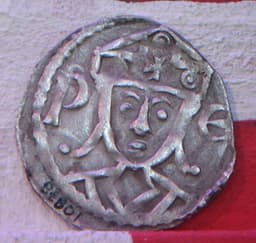
Valdemar II of Denmark
Emperor · Medieval
58.8Total
Basic Information
Born
1471
1170
Died
1529
1241
Era
Medieval
Medieval
Nationality
India
Denmark
Occupation
Emperor
Emperor
Civilization
Indian
Western
Score Comparison
Military (10%)
72.0
61.7
Political (20%)
75.0
62.7
Influence (20%)
65.0
58.0
Legacy (20%)
55.0
50.0
Leadership (15%)
75.0
68.0
Strategy (15%)
68.1
60.7
TOTAL
66.5
58.8
Krishnadevaraya — Complete Timeline
1509 AD
Conquest of the Bahmani SultanateWar◆ Major
Krishnadevaraya led a campaign against the Bahmani Sultanate, capturing the fortress of Gulbarga and expanding Vijayanagara territory. This victory established his military reputation and secured the empire's northern frontier.
Military CampaignExpansion
Impact: regional
1510 AD
Patronage of Telugu LiteratureCultural◆ Major
Krishnadevaraya patronized Telugu poets and scholars, including Allasani Peddana, who composed the epic 'Manucharitram'. His court became a center of Telugu literature, earning him the title 'Andhra Bhoja'.
Cultural PatronageLiterature
Impact: regionalconstructive
1513 AD
Expedition to KalingaWar
Krishnadevaraya led a military expedition to the Kalinga region (modern Odisha), defeating the Gajapati king. This campaign extended Vijayanagara influence eastward and secured tribute from the conquered territories.
Military CampaignExpansion
Impact: regional
1515 AD
Construction of the Vijayanagara CityCultural◆ Major
Krishnadevaraya expanded and beautified the Vijayanagara capital, constructing temples, irrigation works, and public buildings. The city became one of the largest and most prosperous in India at the time.
Urban DevelopmentArchitecture
Impact: regionalconstructive
1520 AD
Battle of RaichurWar◆ Major
Krishnadevaraya defeated the combined forces of the Bijapur and Golconda sultanates at Raichur. This victory secured the Raichur Doab region for Vijayanagara and demonstrated his military prowess.
BattleTerritorial Gain
Impact: regional
Valdemar II of Denmark — Complete Timeline
1202 AD
Became King of DenmarkPolitical Action◆ Major
Valdemar II became King of Denmark after the death of his brother, King Canute VI. He inherited a kingdom that was already a major Baltic power, and he continued his predecessor's expansionist policies, aiming to control the Baltic Sea trade routes.
SuccessionDenmarkBaltic Power
Impact: regional
1219 AD
Conquered EstoniaWar◆ Major
Valdemar II led a Danish crusade to conquer Estonia, defeating the Estonian tribes at the Battle of Lyndanisse (near modern Tallinn). According to legend, the Danish flag Dannebrog fell from the sky during this battle. Estonia became a Danish possession until 1346.
ConquestEstoniaCrusade
Impact: regional
1223 AD
Captured by Count Henry of SchwerinPolitical Action◆ Major
Valdemar II was captured by Count Henry of Schwerin during a hunting trip and held prisoner for over two years. His captivity forced Denmark to pay a huge ransom and cede territories in northern Germany, weakening Danish power in the region.
CaptureRansomGermany
Impact: regionaltragic
1227 AD
Defeated at the Battle of BornhövedWar◆ Major
After his release, Valdemar II attempted to regain lost territories but was decisively defeated by a coalition of German princes at the Battle of Bornh
BattleDefeatGermany
Impact: regionaldestructive
1241 AD
Codified Danish law with the Jutland CodeReform◆ Major
Valdemar II oversaw the compilation of the Jutland Code (Jyske Lov), a comprehensive legal code for Denmark. The code standardized laws, reduced the power of local chieftains, and established a uniform legal system that influenced Danish law for centuries.
Legal CodeReformDenmark
Impact: nationalconstructive
Expert Analysis
Origins
Krishnadevaraya was born in 1471 CE into the Tuluva dynasty of the Vijayanagara Empire in southern India. His father, Tuluva Narasa Nayaka, was a military commander who effectively ruled the empire. Krishnadevaraya received training in warfare, administration, and classical learning, becoming fluent in Telugu, Kannada, and Sanskrit. His early life was shaped by the political instability following the collapse of the Sangama dynasty.
Valdemar II of Denmark was born in 1170 CE, the son of King Valdemar I and Sophia of Minsk. He grew up in a period of Danish expansion under his father and older brother, King Canute VI. Valdemar was educated in statecraft and military tactics, and he participated in campaigns against the Wends and other Baltic tribes. His upbringing emphasized Christian kingship and Baltic dominance.
Rise to Power
Krishnadevaraya ascended the throne in 1509 after the death of his half-brother, King Viranarasimha Raya. He quickly consolidated power by neutralizing internal rivals and securing the support of the nobility. His first major military campaign was against the Bahmani Sultanate in 1510, where he captured the fortress of Gulbarga, demonstrating his strategic acumen.
Valdemar II became king in 1202 after his brother Canute VI died without heirs. He inherited a kingdom that already controlled much of the southern Baltic coast. His early reign focused on consolidating Danish authority in the Baltic region, leading a crusade to Estonia in 1219. At the Battle of Lyndanisse, he defeated Estonian tribes, reportedly aided by the legendary Dannebrog flag falling from the sky.
Leadership & Governance
Krishnadevaraya ruled as an absolute monarch but with a strong administrative system. He divided the empire into provinces (mandalas) governed by loyal officials, and regularly toured his domains to ensure justice. He implemented irrigation projects, such as the construction of a large tank near Vijayanagara, and promoted trade with the Portuguese, who supplied horses for his cavalry. His court at Vijayanagara became a center of Telugu literature, with poets like Allasani Peddana composing the epic 'Manucharitram'. Krishnadevaraya's military strategy scored 68.1, reflecting his ability to coordinate large armies with artillery and cavalry.
Valdemar II governed through a feudal system, relying on the Danish Church and nobility for support. He codified Danish law with the Jutland Code (Jyske Lov) in 1241, which standardized legal procedures, reduced the power of local chieftains, and established a uniform legal framework for Denmark. His military score of 61.7 indicates competent but not exceptional generalship, as he suffered a major defeat at Bornhöved in 1227.
Triumph & Tragedy
Krishnadevaraya's greatest triumph was the Battle of Raichur in 1520, where he defeated a coalition of Bijapur and Golconda sultanates, securing the fertile Raichur Doab. He also led a successful expedition to Kalinga (modern Odisha) in 1515, defeating the Gajapati king and extending Vijayanagara influence. His patronage of arts and literature flourished, with his court producing works like 'Amuktamalyada', a Telugu poem he authored himself. However, his later years saw the rise of powerful feudatories and the beginning of the empire's decline after his death in 1529.
Valdemar II's greatest success was the conquest of Estonia, which brought the Dannebrog legend and expanded Danish influence in the Baltic. The Jutland Code remained in effect for centuries, shaping Danish legal tradition. His tragedy was his capture by Count Henry of Schwerin in 1223 during a hunting trip, which forced Denmark to pay a huge ransom and cede territories. After his release, he attempted to regain lost lands but was decisively defeated at the Battle of Bornhöved in 1227, ending Danish dominance in the Baltic.
Character & Destiny
Krishnadevaraya was known for his strategic patience and cultural sophistication. He was a devout Hindu but tolerant of other religions, employing Muslims in his army. His decision to expand irrigation and trade shows a pragmatic focus on economic stability. His character contributed to Vijayanagara's peak, but his inability to establish a stable succession led to internal strife after his death.
Valdemar II was ambitious and religiously motivated, viewing his Baltic campaigns as crusades. His capture in 1223 resulted from overconfidence and poor security, a flaw that cost Denmark its Baltic empire. After Bornhöved, he focused on internal consolidation, showing resilience but also a diminished ambition. Historians note his legal reforms as his most enduring legacy, overshadowing his military failures.
Legacy
Krishnadevaraya is remembered as the greatest ruler of the Vijayanagara Empire, with his reign marking the empire's zenith. His military campaigns secured key territories, and his patronage of Telugu literature created a cultural golden age. The city of Vijayanagara became one of the largest in the world, with a population estimated at 500,000. However, his empire collapsed within decades of his death, limiting his long-term impact. His legacy score of 55.0 reflects this transience.
Valdemar II's legacy is more mixed. The Jutland Code influenced Danish law until the 17th century, and the Dannebrog flag remains a national symbol. However, his Baltic conquests were lost after Bornhöved, and Denmark's Baltic empire did not recover. His total score of 58.8 reflects a competent ruler whose achievements were partly undone by his own mistakes.
Conclusion
Krishnadevaraya had a greater impact than Valdemar II, with a total score of 66.5 compared to 58.8. Krishnadevaraya's military score of 72.0 and leadership score of 75.0 significantly outpace Valdemar's 61.7 and 68.0, respectively. While Valdemar's legal code was enduring, Krishnadevaraya's military conquests and cultural patronage created a larger and more immediate legacy. Vijayanagara's prosperity under Krishnadevaraya influenced trade and culture across South India, whereas Valdemar's Baltic empire was short-lived. The score gap of 7.7 points underscores Krishnadevaraya's superiority in both governance and military strategy.
Rankings
🥇
KrishnadevarayaLeader
Mil: 72.0Pol: 75.0Inf: 65.0
66.5
🥈
Valdemar II of Denmark
Mil: 61.7Pol: 62.7Inf: 58.0
58.8
+7.7 behind
How This Comparison Works
Algorithm
Each figure is scored on 6 dimensions (0—100 scale) based on structured historical data: Military (10%), Political (20%), Influence (20%), Legacy (20%), Leadership (15%), Strategy (15%). The weighted total produces the final ranking.
Data Sources
Scores are computed from structured sub-indicators in the database. Scale factors adjust for era (Ancient ×0.85, Modern ×1.0) and civilization size (Eastern ×1.05, Other ×0.80) to account for differences in population and military scale.
Maximum 3 Figures
Comparisons are limited to 2—3 figures to ensure readability and statistical meaningfulness.
Error Margins
±5 points per dimension — Sub-scores are derived from historical records with inherent uncertainty. Two figures within 5 points on a dimension should be considered roughly equivalent in that area.
Total Score Accuracy
±3 points overall — The weighted combination of 6 dimensions produces a total score with approximately ±3 points of uncertainty. Differences of less than 3 points are not statistically significant— the figures are effectively tied.
Known Limitations
- Historical records are incomplete and uneven across civilizations
- Figures from oral-tradition societies may be underrepresented
- Occupation labels can misclassify multi-role figures
- Scores measure capability and impact, not moral character
- Quantitative scoring is a comparison tool, not absolute truth
Capability Radar
Military (10%) — Battles & Warfare
Battles
85
65
Win Rate
90
70
Expansion
85
70
Political (20%) — Governance & Reform
Reform
80
60
Diplomacy
85
65
Economy
90
60
Influence (20%) — Cultural & Global Reach
Cultural
85
50
Global
65
40
Legacy (20%) — Historical Impact
Historical
80
55
Longevity
70
45
Leadership (15%) — Power & Stability
Tenure
85
70
Stability
80
55
Strategy (15%) — Tactics & Innovation
Strategy
85
65
Tactics
80
60
Reform
75
55
Similar Comparisons
Comments & Discussion
No comments yet. Be the first to share your thoughts!