Loading...
This comparison has not been analyzed yet.
One-time AI generation (~1 minute). Scores and timeline are already available below.
Koloa Talake vs Nicolas Maduro
Nicolas Maduro leads by 5.0 pts · 2 figures compared
…

Koloa Talake
Politician · Modern
39.1Total
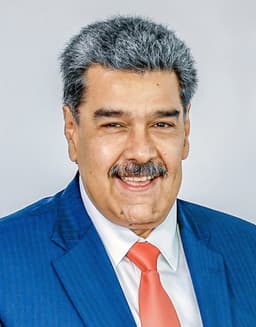
Nicolas Maduro
Politician · Modern
44.1Total
Basic Information
Born
1934
1962
Died
—
—
Era
Modern
Modern
Nationality
Tuvalu
Venezuela
Occupation
Politician
Politician
Civilization
Other
Western
Score Comparison
Military (10%)
44.2
50.0
Political (20%)
26.4
25.0
Influence (20%)
48.6
47.9
Legacy (20%)
35.8
37.5
Leadership (15%)
34.6
65.7
Strategy (15%)
43.8
41.9
TOTAL
39.1
44.1
Koloa Talake — Complete Timeline
2001 AD
Became Prime Minister of TuvaluPolitical Action◆ Major
Koloa Talake was elected Prime Minister of Tuvalu in December 2001, succeeding Faimalaga Luka. He served as head of government during a period of economic challenges and increasing international attention on climate change impacts on low-lying islands.
Prime MinisterTuvaluElection
Impact: national
2002 AD
Threatened to Sue Over Climate ChangePolitical Action◆ Major
Prime Minister Talake announced that Tuvalu would take legal action against the United States and Australia at the International Court of Justice for their failure to reduce greenhouse gas emissions. The threat aimed to hold major polluters accountable for sea-level rise threatening Tuvalu's existence.
Climate ChangeLegal ActionTuvalu
Impact: globalconstructive
Lost No-Confidence Vote and Left OfficePolitical Action◆ Major
Koloa Talake lost a no-confidence vote in the Tuvalu Parliament in December 2002, ending his one-year tenure as Prime Minister. The vote was triggered by political infighting and dissatisfaction with his leadership. He was succeeded by Saufatu Sopoanga.
No-ConfidencePolitical CrisisTuvalu
Impact: nationaldestructive
Nicolas Maduro — Complete Timeline
2013 AD
Assumption of Presidency (2013)Political Action◆ Major
Following the death of Hugo Ch
SuccessionBolivarian RevolutionElection
Impact: national
2014 AD
Economic Collapse and Hyperinflation (2014-2019)Other◆ Major
Under Maduro's presidency, Venezuela entered a severe socioeconomic crisis. The collapse of oil prices, combined with economic mismanagement and sanctions, led to hyperinflation, widespread shortages of food and medicine, and a massive emigration crisis, with millions of Venezuelans leaving the country.
Economic CrisisHyperinflationEmigration
Impact: regionaltragic
2019 AD
Presidential Crisis and Guaidó Challenge (2019)Political Action◆ Major
Following a disputed 2018 election, opposition leader Juan Guaid
Political CrisisDual PresidencyInternational Recognition
Impact: globaldestructive
This comparison has not been analyzed yet.
One-time AI generation (~1 minute). Scores and timeline are already available below.
Rankings
🥇
Nicolas MaduroLeader
Mil: 50.0Pol: 25.0Inf: 47.9
44.1
🥈
Koloa Talake
Mil: 44.2Pol: 26.4Inf: 48.6
39.1
+5.0 behind
How This Comparison Works
Algorithm
Each figure is scored on 6 dimensions (0—100 scale) based on structured historical data: Military (10%), Political (20%), Influence (20%), Legacy (20%), Leadership (15%), Strategy (15%). The weighted total produces the final ranking.
Data Sources
Scores are computed from structured sub-indicators in the database. Scale factors adjust for era (Ancient ×0.85, Modern ×1.0) and civilization size (Eastern ×1.05, Other ×0.80) to account for differences in population and military scale.
Maximum 3 Figures
Comparisons are limited to 2—3 figures to ensure readability and statistical meaningfulness.
Error Margins
±5 points per dimension — Sub-scores are derived from historical records with inherent uncertainty. Two figures within 5 points on a dimension should be considered roughly equivalent in that area.
Total Score Accuracy
±3 points overall — The weighted combination of 6 dimensions produces a total score with approximately ±3 points of uncertainty. Differences of less than 3 points are not statistically significant— the figures are effectively tied.
Known Limitations
- Historical records are incomplete and uneven across civilizations
- Figures from oral-tradition societies may be underrepresented
- Occupation labels can misclassify multi-role figures
- Scores measure capability and impact, not moral character
- Quantitative scoring is a comparison tool, not absolute truth
Capability Radar
Military (10%) — Battles & Warfare
Battles
19
30
Win Rate
27
31
Expansion
28
32
Political (20%) — Governance & Reform
Reform
15
15
Diplomacy
20
20
Economy
10
5
Influence (20%) — Cultural & Global Reach
Cultural
5
10
Global
15
15
Legacy (20%) — Historical Impact
Historical
10
15
Longevity
5
10
Leadership (15%) — Power & Stability
Tenure
10
60
Stability
10
5
Strategy (15%) — Tactics & Innovation
Strategy
32
36
Tactics
33
39
Reform
35
46
Similar Comparisons
Comments & Discussion
No comments yet. Be the first to share your thoughts!