Loading...
Kjell Magne Bondevik vs Nicolas Maduro
Kjell Magne Bondevik leads by 6.3 pts · 2 figures compared
…

Kjell Magne Bondevik
Politician · Modern
50.4Total
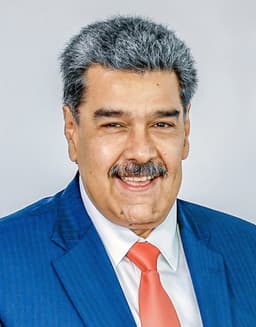
Nicolas Maduro
Politician · Modern
44.1Total
Basic Information
Born
1947
1962
Died
—
—
Era
Modern
Modern
Nationality
Norway
Venezuela
Occupation
Politician
Politician
Civilization
Western
Western
Score Comparison
Military (10%)
47.8
50.0
Political (20%)
53.8
25.0
Influence (20%)
49.4
47.9
Legacy (20%)
40.8
37.5
Leadership (15%)
72.0
65.7
Strategy (15%)
41.9
41.9
TOTAL
50.4
44.1
Kjell Magne Bondevik — Complete Timeline
1997 AD
First Term as Prime Minister of NorwayPolitical Action◆ Major
Bondevik became Prime Minister in October 1997, leading a centrist coalition government of the Christian Democratic, Centre, and Liberal parties. His first term lasted until 2000.
Norwegian PoliticsCoalition Government
Impact: national
1998 AD
Took Sick Leave for DepressionPolitical Action◆ Major
Bondevik took a three-week sick leave in August 1998 for depression, becoming the first Norwegian PM to publicly disclose mental health issues. He returned to work after treatment.
Mental HealthNorwegian Politics
Impact: national
2001 AD
Second Term as Prime MinisterPolitical Action◆ Major
Bondevik returned as Prime Minister in October 2001, leading a coalition government until 2005. His government focused on immigration policy and international development.
Norwegian PoliticsGovernment
Impact: national
Nicolas Maduro — Complete Timeline
2013 AD
Assumption of Presidency (2013)Political Action◆ Major
Following the death of Hugo Ch
SuccessionBolivarian RevolutionElection
Impact: national
2014 AD
Economic Collapse and Hyperinflation (2014-2019)Other◆ Major
Under Maduro's presidency, Venezuela entered a severe socioeconomic crisis. The collapse of oil prices, combined with economic mismanagement and sanctions, led to hyperinflation, widespread shortages of food and medicine, and a massive emigration crisis, with millions of Venezuelans leaving the country.
Economic CrisisHyperinflationEmigration
Impact: regionaltragic
2019 AD
Presidential Crisis and Guaidó Challenge (2019)Political Action◆ Major
Following a disputed 2018 election, opposition leader Juan Guaid
Political CrisisDual PresidencyInternational Recognition
Impact: globaldestructive
Expert Analysis
Origins
Kjell Magne Bondevik was born on September 3, 1947, in Fana, Norway, into a devout Christian family. His father was a priest, and Bondevik studied theology at the Norwegian University of Science and Technology. He entered politics early, serving in local government before being elected to the Norwegian Parliament in 1973. His background in theology and his Christian Democratic Party affiliation shaped his focus on ethics and social welfare.
Nicolás Maduro was born on November 23, 1962, in Caracas, Venezuela, into a working-class family. His father was a trade unionist, and Maduro became a bus driver and union leader. He was influenced by leftist ideology and joined the Fifth Republic Movement led by Hugo Chávez. His education was limited; he did not attend university but rose through the ranks of the labor movement and political activism.
Rise to Power
Bondevik's rise was gradual. He became leader of the Christian Democratic Party in 1983 and served as Minister of Foreign Affairs from 1989 to 1990. In October 1997, he became Prime Minister of Norway, leading a centrist coalition. His first term was marked by stability and consensus-building, but he gained international attention in August 1998 when he took a three-week sick leave for depression, becoming the first Norwegian PM to publicly disclose mental health issues. He returned to office and lost power in 2000 but won again in October 2001, serving until 2005.
Maduro's rise was directly tied to Chávez. He served as Foreign Minister and Vice President under Chávez, and after Chávez's death in March 2013, Maduro narrowly won a special presidential election against Henrique Capriles with 50.6% of the vote. He inherited a deeply polarized nation and a faltering economy, but he lacked Chávez's charisma and political skill.
Leadership & Governance
Bondevik's leadership style was inclusive and ethical. He prioritized coalition building and consensus, focusing on social welfare, environmental policy, and international peacekeeping. His government strengthened Norway's oil fund management and maintained a strong economy. Bondevik scored 72.0 in leadership, reflecting his ability to govern effectively despite personal challenges. He was known for his calm demeanor and transparency regarding his mental health.
Maduro's governance was authoritarian and increasingly repressive. He ruled by decree, cracked down on opposition, and manipulated elections. His economic policies, including price controls and expropriations, led to hyperinflation, shortages, and a collapse in oil production. His leadership score of 65.7 is deceptive; it reflects his survival in power rather than effective governance. Unlike Bondevik, Maduro relied on military and paramilitary forces to maintain control, eroding democratic institutions.
Triumph & Tragedy
Bondevik's greatest success was normalizing mental health discussions in politics and maintaining Norway's prosperity. His government also strengthened the welfare state and promoted environmental sustainability. His tragedy was his brief political eclipse after his sick leave; some critics saw it as weakness, though public support later rebounded. His total score of 50.4 reflects moderate influence.
Maduro's triumph was inheriting and retaining power despite immense pressure. He survived a 2019 opposition challenge led by Juan Guaidó, who declared himself interim president. However, his presidency is defined by tragedy: Venezuela's GDP contracted by 75%, over 5 million refugees fled, and the country faced humanitarian crises. His political score of 25.0 is among the lowest, indicating catastrophic governance.
Character & Destiny
Bondevik's character was defined by integrity and resilience. His openness about depression changed perceptions of mental health in leadership. His destiny was to be a respected, if not transformative, leader in a stable democracy. He scored 41.9 in strategy, reflecting cautious, principled decision-making.
Maduro's character was marked by stubbornness and authoritarian tendencies. He refused to cede power despite economic collapse and international isolation. His destiny was to become a symbol of failed socialism and corruption. His strategy score of 41.9 matches Bondevik, but his execution was disastrous.
Legacy
Bondevik's legacy is Norway's continued stability and his role in destigmatizing mental illness. He is remembered as a humane leader in a peaceful nation. His influence score of 49.4 is moderate but positive.
Maduro's legacy is catastrophic: economic ruin, political repression, and mass emigration. He will be remembered as the president who destroyed Venezuela. His influence score of 47.9 is slightly lower, but his negative impact is far greater. His legacy score of 37.5 reflects his failure to build enduring institutions.
Conclusion
Kjell Magne Bondevik had a greater positive impact on his nation and the world. Despite a lower total score (50.4 vs. 44.1), his leadership was ethical and effective, while Maduro's was destructive. Bondevik's governance preserved democracy and prosperity; Maduro's dismantled them. Bondevik's legacy of transparency and stability outweighs Maduro's survivalism. The score gap of 6.3 points reflects Bondevik's superior political skill and moral authority. In the contest of leadership, Bondevik wins decisively.
Rankings
🥇
Kjell Magne BondevikLeader
Mil: 47.8Pol: 53.8Inf: 49.4
50.4
🥈
Nicolas Maduro
Mil: 50.0Pol: 25.0Inf: 47.9
44.1
+6.3 behind
How This Comparison Works
Algorithm
Each figure is scored on 6 dimensions (0—100 scale) based on structured historical data: Military (10%), Political (20%), Influence (20%), Legacy (20%), Leadership (15%), Strategy (15%). The weighted total produces the final ranking.
Data Sources
Scores are computed from structured sub-indicators in the database. Scale factors adjust for era (Ancient ×0.85, Modern ×1.0) and civilization size (Eastern ×1.05, Other ×0.80) to account for differences in population and military scale.
Maximum 3 Figures
Comparisons are limited to 2—3 figures to ensure readability and statistical meaningfulness.
Error Margins
±5 points per dimension — Sub-scores are derived from historical records with inherent uncertainty. Two figures within 5 points on a dimension should be considered roughly equivalent in that area.
Total Score Accuracy
±3 points overall — The weighted combination of 6 dimensions produces a total score with approximately ±3 points of uncertainty. Differences of less than 3 points are not statistically significant— the figures are effectively tied.
Known Limitations
- Historical records are incomplete and uneven across civilizations
- Figures from oral-tradition societies may be underrepresented
- Occupation labels can misclassify multi-role figures
- Scores measure capability and impact, not moral character
- Quantitative scoring is a comparison tool, not absolute truth
Capability Radar
Military (10%) — Battles & Warfare
Battles
28
30
Win Rate
34
31
Expansion
37
32
Political (20%) — Governance & Reform
Reform
55
15
Diplomacy
65
20
Economy
55
5
Influence (20%) — Cultural & Global Reach
Cultural
20
10
Global
15
15
Legacy (20%) — Historical Impact
Historical
25
15
Longevity
20
10
Leadership (15%) — Power & Stability
Tenure
60
60
Stability
60
5
Strategy (15%) — Tactics & Innovation
Strategy
35
36
Tactics
44
39
Reform
42
46
Similar Comparisons
Comments & Discussion
No comments yet. Be the first to share your thoughts!