Loading...
This comparison has not been analyzed yet.
One-time AI generation (~1 minute). Scores and timeline are already available below.
Kirill Meretskov vs Shaka Zulu
Shaka Zulu leads by 9.0 pts · 2 figures compared
…

Kirill Meretskov
General · Modern
61.2Total
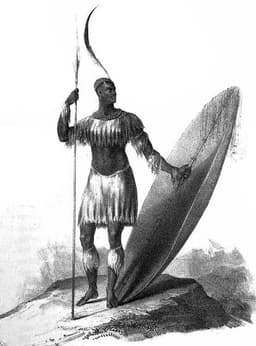
Shaka Zulu
General · Modern
70.2Total
Basic Information
Born
1897
1787
Died
1968
1828
Era
Modern
Modern
Nationality
USSR
Zulu Kingdom
Occupation
General
General
Civilization
Western
Other
Score Comparison
Military (10%)
74.7
80.0
Political (20%)
68.0
72.0
Influence (20%)
56.4
68.0
Legacy (20%)
48.3
68.0
Leadership (15%)
72.0
62.0
Strategy (15%)
65.4
80.8
TOTAL
61.2
70.2
Kirill Meretskov — Complete Timeline
1937 AD
Arrest and release during the Great PurgePolitical Action
Meretskov was arrested during the Great Purge and imprisoned. He was released in 1938 after confessing to fabricated charges, and was reinstated to the military, though his reputation was damaged.
Great PurgeArrestStalin
Impact: nationaltragic
1939 AD
Winter WarWar◆ Major
Meretskov commanded the 7th Army during the Winter War against Finland. His forces failed to break the Mannerheim Line initially, leading to heavy Soviet casualties and his temporary relief from command.
Winter WarFinlandMannerheim Line
Impact: regionaltragic
1944 AD
Leningrad–Novgorod OffensiveWar◆ Major
Meretskov commanded the Volkhov Front in the Leningrad
World War IILeningradSiege
Impact: regional
1945 AD
Soviet–Japanese WarWar◆ Major
Meretskov commanded the 1st Far Eastern Front in the Soviet invasion of Manchuria. His forces broke through Japanese defenses in the mountains and advanced into central Manchuria, contributing to Japan's surrender.
World War IIManchuriaJapan
Impact: regional
Shaka Zulu — Complete Timeline
1816 AD
Introduction of the iklwa and horns of the buffalo formationReform
Shaka introduced the iklwa, a short stabbing spear, and the 'horns of the buffalo' tactical formation to the Zulu army. These innovations replaced the traditional throwing assegai and allowed for close-quarters combat, significantly increasing the Zulu's military effectiveness and enabling rapid conquest.
Military InnovationTacticsZulu Warfare
Impact: regional
1819 AD
Conquest of the Ndwandwe KingdomWar◆ Major
Shaka's Zulu army defeated the Ndwandwe kingdom at the Battle of Gqokli Hill, a decisive victory that eliminated a major rival. This conquest allowed Shaka to consolidate control over a large territory in present-day KwaZulu-Natal, marking the rise of the Zulu as a dominant regional power.
ConquestZulu ExpansionNdwandwe
Impact: regional
1828 AD
Assassination of ShakaPolitical Action◆ Major
Shaka was assassinated by his half-brothers Dingane and Mhlangana, with the support of his aunt Mkabayi. The coup ended his reign of terror and expansionist wars, leading to a period of instability and the eventual rise of Dingane as king.
AssassinationSuccession CrisisZulu Kingdom
Impact: regionaltragic
This comparison has not been analyzed yet.
One-time AI generation (~1 minute). Scores and timeline are already available below.
Rankings
🥇
Shaka ZuluLeader
Mil: 80.0Pol: 72.0Inf: 68.0
70.2
🥈
Kirill Meretskov
Mil: 74.7Pol: 68.0Inf: 56.4
61.2
+9.0 behind
How This Comparison Works
Algorithm
Each figure is scored on 6 dimensions (0—100 scale) based on structured historical data: Military (10%), Political (20%), Influence (20%), Legacy (20%), Leadership (15%), Strategy (15%). The weighted total produces the final ranking.
Data Sources
Scores are computed from structured sub-indicators in the database. Scale factors adjust for era (Ancient ×0.85, Modern ×1.0) and civilization size (Eastern ×1.05, Other ×0.80) to account for differences in population and military scale.
Maximum 3 Figures
Comparisons are limited to 2—3 figures to ensure readability and statistical meaningfulness.
Error Margins
±5 points per dimension — Sub-scores are derived from historical records with inherent uncertainty. Two figures within 5 points on a dimension should be considered roughly equivalent in that area.
Total Score Accuracy
±3 points overall — The weighted combination of 6 dimensions produces a total score with approximately ±3 points of uncertainty. Differences of less than 3 points are not statistically significant— the figures are effectively tied.
Known Limitations
- Historical records are incomplete and uneven across civilizations
- Figures from oral-tradition societies may be underrepresented
- Occupation labels can misclassify multi-role figures
- Scores measure capability and impact, not moral character
- Quantitative scoring is a comparison tool, not absolute truth
Capability Radar
Military (10%) — Battles & Warfare
Battles
75
85
Win Rate
70
90
Expansion
65
88
Political (20%) — Governance & Reform
Reform
40
85
Diplomacy
50
60
Economy
35
65
Influence (20%) — Cultural & Global Reach
Cultural
30
80
Global
40
70
Legacy (20%) — Historical Impact
Historical
45
85
Longevity
35
75
Leadership (15%) — Power & Stability
Tenure
55
70
Stability
45
55
Strategy (15%) — Tactics & Innovation
Strategy
78
90
Tactics
72
95
Reform
60
98
Similar Comparisons
Comments & Discussion
No comments yet. Be the first to share your thoughts!