Loading...
King Uijong of Goryeo vs Wenceslaus I of Bohemia
Wenceslaus I of Bohemia leads by 18.9 pts · 2 figures compared
…
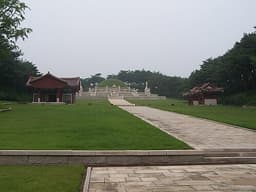
King Uijong of Goryeo
Emperor · Medieval
37.8Total
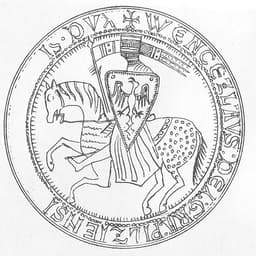
Wenceslaus I of Bohemia
Emperor · Medieval
56.7Total
Basic Information
Born
1127
907
Died
1173
935
Era
Medieval
Medieval
Nationality
Korea
Bohemia
Occupation
Emperor
Emperor
Civilization
Eastern
Western
Score Comparison
Military (10%)
20.0
50.0
Political (20%)
26.4
40.8
Influence (20%)
47.1
68.0
Legacy (20%)
37.5
65.0
Leadership (15%)
41.5
62.2
Strategy (15%)
45.0
30.3
TOTAL
37.8
56.7
King Uijong of Goryeo — Complete Timeline
1150 AD
Reign of ExtravaganceOther
King Uijong's reign before the coup was characterized by lavish spending on palaces, gardens, and entertainment. He neglected state affairs and surrounded himself with pleasure-seeking courtiers. This extravagance alienated the military and contributed to the coup.
ExtravaganceNeglectCoup Cause
Impact: nationaldestructive
1170 AD
Military Coup of Jeong Jung-buPolitical Action
General Jeong Jung-bu led a military coup against King Uijong's civil-dominated government. The king was deposed and exiled to Geojedo. Many civil officials were killed. This coup ended the civil bureaucracy's supremacy and began a century of military rule in Goryeo.
CoupMilitary RuleJeong Jung-bu
Impact: nationaldestructive
Destruction of Buddhist TemplesCultural
Following the coup, the military regime targeted Buddhist institutions that had been closely tied to the civil bureaucracy. Several temples were destroyed or looted, and monks were persecuted. This marked a decline in state patronage of Buddhism.
BuddhismPersecutionTemple Destruction
Impact: nationaldestructive
1173 AD
Exile and Assassination of King UijongPolitical Action◆ Major
After being deposed, King Uijong was exiled to Geojedo Island. In 1173, fearing a restoration attempt, the military regime sent assassins who killed the former king. His death solidified the military's control and eliminated a potential rallying point for loyalists.
ExileAssassinationMilitary Regime
Impact: nationaltragic
Wenceslaus I of Bohemia — Complete Timeline
921 AD
Conversion to ChristianityCultural◆ Major
Wenceslaus I was raised and educated as a Christian by his grandmother, Saint Ludmila. He promoted Christianity in Bohemia, building churches and supporting missionaries, which strengthened the Christian identity of the Czech state.
ChristianizationReligious ReformCultural Change
Impact: nationalconstructive
929 AD
Submission to Henry the FowlerPolitical Action◆ Major
Wenceslaus I accepted the overlordship of King Henry I of East Francia to avoid invasion. This act secured peace for Bohemia but made it a tributary state of the Holy Roman Empire, a status that lasted for centuries.
TributeHoly Roman EmpireDiplomacy
Impact: regional
935 AD
Assassination of Wenceslaus IPolitical Action
Wenceslaus I was murdered by his brother Boleslaus I and other conspirators at the gates of a church in Star
AssassinationMartyrdomDynastic Conflict
Impact: nationaltragic
Expert Analysis
Origins
King Uijong of Goryeo (born 1127, reigned 1146–1170) was the 18th monarch of the Goryeo dynasty. He was raised in a court dominated by civil officials, with little exposure to military affairs. His early education emphasized Confucian scholarship and Buddhist patronage, shaping his extravagant tastes.
Wenceslaus I of Bohemia (born c. 907, reigned 921–935) was a Přemyslid duke, raised by his grandmother Saint Ludmila in the Christian faith. His father, Vratislaus I, died early, leaving Wenceslaus under the regency of his mother Drahomíra, who opposed Christianity. This religious tension defined his youth.
Rise to Power
Uijong ascended the throne at age 19 after the death of his father, King Injong. His early reign was marked by stability, but he quickly became dependent on civil officials, particularly Kim Bo-sik, and neglected military leaders. This imbalance led to growing resentment among the military class.
Wenceslaus inherited the duchy at age 13 or 14, with his mother Drahomíra acting as regent. After she persecuted Christians, including the murder of Saint Ludmila, Wenceslaus took control and exiled his mother. He then promoted Christianity, building churches and inviting missionaries, which strengthened ties with East Francia.
Leadership & Governance
Uijong's leadership was characterized by lavish spending and detachment. He built extravagant palaces and gardens, hosted endless feasts, and focused on poetry and Buddhist rituals. Civil officials like Kim Bo-sik dominated policy, while military officers were sidelined. This neglect culminated in the 1170 coup led by General Jeong Jung-bu, who killed many civil officials and deposed the king.
Wenceslaus governed with a focus on Christianization and state consolidation. He submitted to King Henry I of East Francia in 929, accepting tributary status to avoid invasion. This pragmatic decision secured peace but reduced Bohemia's independence. He also centralized administration and supported the Church, building St. Vitus Cathedral in Prague. His leadership scored 62.2 compared to Uijong's 41.5.
Triumph & Tragedy
Uijong's greatest success was maintaining Goryeo's cultural flourishing early in his reign, but his tragic failure was his inability to manage military-civil relations. The coup not only ended his rule but also initiated a century of military dictatorship. He was exiled to Geojedo Island and assassinated in 1173. His reign score of 37.8 reflects his poor outcomes.
Wenceslaus's triumph was his successful promotion of Christianity and his posthumous reputation as a saint. However, his submission to Henry the Fowler made Bohemia a tributary state, a controversial decision. His assassination by his brother Boleslaus at a church door in 935 turned him into a martyr. His influence score of 68.0 and legacy of 65.0 are far higher than Uijong's 47.1 and 37.5.
Character & Destiny
Uijong was a cultured but weak ruler, preferring leisure over governance. His character led to over-reliance on civil officials and alienation of the military, sealing his fate. Historical assessments portray him as a victim of structural flaws, but his own negligence was a key factor.
Wenceslaus was devout and diplomatic, but his piety and submission to foreign rule alienated his brother and nobles. His character combined Christian idealism with political realism, yet his assassination shows the limits of his compromise. He scored 56.7 overall, reflecting a more balanced but still flawed profile.
Legacy
Uijong's legacy is overshadowed by the military regime that followed. His reign is remembered as the catalyst for Goryeo's decline into military rule. Buddhist institutions he patronized were later destroyed by the coup leaders. His name is rarely invoked in Korean history except as a cautionary tale.
Wenceslaus became the patron saint of Bohemia, celebrated in the Christmas carol "Good King Wenceslaus." His legacy as a Christian ruler and martyr influenced Czech identity for centuries. The Přemyslid dynasty continued, and his brother Boleslaus, despite killing him, later sought his canonization. Wenceslaus's legacy score of 65.0 dwarfs Uijong's 37.5.
Conclusion
Wenceslaus I had greater impact, with a total score of 56.7 versus Uijong's 37.8. While Uijong's reign triggered a military takeover that reshaped Goryeo, his individual contributions were minimal and negative. Wenceslaus's promotion of Christianity and his sainthood left a lasting cultural and religious imprint on Bohemia. His political maneuvering, though flawed, secured peace and stability. In the data-driven comparison, Wenceslaus emerges as the more significant historical figure.
Rankings
🥇
Wenceslaus I of BohemiaLeader
Mil: 50.0Pol: 40.8Inf: 68.0
56.7
🥈
King Uijong of Goryeo
Mil: 20.0Pol: 26.4Inf: 47.1
37.8
+18.9 behind
How This Comparison Works
Algorithm
Each figure is scored on 6 dimensions (0—100 scale) based on structured historical data: Military (10%), Political (20%), Influence (20%), Legacy (20%), Leadership (15%), Strategy (15%). The weighted total produces the final ranking.
Data Sources
Scores are computed from structured sub-indicators in the database. Scale factors adjust for era (Ancient ×0.85, Modern ×1.0) and civilization size (Eastern ×1.05, Other ×0.80) to account for differences in population and military scale.
Maximum 3 Figures
Comparisons are limited to 2—3 figures to ensure readability and statistical meaningfulness.
Error Margins
±5 points per dimension — Sub-scores are derived from historical records with inherent uncertainty. Two figures within 5 points on a dimension should be considered roughly equivalent in that area.
Total Score Accuracy
±3 points overall — The weighted combination of 6 dimensions produces a total score with approximately ±3 points of uncertainty. Differences of less than 3 points are not statistically significant— the figures are effectively tied.
Known Limitations
- Historical records are incomplete and uneven across civilizations
- Figures from oral-tradition societies may be underrepresented
- Occupation labels can misclassify multi-role figures
- Scores measure capability and impact, not moral character
- Quantitative scoring is a comparison tool, not absolute truth
Capability Radar
Military (10%) — Battles & Warfare
Battles
5
15
Win Rate
5
20
Expansion
5
10
Political (20%) — Governance & Reform
Reform
20
35
Diplomacy
20
40
Economy
20
35
Influence (20%) — Cultural & Global Reach
Cultural
15
75
Global
5
70
Legacy (20%) — Historical Impact
Historical
20
80
Longevity
15
85
Leadership (15%) — Power & Stability
Tenure
40
40
Stability
10
40
Strategy (15%) — Tactics & Innovation
Strategy
5
15
Tactics
5
15
Reform
5
10
Similar Comparisons
Comments & Discussion
No comments yet. Be the first to share your thoughts!