Loading...
King Uijong of Goryeo vs Napoleon Bonaparte
Napoleon Bonaparte leads by 33.1 pts · 2 figures compared
…
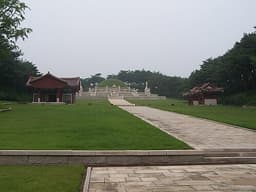
King Uijong of Goryeo
Emperor · Medieval
37.8Total

Napoleon Bonaparte
General · Modern
70.9Total
Basic Information
Born
1127
1769
Died
1173
1821
Era
Medieval
Modern
Nationality
Korea
France
Occupation
Emperor
General
Civilization
Eastern
Western
Score Comparison
Military (10%)
20.0
94.0
Political (20%)
26.4
72.0
Influence (20%)
47.1
40.0
Legacy (20%)
37.5
80.0
Leadership (15%)
41.5
78.0
Strategy (15%)
45.0
90.0
TOTAL
37.8
70.9
King Uijong of Goryeo — Complete Timeline
1150 AD
Reign of ExtravaganceOther
King Uijong's reign before the coup was characterized by lavish spending on palaces, gardens, and entertainment. He neglected state affairs and surrounded himself with pleasure-seeking courtiers. This extravagance alienated the military and contributed to the coup.
ExtravaganceNeglectCoup Cause
Impact: nationaldestructive
1170 AD
Military Coup of Jeong Jung-buPolitical Action
General Jeong Jung-bu led a military coup against King Uijong's civil-dominated government. The king was deposed and exiled to Geojedo. Many civil officials were killed. This coup ended the civil bureaucracy's supremacy and began a century of military rule in Goryeo.
CoupMilitary RuleJeong Jung-bu
Impact: nationaldestructive
Destruction of Buddhist TemplesCultural
Following the coup, the military regime targeted Buddhist institutions that had been closely tied to the civil bureaucracy. Several temples were destroyed or looted, and monks were persecuted. This marked a decline in state patronage of Buddhism.
BuddhismPersecutionTemple Destruction
Impact: nationaldestructive
1173 AD
Exile and Assassination of King UijongPolitical Action◆ Major
After being deposed, King Uijong was exiled to Geojedo Island. In 1173, fearing a restoration attempt, the military regime sent assassins who killed the former king. His death solidified the military's control and eliminated a potential rallying point for loyalists.
ExileAssassinationMilitary Regime
Impact: nationaltragic
Napoleon Bonaparte — Complete Timeline
1799 AD
Coup of 18 BrumaireOther◆ Major
Napoleon Bonaparte, with support from his brother Lucien and key political figures, overthrew the Directory in a bloodless coup. He established the Consulate with himself as First Consul, effectively becoming the ruler of France. This event ended the French Revolution's most unstable period.
French RevolutionCoupRise to Power
Impact: regional
1804 AD
Promulgation of the Napoleonic CodeOther◆ Major
Napoleon enacted the Civil Code of the French, known as the Napoleonic Code, a comprehensive set of laws that replaced the fragmented feudal legal systems. The code established legal equality, protected property rights, and secularized law. It became the basis for legal systems in many European and world countries.
Legal ReformNapoleonic CodeCivil Law
Impact: globalconstructive
1805 AD
Battle of AusterlitzWar◆ Major
Napoleon's Grande Arm
Napoleonic WarsBattleDecisive Victory
Impact: global
1812 AD
Invasion of RussiaWar◆ Major
Napoleon led the Grande Arm
Napoleonic WarsInvasionDisaster
Impact: globaldestructive
1815 AD
Battle of WaterlooWar◆ Major
Napoleon's French army was defeated by the combined forces of the Duke of Wellington's Anglo-Allied army and Gebhard Leberecht von Bl
Napoleonic WarsBattleFinal Defeat
Impact: globaldestructive
Expert Analysis
king-uijong-of-goryeo-vs-napoleon-bonaparte
# The Emperor and the King: Two Paths Through Power’s Storm
In the spring of 1815, Napoleon Bonaparte stood before his assembled troops at Grenoble, a man who had escaped exile and was marching toward Paris to reclaim an empire. The soldiers sent to arrest him instead fell to their knees. In the autumn of 1170, King Uijong of Goryeo watched helplessly as his own generals dragged him from his palace, his guards melting away like morning frost. Both men faced the same raw truth of power—that it rests ultimately on the loyalty of armed men—but their fates diverged as sharply as their civilizations. Why did one become the master of Europe and the other a forgotten footnote in Korean history?
Origins
Napoleon Bonaparte was born in 1769 on the Mediterranean island of Corsica, a place only recently annexed by France. His family was minor nobility, proud and poor, and young Napoleon grew up speaking Italian-accented French in a household that resented French rule. This outsider’s perspective would prove essential: he saw French society not as a fixed hierarchy but as a chessboard of opportunity. The French Revolution, which erupted when he was twenty, shattered the old order and opened every military command to talent. Napoleon was perfectly positioned—hungry, brilliant, and unburdened by tradition.
King Uijong, born in 1127, entered a world where everything was already decided. He was the eighteenth king of Goryeo, a dynasty that had ruled Korea for nearly two centuries. His father, King Injong, had spent his reign struggling against powerful military factions, and the boy king inherited both the throne and the wounds of that struggle. Unlike Napoleon, who forged his identity in revolution, Uijong was shaped by a system that demanded he be a ritual figurehead while real power belonged to civil bureaucrats. The Goryeo court valued poetry over strategy, ceremony over strength.
Rise to Power
Napoleon’s ascent was a masterpiece of speed and audacity. In 1793, at just twenty-four, he drove British forces from the port of Toulon, earning promotion to brigadier general. Four years later, in 1796, he took command of a starving, mutinous army in Italy and turned it into a conquering force, winning seventeen battles in a single year. Each victory was a stepping stone, and by 1799 he had seized political power in a coup, becoming First Consul of France. He was thirty years old. His rise was not luck but design—every move calculated, every risk measured against the reward.
King Uijong’s path was the opposite of choice. He became king upon his father’s death in 1146, at age nineteen, inheriting a court riven by factionalism between civil officials and military officers. The Goryeo military had long been humiliated by the civilian aristocracy—generals were beaten for minor offenses, soldiers were treated as servants. Uijong did not create this tension, but he inflamed it by surrounding himself with Buddhist monks and poets, spending state funds on gardens and festivals while the army grew sullen. His “Reign of Extravagance,” beginning around 1150, turned the palace into a pleasure ground and the barracks into a powder keg.
Leadership & Governance
Napoleon governed with the same ferocity he brought to battle. His Napoleonic Code, enacted in 1804, standardized French law across a patchwork of feudal customs, establishing principles of meritocracy, religious tolerance, and property rights that still shape European legal systems today. He appointed officials based on ability, not birth, and his military promotions were legendary for rewarding talent. Yet his governance had a dark edge: he suppressed dissent, censored newspapers, and treated conquered territories as sources of loot and soldiers. His strategy was total—war and rule were the same art, requiring absolute control.
King Uijong ruled as a patron of culture, not a commander. He sponsored Buddhist temples and literary salons, seeking to embody the Confucian ideal of a benevolent, scholarly king. But this vision ignored the military reality at his gates. In 1170, General Jeong Jung-bu led his soldiers into the capital, slaughtering civil officials and burning Buddhist temples that symbolized civilian dominance. The coup was not just a seizure of power but a class war—the military’s revenge for decades of contempt. Uijong’s political score of 44.8 reflects not incompetence but irrelevance: he never truly governed, he merely reigned.
Triumph & Tragedy
Napoleon’s greatest moment came in December 1805 at Austerlitz, where he crushed the combined armies of Russia and Austria. The victory was so complete that the Austrian emperor sued for peace that night. Napoleon stood at the summit of Europe, master of a continent from Spain to Poland. His tragedy followed a decade later: the disastrous invasion of Russia in 1812, where 600,000 men marched east and only 100,000 returned. Exiled to Elba, he escaped, only to meet final defeat at Waterloo in 1815. His end was dramatic, a fall from such height that it became legend.
King Uijong’s tragedy was smaller but no less absolute. After the 1170 coup, he was deposed, stripped of his title, and exiled to Geojedo Island. For three years, the former king lived in obscurity, a ghost of the palace he had once filled with music. In 1173, the military regime, fearing his restoration, sent assassins. He died alone, far from court, his death barely noticed. His military score of 55.1 and leadership score of 40.6 are not judgments of failure—they are measurements of a man who never held the reins.
Character & Destiny
Napoleon’s character was a furnace of ambition and calculation. He once said, “Power is my mistress,” and he meant it. Every decision, from his marriage to Josephine to his invasion of Egypt, served a single purpose: the expansion of his authority. Yet this same drive blinded him. He could not stop conquering, could not accept a negotiated peace, and so he overreached until Europe united against him. His strategy score of 93 reflects genius; his leadership score of 80 reveals the flaw—he was a brilliant general who made a poor diplomat.
King Uijong’s character was shaped by a different culture. He was not ambitious but aesthetic, not calculating but indulgent. He believed that being king meant being served, not leading. In Goryeo, kings were sacred figures who ruled through ritual, not force. But when the military stopped believing in the ritual, the king became a target. His strategy score of 30.0 is not cowardice but incomprehension—he never understood that power must be defended.
Legacy
Napoleon’s legacy is monumental. The Napoleonic Code, the metric system, the modern concept of a meritocratic state—these survive him. He reshaped Europe’s borders and inspired nationalism across the continent. His memory is debated: liberator or tyrant, genius or megalomaniac. But he is remembered. His total score of 82.4 reflects a figure who changed the world.
King Uijong’s legacy is a warning. His deposition in 1170 began a century of military rule in Goryeo, a period of violence and instability that ended only with the Mongol invasions. He is remembered in Korean history as a cautionary tale—a king who lost his throne because he forgot that power rests on force. His legacy score of 50.5 is not low because he was insignificant, but because his significance is negative: he represents failure.
Conclusion
Standing at the distance of centuries, these two men seem to belong to different species: the Corsican conqueror who remade Europe, the Korean king who lost everything to a coup. Yet they faced the same fundamental question: what does it mean to hold power? Napoleon understood that power is a living thing, needing constant feeding. Uijong believed it was a birthright, needing only ceremony. One died in exile on a remote Atlantic island, the other in exile on a remote Korean island. In the end, both learned the same lesson—that power is never owned, only borrowed. The difference is that Napoleon borrowed it brilliantly, and Uijong never knew it was a loan.
Rankings
🥇
Napoleon BonaparteLeader
Mil: 94.0Pol: 72.0Inf: 40.0
70.9
🥈
King Uijong of Goryeo
Mil: 20.0Pol: 26.4Inf: 47.1
37.8
+33.1 behind
How This Comparison Works
Algorithm
Each figure is scored on 6 dimensions (0—100 scale) based on structured historical data: Military (10%), Political (20%), Influence (20%), Legacy (20%), Leadership (15%), Strategy (15%). The weighted total produces the final ranking.
Data Sources
Scores are computed from structured sub-indicators in the database. Scale factors adjust for era (Ancient ×0.85, Modern ×1.0) and civilization size (Eastern ×1.05, Other ×0.80) to account for differences in population and military scale.
Maximum 3 Figures
Comparisons are limited to 2—3 figures to ensure readability and statistical meaningfulness.
Error Margins
±5 points per dimension — Sub-scores are derived from historical records with inherent uncertainty. Two figures within 5 points on a dimension should be considered roughly equivalent in that area.
Total Score Accuracy
±3 points overall — The weighted combination of 6 dimensions produces a total score with approximately ±3 points of uncertainty. Differences of less than 3 points are not statistically significant— the figures are effectively tied.
Known Limitations
- Historical records are incomplete and uneven across civilizations
- Figures from oral-tradition societies may be underrepresented
- Occupation labels can misclassify multi-role figures
- Scores measure capability and impact, not moral character
- Quantitative scoring is a comparison tool, not absolute truth
Capability Radar
Military (10%) — Battles & Warfare
Battles
5
95
Win Rate
5
90
Expansion
5
95
Political (20%) — Governance & Reform
Reform
20
95
Diplomacy
20
80
Economy
20
85
Influence (20%) — Cultural & Global Reach
Cultural
15
85
Global
5
90
Legacy (20%) — Historical Impact
Historical
20
95
Longevity
15
90
Leadership (15%) — Power & Stability
Tenure
40
85
Stability
10
70
Strategy (15%) — Tactics & Innovation
Strategy
5
95
Tactics
5
98
Reform
5
92
Similar Comparisons
Comments & Discussion
BatteringRamBard6/17/2026
Napoleon mastered the art of the personal army, whereas Uijong got schooled in the School of Hard Knocks by his own generals. Bonaparte's Hundred Days show he could flip loyalty like a pancake, turning arrest orders into adoration. Uijong, though, had his guards vanish like snow in spring. The key difference: Napoleon charmed his way to power with a mix of charisma and cannonballs, while Uijong trusted court rituals over realpolitik. One ended up writing history, the other was written out of it.
历史精准打击6/17/2026
拿破仑是踩着革命的阶梯登顶的野路子天才,而毅宗是烂在体制内的憋屈君主。事实是:拿破仑在滑铁卢会战前夜还能调动25万大军,毅宗被武臣的兵变吓得连禁军都指挥不动。別吹什么"权力本质"了——一个从零开始征服欧洲,一个连家门口的将军都摆不平,拿什么比?官僚子弟永远玩不过泥腿子上位的狠人。
NumericJuggernaut6/17/2026
Data says: Napoleon’s peak military command was ~600,000 men in 1812; Uijong’s entire kingdom had maybe 200,000 soldiers total, many of whom he couldn't even trust. The power analysis is fluffy if we look at scale. Sure, both faced loyalty crises, but Napoleon’s Empire had a turnover rate of 1 emperor per 10 years; Uijong’s dynasty had 18 kings in 200 years—institutional inertia, not personal failure. He was a product, not a cause. Numbers don’t care about charisma.
纵横史海6/17/2026
对比有意思但偏题了。重点不是"权力忠诚",而是文化基因:中国式的"天命"君主和欧洲式的"征服者"皇帝。毅宗靠血缘合法性统治270年王朝,拿破仑靠军功和个人魅力。1170年武臣之变后,毅宗被流放海岛饿死——文臣政府千年传统打不过武备的刀。拿破仑两次流放,却能回巴黎再战。文明不同,出路不同。别拿韩国王室当欧洲独裁者比。