Loading...
Emperor Kammu vs King Uijong of Goryeo
Emperor Kammu leads by 27.1 pts · 2 figures compared
…
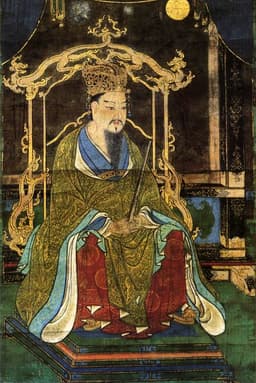
Emperor Kammu
Emperor · Medieval
64.9Total
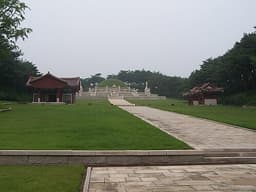
King Uijong of Goryeo
Emperor · Medieval
37.8Total
Basic Information
Born
737
1127
Died
806
1173
Era
Medieval
Medieval
Nationality
Japan
Korea
Occupation
Emperor
Emperor
Civilization
Eastern
Eastern
Score Comparison
Military (10%)
21.2
20.0
Political (20%)
72.0
26.4
Influence (20%)
82.0
47.1
Legacy (20%)
68.0
37.5
Leadership (15%)
72.0
41.5
Strategy (15%)
36.8
45.0
TOTAL
64.9
37.8
Emperor Kammu — Complete Timeline
789 AD
Campaign against the EmishiWar◆ Major
Kammu launched a major military campaign to subdue the Emishi people in northern Honshu. The campaign was initially unsuccessful, with a defeat at the Battle of Koromo River, but later efforts under Sakanoue no Tamuramaro achieved victory.
Military CampaignEmishiExpansion
Impact: national
794 AD
Moved the capital to Heian-kyoPolitical Action
Emperor Kammu moved the imperial capital from Nara to Heian-kyo (modern Kyoto). This relocation was intended to escape the influence of powerful Buddhist monasteries in Nara and marked the beginning of the Heian period.
Capital MoveHeian PeriodJapan
Impact: nationalconstructive
800 AD
Patronage of Buddhist templesCultural
Kammu commissioned the construction of several Buddhist temples in Heian-kyo, including To-ji and Sai-ji. These temples were intended to protect the new capital and promote Buddhism as a state religion.
BuddhismArchitectureReligion
Impact: nationalconstructive
King Uijong of Goryeo — Complete Timeline
1150 AD
Reign of ExtravaganceOther
King Uijong's reign before the coup was characterized by lavish spending on palaces, gardens, and entertainment. He neglected state affairs and surrounded himself with pleasure-seeking courtiers. This extravagance alienated the military and contributed to the coup.
ExtravaganceNeglectCoup Cause
Impact: nationaldestructive
1170 AD
Military Coup of Jeong Jung-buPolitical Action
General Jeong Jung-bu led a military coup against King Uijong's civil-dominated government. The king was deposed and exiled to Geojedo. Many civil officials were killed. This coup ended the civil bureaucracy's supremacy and began a century of military rule in Goryeo.
CoupMilitary RuleJeong Jung-bu
Impact: nationaldestructive
Destruction of Buddhist TemplesCultural
Following the coup, the military regime targeted Buddhist institutions that had been closely tied to the civil bureaucracy. Several temples were destroyed or looted, and monks were persecuted. This marked a decline in state patronage of Buddhism.
BuddhismPersecutionTemple Destruction
Impact: nationaldestructive
1173 AD
Exile and Assassination of King UijongPolitical Action◆ Major
After being deposed, King Uijong was exiled to Geojedo Island. In 1173, fearing a restoration attempt, the military regime sent assassins who killed the former king. His death solidified the military's control and eliminated a potential rallying point for loyalists.
ExileAssassinationMilitary Regime
Impact: nationaltragic
Expert Analysis
Origins
Emperor Kammu (737-806) was born as Yamabe, the son of Prince Shirakabe (later Emperor Konin). His mother, Takano no Niigasa, was of Korean descent from the Baekje royal family. Kammu was not initially expected to become emperor, but after his father ascended the throne in 770, he was named crown prince. He received a classical education in Chinese literature and statecraft, which shaped his vision of centralized imperial rule.
King Uijong (1127-1173) was born Wang Hyeon, the eldest son of King Injong of Goryeo. He became crown prince at age 11 and ascended the throne at 19 in 1146. Uijong was raised in a court dominated by civil officials and Buddhist clergy, receiving a refined education in poetry and Confucian classics. However, he showed little interest in military affairs or governance, preferring artistic pursuits.
Rise to Power
Kammu became emperor in 781 after his father's death. His reign was marked by an immediate break from tradition: in 784, he moved the capital from Nara to Nagaoka, and then in 794 to Heian-kyo (modern Kyoto). This move was intended to escape the political influence of powerful Buddhist monasteries in Nara. Kammu consolidated power by promoting capable officials from outside the traditional aristocratic clans, such as Wake no Kiyomaro.
Uijong's rise was smooth as the eldest son of a stable king. He inherited a civil government dominated by scholar-officials, but his reign quickly became known for extravagance. He spent heavily on palaces and gardens, neglected state affairs, and surrounded himself with favored officials. By the 1160s, military discontent grew as the civil bureaucracy sidelined generals and soldiers. In 1170, General Jeong Jung-bu led a coup that deposed Uijong, ending his 24-year reign.
Leadership & Governance
Kammu's leadership score of 72.0 reflects his decisive governance. He implemented administrative reforms, including the establishment of the Kurodo-dokoro (Chamberlain's Office) to streamline imperial decrees. He also sponsored the compilation of the Shoku Nihongi, a historical chronicle. His military score of 21.2 was low due to failed campaigns against the Emishi, but he focused on consolidating imperial authority rather than expansion.
Uijong's leadership score of 41.5 indicates a weak ruler. He delegated governance to civil officials like Kim Bu-sik, but his lavish spending drained the treasury. His political score of 26.4 shows his inability to balance factions. The coup exposed his failure to maintain military loyalty. After his deposition, he was exiled to Geojedo and assassinated in 1173 when the regime feared his restoration.
Triumph & Tragedy
Kammu's greatest triumph was the founding of Heian-kyo, which remained the imperial capital for over a millennium. His patronage of Buddhism, including temples like To-ji, established a cultural legacy. However, his military campaigns against the Emishi were costly failures; in 789, his general Ki no Kosami was defeated at the Battle of Koromo River.
Uijong's reign saw the flourishing of Goryeo culture, with the compilation of historical works and the development of celadon pottery. But his tragedy was the destruction of the civil government and the rise of a military dictatorship. The coup led to the massacre of civil officials and the destruction of Buddhist temples, erasing much of his era's achievements.
Character & Destiny
Kammu was pragmatic and determined, willing to break with tradition to secure imperial authority. His decision to move the capital twice shows his strategic thinking (score 36.8), though his military strategy was flawed. He died naturally in 806, leaving a stable dynasty.
Uijong was artistic but indecisive, ignoring the growing military threat. His character led to his downfall; he failed to adapt to the changing power dynamics. His assassination in exile marked a tragic end, with his legacy overshadowed by the subsequent military rule.
Legacy
Kammu's influence score of 82.0 and legacy score of 68.0 are high. Heian-kyo became the heart of Japanese culture and politics for centuries. The Heian period's literature, art, and courtly traditions trace their origins to his foundation. The imperial institution was strengthened and endured.
Uijong's legacy score of 37.5 reflects his limited impact. The Goryeo military regime, led by the Choe family, ruled for decades, and Uijong is remembered as a weak king who lost control. His death marked the end of civilian dominance, and his name is often omitted from positive historical narratives.
Conclusion
Emperor Kammu had a far greater impact than King Uijong, with a total score of 64.9 versus 37.8. Kammu's decision to move the capital to Kyoto shaped Japanese history for over a millennium, while Uijong's reign ended in a coup that destabilized Goryeo. Kammu's legacy is foundational; Uijong's is cautionary. The data supports Kammu as the more significant figure by every measure except military, where both were weak. Kammu's political and influence scores (72.0 and 82.0) far exceed Uijong's (26.4 and 47.1), confirming his enduring importance.
Rankings
🥇
Emperor KammuLeader
Mil: 21.2Pol: 72.0Inf: 82.0
64.9
🥈
King Uijong of Goryeo
Mil: 20.0Pol: 26.4Inf: 47.1
37.8
+27.1 behind
How This Comparison Works
Algorithm
Each figure is scored on 6 dimensions (0—100 scale) based on structured historical data: Military (10%), Political (20%), Influence (20%), Legacy (20%), Leadership (15%), Strategy (15%). The weighted total produces the final ranking.
Data Sources
Scores are computed from structured sub-indicators in the database. Scale factors adjust for era (Ancient ×0.85, Modern ×1.0) and civilization size (Eastern ×1.05, Other ×0.80) to account for differences in population and military scale.
Maximum 3 Figures
Comparisons are limited to 2—3 figures to ensure readability and statistical meaningfulness.
Error Margins
±5 points per dimension — Sub-scores are derived from historical records with inherent uncertainty. Two figures within 5 points on a dimension should be considered roughly equivalent in that area.
Total Score Accuracy
±3 points overall — The weighted combination of 6 dimensions produces a total score with approximately ±3 points of uncertainty. Differences of less than 3 points are not statistically significant— the figures are effectively tied.
Known Limitations
- Historical records are incomplete and uneven across civilizations
- Figures from oral-tradition societies may be underrepresented
- Occupation labels can misclassify multi-role figures
- Scores measure capability and impact, not moral character
- Quantitative scoring is a comparison tool, not absolute truth
Capability Radar
Military (10%) — Battles & Warfare
Battles
10
5
Win Rate
10
5
Expansion
10
5
Political (20%) — Governance & Reform
Reform
75
20
Diplomacy
60
20
Economy
65
20
Influence (20%) — Cultural & Global Reach
Cultural
70
15
Global
60
5
Legacy (20%) — Historical Impact
Historical
75
20
Longevity
75
15
Leadership (15%) — Power & Stability
Tenure
70
40
Stability
60
10
Strategy (15%) — Tactics & Innovation
Strategy
10
5
Tactics
10
5
Reform
10
5
Similar Comparisons
Comments & Discussion
No comments yet. Be the first to share your thoughts!