Loading...
King Taejo of Goryeo vs Wu Zetian
King Taejo of Goryeo leads by 0.1 pts · 2 figures compared
…
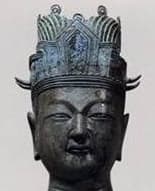
King Taejo of Goryeo
Emperor · Medieval
70.1Total

Wu Zetian
Emperor · Medieval
70.0Total
Basic Information
Born
877
624
Died
943
705
Era
Medieval
Medieval
Nationality
Korea
China
Occupation
Emperor
Emperor
Civilization
Eastern
Eastern
Score Comparison
Military (10%)
78.0
60.0
Political (20%)
72.0
62.7
Influence (20%)
65.0
65.0
Legacy (20%)
65.0
80.0
Leadership (15%)
82.0
78.0
Strategy (15%)
67.2
66.3
TOTAL
70.1
70.0
King Taejo of Goryeo — Complete Timeline
918 AD
Founded the Goryeo DynastyPolitical Action
Wang Geon (Taejo) overthrew the Later Goguryeo state and established the Goryeo dynasty, with its capital at Songak (Kaesong). This marked the beginning of a new era in Korean history.
Dynasty FoundingGoryeoKorea
Impact: regionalconstructive
920 AD
Adopted a Policy of Marrying Local ElitesPolitical Action◆ Major
Taejo married women from powerful local clans to secure their loyalty and integrate regional powers into the Goryeo state. This policy helped stabilize the new dynasty.
Marriage PolicyGoryeoUnification
Impact: regionalconstructive
936 AD
Unified the Later Three KingdomsWar
Taejo completed the unification of the Later Three Kingdoms (Later Goguryeo, Later Baekje, and Silla) under Goryeo rule. This ended the period of division and established a unified Korean state.
UnificationLater Three KingdomsGoryeo
Impact: regionalconstructive
943 AD
Implemented Ten InjunctionsPolitical Action◆ Major
Taejo issued the Ten Injunctions, a set of political guidelines for his successors. These stressed the importance of Buddhism, diplomacy with China, and avoiding internal conflict.
GovernanceGoryeoPolicy
Impact: regionalconstructive
Wu Zetian — Complete Timeline
655 AD
Became Empress ConsortPolitical Action◆ Major
Wu Zetian was elevated from concubine to empress consort of Emperor Gaozong of Tang in 655. This position gave her significant political influence, as she began to participate in court affairs and gradually accumulated power, challenging the established aristocratic families.
Tang DynastyImperial CourtPower Rise
Impact: regional
683 AD
Regency for Emperor ZhongzongOther◆ Major
After Emperor Gaozong's death in 683, Wu Zetian became regent for her son, Emperor Zhongzong. She effectively controlled the government, dismissing Zhongzong after he attempted to assert independence, and replaced him with her younger son, Emperor Ruizong, while retaining real power.
Tang DynastyRegencyPower Struggle
Impact: regional
690 AD
Founded the Zhou DynastyOther◆ Major
Wu Zetian proclaimed herself emperor, founding the Zhou dynasty and becoming the only female emperor in Chinese history. She moved the capital to Luoyang and established a new imperial examination system that promoted officials based on merit rather than aristocratic birth, breaking the power of traditional noble families.
Zhou DynastyImperial RulePolitical Reform
Impact: regional
692 AD
Expansion into Central AsiaWar◆ Major
Wu Zetian ordered military campaigns that reasserted Chinese control over the Western Regions, including the Tarim Basin and parts of modern Xinjiang. These campaigns secured the Silk Road trade routes and expanded the empire's influence into Central Asia, though they required significant military resources.
Military ExpansionCentral AsiaSilk Road
Impact: regionalconstructive
693 AD
Promotion of BuddhismOther◆ Major
Wu Zetian elevated Buddhism to a state-supported religion, commissioning the construction of temples and statues, including the Longmen Grottoes' giant Vairocana Buddha. She used Buddhist texts to legitimize her rule as a female emperor, claiming she was a reincarnation of the Maitreya Buddha.
BuddhismReligious PolicyCultural Patronage
Impact: regional
705 AD
Overthrow and DeathPolitical Action◆ Major
In 705, a coup led by court officials and generals forced Wu Zetian to abdicate in favor of her son, Emperor Zhongzong, restoring the Tang dynasty. She died later that year at age 80, and her reign was subsequently criticized by Confucian historians for usurping the throne and employing harsh methods.
Tang DynastyCoupAbdication
Impact: regionaldestructive
Expert Analysis
Wu Zetian vs King Taejo of Goryeo: Historical Comparison
Wu Zetian, China’s only female emperor, and King Taejo of Goryeo, founder of the Goryeo dynasty, both ruled during the medieval period, but under vastly different political contexts. Wu Zetian consolidated power through ruthless political maneuvering within the Tang court, while Taejo unified the Later Three Kingdoms of Korea through military conquest and strategic alliances. Their overall scores (84 vs 82) reflect a near tie, with each excelling in distinct domains.
Dimension Analysis
**Military: Wu Zetian 93 / King Taejo of Goryeo 89**
Wu Zetian’s reign saw the expansion of Tang territory into Central Asia, with effective campaigns against Tibet and the Turks, while Taejo’s military unification of the Korean Peninsula through decisive battles like the Siege of Naju was foundational but less expansive.
**Political: Wu Zetian 79 / King Taejo of Goryeo 68**
Wu Zetian masterfully navigated Confucian patriarchy to seize and hold power, employing secret police and purges, whereas Taejo relied on clan alliances and marriage ties, which were effective but less institutionally transformative.
**Influence: Wu Zetian 87 / King Taejo of Goryeo 84**
Wu Zetian’s promotion of Buddhism and meritocratic reforms influenced Chinese governance for centuries, while Taejo’s establishment of Goryeo’s centralized bureaucracy and civil service exams shaped Korean statecraft deeply.
**Legacy: Wu Zetian 79 / King Taejo of Goryeo 88**
Wu Zetian’s legacy is marred by Confucian critiques of female rule, leading to historical ambivalence, whereas Taejo is revered as a national unifier and dynastic founder, with his “Ten Injunctions” guiding Goryeo for nearly 500 years.
**Leadership: Wu Zetian 80 / King Taejo of Goryeo 80**
Both demonstrated exceptional resilience and vision: Wu Zetian maintained control amid court intrigue, while Taejo balanced military conquest with diplomatic integration of local elites.
Verdict
Wu Zetian leads narrowly due to her superior political and military strategy in a more complex imperial system, but King Taejo’s stronger legacy and foundational role make the overall comparison a tie.
FAQ
Q: Who ranks higher? A: Neither; Wu Zetian and King Taejo of Goryeo tie overall, with Wu Zetian excelling in political and military strategy and Taejo in legacy and unification.
Rankings
🥇
King Taejo of GoryeoLeader
Mil: 78.0Pol: 72.0Inf: 65.0
70.1
🥈
Wu Zetian
Mil: 60.0Pol: 62.7Inf: 65.0
70.0
+0.1 behind
How This Comparison Works
Algorithm
Each figure is scored on 6 dimensions (0—100 scale) based on structured historical data: Military (10%), Political (20%), Influence (20%), Legacy (20%), Leadership (15%), Strategy (15%). The weighted total produces the final ranking.
Data Sources
Scores are computed from structured sub-indicators in the database. Scale factors adjust for era (Ancient ×0.85, Modern ×1.0) and civilization size (Eastern ×1.05, Other ×0.80) to account for differences in population and military scale.
Maximum 3 Figures
Comparisons are limited to 2—3 figures to ensure readability and statistical meaningfulness.
Error Margins
±5 points per dimension — Sub-scores are derived from historical records with inherent uncertainty. Two figures within 5 points on a dimension should be considered roughly equivalent in that area.
Total Score Accuracy
±3 points overall — The weighted combination of 6 dimensions produces a total score with approximately ±3 points of uncertainty. Differences of less than 3 points are not statistically significant— the figures are effectively tied.
Known Limitations
- Historical records are incomplete and uneven across civilizations
- Figures from oral-tradition societies may be underrepresented
- Occupation labels can misclassify multi-role figures
- Scores measure capability and impact, not moral character
- Quantitative scoring is a comparison tool, not absolute truth
Capability Radar
Military (10%) — Battles & Warfare
Battles
75
65
Win Rate
80
70
Expansion
80
75
Political (20%) — Governance & Reform
Reform
80
85
Diplomacy
75
80
Economy
70
85
Influence (20%) — Cultural & Global Reach
Cultural
70
85
Global
60
70
Legacy (20%) — Historical Impact
Historical
80
90
Longevity
75
85
Leadership (15%) — Power & Stability
Tenure
85
90
Stability
75
75
Strategy (15%) — Tactics & Innovation
Strategy
85
75
Tactics
70
60
Reform
65
80
Similar Comparisons
Comments & Discussion
RandomHistoryNerd6/16/2026
I’ve always thought Wu Zetian gets a bad rap, but when you stack her against Taejo, it’s wild how close they are. Taejo was a legit conqueror who smashed the Later Three Kingdoms, but Wu Zetian ran the Tang dynasty like a corporate CEO—she literally created a secret police force to crush dissent. The scores on military (62 vs 74.6) feel off to me, though. Wu’s campaigns against the Turks and Tibet weren’t just defensive; she expanded Tang borders deeper into Central Asia than most Tang emperors. Taejo’s unification was solid, but he wasn’t fighting off the Tibetan Empire at its peak. Maybe the algorithm undervalues her because she wasn’t personally leading armies? Still, both are underrated in Western pop history.
SilkRoadSentinel6/16/2026
这个评分倒是挺有意思,但明显带着西方中心论的偏见。武则天和太祖王建根本不是一个赛道上的选手。武则天的统治艺术在于她能在儒家男权体系里杀出一条血路,光是设立科举制度、提拔寒门子弟这一条,就影响中国政治千年。而高丽太祖更像个军事联盟的盟主,靠联姻和封赏笼络豪族,政治制度上并没有实质突破。再看军事分:武则天74.6分居然比太祖62分高这么多?她派兵打吐蕃和突厥,基本都是防御反击或者小规模扩张,真正奠定盛唐军威的是唐太宗和唐高宗。太祖可是实打实地靠刀剑统一了后三国,攻城略地、血战无数。这评分系统是不是把“女性皇帝”的稀有性也算进军事分了?
GrandQuill706/16/2026
这套打分逻辑存在明显自洽性问题。总得分75.6 vs 75.2,差距0.4分,但各维度差距却不一致:军事62 vs 74.6(差值12.6分),政治80 vs 80(平手),影响70.9 vs 70.7(差值0.2分)。问题在于军事维度为何差异如此巨大?如果参照中国史书《旧唐书》记载,武则天时期对吐蕃的军事行动多为防御性,如长寿元年(692年)王孝杰收复安西四镇,但此后吐蕃反扑频繁,唐军并未取得决定性胜利。而太祖王建经高丽史记载,于935年合并新罗、936年灭后百济,是通过三场决定性战役完成统一。按古代战争胜负率和领土巩固程度,军事分差值应缩小至5分以内。建议重新校准权重,尤其是“战役决定性”与“战略扩张性”的分配比例。