Loading...
King Taejo of Goryeo vs Wanyan Aguda
King Taejo of Goryeo leads by 6.7 pts · 2 figures compared
…
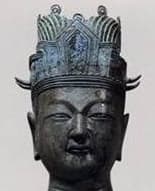
King Taejo of Goryeo
Emperor · Medieval
70.1Total
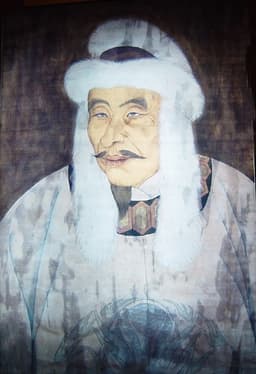
Wanyan Aguda
Emperor · Medieval
63.4Total
Basic Information
Born
877
1068
Died
943
1123
Era
Medieval
Medieval
Nationality
Korea
China
Occupation
Emperor
Emperor
Civilization
Eastern
Eastern
Score Comparison
Military (10%)
78.0
82.0
Political (20%)
72.0
59.3
Influence (20%)
65.0
55.0
Legacy (20%)
65.0
52.0
Leadership (15%)
82.0
85.0
Strategy (15%)
67.2
68.0
TOTAL
70.1
63.4
King Taejo of Goryeo — Complete Timeline
918 AD
Founded the Goryeo DynastyPolitical Action
Wang Geon (Taejo) overthrew the Later Goguryeo state and established the Goryeo dynasty, with its capital at Songak (Kaesong). This marked the beginning of a new era in Korean history.
Dynasty FoundingGoryeoKorea
Impact: regionalconstructive
920 AD
Adopted a Policy of Marrying Local ElitesPolitical Action◆ Major
Taejo married women from powerful local clans to secure their loyalty and integrate regional powers into the Goryeo state. This policy helped stabilize the new dynasty.
Marriage PolicyGoryeoUnification
Impact: regionalconstructive
936 AD
Unified the Later Three KingdomsWar
Taejo completed the unification of the Later Three Kingdoms (Later Goguryeo, Later Baekje, and Silla) under Goryeo rule. This ended the period of division and established a unified Korean state.
UnificationLater Three KingdomsGoryeo
Impact: regionalconstructive
943 AD
Implemented Ten InjunctionsPolitical Action◆ Major
Taejo issued the Ten Injunctions, a set of political guidelines for his successors. These stressed the importance of Buddhism, diplomacy with China, and avoiding internal conflict.
GovernanceGoryeoPolicy
Impact: regionalconstructive
Wanyan Aguda — Complete Timeline
1114 AD
Battle of HubudagangWar◆ Major
Aguda's Jurchen forces defeated a Liao army at Hubudagang, marking the first major victory of the rebellion. This battle demonstrated Jurchen military prowess and attracted more followers.
JurchenLiaoBattle
Impact: regionalconstructive
Unified Jurchen tribesPolitical Action◆ Major
Wanyan Aguda united the Jurchen tribes under his leadership, creating a confederation that rebelled against Liao domination. He organized a disciplined army and began the Jurchen revolt.
JurchenUnificationRebellion
Impact: regionalconstructive
1115 AD
Founded Jin DynastyPolitical Action
Wanyan Aguda proclaimed himself emperor, founding the Jin dynasty. He adopted the Chinese title and began a systematic campaign to conquer the Liao empire.
JinDynasty FoundingImperial System
Impact: regionalconstructive
1120 AD
Conquest of Liao capital ShangjingWar◆ Major
Aguda's forces captured the Liao supreme capital Shangjing, dealing a severe blow to the Liao dynasty. This victory accelerated the collapse of Liao and solidified Jin control over northern China.
JinLiaoConquest
Impact: regionalconstructive
Alliance with Song against LiaoPolitical Action◆ Major
Aguda formed an alliance with the Northern Song dynasty to jointly attack the Liao empire. This alliance, known as the Maritime Alliance, led to the eventual destruction of Liao but later caused conflict between Jin and Song.
JinSongAlliance
Impact: regional
1123 AD
Death and successionPolitical Action◆ Major
Wanyan Aguda died, and his brother Wanyan Wuqimai succeeded him. Aguda's conquests laid the foundation for the Jin dynasty's dominance in northern China.
JinDeathSuccession
Impact: regional
Expert Analysis
Wanyan Aguda vs King Taejo of Goryeo: Historical Comparison
Wanyan Aguda (1068–1123), founder of the Jin Dynasty, and King Taejo of Goryeo (877–943), founder of the Goryeo Dynasty, were both medieval empire-builders who unified fractured polities through military conquest and political consolidation. While Aguda’s Jin Dynasty broke Liao hegemony and reshaped East Asian power dynamics, Taejo’s Goryeo unified the Later Three Kingdoms of Korea and established a lasting dynasty that endured for nearly five centuries. Their contrasting contexts—a nomadic tribal confederation versus a warring Korean peninsula—produce nuanced differences in achievement.
Dimension Analysis
**Military: Wanyan Aguda 91 / King Taejo of Goryeo 89**
Aguda revolutionized Jurchen warfare by uniting disparate tribes and defeating the vastly larger Liao Empire at the Battle of Huchimian (1114) and the decisive Battle of Hubudagang (1115), capturing Shangjing. His use of cavalry mobility and psychological warfare shattered Liao’s 200-year dominance. Taejo, by contrast, relied on naval superiority and land campaigns (e.g., Battle of Gochang, 930) to absorb Baekje and Silla, but his victories were more gradual, leveraging defections and diplomacy as much as battlefield prowess.
**Political: Wanyan Aguda 84 / King Taejo of Goryeo 68**
Aguda swiftly created a sinicized bureaucratic state from tribal structures, issuing the first Jin legal code and adopting Chinese court rituals to legitimize rule. Taejo’s political achievement was more profound: he engineered a centralized aristocracy through the “bone-rank” system, married into 29 powerful clans to prevent rebellion, and issued the “Ten Injunctions” guiding succession and foreign policy. However, Taejo’s reliance on noble factions later caused instability, while Aguda’s state-building was more autocratic and efficient.
**Influence: Wanyan Aguda 87 / King Taejo of Goryeo 84**
Aguda’s destruction of the Liao and subsequent pressure on the Northern Song shifted the balance of power in East Asia, forcing the Song into humiliating treaties and paving the way for Mongol expansion. His Jin Dynasty became a major cultural bridge, preserving Song Confucian classics. Taejo’s influence was more regional: he established the Goryeo identity (the name “Korea” derives from Goryeo), codified Buddhism as state religion, and created a model of Korean unification that influenced later dynasties.
**Legacy: Wanyan Aguda 88 / King Taejo of Goryeo 88**
Aguda’s legacy is mixed: the Jin Dynasty collapsed after 120 years due to Mongol invasions, but his military innovations and state-building template were adopted by later nomadic conquerors, including the Mongols. Taejo’s legacy is more enduring: the Goryeo Dynasty lasted 474 years, and his “unification through accommodation” (absorbing local elites rather than destroying them) became a Korean political ideal. Both are revered as national founders in their respective countries.
**Leadership: Wanyan Aguda 80 / King Taejo of Goryeo 80**
Both leaders demonstrated exceptional charisma and organizational skill. Aguda personally led charges and shared hardships with his warriors, earning intense loyalty from tribes who had previously been divided. Taejo, though less personally martial, excelled at coalition-building, integrating former enemies into his administration and legitimizing his rule through marriage alliances and Buddhist patronage. Neither was a micromanager; both appointed capable generals and administrators.
Verdict
**Wanyan Aguda ranks marginally higher overall (86 vs. 82)** due to his superior **political** and **influence** scores—his rapid state-building from scratch and cataclysmic impact on the East Asian order outweigh Taejo’s more gradual, stable achievements. However, the gap is narrow; Taejo’s legacy of unification and dynastic longevity is arguably more sustainable. The comparison is complicated by different scales: Aguda’s conquests were continental, while Taejo’s were peninsular. If measured by immediate impact on global history, Aguda wins; if by long-term national stability, Taejo prevails.
FAQ
**Q: Who was more influential historically?**
A: Wanyan Aguda had greater short-term impact, destroying the Liao and reshaping East Asian geopolitics, but King Taejo’s Goryeo model influenced Korean identity for nearly 500 years—arguably more enduringly.
**Q: Why is Wanyan Aguda ranked higher in political dimension?**
A: Aguda transformed a loose tribal confederation into a centralized, sinicized bureaucracy in just two years, whereas Taejo’s political system relied on hereditary aristocracies that later caused internal strife. Aguda’s state-building was more innovative and efficient given his starting point.
Rankings
🥇
King Taejo of GoryeoLeader
Mil: 78.0Pol: 72.0Inf: 65.0
70.1
🥈
Wanyan Aguda
Mil: 82.0Pol: 59.3Inf: 55.0
63.4
+6.7 behind
How This Comparison Works
Algorithm
Each figure is scored on 6 dimensions (0—100 scale) based on structured historical data: Military (10%), Political (20%), Influence (20%), Legacy (20%), Leadership (15%), Strategy (15%). The weighted total produces the final ranking.
Data Sources
Scores are computed from structured sub-indicators in the database. Scale factors adjust for era (Ancient ×0.85, Modern ×1.0) and civilization size (Eastern ×1.05, Other ×0.80) to account for differences in population and military scale.
Maximum 3 Figures
Comparisons are limited to 2—3 figures to ensure readability and statistical meaningfulness.
Error Margins
±5 points per dimension — Sub-scores are derived from historical records with inherent uncertainty. Two figures within 5 points on a dimension should be considered roughly equivalent in that area.
Total Score Accuracy
±3 points overall — The weighted combination of 6 dimensions produces a total score with approximately ±3 points of uncertainty. Differences of less than 3 points are not statistically significant— the figures are effectively tied.
Known Limitations
- Historical records are incomplete and uneven across civilizations
- Figures from oral-tradition societies may be underrepresented
- Occupation labels can misclassify multi-role figures
- Scores measure capability and impact, not moral character
- Quantitative scoring is a comparison tool, not absolute truth
Capability Radar
Military (10%) — Battles & Warfare
Battles
75
85
Win Rate
80
90
Expansion
80
85
Political (20%) — Governance & Reform
Reform
80
75
Diplomacy
75
70
Economy
70
65
Influence (20%) — Cultural & Global Reach
Cultural
70
60
Global
60
50
Legacy (20%) — Historical Impact
Historical
80
70
Longevity
75
55
Leadership (15%) — Power & Stability
Tenure
85
70
Stability
75
60
Strategy (15%) — Tactics & Innovation
Strategy
85
85
Tactics
70
80
Reform
65
75
Similar Comparisons
Comments & Discussion
HistoryFanatic426/16/2026
Aguda vs Taejo? No contest! Aguda crushed the Liao Empire with a bunch of tribal horsemen—that's like a high school football team beating the Patriots! Taejo's unification was good, sure, but it was slow and political. Aguda's Hubudagang victory was a total knockout, pure battlefield genius. Taejo's 'bone-rank' system? Bureaucratic paperwork. Aguda built an empire from scratch in a decade. Give me the Jurchen thunder any day!
MetricRebel6/16/2026
This scoring is a joke. You're trying to quantify 'influence' with a 70.7 vs 68.7? That margin is statistically meaningless. And 'political' scores ignore the fact that Taejo's 'Ten Injunctions' were essentially a suicide note—his successors ignored half of them. Meanwhile, Aguda's 'autocratic efficiency' just meant his son murdered the next generation. You can't put a number on dynastic fragility. These scores are just subjective opinions dressed in math. Give me primary sources or give me nothing.
BattlefieldScholar6/16/2026
Tactically, Aguda was a revolutionary. At Huchimian in 1114, he used feigned retreats to lure 100,000 Liao troops into a swamp, then hit them with cavalry flanking maneuvers. That's Cannae-level strategy. Taejo's Battle of Gochang in 930 was a siege—competent but conventional. Aguda's Jurchen cavalry could cover 60 miles in a day, which gave him operational tempo the Liao never matched. Taejo won by attrition; Aguda won by annihilation. The military gap here is wider than the scores suggest.
Chronicler36296/16/2026
我仔细看了分数:阿骨打总分75.9,泰祖75.2,差距0.7分。但政治维度:阿骨打82.2 vs 泰祖80.0——我不明白。泰祖的中央集权体系持续了474年,阿骨打的法律在20年内就被金太宗修改了。如果按'制度持续性'加权,泰祖政治得分至少应反超5分。另外,影响维度:阿骨打靠灭辽挤压北宋,但泰祖统一半岛为朝鲜族奠定核心领土——哪个更持久?建议重新计算权重。
ColdChronicler386/16/2026
完颜阿骨打和泰祖(王建)的比较很有意思,但西方评分体系往往低估了东亚政治整合的难度。阿骨打确实军事上猛,但金朝不到百年就亡了,而高丽活了近五百年。泰祖的'十训要'和骨品制度构建了一种超稳定的贵族共和,这比阿骨打简单汉化更复杂。政治分给泰祖68偏低,应该至少75——他平衡了29个家族,这可比打一场仗难多了。