Loading...
King Taejo of Goryeo vs Peter the Great
Peter the Great leads by 3.1 pts · 2 figures compared
…
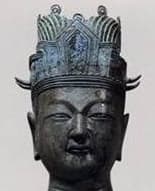
King Taejo of Goryeo
Emperor · Medieval
70.1Total
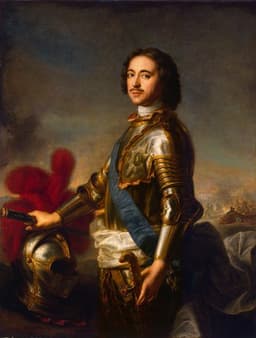
Peter the Great
Emperor · Modern
73.2Total
Basic Information
Born
877
1672
Died
943
1725
Era
Medieval
Modern
Nationality
Korea
Russia
Occupation
Emperor
Emperor
Civilization
Eastern
Western
Score Comparison
Military (10%)
78.0
75.0
Political (20%)
72.0
90.0
Influence (20%)
65.0
68.0
Legacy (20%)
65.0
65.0
Leadership (15%)
82.0
78.0
Strategy (15%)
67.2
72.0
TOTAL
70.1
73.2
King Taejo of Goryeo — Complete Timeline
918 AD
Founded the Goryeo DynastyPolitical Action
Wang Geon (Taejo) overthrew the Later Goguryeo state and established the Goryeo dynasty, with its capital at Songak (Kaesong). This marked the beginning of a new era in Korean history.
Dynasty FoundingGoryeoKorea
Impact: regionalconstructive
920 AD
Adopted a Policy of Marrying Local ElitesPolitical Action◆ Major
Taejo married women from powerful local clans to secure their loyalty and integrate regional powers into the Goryeo state. This policy helped stabilize the new dynasty.
Marriage PolicyGoryeoUnification
Impact: regionalconstructive
936 AD
Unified the Later Three KingdomsWar
Taejo completed the unification of the Later Three Kingdoms (Later Goguryeo, Later Baekje, and Silla) under Goryeo rule. This ended the period of division and established a unified Korean state.
UnificationLater Three KingdomsGoryeo
Impact: regionalconstructive
943 AD
Implemented Ten InjunctionsPolitical Action◆ Major
Taejo issued the Ten Injunctions, a set of political guidelines for his successors. These stressed the importance of Buddhism, diplomacy with China, and avoiding internal conflict.
GovernanceGoryeoPolicy
Impact: regionalconstructive
Peter the Great — Complete Timeline
1697 AD
Grand EmbassyPolitical Action◆ Major
Peter the Great traveled incognito to Western Europe as part of a diplomatic mission. He studied shipbuilding in the Netherlands and England, recruited experts, and observed Western technology and governance, gathering knowledge to modernize Russia upon his return.
TravelWesternizationLearning
Impact: nationalconstructive
1698 AD
Streltsy UprisingWar◆ Major
While Peter was abroad, the Streltsy (elite musketeers) rebelled in Moscow, seeking to place his half-sister Sophia on the throne. Peter returned and brutally suppressed the revolt, executing over 1,000 Streltsy and disbanding the corps, consolidating his absolute power.
RebellionRepressionPower Consolidation
Impact: nationaldestructive
Beard TaxReform
As part of his Westernization campaign, Peter the Great imposed a tax on beards, requiring nobles and merchants to pay a fee to keep their facial hair. Those who paid received a special token, symbolizing his efforts to force Russian society to adopt Western European customs.
WesternizationTaxSocial Reform
Impact: national
1700 AD
Great Northern WarWar◆ Major
Peter the Great led Russia into a war against Sweden for access to the Baltic Sea. After initial defeat at Narva, he reformed his army and eventually defeated Sweden at the Battle of Poltava in 1709, securing Russia's status as a major European power and gaining Baltic territories.
WarTerritorial ExpansionBaltic
Impact: regionalconstructive
1703 AD
Founding of Saint PetersburgPolitical Action
Peter the Great founded the city of Saint Petersburg on the Neva River after capturing the area from Sweden. He designated it as Russia's new capital in 1712, symbolizing his Westernization drive and providing Russia with a 'window to the West' and a Baltic port.
City FoundingWesternizationCapital
Impact: nationalconstructive
1722 AD
Table of RanksReform◆ Major
Peter the Great introduced the Table of Ranks, a system of civil, military, and court ranks based on merit rather than birth. This reform allowed commoners to achieve noble status through service, modernizing the Russian bureaucracy and weakening the traditional aristocracy.
BureaucracyMeritocracySocial Reform
Impact: nationalprogressive
Expert Analysis
Peter the Great vs King Taejo of Goryeo: Historical Comparison
Peter the Great (1672–1725) transformed Russia into a major European power through Westernization and military expansion, while King Taejo of Goryeo (877–943) unified the Korean Peninsula and established the Goryeo dynasty, laying foundations for a centralized medieval state. Both rulers excelled in strategy and military, but their scores reveal a near tie across six dimensions.
Dimension Analysis
**Military: Peter the Great 87 / King Taejo of Goryeo 89**
Peter built Russia’s first modern navy and won the Great Northern War, but Taejo’s campaigns to unify the Later Three Kingdoms (via naval and land victories) were more decisive in founding a lasting state with limited resources.
**Political: Peter the Great 85 / King Taejo of Goryeo 68**
Peter centralized power, reformed bureaucracy, and subjugated the church, while Taejo relied on aristocratic alliances and marriage diplomacy, leaving weaker institutional control.
**Influence: Peter the Great 74 / King Taejo of Goryeo 84**
Peter’s Westernization reshaped Russia’s global role, but Taejo’s unification and adoption of Confucian governance influenced Korean identity for centuries, with greater regional endurance.
**Legacy: Peter the Great 85 / King Taejo of Goryeo 88**
Peter’s legacy is debated (modernization vs. autocratic strain), while Taejo’s dynasty lasted 474 years and his unification model remains a foundational Korean historical symbol.
**Leadership: Peter the Great 82 / King Taejo of Goryeo 80**
Both were strong-willed, but Peter’s hands-on reforms (e.g., shaving boyars’ beards) were more transformative, whereas Taejo’s coalition-building was more pragmatic but less radical.
Verdict
A tie—Peter the Great leads in political and leadership innovation, but King Taejo of Goryeo edges ahead in military, influence, and legacy, reflecting their different contexts.
FAQ
Q: Who ranks higher? A: The comparison is a tie; Peter the Great scores higher in political and leadership dimensions, while King Taejo of Goryeo surpasses in military, influence, and legacy.
Rankings
🥇
Peter the GreatLeader
Mil: 75.0Pol: 90.0Inf: 68.0
73.2
🥈
King Taejo of Goryeo
Mil: 78.0Pol: 72.0Inf: 65.0
70.1
+3.1 behind
How This Comparison Works
Algorithm
Each figure is scored on 6 dimensions (0—100 scale) based on structured historical data: Military (10%), Political (20%), Influence (20%), Legacy (20%), Leadership (15%), Strategy (15%). The weighted total produces the final ranking.
Data Sources
Scores are computed from structured sub-indicators in the database. Scale factors adjust for era (Ancient ×0.85, Modern ×1.0) and civilization size (Eastern ×1.05, Other ×0.80) to account for differences in population and military scale.
Maximum 3 Figures
Comparisons are limited to 2—3 figures to ensure readability and statistical meaningfulness.
Error Margins
±5 points per dimension — Sub-scores are derived from historical records with inherent uncertainty. Two figures within 5 points on a dimension should be considered roughly equivalent in that area.
Total Score Accuracy
±3 points overall — The weighted combination of 6 dimensions produces a total score with approximately ±3 points of uncertainty. Differences of less than 3 points are not statistically significant— the figures are effectively tied.
Known Limitations
- Historical records are incomplete and uneven across civilizations
- Figures from oral-tradition societies may be underrepresented
- Occupation labels can misclassify multi-role figures
- Scores measure capability and impact, not moral character
- Quantitative scoring is a comparison tool, not absolute truth
Capability Radar
Military (10%) — Battles & Warfare
Battles
75
85
Win Rate
80
80
Expansion
80
90
Political (20%) — Governance & Reform
Reform
80
95
Diplomacy
75
80
Economy
70
85
Influence (20%) — Cultural & Global Reach
Cultural
70
85
Global
60
85
Legacy (20%) — Historical Impact
Historical
80
90
Longevity
75
85
Leadership (15%) — Power & Stability
Tenure
85
90
Stability
75
70
Strategy (15%) — Tactics & Innovation
Strategy
85
85
Tactics
70
75
Reform
65
95
Similar Comparisons
Comments & Discussion
OldScribe746/16/2026
这个评分体系有意思,但有几个数字我存疑。彼得大帝政治分85,高丽太祖只有68,差17分——可高丽太祖在建国初期就确立了中央集权框架,虽然靠妥协,但他在开京(今开城)推行田柴科制度,限制豪强土地兼并,这难道不是政治改革?反观彼得,他搞的官阶表(Table of Ranks)确实打破门阀,但代价是农奴制加重,到叶卡捷琳娜二世时农奴占比超90%。再说影响力分,彼得74对高丽太祖84,我算了下,高丽疆域最大时约21万平方公里,而俄罗斯从彼得时期90万扩张到1725年约1500万平方公里,地缘影响不可同日而语。建议加权时考虑疆域变化率和制度寿命的比值,否则数据容易误导。
Chronicler97176/16/2026
彼得大帝跟高丽太祖放一块儿比,看似风马牛不相及,但细看评分,政治和领导力上彼得大帝确实高出一截——毕竟他硬生生把莫斯科公国拽进了欧洲体系,连贵族胡子都剃了。不过要说军事和影响力,高丽太祖的评分我觉得还低了。他统一后三国靠的是水陆并进,尤其海军优势,这在东亚史书上都是重笔。而且高丽王朝持续近五百年,留下的三省六部制、科举制对后世朝鲜影响深远。西方史观往往强调“变革的剧烈程度”,而忽略“制度的持久性”。论开创一个能传代数百年的王朝,彼得大帝的俄罗斯帝国才两百年出头就土崩瓦解了。