Loading...
King Taejo of Goryeo vs Pachacuti
King Taejo of Goryeo leads by 0.7 pts · 2 figures compared
…
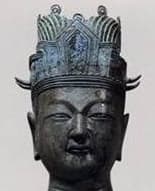
King Taejo of Goryeo
Emperor · Medieval
70.1Total
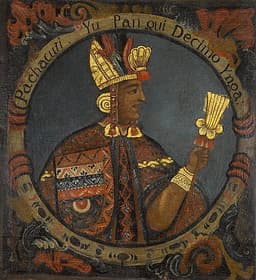
Pachacuti
Emperor · Medieval
69.4Total
Basic Information
Born
877
1418
Died
943
1472
Era
Medieval
Medieval
Nationality
Korea
Inca Empire
Occupation
Emperor
Emperor
Civilization
Eastern
Other
Score Comparison
Military (10%)
78.0
78.5
Political (20%)
72.0
58.1
Influence (20%)
65.0
65.0
Legacy (20%)
65.0
72.0
Leadership (15%)
82.0
78.0
Strategy (15%)
67.2
69.2
TOTAL
70.1
69.4
King Taejo of Goryeo — Complete Timeline
918 AD
Founded the Goryeo DynastyPolitical Action
Wang Geon (Taejo) overthrew the Later Goguryeo state and established the Goryeo dynasty, with its capital at Songak (Kaesong). This marked the beginning of a new era in Korean history.
Dynasty FoundingGoryeoKorea
Impact: regionalconstructive
920 AD
Adopted a Policy of Marrying Local ElitesPolitical Action◆ Major
Taejo married women from powerful local clans to secure their loyalty and integrate regional powers into the Goryeo state. This policy helped stabilize the new dynasty.
Marriage PolicyGoryeoUnification
Impact: regionalconstructive
936 AD
Unified the Later Three KingdomsWar
Taejo completed the unification of the Later Three Kingdoms (Later Goguryeo, Later Baekje, and Silla) under Goryeo rule. This ended the period of division and established a unified Korean state.
UnificationLater Three KingdomsGoryeo
Impact: regionalconstructive
943 AD
Implemented Ten InjunctionsPolitical Action◆ Major
Taejo issued the Ten Injunctions, a set of political guidelines for his successors. These stressed the importance of Buddhism, diplomacy with China, and avoiding internal conflict.
GovernanceGoryeoPolicy
Impact: regionalconstructive
Pachacuti — Complete Timeline
1438 AD
Conquest of the Chanka KingdomWar
Pachacuti led the Inca army to defeat the Chanka, a powerful rival, in a decisive battle near Cusco. This victory secured his position as Sapa Inca and initiated a period of rapid expansion, transforming the Inca from a small kingdom into a vast empire.
ConquestInca ExpansionChanka
Impact: regional
1440 AD
Reconstruction of CuscoCultural◆ Major
Pachacuti rebuilt Cusco as the imperial capital, designing it in the shape of a puma and constructing massive stone structures like Sacsayhuam
Urban PlanningArchitectureInca Empire
Impact: regionalconstructive
1450 AD
Initiation of Machu Picchu's ConstructionCultural◆ Major
Pachacuti ordered the construction of Machu Picchu, a royal estate and ceremonial site high in the Andes. The complex featured sophisticated dry-stone masonry and terraced agriculture, serving as a symbol of Inca engineering and a retreat for the emperor.
ArchitectureRoyal EstateInca Engineering
Impact: regionalconstructive
Expert Analysis
Pachacuti vs King Taejo of Goryeo
### The Mountain and the Peninsula
In the high, thin air of the Andes, a young prince named Cusi Yupanqui watched his father, the Sapa Inca, flee before the advancing Chanka army. The year was 1438, and the very existence of the Inca kingdom hung by a thread. The prince did not flee. He rallied the terrified defenders of Cusco, turned the tide of battle, and, in a single, violent stroke, forged an empire. Half a world away, on the misty, war-torn Korean Peninsula, another young man, Wang Geon, a brilliant naval commander, watched his own lord, the tyrant Gung Ye, descend into madness. In 918, he did not rally a defense; he staged a quiet coup, took the throne, and began a long, patient work of stitching a fractured land back together.
One was a conqueror who broke the world to remake it. The other was a unifier who bent the world to hold it together. Pachacuti of the Incas and Taejo of Goryeo both created nations, but they did so with radically different tools—one driven by the lightning of war, the other by the slow, steady rain of diplomacy.
### Origins
Pachacuti was born into a world of stone and sky. The Incas were a minor tribe in the Cusco Valley, surrounded by powerful neighbors like the Chanka. His father, Viracocha Inca, was a cautious ruler, more inclined to diplomacy than war. Young Cusi Yupanqui grew up in a shadow of vulnerability, where survival depended on strength. This bred a fierce, almost mystical belief in his own destiny. When his father abandoned Cusco, he saw not a retreat, but an opportunity for divine intervention—he claimed the very stones of the battlefield turned into warriors to aid him.
Wang Geon’s world was one of smoke and ink. Born in 877, he was the son of a powerful maritime merchant family in the Songak region. His father had been a key supporter of Gung Ye, who had carved out the state of Later Goguryeo. Wang Geon grew up not in a palace, but on ships and in trading ports, learning the art of negotiation and the value of alliances. His world was not one of divine battles, but of pragmatic deals. Where Pachacuti saw enemies to be crushed, Wang Geon saw rivals to be married.
### Rise to Power
Pachacuti’s rise was a coup d’état on the battlefield. After his stunning victory over the Chanka in 1438, he returned to Cusco not as a prince, but as a living legend. His father, shamed by his own cowardice, was forced into exile. Pachacuti did not just take power; he earned it through a single, decisive act of war. The name he adopted, Pachacuti, means "He Who Shakes the Earth." It was a title of absolute, terrifying power.
Wang Geon’s rise was a quiet revolution. Gung Ye had become a paranoid tyrant, executing his own generals and claiming to be the Buddha. In 918, Wang Geon, seeing the kingdom crumbling, acted. But he did not lead a bloody charge. Instead, his generals secretly offered him the throne. He accepted, but with a show of reluctance. He then immediately issued a proclamation of good governance, promising to restore order. He did not "shake the earth"; he steadied it.
### Leadership & Governance
Pachacuti was a visionary architect of empire. He rebuilt Cusco in the shape of a puma, a sacred animal, beginning in 1440. He organized the empire into four *suyus* (provinces), each ruled by a governor. He imposed a single language, Quechua, and a state religion, the worship of the sun god Inti. His military genius was in logistics: he built a vast network of roads and storehouses that allowed his armies to move faster than any enemy. His strategy was total assimilation—conquered peoples were resettled, their gods subjugated, and their children sent to Cusco to be educated as Incas. He even began construction of Machu Picchu around 1450, a royal estate so remote and perfect that it seemed to touch the sky—a monument to his absolute will.
Taejo was a patient weaver of alliances. He did not impose; he integrated. His key strategy, adopted around 920, was to marry his daughters and sons into the powerful local clans of the conquered territories—the Silla aristocracy, the Later Baekje warlords. He did not destroy their power; he absorbed it. His military campaigns, culminating in the unification of the Later Three Kingdoms in 936, were swift and decisive, but they were always followed by generous terms of surrender. His greatest act of governance was the Ten Injunctions, issued in 943, a political testament for his successors. They did not command worship of a single god; they stressed the importance of Buddhism, warned against civil war, and urged his descendants to never forget the sacrifices of the common people. Where Pachacuti built in stone, Taejo built in bloodlines.
### Triumph & Tragedy
Pachacuti’s triumph was the creation of an empire that stretched from modern-day Colombia to Chile. His tragedy was that he built a system that depended entirely on him. The Inca state was a machine with one driver. After his death in 1472, his son Topa Inca had to reconquer many regions that had rebelled. The system of total control bred deep resentment. When the Spanish arrived, many conquered peoples saw them as liberators from Inca rule. The empire, so perfectly structured, shattered in a few short years.
Taejo’s triumph was a unification that lasted nearly five centuries. His tragedy was more personal. To secure his dynasty, he had to suppress his own ambitions. He died in 943, a relatively peaceful king, but he never saw the full flowering of the civilization he founded. He knew that the alliances he built were fragile, and his Ten Injunctions were a desperate plea for his descendants to be wise.
### Character & Destiny
Pachacuti was a man of fire and iron. He believed he was chosen by the sun god. This gave him immense courage but also immense arrogance. He could not tolerate dissent. His character shaped a destiny of rapid expansion but brittle foundations. He was a creator who could not imagine his creation without him.
Taejo was a man of water and stone. He was patient, pragmatic, and deeply aware of human weakness. He knew that a kingdom built on fear would not last. His character shaped a destiny of slow growth but deep roots. He was a gardener who planted trees under whose shade he knew he would never sit.
### Legacy
Pachacuti’s legacy is the Inca Empire itself—a marvel of engineering, organization, and ambition. His name is synonymous with the golden age of the Andes. Machu Picchu stands as a global icon of human achievement. But his legacy is also a cautionary tale: empires built on conquest alone are fragile.
Taejo’s legacy is the name of Korea itself. "Goryeo" is the root of the modern English word "Korea." His policy of integration through marriage created a unified Korean identity that survived the fall of his own dynasty and the rise of the Joseon dynasty. His Ten Injunctions are still studied as a masterpiece of political philosophy. His legacy is not a single monument, but a nation.
### Conclusion
Standing at the edge of Machu Picchu, one feels the sheer will of a single man who commanded mountains. Standing in the ancient capital of Kaesong, one feels the quiet patience of a man who commanded hearts. Pachacuti built a ladder to the sun; Taejo built a home for a people. One created a wonder; the other created a world. In the end, the question is not which was greater, but which was wiser. The stones of Machu Picchu have outlasted the empire, but the name of Goryeo has outlasted the stone.
Rankings
🥇
King Taejo of GoryeoLeader
Mil: 78.0Pol: 72.0Inf: 65.0
70.1
🥈
Pachacuti
Mil: 78.5Pol: 58.1Inf: 65.0
69.4
+0.7 behind
How This Comparison Works
Algorithm
Each figure is scored on 6 dimensions (0—100 scale) based on structured historical data: Military (10%), Political (20%), Influence (20%), Legacy (20%), Leadership (15%), Strategy (15%). The weighted total produces the final ranking.
Data Sources
Scores are computed from structured sub-indicators in the database. Scale factors adjust for era (Ancient ×0.85, Modern ×1.0) and civilization size (Eastern ×1.05, Other ×0.80) to account for differences in population and military scale.
Maximum 3 Figures
Comparisons are limited to 2—3 figures to ensure readability and statistical meaningfulness.
Error Margins
±5 points per dimension — Sub-scores are derived from historical records with inherent uncertainty. Two figures within 5 points on a dimension should be considered roughly equivalent in that area.
Total Score Accuracy
±3 points overall — The weighted combination of 6 dimensions produces a total score with approximately ±3 points of uncertainty. Differences of less than 3 points are not statistically significant— the figures are effectively tied.
Known Limitations
- Historical records are incomplete and uneven across civilizations
- Figures from oral-tradition societies may be underrepresented
- Occupation labels can misclassify multi-role figures
- Scores measure capability and impact, not moral character
- Quantitative scoring is a comparison tool, not absolute truth
Capability Radar
Military (10%) — Battles & Warfare
Battles
75
85
Win Rate
80
90
Expansion
80
90
Political (20%) — Governance & Reform
Reform
80
92
Diplomacy
75
75
Economy
70
80
Influence (20%) — Cultural & Global Reach
Cultural
70
85
Global
60
65
Legacy (20%) — Historical Impact
Historical
80
80
Longevity
75
70
Leadership (15%) — Power & Stability
Tenure
85
85
Stability
75
82
Strategy (15%) — Tactics & Innovation
Strategy
85
88
Tactics
70
80
Reform
65
85
Similar Comparisons
Comments & Discussion
IncaShock6/16/2026
Pachacuti didn't just win battles—he literally redesigned reality. The guy moved mountains, built Machu Picchu, and turned Cusco into a puma-shaped capital because he could. Taejo unified a divided peninsula? Impressive. But the Incas went from a tiny tribe to ruling 4,000 miles of Andes in one generation. That's not empire-building, that's a supernatural event. Taejo played politics. Pachacuti played god. And he won.