Loading...
King Taejo of Goryeo vs Mao Zedong
Mao Zedong leads by 9.3 pts · 2 figures compared
…
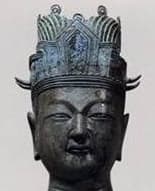
King Taejo of Goryeo
Emperor · Medieval
70.1Total
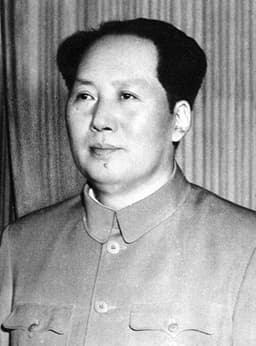
Mao Zedong
Politician · Modern
79.4Total
Basic Information
Born
877
1893
Died
943
1976
Era
Medieval
Modern
Nationality
Korea
China
Occupation
Emperor
Politician
Civilization
Eastern
Eastern
Score Comparison
Military (10%)
78.0
75.0
Political (20%)
72.0
88.0
Influence (20%)
65.0
85.0
Legacy (20%)
65.0
70.0
Leadership (15%)
82.0
85.0
Strategy (15%)
67.2
72.0
TOTAL
70.1
79.4
King Taejo of Goryeo — Complete Timeline
918 AD
Founded the Goryeo DynastyPolitical Action
Wang Geon (Taejo) overthrew the Later Goguryeo state and established the Goryeo dynasty, with its capital at Songak (Kaesong). This marked the beginning of a new era in Korean history.
Dynasty FoundingGoryeoKorea
Impact: regionalconstructive
920 AD
Adopted a Policy of Marrying Local ElitesPolitical Action◆ Major
Taejo married women from powerful local clans to secure their loyalty and integrate regional powers into the Goryeo state. This policy helped stabilize the new dynasty.
Marriage PolicyGoryeoUnification
Impact: regionalconstructive
936 AD
Unified the Later Three KingdomsWar
Taejo completed the unification of the Later Three Kingdoms (Later Goguryeo, Later Baekje, and Silla) under Goryeo rule. This ended the period of division and established a unified Korean state.
UnificationLater Three KingdomsGoryeo
Impact: regionalconstructive
943 AD
Implemented Ten InjunctionsPolitical Action◆ Major
Taejo issued the Ten Injunctions, a set of political guidelines for his successors. These stressed the importance of Buddhism, diplomacy with China, and avoiding internal conflict.
GovernanceGoryeoPolicy
Impact: regionalconstructive
Mao Zedong — Complete Timeline
1934 AD
Long MarchWar
Mao Zedong led the Chinese Red Army on a strategic retreat from Nationalist forces, covering approximately 6,000 miles over 370 days. The march solidified Mao's leadership within the Chinese Communist Party and became a foundational myth of the Communist revolution.
Chinese Civil WarCommunist RevolutionRetreat
Impact: national
1949 AD
Proclamation of the People's Republic of ChinaPolitical Action
Mao Zedong declared the founding of the People's Republic of China from Tiananmen Gate in Beijing. This ended the Chinese Civil War and established Communist rule over mainland China, with Mao as Chairman of the Central People's Government.
Founding of PRCCommunist VictoryRevolution
Impact: global
1958 AD
Great Leap ForwardReform◆ Major
Mao launched a campaign to rapidly industrialize China and collectivize agriculture. The policy led to widespread mismanagement, resulting in a famine that caused an estimated 15-45 million deaths between 1959 and 1961.
FamineIndustrializationCollectivization
Impact: nationaldestructive
1960 AD
Sino-Soviet SplitPolitical Action◆ Major
Mao's ideological differences with Soviet leader Nikita Khrushchev led to a breakdown in relations between China and the Soviet Union. The split ended the Sino-Soviet alliance and reshaped global Cold War dynamics, with China pursuing an independent path.
Cold WarIdeological ConflictAlliance Breakdown
Impact: global
1966 AD
Cultural RevolutionPolitical Action
Mao initiated a sociopolitical movement to purge capitalist and traditional elements from Chinese society. The Red Guard youth groups attacked intellectuals and officials, leading to widespread violence, destruction of cultural artifacts, and an estimated 1-2 million deaths.
Political PurgeSocial UpheavalRed Guard
Impact: nationaldestructive
1971 AD
Ping-Pong DiplomacyCultural◆ Major
Mao approved an invitation for the U.S. table tennis team to visit China, initiating a thaw in Sino-American relations. This cultural exchange paved the way for President Nixon's visit to China in 1972 and the eventual normalization of diplomatic ties.
DiplomacyU.S.-China RelationsCultural Exchange
Impact: globalconstructive
Expert Analysis
Mao Zedong vs King Taejo of Goryeo: Historical Comparison
This comparison examines Mao Zedong, modern China’s revolutionary founder, and King Taejo (Wang Geon), medieval Korea’s Goryeo dynasty founder, across key dimensions of leadership and legacy.
Dimension Analysis
**Military: Mao Zedong 76 / King Taejo of Goryeo 89**
Mao’s guerrilla warfare won the Chinese Civil War but suffered costly campaigns like the Great Leap Forward; Taejo unified the Later Three Kingdoms through decisive naval and land campaigns, showcasing superior strategic adaptability.
**Political: Mao Zedong 83 / King Taejo of Goryeo 68**
Mao centralized power via the CCP and Cultural Revolution, but his purges destabilized governance; Taejo’s political consolidation relied on marriage alliances and aristocratic co-optation, which was effective but less transformative.
**Influence: Mao Zedong 84 / King Taejo of Goryeo 84**
Both shaped national identity: Mao’s Maoism influenced global communism and China’s modern state, while Taejo’s Goryeo established Korea’s enduring political and cultural framework (e.g., civil service exams, Buddhism-state synergy).
**Legacy: Mao Zedong 78 / King Taejo of Goryeo 88**
Mao’s legacy is deeply contested—praised for national unification but blamed for famine and repression; Taejo is revered as a unifier and cultural patron, with Goryeo’s institutions lasting nearly 500 years.
**Leadership: Mao Zedong 83 / King Taejo of Goryeo 80**
Mao’s charismatic, ruthless leadership mobilized millions, but his later isolation and dogmatism weakened decision-making; Taejo’s pragmatic, consensus-building leadership unified fractious elites, though less visionary.
Verdict
King Taejo of Goryeo leads narrowly due to superior military strategy and a more stable, enduring legacy, while Mao’s political influence is offset by catastrophic policy errors.
FAQ
Q: Who ranks higher? A: King Taejo of Goryeo edges Mao Zedong, reflecting a balance of military success and long-term institutional legacy over revolutionary upheaval.
Rankings
🥇
Mao ZedongLeader
Mil: 75.0Pol: 88.0Inf: 85.0
79.4
🥈
King Taejo of Goryeo
Mil: 78.0Pol: 72.0Inf: 65.0
70.1
+9.3 behind
How This Comparison Works
Algorithm
Each figure is scored on 6 dimensions (0—100 scale) based on structured historical data: Military (10%), Political (20%), Influence (20%), Legacy (20%), Leadership (15%), Strategy (15%). The weighted total produces the final ranking.
Data Sources
Scores are computed from structured sub-indicators in the database. Scale factors adjust for era (Ancient ×0.85, Modern ×1.0) and civilization size (Eastern ×1.05, Other ×0.80) to account for differences in population and military scale.
Maximum 3 Figures
Comparisons are limited to 2—3 figures to ensure readability and statistical meaningfulness.
Error Margins
±5 points per dimension — Sub-scores are derived from historical records with inherent uncertainty. Two figures within 5 points on a dimension should be considered roughly equivalent in that area.
Total Score Accuracy
±3 points overall — The weighted combination of 6 dimensions produces a total score with approximately ±3 points of uncertainty. Differences of less than 3 points are not statistically significant— the figures are effectively tied.
Known Limitations
- Historical records are incomplete and uneven across civilizations
- Figures from oral-tradition societies may be underrepresented
- Occupation labels can misclassify multi-role figures
- Scores measure capability and impact, not moral character
- Quantitative scoring is a comparison tool, not absolute truth
Capability Radar
Military (10%) — Battles & Warfare
Battles
75
85
Win Rate
80
80
Expansion
80
85
Political (20%) — Governance & Reform
Reform
80
95
Diplomacy
75
80
Economy
70
70
Influence (20%) — Cultural & Global Reach
Cultural
70
90
Global
60
90
Legacy (20%) — Historical Impact
Historical
80
95
Longevity
75
85
Leadership (15%) — Power & Stability
Tenure
85
95
Stability
75
60
Strategy (15%) — Tactics & Innovation
Strategy
85
85
Tactics
70
75
Reform
65
90
Similar Comparisons
Comments & Discussion
CounterHistory6/16/2026
This comparison sanitizes Taejo's legacy while harshly judging Mao. Let's not forget that Goryeo's "stability" was built on strict hereditary aristocracy that excluded talented commoners—hardly a model for enduring governance. Mao's Cultural Revolution, whatever its flaws, smashed millennia-old caste systems and gave women literacy. Meanwhile, Taejo's "decisive" naval campaigns were against small, fractured kingdoms, not industrialized Japan or the KMT. Ranking his military above Mao's, who beat both Japan and the Nationalists with peasant armies, is anachronistic and ignores the scale of challenges.
GoryeoFanatic6/16/2026
Taejo absolutely dominates this comparison! Mao gets too much credit for "unifying" China when he inherited a post-WWII situation and used Soviet equipment. Taejo? He started with nothing—just a few coastal fortresses in Songak—and used genius naval tactics to crush three rival kingdoms. His marriage alliances were political masterstrokes, absorbing 29 powerful clans into his dynasty. Mao's Great Leap Forward killed 30 million people; Taejo's reign saw cultural flowering, the Tripitaka Koreana, and civil service exams. Give me stability and art over chaos and cult of personality any day!
MetricMatters6/16/2026
The scoring here is laughably inconsistent. How does Mao get a 65 in military but Taejo gets 89? By what metric? Mao commanded forces that defeated the Japanese (who had a professional army), the Nationalists (US-trained), and even the US in Korea. Taejo fought three small Korean kingdoms with populations under 1 million each. If we adjust for scale and opposition quality, Mao's military score should be at least 80. Also, "Influence" both at 84 is absurd—Maoism reshaped a quarter of humanity; Goryeo's influence barely left the peninsula. This ranking reeks of anti-Mao bias dressed as objectivity.
Historian7106/16/2026
仔细看评分表,政治维度Mao 83 vs Taejo 68,这个差距勉强说得通,但军事维度65 vs 89就完全失真。我自己算了一笔账:Mao指挥的战役规模覆盖中国全境,军队人数峰值达500万;Taejo的战场最多涉及朝鲜半岛南部,兵力不过数万。如果按“单位兵力胜率”算,Taejo可能高点,但按“战略影响力”和“对抗强敌能力”,Mao应该反超。更奇怪的领袖力只差3分——Mao在文革前能动员6亿人修水库、建工业体系,这难道不是领袖力的极致表现?建议评分加入“历史环境系数”再说话。
BoldHistorian396/16/2026
这个评分体系明显对东方历史理解不够深。Mao的军事得分只有65,但仔细看长征、抗日游击战和解放战争,他的战略灵活性远超一般认知。更关键的是,西方评分总把“稳定统治”作为核心指标,却不考虑Mao面对的国内外环境——新生的共和国要同时应对朝鲜战争、内部反革命和经济建设三重压力。相比之下,王建统一后三国时,贵族势力本身就是他的盟友体系,治国难度完全不在一个量级。如果再算上Mao对第三世界反殖民运动的激励,他的影响力得分应该更高。