Loading...
Ivan III the Great vs King Sejong the Great
Ivan III the Great leads by 0.4 pts · 2 figures compared
…
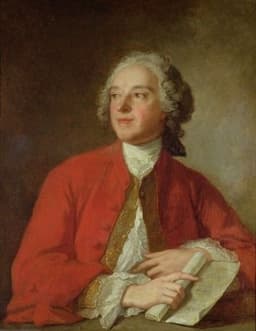
Ivan III the Great
Emperor · Medieval
75.3Total

King Sejong the Great
Emperor · Medieval
74.9Total
Basic Information
Born
1440
1397
Died
1505
1450
Era
Medieval
Medieval
Nationality
Muscovy
Korea
Occupation
Emperor
Emperor
Civilization
Western
Eastern
Score Comparison
Military (10%)
76.0
55.0
Political (20%)
70.0
78.0
Influence (20%)
75.0
85.0
Legacy (20%)
80.0
75.0
Leadership (15%)
78.0
78.0
Strategy (15%)
67.2
60.0
TOTAL
75.3
74.9
Ivan III the Great — Complete Timeline
1472 AD
Marriage to Sophia PalaiologinaPolitical Action◆ Major
Ivan III married Sophia (Zoe) Palaiologina, niece of the last Byzantine emperor. This marriage allowed Ivan to claim succession to the Byzantine Empire, adopt the double-headed eagle as a symbol, and promote Moscow as the Third Rome.
ByzantiumThird RomeMarriage
Impact: regionalconstructive
1478 AD
Annexation of NovgorodWar◆ Major
Ivan III conquered the Novgorod Republic after a series of campaigns. He abolished the veche (assembly) and removed the veche bell, incorporating Novgorod's vast territories into the Grand Principality of Moscow.
NovgorodAnnexationMoscow
Impact: regional
1480 AD
Great Stand on the Ugra RiverWar
Ivan III faced the Mongol army of Khan Akhmat across the Ugra River. After weeks of stalemate, the Mongols withdrew without battle. This event ended 240 years of Mongol suzerainty over Russia.
Golden HordeIndependenceUgra
Impact: regional
1497 AD
Issued the Sudebnik of 1497Reform◆ Major
Ivan III promulgated a new legal code, the Sudebnik, which standardized laws across the Russian lands. It restricted peasant mobility by limiting the time for transfer between landowners, a step toward serfdom.
Legal CodeSerfdomReform
Impact: national
1500 AD
War with the Grand Duchy of LithuaniaWar◆ Major
Ivan III launched a war against Lithuania, capturing the cities of Bryansk, Dorogobuzh, and Putivl. The war ended with the Truce of 1503, which ceded significant territories to Moscow.
LithuaniaTerritorial ExpansionWar
Impact: regional
King Sejong the Great — Complete Timeline
1441 AD
Development of the Cheugugi (Rain Gauge)Invention◆ Major
Sejong's court invented the cheugugi, the world's first standardized rain gauge, to improve agricultural planning and tax assessment. This scientific instrument was distributed across the kingdom, enabling systematic weather data collection and enhancing state capacity to manage crop yields.
Scientific InstrumentAgricultureInnovation
Impact: nationalconstructive
1443 AD
Creation of Hangul (Hunminjeongeum)Invention
King Sejong oversaw the creation of Hangul, the Korean alphabet, promulgated in 1446 as the Hunminjeongeum. The script was designed to be easily learned by commoners, dramatically increasing literacy rates and fostering a distinct Korean cultural identity, separate from Chinese characters.
AlphabetLiteracyCultural Identity
Impact: nationalconstructive
1446 AD
Promulgation of the Gyeongguk Daejeon (National Code)Reform◆ Major
Sejong initiated the compilation of the Gyeongguk Daejeon, a comprehensive legal code that systematized Joseon's government and laws. Although completed after his death, it became the foundational legal document of the dynasty, centralizing royal authority and standardizing administration.
Legal ReformGovernanceJoseon Dynasty
Impact: nationalconstructive
Expert Analysis
Origins
Ivan III Vasilyevich, born in 1440 in Moscow, was the son of Grand Prince Vasily II of Moscow. His early years were shaped by the ongoing civil war within the Muscovite principality and the dominance of the Mongol Golden Horde. Ivan received a traditional education in Orthodox Christianity and statecraft, learning to navigate the complex politics of tribute and alliance. His father's struggles instilled in him a cautious but determined approach to power.
King Sejong the Great, born in 1397 in Hanyang (modern Seoul), was the third son of King Taejong of Joseon. Unlike Ivan, Sejong was not the heir apparent, but his intellectual brilliance led his father to appoint him as crown prince. He received a rigorous Confucian education, studying classics, history, and science. His early exposure to scholarly debates and administrative affairs shaped his vision for a well-ordered society.
Rise to Power
Ivan III became Grand Prince of Moscow in 1462 upon his father's death. He inherited a principality that had grown in strength but still paid tribute to the Great Horde. His first major challenge was to assert control over neighboring Russian principalities, particularly Tver and Novgorod. In 1471, he defeated Novgorod at the Battle of Shelon, and by 1478, he fully annexed the Novgorod Republic, abolishing its veche (assembly). The climax of his rise was the Great Stand on the Ugra River in 1480, where he faced Khan Akhmat. After weeks of stalemate, the Mongols withdrew without battle, effectively ending Mongol suzerainty over Russia. This event marked Ivan as the gatherer of Russian lands and a sovereign ruler.
Sejong ascended the throne in 1418 at age 21, after his older brother was deposed for misconduct. His father Taejong, a former king, initially held real power but gradually ceded authority to Sejong. Sejong's early reign focused on consolidating Confucian governance and strengthening the bureaucracy. He surrounded himself with talented scholars from the Hall of Worthies (Jiphyeonjeon), a research institute he established. His first major initiative was the creation of Hangul in 1443, promulgated in 1446, which aimed to increase literacy among commoners. This move, however, faced opposition from the yangban aristocracy who saw it as a threat to their monopoly on learning.
Leadership & Governance
Ivan III ruled as an autocrat, centralizing power in Moscow. He introduced the Sudebnik of 1497, a legal code that standardized laws and restricted peasant mobility, laying the groundwork for serfdom. He also adopted the title of 'Tsar' and used the double-headed eagle as a symbol, asserting continuity with the Byzantine Empire. His marriage to Sophia Palaiologina in 1472 allowed him to claim Byzantine heritage and legitimize his authority. Ivan's governance was pragmatic: he negotiated with the Crimean Khanate to secure his southern borders while expanding west against Lithuania. He scored 70.0 in political acumen, reflecting his ability to manipulate alliances and suppress rivals.
Sejong's governance was rooted in Confucian principles, emphasizing education, law, and science. He oversaw the compilation of the Gyeongguk Daejeon (National Code), completed after his death, which systematized Joseon's administration. He promoted agricultural innovation, distributing manuals on farming techniques and ordering the creation of the cheugugi (rain gauge) to improve tax assessment. Sejong also reformed the civil service examination system, making it more meritocratic. His political score of 78.0 reflects his ability to implement reforms despite aristocratic resistance. Unlike Ivan, Sejong's leadership was consultative; he relied on scholarly advisors and public debate.
Triumph & Tragedy
Ivan III's greatest triumph was ending Mongol rule and unifying much of northern Russia. By 1503, he had expanded Muscovy's territory from 400,000 to 2 million square kilometers. His military score of 76.0 reflects successful campaigns against Novgorod, Tver, and Lithuania. However, his failures include the brutal suppression of Novgorod's independence, which involved mass deportations and executions. His legal code also exacerbated peasant bondage, a tragedy for the common people. Additionally, his war with Lithuania (1500-1503) ended with modest gains, and he failed to secure a Baltic port.
Sejong's greatest triumph is the creation of Hangul, which remains the writing system of Korea today. His advancements in science—rain gauges, sundials, and water clocks—and his support for medical texts (e.g., Dongui Bogam) had lasting impact. He scored 85.0 in influence, the highest of any category. Yet his tragedy lies in the opposition to Hangul; it was suppressed after his death by the elite and only revived in the 20th century. His military score of 55.0 is low, reflecting his focus on defense rather than conquest. He did not expand Korea's borders significantly, and his northern campaigns against the Jurchens were limited.
Character & Destiny
Ivan III was cautious, calculating, and ruthless. His decision to face the Mongols at the Ugra River without engaging in battle showed strategic patience. He was also suspicious of rivals, exiling his own brothers to prevent rebellion. His character shaped a destiny of centralization and autocracy, setting the stage for Russia's emergence as a major power. Historical assessments note his 'gathering of the Russian lands' as a foundational achievement, but his methods were harsh.
Sejong was intellectual, benevolent, and persistent. He personally studied phonetics and linguistics to create Hangul, and he insisted on its practicality. His character fostered innovation and cultural flourishing, but his reliance on scholar-officials sometimes slowed decision-making. His destiny was to be remembered as the epitome of a sage-king in Korean history, though his policies on serfdom and class structure were less progressive. His leadership score of 78.0 matches Ivan, but his strategy score of 60.0 is lower, indicating a preference for gradual reform over bold action.
Legacy
Ivan III's legacy is immense: he laid the foundations for the Russian Tsardom, centralized the state, and ended foreign domination. His territorial acquisitions and legal code influenced Ivan the Terrible and subsequent rulers. The double-headed eagle and the title 'Tsar' persisted until 1917. His total score of 75.3 reflects a transformative impact on Russia's political geography and identity.
Sejong's legacy is equally profound in the cultural and scientific realms. Hangul is celebrated as one of the most scientific writing systems, and his patronage of science led to inventions like the rain gauge. The Gyeongguk Daejeon codified Joseon governance for centuries. His total score of 74.9 is close, but his influence score of 85.0 surpasses Ivan's 75.0. However, his political and military scores are lower, reflecting a narrower scope of power.
Conclusion
While both figures reshaped their nations, Ivan III's impact was more fundamental to Russia's survival and rise as a great power. He scored 75.3 overall, slightly higher than Sejong's 74.9. Ivan's military and political achievements—ending Mongol rule, expanding territory, and centralizing authority—were necessary for Russia to exist as an independent state. Sejong's contributions, though culturally and scientifically significant, did not alter Korea's geopolitical position as a tributary state. Ivan's legacy of autocratic centralization defined Russia for centuries, whereas Sejong's Hangul faced suppression until modern times. Therefore, Ivan III the Great had a greater overall impact on history.
Rankings
🥇
Ivan III the GreatLeader
Mil: 76.0Pol: 70.0Inf: 75.0
75.3
🥈
King Sejong the Great
Mil: 55.0Pol: 78.0Inf: 85.0
74.9
+0.4 behind
How This Comparison Works
Algorithm
Each figure is scored on 6 dimensions (0—100 scale) based on structured historical data: Military (10%), Political (20%), Influence (20%), Legacy (20%), Leadership (15%), Strategy (15%). The weighted total produces the final ranking.
Data Sources
Scores are computed from structured sub-indicators in the database. Scale factors adjust for era (Ancient ×0.85, Modern ×1.0) and civilization size (Eastern ×1.05, Other ×0.80) to account for differences in population and military scale.
Maximum 3 Figures
Comparisons are limited to 2—3 figures to ensure readability and statistical meaningfulness.
Error Margins
±5 points per dimension — Sub-scores are derived from historical records with inherent uncertainty. Two figures within 5 points on a dimension should be considered roughly equivalent in that area.
Total Score Accuracy
±3 points overall — The weighted combination of 6 dimensions produces a total score with approximately ±3 points of uncertainty. Differences of less than 3 points are not statistically significant— the figures are effectively tied.
Known Limitations
- Historical records are incomplete and uneven across civilizations
- Figures from oral-tradition societies may be underrepresented
- Occupation labels can misclassify multi-role figures
- Scores measure capability and impact, not moral character
- Quantitative scoring is a comparison tool, not absolute truth
Capability Radar
Military (10%) — Battles & Warfare
Battles
75
30
Win Rate
80
40
Expansion
85
20
Political (20%) — Governance & Reform
Reform
80
90
Diplomacy
85
70
Economy
70
85
Influence (20%) — Cultural & Global Reach
Cultural
70
95
Global
70
85
Legacy (20%) — Historical Impact
Historical
85
90
Longevity
80
95
Leadership (15%) — Power & Stability
Tenure
85
80
Stability
75
85
Strategy (15%) — Tactics & Innovation
Strategy
85
40
Tactics
70
35
Reform
65
50
Similar Comparisons
Comments & Discussion
No comments yet. Be the first to share your thoughts!