Loading...
King Jinheung vs Maximinus Thrax
King Jinheung leads by 16.9 pts · 2 figures compared
…
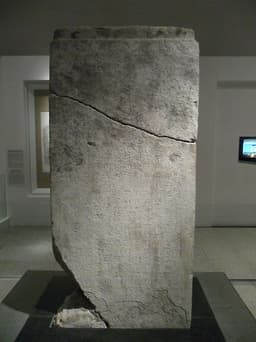
King Jinheung
Emperor · Ancient
57.9Total
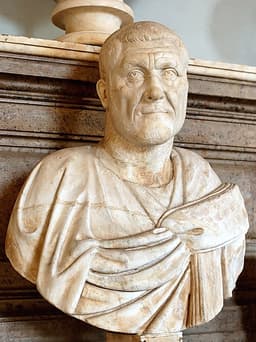
Maximinus Thrax
Emperor · Ancient
41.0Total
Basic Information
Born
-526
173
Died
—
238
Era
Ancient
Ancient
Nationality
Korea
Roman Empire
Occupation
Emperor
Emperor
Civilization
Eastern
Western
Score Comparison
Military (10%)
63.3
45.0
Political (20%)
45.0
26.4
Influence (20%)
57.2
47.9
Legacy (20%)
52.0
38.3
Leadership (15%)
79.8
33.6
Strategy (15%)
55.0
60.0
TOTAL
57.9
41.0
King Jinheung — Complete Timeline
540 AD
Created the HwarangReform
Jinheung formally organized the Hwarang, an elite youth corps that combined military training with cultural and spiritual education. The Hwarang became a key institution in Silla's unification of Korea.
HwarangMilitarySilla
Impact: regionalconstructive
Ascended to the Throne of SillaPolitical Action◆ Major
Jinheung became king of Silla, one of the Three Kingdoms of Korea. His reign marked a period of significant territorial expansion and cultural development.
AccessionSillaKorea
Impact: regional
550 AD
Promoted BuddhismCultural◆ Major
Jinheung actively promoted Buddhism as a state religion, building temples and supporting monks. This helped unify the kingdom and fostered cultural exchange with China.
BuddhismReligionSilla
Impact: regionalconstructive
553 AD
Expanded into the Han River ValleyWar◆ Major
Jinheung captured the Han River valley from Baekje, gaining control of a strategic region with access to China. This victory significantly strengthened Silla's position.
ExpansionHan RiverSilla
Impact: regional
562 AD
Conquered the Gaya ConfederacyWar◆ Major
Jinheung's forces conquered the Gaya Confederacy, a group of city-states in southern Korea. This annexation expanded Silla's territory and resources.
ConquestGayaSilla
Impact: regional
Maximinus Thrax — Complete Timeline
235 AD
Campaign against the AlemanniWar◆ Major
Maximinus led a campaign against the Alemanni tribe in Germania. He defeated them in battle and drove them back across the Rhine. He then devastated their territory, earning the title 'Germanicus Maximus' from the Senate.
Germanic WarsRhine FrontierMilitary Victory
Impact: regional
Accession as EmperorPolitical Action
Maximinus was proclaimed emperor by the Pannonian legions after the assassination of Severus Alexander. He was the first emperor to rise from the ranks of the army without any senatorial background, marking a shift in imperial power dynamics.
Imperial AccessionBarracks EmperorMilitary Coup
Impact: global
238 AD
Siege of AquileiaWar◆ Major
Maximinus marched on Italy to suppress a rebellion led by the Senate and the Gordians. He besieged the city of Aquileia, which resisted his army. The siege dragged on, and Maximinus's troops grew discontented with the lack of supplies and progress.
Civil WarSiegeItaly
Impact: regionaldestructive
Assassination by His Own TroopsPolitical Action◆ Major
Maximinus was assassinated in his tent by soldiers of the Legio II Parthica during the siege of Aquileia. His death ended his three-year reign. The Praetorian Guard and the Senate then recognized the new emperors Pupienus and Balbinus.
AssassinationMilitary MutinyEnd of Reign
Impact: nationaltragic
Expert Analysis
Origins
King Jinheung was born around 534 AD into the royal Kim clan of Silla, one of the Three Kingdoms of Korea. His father, King Beopheung, had already established Buddhism as the state religion. Jinheung ascended the throne as a child (540 AD) and was initially guided by regents, but he quickly asserted his authority. His formative years were shaped by the aristocratic culture of Silla and the constant threat from neighboring kingdoms Baekje and Goguryeo.
Maximinus Thrax was born around 173 AD in Thrace (modern Bulgaria) to a Gothic father and an Alanic mother, according to the unreliable *Historia Augusta*. He was a commoner of immense physical stature—said to stand over 8 feet tall (likely exaggerated). He joined the Roman army as a recruit and rose through the ranks due to his strength and military prowess. His early career saw him serve under Emperor Septimius Severus and later under Severus Alexander, commanding legions in the east.
Rise to Power
Jinheung became king of Silla at age 7 upon his father's death in 540 AD. The early years of his reign were dominated by the Gaya Confederacy's influence, but by 551 AD, he had reached adulthood and began an aggressive expansion. His first major move was the conquest of the Gaya Confederacy (532-562 AD), which added fertile lands and manpower to Silla. In 553 AD, he seized the Han River valley from Baekje, a strategic victory that gave Silla direct access to China and its trade routes. This conquest was achieved through a combination of military force and diplomatic maneuvering, including an alliance with Goguryeo.
Maximinus Thrax rose to power through military coup. In 235 AD, Emperor Severus Alexander was assassinated by his own troops during a campaign against Germanic tribes. The Pannonian legions, angry at Alexander's perceived weakness, proclaimed Maximinus as emperor. He was the first 'barracks emperor'—a man of low birth who became ruler solely through military acclamation. His rise bypassed the Senate, which never accepted him, setting a precedent for the Crisis of the Third Century.
Leadership & Governance
Jinheung ruled Silla for 56 years (540-576 AD), a period of stability and growth. He centralized royal authority by creating the Hwarang (Flower Knights) around 540 AD—an elite youth corps that combined military training with Confucian and Buddhist ethics. This institution fostered loyalty to the crown and produced many of Silla's future leaders. He also promoted Buddhism, building temples like Hwangnyongsa (553 AD) and sponsoring monks, which helped unify the kingdom culturally. His governance was marked by strategic marriages and alliances, but he maintained firm control over the aristocracy.
Maximinus Thrax reigned only three years (235-238 AD) and never set foot in Rome. He governed from the frontier, focusing entirely on military campaigns. He doubled soldiers' pay and funded them through confiscations of senatorial property and temple treasures, alienating the elite. His rule was autocratic and brutal: he executed suspected conspirators without trial. He failed to engage with the Senate or the urban populace, relying solely on the army's loyalty. This narrow base proved fatal when the Senate revolted in 238 AD.
Triumph & Tragedy
Jinheung's greatest triumph was the territorial expansion of Silla. By conquering the Gaya Confederacy and the Han River valley, he doubled Silla's territory and secured its dominance over the Korean peninsula. His promotion of Buddhism and creation of the Hwarang left a lasting cultural legacy. However, his later years saw a decline: some conquered Gaya states rebelled, and Silla faced renewed pressure from Baekje. He also failed to fully subjugate Goguryeo, leaving the Three Kingdoms stalemate unresolved.
Maximinus's triumph was his successful campaign against the Alemanni in 235-236 AD, where he defeated them and ravaged their lands, earning the title *Germanicus Maximus*. He also campaigned against the Sarmatians and Dacians, securing the Danube frontier. His tragedy was his inability to govern: his heavy taxation and confiscations sparked a revolt in Africa in 238 AD, leading the Senate to declare him a public enemy. His march on Italy ended in the failed Siege of Aquileia, where his own troops, demoralized by hunger and disease, assassinated him in his tent. His reign was a precursor to the military anarchy that followed.
Character & Destiny
Jinheung was a calculated and patient ruler, willing to use both diplomacy and war. He invested in long-term institutions like the Hwarang, reflecting a strategic mind. His religious patronage suggests a desire for cultural unity. However, his later years showed complacency: he failed to maintain momentum against Goguryeo.
Maximinus was a product of the army: physically imposing, brave in battle, but politically inept. He trusted only soldiers and despised the Senate. His character—brutal, suspicious, and uncompromising—made him unable to build the alliances necessary for stable rule. His destiny was sealed by his failure to legitimize his rule beyond the military.
Legacy
Jinheung's legacy is profound. The Hwarang became a symbol of Korean chivalry and influenced later martial traditions. His territorial gains laid the foundation for Silla's eventual unification of Korea under King Munmu in 668 AD. Buddhism flourished due to his patronage, shaping Korean culture for centuries. He is remembered as one of Silla's greatest kings, with a total score of 57.9 (military 63.3, political 45.0, influence 57.2, legacy 52.0, leadership 79.8, strategy 55.0).
Maximinus Thrax left no positive legacy. His brief reign accelerated the Crisis of the Third Century, demonstrating that any general could claim the throne with army support. He is remembered as a brutal usurper who failed to govern. His scores reflect this: total 41.0 (military 45.0, political 26.4, influence 47.9, legacy 38.3, leadership 33.6, strategy 60.0). The only area where he slightly outperforms Jinheung is strategy (60 vs 55), due to his effective frontier campaigns.
Conclusion
King Jinheung had far greater impact than Maximinus Thrax. While both were military leaders, Jinheung built a state that lasted centuries, while Maximinus merely accelerated Rome's decline. Jinheung's total score of 57.9 decisively beats Maximinus's 41.0. His leadership (79.8 vs 33.6) and political skills (45.0 vs 26.4) were superior. Maximinus's strategic score (60.0) cannot compensate for his failures in governance and legacy. Jinheung's creation of the Hwarang and territorial expansion shaped Korean history; Maximinus's reign only demonstrated the fragility of imperial power. In the contest between a builder and a destroyer, the builder wins.
Rankings
🥇
King JinheungLeader
Mil: 63.3Pol: 45.0Inf: 57.2
57.9
🥈
Maximinus Thrax
Mil: 45.0Pol: 26.4Inf: 47.9
41.0
+16.9 behind
How This Comparison Works
Algorithm
Each figure is scored on 6 dimensions (0—100 scale) based on structured historical data: Military (10%), Political (20%), Influence (20%), Legacy (20%), Leadership (15%), Strategy (15%). The weighted total produces the final ranking.
Data Sources
Scores are computed from structured sub-indicators in the database. Scale factors adjust for era (Ancient ×0.85, Modern ×1.0) and civilization size (Eastern ×1.05, Other ×0.80) to account for differences in population and military scale.
Maximum 3 Figures
Comparisons are limited to 2—3 figures to ensure readability and statistical meaningfulness.
Error Margins
±5 points per dimension — Sub-scores are derived from historical records with inherent uncertainty. Two figures within 5 points on a dimension should be considered roughly equivalent in that area.
Total Score Accuracy
±3 points overall — The weighted combination of 6 dimensions produces a total score with approximately ±3 points of uncertainty. Differences of less than 3 points are not statistically significant— the figures are effectively tied.
Known Limitations
- Historical records are incomplete and uneven across civilizations
- Figures from oral-tradition societies may be underrepresented
- Occupation labels can misclassify multi-role figures
- Scores measure capability and impact, not moral character
- Quantitative scoring is a comparison tool, not absolute truth
Capability Radar
Military (10%) — Battles & Warfare
Battles
55
55
Win Rate
60
50
Expansion
75
35
Political (20%) — Governance & Reform
Reform
70
15
Diplomacy
65
20
Economy
60
15
Influence (20%) — Cultural & Global Reach
Cultural
65
20
Global
40
25
Legacy (20%) — Historical Impact
Historical
70
30
Longevity
60
20
Leadership (15%) — Power & Stability
Tenure
80
20
Stability
70
10
Strategy (15%) — Tactics & Innovation
Strategy
65
40
Tactics
50
45
Reform
70
30
Similar Comparisons
Comments & Discussion
No comments yet. Be the first to share your thoughts!