Loading...
Maximinus Thrax vs Zeno
Zeno leads by 5.2 pts · 2 figures compared
…
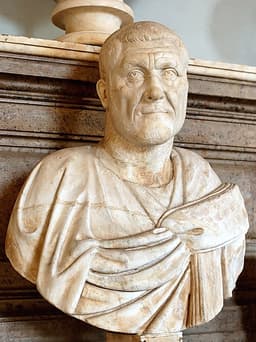
Maximinus Thrax
Emperor · Ancient
41.0Total

Zeno
Emperor · Ancient
46.2Total
Basic Information
Born
173
425
Died
238
491
Era
Ancient
Ancient
Nationality
Roman Empire
Byzantine Empire
Occupation
Emperor
Emperor
Civilization
Western
Western
Score Comparison
Military (10%)
45.0
50.0
Political (20%)
26.4
35.1
Influence (20%)
47.9
51.0
Legacy (20%)
38.3
43.3
Leadership (15%)
33.6
58.8
Strategy (15%)
60.0
35.7
TOTAL
41.0
46.2
Maximinus Thrax — Complete Timeline
235 AD
Campaign against the AlemanniWar◆ Major
Maximinus led a campaign against the Alemanni tribe in Germania. He defeated them in battle and drove them back across the Rhine. He then devastated their territory, earning the title 'Germanicus Maximus' from the Senate.
Germanic WarsRhine FrontierMilitary Victory
Impact: regional
Accession as EmperorPolitical Action
Maximinus was proclaimed emperor by the Pannonian legions after the assassination of Severus Alexander. He was the first emperor to rise from the ranks of the army without any senatorial background, marking a shift in imperial power dynamics.
Imperial AccessionBarracks EmperorMilitary Coup
Impact: global
238 AD
Siege of AquileiaWar◆ Major
Maximinus marched on Italy to suppress a rebellion led by the Senate and the Gordians. He besieged the city of Aquileia, which resisted his army. The siege dragged on, and Maximinus's troops grew discontented with the lack of supplies and progress.
Civil WarSiegeItaly
Impact: regionaldestructive
Assassination by His Own TroopsPolitical Action◆ Major
Maximinus was assassinated in his tent by soldiers of the Legio II Parthica during the siege of Aquileia. His death ended his three-year reign. The Praetorian Guard and the Senate then recognized the new emperors Pupienus and Balbinus.
AssassinationMilitary MutinyEnd of Reign
Impact: nationaltragic
Zeno — Complete Timeline
476 AD
Failed to prevent the fall of the Western Roman EmpireWar
During Zeno's reign, the Western Roman Emperor Romulus Augustulus was deposed by Odoacer. Zeno recognized Odoacer as patrician but refused to recognize a new Western emperor, effectively accepting the end of the Western Roman Empire as a separate entity.
Fall of RomeLate AntiquityPolitical Change
Impact: globaltragic
Ended the reign of BasiliscusPolitical Action◆ Major
Zeno, who had been forced to flee Constantinople by the usurper Basiliscus, returned with an army of Isaurians and regained the throne. Basiliscus and his family were captured and executed, restoring Zeno's rule.
UsurpationCivil WarByzantine Empire
Impact: national
482 AD
Issued the HenotikonPolitical Action◆ Major
Emperor Zeno issued the Henotikon, an edict intended to reconcile the Chalcedonian and Miaphysite factions within the Christian church. The edict attempted to find a compromise but ultimately failed to heal the schism, alienating both sides and causing the Acacian Schism with the Papacy.
Religious PolicyChurch SchismByzantine Empire
Impact: regional
488 AD
Negotiated with Theodoric the GreatPolitical Action◆ Major
Zeno commissioned the Ostrogothic king Theodoric to invade Italy and overthrow the barbarian ruler Odoacer. This agreement removed a potential threat to the Eastern Empire and established Theodoric as the ruler of Italy, nominally as Zeno's viceroy.
Barbarian KingdomsOstrogothsItaly
Impact: regional
Expert Analysis
Origins
Maximinus Thrax, born around 173 AD in Thrace (modern-day Bulgaria), came from a humble background. His father was a Gothic or Alanic herdsman, and his mother was an Alanic woman. He joined the Roman army as a common soldier and rose through the ranks due to his immense physical strength and stature—ancient sources claim he stood over 8 feet tall. He served under Emperor Septimius Severus and later under Caracalla, earning a reputation as a fearsome warrior.
Zeno, born around 425 AD in Isauria (modern-day southern Turkey), was originally named Tarasicodissa. He hailed from a region known for its rugged mountaineers. His father was a local Isaurian chieftain, and Zeno himself became a commander of the Isaurian guard. He married Ariadne, daughter of Emperor Leo I, which elevated his status. He adopted the Greek name Zeno upon entering imperial politics.
Rise to Power
Maximinus's rise was meteoric. In 235 AD, during a campaign against the Germanic tribes, Emperor Severus Alexander was assassinated by his own troops. The Pannonian legions, impressed by Maximinus's military prowess and his physical might, proclaimed him emperor. He was the first emperor to rise from the ranks of the common soldiery, bypassing the senatorial class entirely. His accession marked the beginning of the Crisis of the Third Century.
Zeno's path to power was more circuitous. He became a trusted general under Emperor Leo I, who relied on Isaurian troops to balance the Germanic military influence. In 466 AD, Zeno helped Leo suppress a revolt by the Alan magister militum Ardabur. He was appointed magister militum per Orientem and later consul. After Leo's death in 474 AD, Zeno's son Leo II became emperor, but the young boy died within months. Zeno then assumed the throne, though his position was precarious due to opposition from the Senate and the Germanic general Aspar.
Leadership & Governance
Maximinus's leadership was purely military. He spent his entire reign (235-238 AD) on campaign, primarily against the Alemanni and the Dacians. He demanded high taxes from the senatorial class to fund his wars, leading to widespread resentment. He rarely visited Rome and ignored traditional senatorial governance. His approach was autocratic and focused on personal military glory, with no significant administrative reforms.
Zeno, by contrast, exhibited a more nuanced political style. He issued the Henotikon in 482 AD, an edict aimed at reconciling the Chalcedonian and Miaphysite factions in the Christian church. Although it ultimately failed, it showed his willingness to engage in religious diplomacy. He also skillfully managed the threat of the Ostrogoths by commissioning Theodoric the Great to invade Italy in 488 AD, effectively removing a dangerous barbarian force from the Eastern Empire. Zeno's political score of 35.1 reflects his cautious maneuvering, while Maximinus's political score of 26.4 highlights his inability to build alliances.
Triumph & Tragedy
Maximinus's greatest triumph was his successful campaign against the Alemanni in 235 AD, where he defeated them in battle and drove them across the Rhine. He also suppressed a revolt in Dacia. However, his tragedy was his inability to secure the loyalty of the Senate and the Praetorian Guard. His harsh tax policies and absence from Rome led to a rebellion in Africa, where the Gordians were proclaimed emperors. When he marched on Italy, his troops grew restless during the Siege of Aquileia (238 AD), and he was assassinated in his tent by soldiers of Legio II Parthica. His reign lasted only three years.
Zeno's greatest triumph was his restoration to power after being overthrown by Basiliscus in 475 AD. He fled to Isauria, raised an army, and returned to Constantinople, successfully reclaiming the throne in 476 AD. His greatest tragedy was his failure to prevent the fall of the Western Roman Empire. When Odoacer deposed Romulus Augustulus in 476 AD, Zeno recognized Odoacer as patrician but refused to acknowledge him as emperor. The West was effectively lost, and Zeno's inaction contributed to the end of a unified Roman state.
Character & Destiny
Maximinus was a man of immense physical strength and personal courage, but he lacked political acumen. His character was that of a soldier-emperor, distrustful of the elite and reliant on the army. This ultimately led to his downfall, as he could not adapt to the political demands of ruling an empire. Historical assessments describe him as a capable general but a poor administrator.
Zeno was a pragmatic and cautious ruler, often accused of indecisiveness. He survived multiple plots and usurpations through a combination of diplomacy and military force. His Isaurian background made him an outsider in Constantinople, but he leveraged his connections to maintain power. His character was marked by resilience and a willingness to compromise, which allowed him to reign for 17 years (474-491 AD), a relatively long tenure in the chaotic late 5th century.
Legacy
Maximinus's legacy is as the first "barracks emperor," setting a precedent for military usurpation that plagued Rome for decades. His reign accelerated the Crisis of the Third Century, destabilizing the empire. He scored 38.3 in legacy, reflecting his negative but significant impact.
Zeno's legacy is more complex. He is credited with preserving the Eastern Roman Empire during a time of barbarian pressure. His Henotikon attempted to heal religious divisions, though it ultimately failed. By sending Theodoric to Italy, he inadvertently laid the groundwork for the Ostrogothic Kingdom. Zeno's legacy score of 43.3 is higher, as his actions shaped the transition from the Roman to the Byzantine world.
Conclusion
Zeno had a greater impact on history than Maximinus Thrax. While Maximinus's military score of 45.0 is slightly lower than Zeno's 50.0, Zeno's political (35.1 vs. 26.4), leadership (58.8 vs. 33.6), and total score (46.2 vs. 41.0) all surpass Maximinus. Zeno navigated the collapse of the Western Empire and maintained the Eastern Empire for nearly two decades, while Maximinus's brief, violent reign only deepened Rome's crisis. Zeno's legacy is more substantial, as his decisions influenced the course of Byzantine history and the fate of Italy.
Rankings
🥇
ZenoLeader
Mil: 50.0Pol: 35.1Inf: 51.0
46.2
🥈
Maximinus Thrax
Mil: 45.0Pol: 26.4Inf: 47.9
41.0
+5.2 behind
How This Comparison Works
Algorithm
Each figure is scored on 6 dimensions (0—100 scale) based on structured historical data: Military (10%), Political (20%), Influence (20%), Legacy (20%), Leadership (15%), Strategy (15%). The weighted total produces the final ranking.
Data Sources
Scores are computed from structured sub-indicators in the database. Scale factors adjust for era (Ancient ×0.85, Modern ×1.0) and civilization size (Eastern ×1.05, Other ×0.80) to account for differences in population and military scale.
Maximum 3 Figures
Comparisons are limited to 2—3 figures to ensure readability and statistical meaningfulness.
Error Margins
±5 points per dimension — Sub-scores are derived from historical records with inherent uncertainty. Two figures within 5 points on a dimension should be considered roughly equivalent in that area.
Total Score Accuracy
±3 points overall — The weighted combination of 6 dimensions produces a total score with approximately ±3 points of uncertainty. Differences of less than 3 points are not statistically significant— the figures are effectively tied.
Known Limitations
- Historical records are incomplete and uneven across civilizations
- Figures from oral-tradition societies may be underrepresented
- Occupation labels can misclassify multi-role figures
- Scores measure capability and impact, not moral character
- Quantitative scoring is a comparison tool, not absolute truth
Capability Radar
Military (10%) — Battles & Warfare
Battles
55
20
Win Rate
50
25
Expansion
35
5
Political (20%) — Governance & Reform
Reform
15
30
Diplomacy
20
40
Economy
15
20
Influence (20%) — Cultural & Global Reach
Cultural
20
20
Global
25
25
Legacy (20%) — Historical Impact
Historical
30
40
Longevity
20
30
Leadership (15%) — Power & Stability
Tenure
20
60
Stability
10
15
Strategy (15%) — Tactics & Innovation
Strategy
40
20
Tactics
45
15
Reform
30
10
Similar Comparisons
Comments & Discussion
No comments yet. Be the first to share your thoughts!