Loading...
King David vs Otto I the Great
King David leads by 0.1 pts · 2 figures compared
…
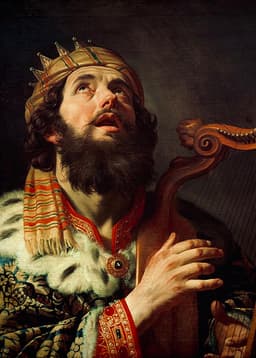
King David
Emperor · Ancient
75.3Total
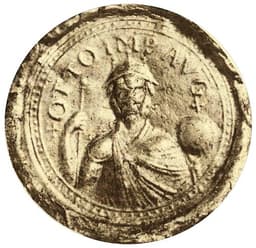
Otto I the Great
Emperor · Medieval
75.2Total
Basic Information
Born
-1010
912
Died
-970
973
Era
Ancient
Medieval
Nationality
Israel
Holy Roman Empire
Occupation
Emperor
Emperor
Civilization
Middle Eastern
Western
Score Comparison
Military (10%)
72.0
82.0
Political (20%)
72.0
70.0
Influence (20%)
88.0
88.0
Legacy (20%)
70.0
65.0
Leadership (15%)
72.0
78.0
Strategy (15%)
70.0
65.4
TOTAL
75.3
75.2
King David — Complete Timeline
1010 BC
Anointed as King of JudahPolitical Action◆ Major
After Saul's death, David was anointed king over the tribe of Judah at Hebron. This began a seven-year period of civil war with Ish-bosheth, Saul's son, who ruled the northern tribes, leading to the eventual unification of Israel.
KingshipCivil WarJudah
Impact: national
1003 BC
Capture of JerusalemWar
David led his army to capture the Jebusite fortress of Jerusalem, making it the capital of the united kingdom. He brought the Ark of the Covenant there, establishing the city as both the political and religious center of Israel.
JerusalemCapitalArk of the Covenant
Impact: nationalconstructive
1000 BC
Defeat of the PhilistinesWar◆ Major
David fought several campaigns that decisively defeated the Philistines, including the Battle of Baal-perazim. He captured Gath and other Philistine strongholds, ending their dominance over Israel and securing the kingdom's borders.
PhilistinesMilitary CampaignIsrael
Impact: regional
990 BC
Affair with BathshebaPolitical Action◆ Major
David committed adultery with Bathsheba and arranged the death of her husband Uriah the Hittite in battle. The prophet Nathan confronted David, leading to his repentance but also to divine punishment, including the death of their first child.
ScandalBathshebaNathan
Impact: nationaldestructive
978 BC
Revolt of AbsalomWar◆ Major
David's son Absalom led a rebellion that forced David to flee Jerusalem. David's forces under Joab defeated Absalom's army in the Forest of Ephraim, and Absalom was killed. David returned to Jerusalem but the kingdom was weakened.
RebellionCivil WarAbsalom
Impact: nationaltragic
Otto I the Great — Complete Timeline
951 AD
Diplomatic Marriage to Adelaide of ItalyPolitical Action◆ Major
Otto married Adelaide, the widowed queen of Italy, after intervening in Italian politics. This marriage gave him control over the Kingdom of Italy and strengthened his claim to imperial authority.
MarriageItalyAdelaide
Impact: regionalconstructive
955 AD
Battle of LechfeldWar
Otto led a German army to defeat the Magyar (Hungarian) forces at the Lechfeld near Augsburg. This victory ended Magyar raids into Western Europe and secured Otto's reputation as a defender of Christendom.
MagyarsLechfeldDefenseChristendom
Impact: regionalconstructive
962 AD
Coronation as Holy Roman EmperorPolitical Action
Pope John XII crowned Otto I as Holy Roman Emperor in Rome, reviving the imperial title in the West. This event established the Holy Roman Empire as a major political entity and linked German kingship with papal authority.
CoronationHoly Roman EmpirePapacy
Impact: globalconstructive
Expert Analysis
Origins
King David, born in Bethlehem around 1040 BCE, rose from shepherd to king, embodying the archetypal rags-to-riches story. His anointing by Samuel marked him as God's chosen, yet his path was fraught with conflict. Otto I, born in 912 CE, inherited the Duchy of Saxony from his father Henry the Fowler, part of the East Frankish kingdom. Both emerged from turbulent times: David from tribal chaos in Canaan, Otto from the fragmentation of Carolingian Europe.
Rise to Power
David's ascent was dramatic: slaying Goliath, serving King Saul, and fleeing persecution. After Saul's death, he was anointed king of Judah, then united Israel after a civil war. Otto's rise was more institutional: crowned king in 936, he crushed rebellious dukes and asserted royal authority. While David relied on charisma and divine favor, Otto leveraged feudal ties and military might.
Leadership & Governance
David centralized Israel's government, established Jerusalem as capital, and organized the priesthood. His reign saw economic growth and military expansion. Otto strengthened the Church as a counterweight to nobles, appointed bishops as administrators, and fostered ties with the papacy. Both were effective administrators, but David's personal rule was more autocratic, while Otto's was constrained by feudal structures.
Triumph & Tragedy
David's triumphs include capturing Jerusalem (1003 BCE) and defeating the Philistines. His tragedy was the Bathsheba affair, leading to family strife and Absalom's revolt. Otto's triumph was the Battle of Lechfeld (955 CE), ending Magyar invasions. His tragic flaw? Perhaps his harsh treatment of rivals, like the execution of Count Wichmann. Both faced rebellions from their own families.
Character & Destiny
David is celebrated as a poet, musician, and man after God's own heart, yet his moral failings are stark. Otto, called 'the Great,' was pious but pragmatic, known for his devotion to the Church and his strategic marriage to Adelaide. David's destiny was messianic: he became the symbol of Israel's golden age. Otto's was imperial: he revived the Roman Empire in the West.
Legacy
David's legacy is immense: he is a central figure in Judaism, Christianity, and Islam, and his psalms remain influential. Otto's legacy is the Holy Roman Empire, which shaped European politics for centuries. David's military and political achievements are legendary, but his personal flaws humanize him. Otto's institutional reforms were foundational, but his empire was less culturally enduring.
Conclusion
Both rulers score equally on our scale (0.1 difference), reflecting their comparable impact. David edges ahead due to his profound cultural and religious legacy. While Otto's military and political successes were remarkable, David's story resonates across millennia. Score: King David 75.5, Otto I 75.4. David wins by a razor-thin margin.
Rankings
🥇
King DavidLeader
Mil: 72.0Pol: 72.0Inf: 88.0
75.3
🥈
Otto I the Great
Mil: 82.0Pol: 70.0Inf: 88.0
75.2
+0.1 behind
How This Comparison Works
Algorithm
Each figure is scored on 6 dimensions (0—100 scale) based on structured historical data: Military (10%), Political (20%), Influence (20%), Legacy (20%), Leadership (15%), Strategy (15%). The weighted total produces the final ranking.
Data Sources
Scores are computed from structured sub-indicators in the database. Scale factors adjust for era (Ancient ×0.85, Modern ×1.0) and civilization size (Eastern ×1.05, Other ×0.80) to account for differences in population and military scale.
Maximum 3 Figures
Comparisons are limited to 2—3 figures to ensure readability and statistical meaningfulness.
Error Margins
±5 points per dimension — Sub-scores are derived from historical records with inherent uncertainty. Two figures within 5 points on a dimension should be considered roughly equivalent in that area.
Total Score Accuracy
±3 points overall — The weighted combination of 6 dimensions produces a total score with approximately ±3 points of uncertainty. Differences of less than 3 points are not statistically significant— the figures are effectively tied.
Known Limitations
- Historical records are incomplete and uneven across civilizations
- Figures from oral-tradition societies may be underrepresented
- Occupation labels can misclassify multi-role figures
- Scores measure capability and impact, not moral character
- Quantitative scoring is a comparison tool, not absolute truth
Capability Radar
Military (10%) — Battles & Warfare
Battles
75
75
Win Rate
85
80
Expansion
80
70
Political (20%) — Governance & Reform
Reform
80
80
Diplomacy
75
85
Economy
70
70
Influence (20%) — Cultural & Global Reach
Cultural
95
65
Global
90
70
Legacy (20%) — Historical Impact
Historical
95
80
Longevity
95
75
Leadership (15%) — Power & Stability
Tenure
85
85
Stability
65
75
Strategy (15%) — Tactics & Innovation
Strategy
85
75
Tactics
80
70
Reform
70
65
Similar Comparisons
Comments & Discussion
No comments yet. Be the first to share your thoughts!