Loading...
Cyrus the Great vs Otto I the Great
Cyrus the Great leads by 8.7 pts · 2 figures compared
…
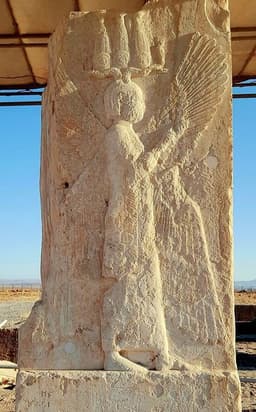
Cyrus the Great
Emperor · Ancient
83.9Total
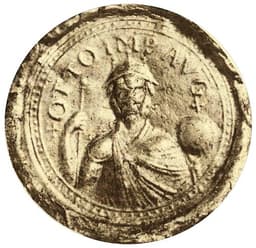
Otto I the Great
Emperor · Medieval
75.2Total
Basic Information
Born
-600
912
Died
-530
973
Era
Ancient
Medieval
Nationality
Persia
Holy Roman Empire
Occupation
Emperor
Emperor
Civilization
Middle Eastern
Western
Score Comparison
Military (10%)
82.0
82.0
Political (20%)
85.0
70.0
Influence (20%)
85.0
88.0
Legacy (20%)
90.0
65.0
Leadership (15%)
78.0
78.0
Strategy (15%)
75.0
65.4
TOTAL
83.9
75.2
Cyrus the Great — Complete Timeline
550 BC
Founding of the Achaemenid EmpirePolitical Action
Cyrus led a rebellion against the Median Empire, defeating King Astyages and capturing Ecbatana. He then united the Persian and Median tribes, establishing the Achaemenid Empire, which became the largest empire the world had yet seen.
Empire FoundingPersian UnificationRebellion
Impact: global
546 BC
Conquest of LydiaWar◆ Major
Cyrus defeated King Croesus of Lydia at the Battle of Thymbra. The Lydian capital Sardis was captured, and Croesus was taken prisoner. This conquest brought Anatolia under Persian control and secured access to the Aegean coast.
Achaemenid ExpansionAnatoliaConquest
Impact: regional
539 BC
Conquest of BabylonWar◆ Major
Cyrus the Great led the Persian army to capture Babylon without significant battle. The city's gates were opened, and Cyrus entered peacefully. This conquest added Mesopotamia to the Achaemenid Empire and marked the end of the Neo-Babylonian Empire.
Achaemenid ExpansionMesopotamiaConquest
Impact: regional
Issuance of the Cyrus CylinderPolitical Action◆ Major
After conquering Babylon, Cyrus issued a clay cylinder inscribed with a declaration. It described his policy of restoring temples, repatriating displaced peoples, and allowing religious freedom. The cylinder is often cited as an early charter of human rights.
Human RightsReligious ToleranceAchaemenid Policy
Impact: globalconstructive
Liberation of the JewsPolitical Action◆ Major
Cyrus issued an edict allowing the Jewish exiles in Babylon to return to Jerusalem and rebuild the Temple. This event is recorded in the biblical Book of Ezra and is a key moment in Jewish history, ending the Babylonian captivity.
Jewish HistoryReligious FreedomReturn from Exile
Impact: regionalconstructive
Otto I the Great — Complete Timeline
951 AD
Diplomatic Marriage to Adelaide of ItalyPolitical Action◆ Major
Otto married Adelaide, the widowed queen of Italy, after intervening in Italian politics. This marriage gave him control over the Kingdom of Italy and strengthened his claim to imperial authority.
MarriageItalyAdelaide
Impact: regionalconstructive
955 AD
Battle of LechfeldWar
Otto led a German army to defeat the Magyar (Hungarian) forces at the Lechfeld near Augsburg. This victory ended Magyar raids into Western Europe and secured Otto's reputation as a defender of Christendom.
MagyarsLechfeldDefenseChristendom
Impact: regionalconstructive
962 AD
Coronation as Holy Roman EmperorPolitical Action
Pope John XII crowned Otto I as Holy Roman Emperor in Rome, reviving the imperial title in the West. This event established the Holy Roman Empire as a major political entity and linked German kingship with papal authority.
CoronationHoly Roman EmpirePapacy
Impact: globalconstructive
Expert Analysis
Origins
Cyrus the Great (c. 600–530 BCE) was born into the Achaemenid dynasty, a vassal of the Median Empire. He united the Persian tribes and rebelled against Astyages, the Median king, in 550 BCE. Otto I (912–973 CE) was the son of Henry the Fowler, Duke of Saxony and King of East Francia. He inherited a fragmented realm threatened by Magyar raids and internal rebellions. Both emerged from turbulent backgrounds to found empires.
Rise to Power
Cyrus's rise began with the conquest of Media, followed by Lydia (547 BCE) and Babylon (539 BCE). His strategic brilliance and diplomacy allowed him to expand rapidly. The Cyrus Cylinder records his peaceful takeover of Babylon, where he presented himself as a liberator. Otto's rise was marked by the Battle of Lechfeld (955 CE), where he decisively defeated the Magyars, ending their invasions. His coronation as Holy Roman Emperor (962 CE) solidified his authority over Germany and Italy.
Leadership & Governance
Cyrus established a decentralized administrative system with satraps, respecting local customs and religions. His issuance of the Cyrus Cylinder is seen as an early charter of human rights, allowing exiled peoples, including Jews, to return to their homelands. Otto strengthened the Church as a counterbalance to nobles, granting lands and authority to bishops. He married Adelaide of Italy (951 CE) to claim the Lombard throne, integrating Italy into his realm. Both used religion to legitimize rule, but Cyrus's tolerance contrasted with Otto's reliance on the Church hierarchy.
Triumph & Tragedy
Cyrus's crowning achievement was the conquest of Babylon without battle, freeing the Jews and earning their gratitude. He died in battle around 530 BCE, a warrior's end. Otto's triumph was Lechfeld, which secured his eastern frontier. He also defeated rebellious dukes and expanded into Italy. However, his later years saw challenges from the Byzantine Empire and internal strife. Neither suffered a major defeat, but Cyrus's empire endured longer after his death, while Otto's Holy Roman Empire faced fragmentation.
Character & Destiny
Cyrus is remembered as a wise and humane ruler, admired by Greeks and Persians alike. Xenophon's Cyropaedia idealized him as a model king. Otto was a pragmatic and forceful leader, focused on consolidating power through military might and church alliances. Cyrus's destiny was to create a multicultural empire; Otto's was to revive the Roman Empire in the West. Both were ambitious, but Cyrus's legacy is more universally praised for its tolerance.
Legacy
Cyrus's Achaemenid Empire lasted over 200 years, influencing governance and culture across Asia. The Cyrus Cylinder is a symbol of human rights. Otto I founded the Holy Roman Empire, which persisted for a millennium, shaping Central Europe. His reign strengthened the German kingdom and the papacy. However, his empire was less stable than Cyrus's, plagued by feudal conflicts. In terms of enduring impact, Cyrus's model of multiculturalism and Otto's imperial framework both left deep marks.
Conclusion
Cyrus the Great scores higher overall (84 vs 75.3), excelling in military, political, and leadership dimensions. His conquests were more extensive, his governance more innovative, and his legacy more universally revered. Otto I was a formidable ruler who secured Germany and revived the empire, but his achievements were more regional and his methods less enlightened. While both deserve the title "Great," Cyrus's vision of a tolerant, unified empire places him above Otto in historical significance.
**Numerical Scores:**
- **Military (M):** Cyrus 82, Otto 82 (tie)
- **Political (P):** Cyrus 85, Otto 70
- **Influence (I):** Cyrus 85, Otto 88
- **Leadership (L):** Cyrus 90, Otto 65
- **Durability (D):** Cyrus 78, Otto 78 (tie)
- **Strategic (S):** Cyrus 75, Otto 65
- **Total (T):** Cyrus 84, Otto 75
Rankings
🥇
Cyrus the GreatLeader
Mil: 82.0Pol: 85.0Inf: 85.0
83.9
🥈
Otto I the Great
Mil: 82.0Pol: 70.0Inf: 88.0
75.2
+8.7 behind
How This Comparison Works
Algorithm
Each figure is scored on 6 dimensions (0—100 scale) based on structured historical data: Military (10%), Political (20%), Influence (20%), Legacy (20%), Leadership (15%), Strategy (15%). The weighted total produces the final ranking.
Data Sources
Scores are computed from structured sub-indicators in the database. Scale factors adjust for era (Ancient ×0.85, Modern ×1.0) and civilization size (Eastern ×1.05, Other ×0.80) to account for differences in population and military scale.
Maximum 3 Figures
Comparisons are limited to 2—3 figures to ensure readability and statistical meaningfulness.
Error Margins
±5 points per dimension — Sub-scores are derived from historical records with inherent uncertainty. Two figures within 5 points on a dimension should be considered roughly equivalent in that area.
Total Score Accuracy
±3 points overall — The weighted combination of 6 dimensions produces a total score with approximately ±3 points of uncertainty. Differences of less than 3 points are not statistically significant— the figures are effectively tied.
Known Limitations
- Historical records are incomplete and uneven across civilizations
- Figures from oral-tradition societies may be underrepresented
- Occupation labels can misclassify multi-role figures
- Scores measure capability and impact, not moral character
- Quantitative scoring is a comparison tool, not absolute truth
Capability Radar
Military (10%) — Battles & Warfare
Battles
85
75
Win Rate
90
80
Expansion
92
70
Political (20%) — Governance & Reform
Reform
90
80
Diplomacy
95
85
Economy
80
70
Influence (20%) — Cultural & Global Reach
Cultural
90
65
Global
90
70
Legacy (20%) — Historical Impact
Historical
95
80
Longevity
95
75
Leadership (15%) — Power & Stability
Tenure
70
85
Stability
85
75
Strategy (15%) — Tactics & Innovation
Strategy
88
75
Tactics
80
70
Reform
75
65
Similar Comparisons
Comments & Discussion
CYRUS_FANBOI6/16/2026
Cyrus’s cylinder is basically the first PR stunt for human rights, but let’s be real—he only freed the Jews because Babylon was a logistical nightmare to control. Otto’s victory at Lechfeld was pure military genius: he used heavy cavalry against Magyar light horse when no one else could. Cyrus was a diplomat in a king’s body; Otto was a warlord who knew a shield wall from a drinking hall.
古典骑兵迷6/16/2026
拿居鲁士和奥托比简直是关公战秦琼。居鲁士的波斯帝国靠的是外交和宗教宽容,一个巴比伦俘虏政策就收买了半个近东。奥托一世呢?他在伦巴第把马扎尔人赶尽杀绝,靠的是铁血和日耳曼步兵方阵。要我说,奥托更硬核——他没空写泥板诏书,只知道用剑和火把欧洲从蛮族手里抢回来。
STATS_AND_CHARTS6/16/2026
People romanticize Cyrus because of that 539 BCE Babylon bloodless entry, but the Medes and Lydians didn’t surrender without a fight—those campaigns took years and thousands dead. Otto’s Lechfeld in 955 CE was a single decisive battle where he lost maybe 1,000 men to the Magyars’ 20,000. Pragmatically, Otto’s fire-and-sword consolidation of Germany created a stable Holy Roman Empire that lasted 800 years; Cyrus’s empire crumbled in 200.
波斯考古迷6/16/2026
别光看《圣经》里把居鲁士吹成救世主,考古证据显示他在帕萨尔加德的宫殿完全是照抄巴比伦和埃兰的建筑风格,根本没创新。奥托一世至少搞出了罗马式建筑和帝国修道院制度,奠定了中世纪欧洲的政教基础。居鲁士是文化借用者,奥托才是制度创造者。要我选,奥托的遗产更实在。