Loading...
Keith Mitchell vs Napoleon Bonaparte
Napoleon Bonaparte leads by 17.8 pts · 2 figures compared
…
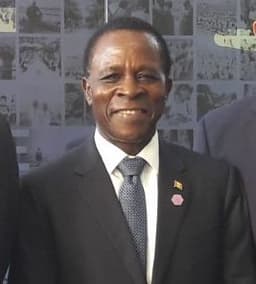
Keith Mitchell
Politician · Modern
53.1Total

Napoleon Bonaparte
General · Modern
70.9Total
Basic Information
Born
1946
1769
Died
—
1821
Era
Modern
Modern
Nationality
Grenada
France
Occupation
Politician
General
Civilization
Other
Western
Score Comparison
Military (10%)
30.2
94.0
Political (20%)
68.0
72.0
Influence (20%)
53.3
40.0
Legacy (20%)
45.8
80.0
Leadership (15%)
72.0
78.0
Strategy (15%)
43.5
90.0
TOTAL
53.1
70.9
Keith Mitchell — Complete Timeline
1995 AD
Elected Prime Minister of GrenadaPolitical Action◆ Major
Keith Mitchell led the New National Party to victory in the 1995 general election, becoming Prime Minister of Grenada. This began his tenure as the country's longest-serving prime minister, spanning multiple terms.
ElectionGrenadaNNP
Impact: nationalconstructive
2003 AD
Re-elected for Third Consecutive TermPolitical Action◆ Major
Mitchell won a third consecutive term in the 2003 general election, a rare achievement in Grenadian politics. His New National Party secured a majority, extending his influence over the country's development.
ElectionGrenadaNNP
Impact: nationalconstructive
2008 AD
Lost 2008 General ElectionPolitical Action◆ Major
Mitchell's New National Party was defeated by the National Democratic Congress in the 2008 general election, ending his 13-year tenure as prime minister. He stepped down as party leader temporarily.
ElectionGrenadaDefeat
Impact: national
2013 AD
Returned to Power in 2013 LandslidePolitical Action◆ Major
Mitchell led the New National Party to a landslide victory in the 2013 general election, winning all 15 seats in Parliament. This marked his return as prime minister after a five-year hiatus.
ElectionGrenadaLandslide
Impact: nationalconstructive
2018 AD
Won Fourth Term in 2018Political Action◆ Major
Mitchell secured a fourth term as prime minister in the 2018 general election, again winning all 15 seats. This extended his record as Grenada's longest-serving leader, with a focus on infrastructure and tourism.
ElectionGrenadaNNP
Impact: nationalconstructive
Napoleon Bonaparte — Complete Timeline
1799 AD
Coup of 18 BrumaireOther◆ Major
Napoleon Bonaparte, with support from his brother Lucien and key political figures, overthrew the Directory in a bloodless coup. He established the Consulate with himself as First Consul, effectively becoming the ruler of France. This event ended the French Revolution's most unstable period.
French RevolutionCoupRise to Power
Impact: regional
1804 AD
Promulgation of the Napoleonic CodeOther◆ Major
Napoleon enacted the Civil Code of the French, known as the Napoleonic Code, a comprehensive set of laws that replaced the fragmented feudal legal systems. The code established legal equality, protected property rights, and secularized law. It became the basis for legal systems in many European and world countries.
Legal ReformNapoleonic CodeCivil Law
Impact: globalconstructive
1805 AD
Battle of AusterlitzWar◆ Major
Napoleon's Grande Arm
Napoleonic WarsBattleDecisive Victory
Impact: global
1812 AD
Invasion of RussiaWar◆ Major
Napoleon led the Grande Arm
Napoleonic WarsInvasionDisaster
Impact: globaldestructive
1815 AD
Battle of WaterlooWar◆ Major
Napoleon's French army was defeated by the combined forces of the Duke of Wellington's Anglo-Allied army and Gebhard Leberecht von Bl
Napoleonic WarsBattleFinal Defeat
Impact: globaldestructive
Expert Analysis
keith-mitchell-vs-napoleon-bonaparte
# The Emperor and the Islander: Two Paths to Power
On a June morning in 1815, Napoleon Bonaparte stood amid the mud and blood of Waterloo, watching his Imperial Guard crumble before the British squares. He was forty-five years old, and within weeks he would be a prisoner on a remote Atlantic rock. Nearly two centuries later, on a Caribbean island not far from that same ocean, another leader—Keith Mitchell—would win his fourth consecutive election, his party sweeping every seat in parliament. One man conquered Europe and lost it all; the other never left his tiny nation yet shaped it for three decades. What explains the gulf between these two figures, born worlds apart, yet both consumed by the same hunger for power?
Origins
Napoleon Bonaparte was born in 1769 on Corsica, an island that had just been sold to France by Genoa. His family was minor nobility, but his father's death left young Napoleon scrambling for a place in the world. He entered a French military academy at nine, a short, awkward outsider mocked for his accent and poverty. Corsica's wild mountains and fierce independence became the forge of his ambition: he would prove himself not just a Frenchman, but a master of France itself.
Keith Mitchell was born in 1946 on Grenada, a tiny spice island in the eastern Caribbean, then still a British colony. His father was a farmer; his mother, a teacher. Grenada's history was one of sugar plantations, slavery, and colonial neglect. Mitchell studied chemistry in the United States and earned a doctorate, but the pull of home was stronger. When he returned, he found a nation struggling with the aftermath of revolution and invasion—the 1983 U.S. intervention that toppled a Marxist government was still fresh in memory.
Two islands, two empires, two men who saw their small beginnings not as limitations but as fuel.
Rise to Power
Napoleon's ascent was a cannonball. In 1793, at twenty-four, he drove the British out of Toulon and was promoted to brigadier general. By 1796, he commanded the Army of Italy, where he smashed Austrian armies and dictated peace terms. The Directory, France's corrupt government, sent him to Egypt in 1798 to disrupt British trade routes—a campaign that failed strategically but made his legend. When he returned in 1799, he staged a coup and became First Consul. Within five years, he crowned himself Emperor.
Mitchell's rise was slower, a patient climb. He entered politics in the 1980s, serving as a minister in the New National Party (NNP). In 1995, his party won the general election, and he became Prime Minister at forty-nine. He faced a fractured, impoverished country of just over 100,000 people, recovering from the trauma of 1983. There were no armies to lead, no empires to topple—only roads to build, schools to open, and tourists to attract.
The difference in scale is staggering. Napoleon conquered Italy in weeks; Mitchell needed years to pave a single highway.
Leadership & Governance
Napoleon ruled through terror and brilliance. He reformed French law with the Napoleonic Code, a system that enshrined equality before the law, secular authority, and property rights—but also restored slavery in the colonies and crushed women's rights. He built schools, roads, and a centralized bureaucracy. He was a military genius who won sixty battles, his strategy of rapid movement and decisive engagement still studied today. But his governance was a contradiction: he brought order to chaos while feeding his own ego.
Mitchell governed through pragmatism and persistence. He focused on infrastructure, tourism, and education. Under his watch, Grenada's economy grew, its roads improved, and its airports expanded. He won elections in 1995, 1999, 2003, then lost in 2008—only to return in 2013 with a landslide, winning all fifteen seats. He repeated the feat in 2018. His style was not Napoleonic grandeur but steady management. He was a politician, not a conqueror.
Yet both men shared a trait: they centralized power. Napoleon abolished the Directory; Mitchell's NNP became the dominant party, critics accusing him of authoritarian tendencies. But where Napoleon's rule ended in exile, Mitchell's ended in retirement—he stepped down in 2022, Grenada's longest-serving prime minister.
Triumph & Tragedy
Napoleon's greatest moment was Austerlitz in 1805, where he crushed the Russian and Austrian armies, destroying the Third Coalition. His empire stretched from Spain to Poland. His tragedy was the invasion of Russia in 1812—600,000 men marched east; fewer than 100,000 returned. The disaster broke his aura of invincibility. He was exiled to Elba, escaped, returned for the Hundred Days, and was finally defeated at Waterloo in 1815. He died six years later on Saint Helena, a British prison island in the South Atlantic.
Mitchell's triumph was his longevity. He survived electoral defeat and returned stronger. His tragedy was less dramatic but real: Grenada remained a small, vulnerable island, dependent on tourism and foreign aid. He could not transform it into a regional power—there was no Grenadian empire to build. His greatest failure was perhaps the same as his success: he became the system, and the system became him.
Character & Destiny
Napoleon was driven by an insatiable need for glory. "Impossible is a word to be found only in the dictionary of fools," he said. His personality—arrogant, brilliant, ruthless—shaped every decision. He believed in destiny, but he also created it. His end was tragic because his ambition knew no limits.
Mitchell was calmer, more calculating. He once said, "I have never believed in the word 'impossible' either, but I know the value of patience." His personality—steady, resilient, pragmatic—allowed him to weather storms. He did not seek to conquer the world; he sought to govern his island. His end was peaceful because his ambition was contained.
Legacy
Napoleon's legacy is a paradox. He spread the ideals of the French Revolution—nationalism, legal equality, secularism—across Europe, but at the cost of millions of lives. The Napoleonic Code remains the basis of law in dozens of countries. His military tactics are still taught. He is remembered as both a tyrant and a reformer, a genius and a fool.
Mitchell's legacy is smaller but no less real. He gave Grenada stability and growth. He is remembered as the man who rebuilt the country after 1983, who won elections no one thought possible. But his name will not echo through centuries like Napoleon's—Grenada is not France, and a prime minister is not an emperor.
Conclusion
Standing at the end of their stories, one sees the profound asymmetry of historical memory. Napoleon Bonaparte, born on a Corsican rock, rose to shake the world and fell into the Atlantic's silence. Keith Mitchell, born on a Grenadian hill, rose to serve his people and stepped down into quiet retirement. Both seized power; both held it; both lost it in their own ways. But the scale of their ambition, the scope of their impact, and the depth of their tragedy are worlds apart.
Perhaps the real difference is not in their characters or their choices, but in the stage history gave them. Napoleon had an empire to win; Mitchell had a nation to build. One died a prisoner; the other died free. And somewhere between Waterloo and St. George's, between the roar of cannons and the hum of a campaign rally, lies the truth about power: it is never the size of the man that matters, but the size of the world he chooses to conquer.
Rankings
🥇
Napoleon BonaparteLeader
Mil: 94.0Pol: 72.0Inf: 40.0
70.9
🥈
Keith Mitchell
Mil: 30.2Pol: 68.0Inf: 53.3
53.1
+17.8 behind
How This Comparison Works
Algorithm
Each figure is scored on 6 dimensions (0—100 scale) based on structured historical data: Military (10%), Political (20%), Influence (20%), Legacy (20%), Leadership (15%), Strategy (15%). The weighted total produces the final ranking.
Data Sources
Scores are computed from structured sub-indicators in the database. Scale factors adjust for era (Ancient ×0.85, Modern ×1.0) and civilization size (Eastern ×1.05, Other ×0.80) to account for differences in population and military scale.
Maximum 3 Figures
Comparisons are limited to 2—3 figures to ensure readability and statistical meaningfulness.
Error Margins
±5 points per dimension — Sub-scores are derived from historical records with inherent uncertainty. Two figures within 5 points on a dimension should be considered roughly equivalent in that area.
Total Score Accuracy
±3 points overall — The weighted combination of 6 dimensions produces a total score with approximately ±3 points of uncertainty. Differences of less than 3 points are not statistically significant— the figures are effectively tied.
Known Limitations
- Historical records are incomplete and uneven across civilizations
- Figures from oral-tradition societies may be underrepresented
- Occupation labels can misclassify multi-role figures
- Scores measure capability and impact, not moral character
- Quantitative scoring is a comparison tool, not absolute truth
Capability Radar
Military (10%) — Battles & Warfare
Battles
19
95
Win Rate
26
90
Expansion
26
95
Political (20%) — Governance & Reform
Reform
50
95
Diplomacy
55
80
Economy
60
85
Influence (20%) — Cultural & Global Reach
Cultural
30
85
Global
30
90
Legacy (20%) — Historical Impact
Historical
40
95
Longevity
35
90
Leadership (15%) — Power & Stability
Tenure
65
85
Stability
55
70
Strategy (15%) — Tactics & Innovation
Strategy
28
95
Tactics
31
98
Reform
38
92
Similar Comparisons
Comments & Discussion
Grenadier's Gambit6/17/2026
Comparing Keith Mitchell to Napoleon isn't just a stretch, it's a category error. Waterloo was a single brutal afternoon that reshaped Europe's map; Mitchell's elections were affairs of civic routine. Napoleon lost everything in one climactic battle at age 45, while Mitchell's career was a slow churn of policy and patronage. The only thing they share is a hunger for power, but one fed on continental armies, the other on constituency favors. A chess grandmaster and a checkers champion.
历史的碎屑6/17/2026
拿破仑的征途是铁与火——从土伦到莫斯科,每一步都踩在尸体与王冠之间。基思·米切尔连任四届格瑞那达总理,那是加勒比海上的一粒沙。拿老师说"政治就是命运",米切尔是"政治就是修路"。比较他们的人大概忘了,拿破仑的滑铁卢改变的是欧洲版图,而米切尔的政治生涯顶多改变了几条岛的巴士路线。历史偏爱大舞台上的悲剧英雄,不是小岛上的常青树。
Data Wrangler6/17/2026
The analysis leans heavily on narrative flair but dodges the hard numbers. Napoleon commanded over 600,000 soldiers during the 1812 invasion alone, while Mitchell's entire nation of Grenada has about 110,000 citizens. Napoleon's campaigns killed roughly 5 million people; Mitchell's policies likely saved lives through improved healthcare. The power comparison collapses under any quantitative lens: Napoleon wielded force on an industrial scale; Mitchell used democratic mandate on a municipal one.
古典的讽刺6/17/2026
普鲁塔克若写《名人传》,定会把这对放在一起,教后人看命运的荒诞。拿破仑像希腊神话里的伊卡洛斯——翅膀是蜡做的,飞得太高就坠入大西洋。米切尔像一只海鸥,永远在自家的海岸线上盘旋,从不冒险。但那海鸥活了三十年,伊卡洛斯只辉煌了十年。历史对前者记得名字和灰烬,对后者知道他在岛上修了几座桥。可哪样才算成功?
Imperial Echo6/17/2026
I find this comparison fascinating because both men understood the mechanics of personal loyalty. Napoleon rebuilt France's administrative elite around a meritocracy he controlled; Mitchell transformed Grenada's political landscape through constituency service and party discipline. The scale is wildly different—Napoleon created the Grand Army and Code Napoléon; Mitchell built roads and schools—but the core strategy is identical: concentrate power by binding people to your success. Napoleon lost
王座下的尘土6/17/2026
终于有人提到了"殖民遗产"这回事。拿坡仑出生时,科西嘉刚被法国买下,是块烫手山芋。他必须证明自己