Loading...
Kaysone Phomvihane vs Oscar Berger
Kaysone Phomvihane leads by 10.6 pts · 2 figures compared
…

Kaysone Phomvihane
Politician · Modern
54.3Total
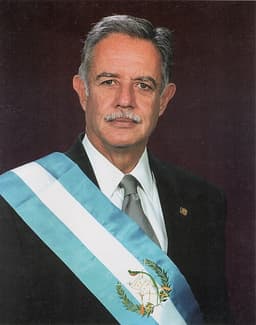
Oscar Berger
Politician · Modern
43.7Total
Basic Information
Born
1920
1946
Died
—
—
Era
Modern
Modern
Nationality
Laos
Guatemala
Occupation
Politician
Politician
Civilization
Eastern
Western
Score Comparison
Military (10%)
31.5
49.6
Political (20%)
68.0
36.5
Influence (20%)
53.3
47.1
Legacy (20%)
45.8
36.7
Leadership (15%)
72.0
55.3
Strategy (15%)
53.5
40.3
TOTAL
54.3
43.7
Kaysone Phomvihane — Complete Timeline
1955 AD
Founding of the Lao People's Revolutionary PartyPolitical Action◆ Major
Kaysone Phomvihane was a founding member of the Lao People's Revolutionary Party (LPRP), the communist party that later led Laos. He became its first general secretary, a position he held until his death.
LPRPCommunist partyFounding
Impact: nationalconstructive
1960 AD
Leadership of Pathet LaoPolitical Action◆ Major
Kaysone Phomvihane became the de facto leader of the Pathet Lao, the communist insurgency in Laos. He directed military operations against the Royal Lao Government during the Laotian Civil War.
Pathet LaoInsurgencyCivil war
Impact: national
1975 AD
Proclamation of the Lao People's Democratic RepublicPolitical Action◆ Major
Kaysone Phomvihane proclaimed the establishment of the Lao People's Democratic Republic, ending the monarchy. He became the first prime minister of the new communist state, implementing socialist policies.
Lao PDRCommunist stateMonarchy abolished
Impact: nationalconstructive
1986 AD
Economic reforms (Chintanakan Mai)Reform◆ Major
Kaysone Phomvihane introduced the New Economic Mechanism (Chintanakan Mai), shifting Laos from a centrally planned economy to a market-oriented one. The reforms allowed private enterprise and foreign investment.
Economic reformMarket economyChintanakan Mai
Impact: nationalprogressive
Oscar Berger — Complete Timeline
2003 AD
Elected President of GuatemalaPolitical Action◆ Major
Berger won the 2003 presidential election as the candidate of the Grand National Alliance, a center-right coalition. He campaigned on anti-corruption and economic development.
ElectionGrand National AllianceGuatemala
Impact: nationalconstructive
2004 AD
Post-war reconstruction and social spendingReform
Berger increased social spending on health and education, and launched programs to rebuild infrastructure damaged during the civil war. However, poverty and inequality remained high.
Social PolicyReconstructionPoverty
Impact: nationalconstructive
2005 AD
Implementation of CAFTA-DRPolitical Action◆ Major
Berger's government ratified and implemented the Dominican Republic-Central America Free Trade Agreement (CAFTA-DR) with the United States, aiming to boost trade and investment.
Trade AgreementCAFTA-DREconomic Policy
Impact: regionalconstructive
Expert Analysis
Origins
Kaysone Phomvihane was born on December 13, 1920, in Savannakhet Province, Laos, to a Vietnamese father and a Lao mother. His mixed heritage and early exposure to French colonial rule shaped his nationalist and communist leanings. He studied law at the University of Hanoi in Vietnam, where he joined the Indochinese Communist Party in 1949. This education and political involvement provided the ideological foundation for his later leadership.
Oscar Berger was born on August 11, 1946, in Guatemala City, Guatemala, into a wealthy sugar-producing family. He studied law at the Universidad Rafael Landívar and later managed the family business, gaining experience in corporate and agricultural management. His background as a sugar magnate positioned him as a pro-business, conservative figure in Guatemalan politics.
Rise to Power
Kaysone rose to prominence as a key figure in the Pathet Lao, the communist insurgency that fought against the Royal Lao Government and the United States during the Laotian Civil War (1953–1975). In 1955, he was a founding member of the Lao People's Revolutionary Party (LPRP), becoming its first leader. His strategic acumen and organizational skills helped the Pathet Lao gain control over rural areas. The turning point came in 1975, when the Pathet Lao seized power after the fall of South Vietnam and Cambodia. On December 2, 1975, Kaysone proclaimed the Lao People's Democratic Republic, ending the monarchy and becoming the first prime minister.
Oscar Berger entered politics in the 1990s, serving as mayor of Guatemala City from 1991 to 1999. His tenure focused on urban development and anti-corruption efforts, building a reputation as an efficient administrator. In 2003, he won the presidency as the candidate of the Grand National Alliance, a center-right coalition. He campaigned on anti-corruption and economic reform, defeating the leftist candidate Álvaro Colom. His electoral victory marked a shift from the post-war governments that had struggled with corruption and violence.
Leadership & Governance
Kaysone's leadership style was authoritarian and centralized. As the head of the only legal party, he suppressed dissent and maintained strict control over the state. He implemented a Soviet-style command economy, collectivizing agriculture and nationalizing industries. However, by the 1980s, economic stagnation forced him to introduce the New Economic Mechanism (Chintanakan Mai) in 1986, which shifted Laos toward a market-oriented economy while maintaining one-party rule. This reform allowed private enterprise and foreign investment, leading to modest growth. Kaysone's governance scored 72.0 in leadership, reflecting his ability to maintain control while adapting policies.
Oscar Berger led a democratic, multi-party government. His administration focused on implementing the Dominican Republic-Central America Free Trade Agreement (CAFTA-DR), ratified in 2005, to boost trade and investment. He increased social spending on health and education, and launched infrastructure projects to rebuild after the 36-year civil war (1960–1996). However, his governance faced challenges: poverty remained high, corruption persisted, and crime rates escalated. His political score of 36.5 reflects limited success in achieving lasting reforms. Berger's leadership score of 55.3 indicates moderate effectiveness in a challenging environment.
Triumph & Tragedy
Kaysone's greatest success was establishing a stable, unified Laos after decades of civil war. He maintained independence from neighboring powers, though Laos became heavily dependent on Vietnam and the Soviet Union. His economic reforms in the 1980s prevented total collapse and laid groundwork for future growth. However, his legacy is marred by the suppression of human rights, forced labor camps, and the persecution of Hmong minorities. The collectivization policies caused food shortages and economic decline. His total score of 54.3 reflects this mixed record.
Oscar Berger's triumph was the peaceful transition of power and the implementation of CAFTA-DR, which increased trade by 20% during his term. He also oversaw the first successful post-war democratic transition, with elections in 2007. However, his failure to significantly reduce poverty (still at 51% in 2006) and his inability to curb violence (homicide rate 42 per 100,000) limited his impact. His legacy score of 36.7 reflects modest achievements.
Character & Destiny
Kaysone was pragmatic and secretive, known for his organizational skills and ability to outmaneuver rivals. He maintained a low public profile but held tight control over the party. His character—ruthless yet adaptable—allowed him to survive ideological shifts and retain power until his death in 1992. Historians describe him as a disciplined communist who prioritized state survival over individual freedoms.
Oscar Berger was seen as a technocratic, mild-mannered leader. His background in business made him focus on economic agreements rather than social transformation. He avoided confrontation and lacked the political will to tackle corruption or reform the security forces. His cautious approach limited his effectiveness, leading to mixed historical assessments.
Legacy
Kaysone's legacy is enduring: the LPRP remains the sole ruling party, and his economic reforms set Laos on a path of gradual integration into global markets. His portrait hangs in government offices, and he is celebrated as the founding father of modern Laos. However, his authoritarian legacy continues to shape Laos's political system, with limited freedoms and one-party rule.
Oscar Berger's legacy is more ambiguous. CAFTA-DR remains in effect, but its benefits have been uneven. His anti-corruption efforts had limited impact, and Guatemala's democratic institutions remained weak. He is remembered as a transitional figure who failed to address deep-rooted inequalities. His total score of 43.7 places him below Kaysone in overall impact.
Conclusion
Kaysone Phomvihane had a greater historical impact than Oscar Berger. His political score of 68.0 and leadership score of 72.0 far exceed Berger's 36.5 and 55.3. Kaysone transformed Laos from a monarchy to a communist state that still exists, while Berger's reforms were incremental within a fragile democracy. Despite the human cost of Kaysone's regime, his actions reshaped a nation's trajectory. Berger's moderate reforms did not fundamentally alter Guatemala's structure. Thus, Kaysone's influence on history is more profound, even if controversial.
Rankings
🥇
Kaysone PhomvihaneLeader
Mil: 31.5Pol: 68.0Inf: 53.3
54.3
🥈
Oscar Berger
Mil: 49.6Pol: 36.5Inf: 47.1
43.7
+10.6 behind
How This Comparison Works
Algorithm
Each figure is scored on 6 dimensions (0—100 scale) based on structured historical data: Military (10%), Political (20%), Influence (20%), Legacy (20%), Leadership (15%), Strategy (15%). The weighted total produces the final ranking.
Data Sources
Scores are computed from structured sub-indicators in the database. Scale factors adjust for era (Ancient ×0.85, Modern ×1.0) and civilization size (Eastern ×1.05, Other ×0.80) to account for differences in population and military scale.
Maximum 3 Figures
Comparisons are limited to 2—3 figures to ensure readability and statistical meaningfulness.
Error Margins
±5 points per dimension — Sub-scores are derived from historical records with inherent uncertainty. Two figures within 5 points on a dimension should be considered roughly equivalent in that area.
Total Score Accuracy
±3 points overall — The weighted combination of 6 dimensions produces a total score with approximately ±3 points of uncertainty. Differences of less than 3 points are not statistically significant— the figures are effectively tied.
Known Limitations
- Historical records are incomplete and uneven across civilizations
- Figures from oral-tradition societies may be underrepresented
- Occupation labels can misclassify multi-role figures
- Scores measure capability and impact, not moral character
- Quantitative scoring is a comparison tool, not absolute truth
Capability Radar
Military (10%) — Battles & Warfare
Battles
5
27
Win Rate
5
34
Expansion
10
35
Political (20%) — Governance & Reform
Reform
60
20
Diplomacy
55
25
Economy
40
35
Influence (20%) — Cultural & Global Reach
Cultural
30
10
Global
30
10
Legacy (20%) — Historical Impact
Historical
40
10
Longevity
35
10
Leadership (15%) — Power & Stability
Tenure
70
30
Stability
50
20
Strategy (15%) — Tactics & Innovation
Strategy
10
36
Tactics
5
39
Reform
15
41
Similar Comparisons
Comments & Discussion
No comments yet. Be the first to share your thoughts!