Loading...
This comparison has not been analyzed yet.
One-time AI generation (~1 minute). Scores and timeline are already available below.
Kavad II vs Ramesses X
Kavad II leads by 12.4 pts · 2 figures compared
…
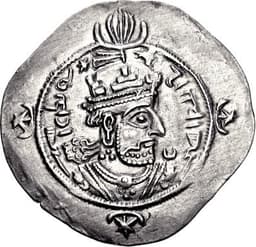
Kavad II
Emperor · Ancient
49.6Total
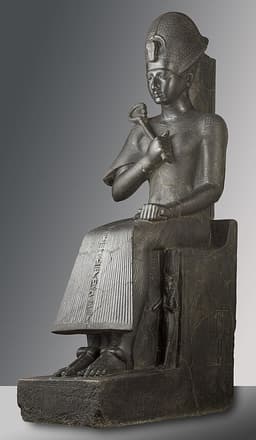
Ramesses X
Emperor · Ancient
37.2Total
Basic Information
Born
-590
-1111
Died
—
-1107
Era
Ancient
Ancient
Nationality
Sasanian Empire
New Kingdom Egypt
Occupation
Emperor
Emperor
Civilization
Middle Eastern
Middle Eastern
Score Comparison
Military (10%)
34.6
10.2
Political (20%)
68.0
35.0
Influence (20%)
56.4
42.4
Legacy (20%)
39.2
33.3
Leadership (15%)
45.0
49.9
Strategy (15%)
53.2
45.0
TOTAL
49.6
37.2
Kavad II — Complete Timeline
628 AD
Murder of Khosrow IIPolitical Action
Kavad II, then known as Sheroe, led a coup against his father Khosrow II, imprisoning and later executing him. This act ended Khosrow's long reign and the Sasanian-Byzantine war, but plunged the empire into civil war and decline.
CoupPatricideCivil War
Impact: regionaldestructive
Massacre of 17 BrothersPolitical Action◆ Major
Kavad II ordered the execution of 17 of his brothers to eliminate potential rivals to the throne. This massacre decimated the Sasanian royal family and weakened the dynasty's legitimacy, contributing to the empire's instability.
MassacreRoyal FamilyPower Consolidation
Impact: nationaldestructive
Peace Treaty with ByzantiumPolitical Action◆ Major
Kavad II negotiated a peace treaty with the Byzantine Empire, ending the decades-long war. The treaty restored pre-war borders and returned the True Cross to Jerusalem, but the Sasanian Empire was left exhausted and weakened.
Peace TreatyByzantiumTrue Cross
Impact: regionalconstructive
Ramesses X — Complete Timeline
1111 BC
Construction of Tomb KV18Cultural
Ramesses X began construction of his tomb in the Valley of the Kings, designated KV18. The tomb was left unfinished and never used for burial, reflecting the instability and reduced resources of his reign.
Tomb ConstructionUnfinished
1110 BC
Loss of NubiaWar◆ Major
During Ramesses X's brief reign, Egypt lost effective control over Nubia, a key source of gold and resources. The withdrawal of Egyptian garrisons and administrative presence allowed local Nubian leaders to assert independence, weakening Egypt's southern frontier.
NubiaTerritorial LossDecline
Impact: regionaldestructive
Workmen's Strikes at Deir el-MedinaPolitical Action
During Ramesses X's reign, the royal tomb workers at Deir el-Medina went on strike due to delayed wages and food supplies. This labor action, recorded in ostraca, highlighted the economic decline and administrative failures of the late New Kingdom.
StrikeEconomic DeclineDeir el-Medina
destructive
This comparison has not been analyzed yet.
One-time AI generation (~1 minute). Scores and timeline are already available below.
Rankings
🥇
Kavad IILeader
Mil: 34.6Pol: 68.0Inf: 56.4
49.6
🥈
Ramesses X
Mil: 10.2Pol: 35.0Inf: 42.4
37.2
+12.4 behind
How This Comparison Works
Algorithm
Each figure is scored on 6 dimensions (0—100 scale) based on structured historical data: Military (10%), Political (20%), Influence (20%), Legacy (20%), Leadership (15%), Strategy (15%). The weighted total produces the final ranking.
Data Sources
Scores are computed from structured sub-indicators in the database. Scale factors adjust for era (Ancient ×0.85, Modern ×1.0) and civilization size (Eastern ×1.05, Other ×0.80) to account for differences in population and military scale.
Maximum 3 Figures
Comparisons are limited to 2—3 figures to ensure readability and statistical meaningfulness.
Error Margins
±5 points per dimension — Sub-scores are derived from historical records with inherent uncertainty. Two figures within 5 points on a dimension should be considered roughly equivalent in that area.
Total Score Accuracy
±3 points overall — The weighted combination of 6 dimensions produces a total score with approximately ±3 points of uncertainty. Differences of less than 3 points are not statistically significant— the figures are effectively tied.
Known Limitations
- Historical records are incomplete and uneven across civilizations
- Figures from oral-tradition societies may be underrepresented
- Occupation labels can misclassify multi-role figures
- Scores measure capability and impact, not moral character
- Quantitative scoring is a comparison tool, not absolute truth
Capability Radar
Military (10%) — Battles & Warfare
Battles
40
5
Win Rate
40
5
Expansion
43
5
Political (20%) — Governance & Reform
Reform
0
5
Diplomacy
0
5
Economy
0
5
Influence (20%) — Cultural & Global Reach
Cultural
0
5
Global
0
5
Legacy (20%) — Historical Impact
Historical
5
5
Longevity
0
5
Leadership (15%) — Power & Stability
Tenure
5
10
Stability
0
5
Strategy (15%) — Tactics & Innovation
Strategy
49
5
Tactics
53
5
Reform
52
5
Similar Comparisons
Comments & Discussion
No comments yet. Be the first to share your thoughts!