Loading...
Djoser vs Kavad II
Djoser leads by 4.4 pts · 2 figures compared
…
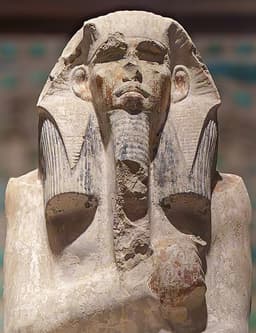
Djoser
Emperor · Ancient
54.0Total
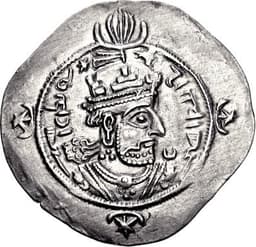
Kavad II
Emperor · Ancient
49.6Total
Basic Information
Born
-2670
-590
Died
-2640
—
Era
Ancient
Ancient
Nationality
Egypt
Sasanian Empire
Occupation
Emperor
Emperor
Civilization
Middle Eastern
Middle Eastern
Score Comparison
Military (10%)
10.2
34.6
Political (20%)
68.0
68.0
Influence (20%)
55.0
56.4
Legacy (20%)
55.0
39.2
Leadership (15%)
72.0
45.0
Strategy (15%)
45.0
53.2
TOTAL
54.0
49.6
Djoser — Complete Timeline
2670 BC
Construction of the Step Pyramid at SaqqaraCultural
Djoser commissioned his vizier Imhotep to build a step pyramid at Saqqara, the first monumental stone building in history. The pyramid, a six-tiered structure, served as Djoser's tomb and marked a revolutionary advance in architecture and engineering.
PyramidArchitectureImhotep
Impact: globalconstructive
Kavad II — Complete Timeline
628 AD
Murder of Khosrow IIPolitical Action
Kavad II, then known as Sheroe, led a coup against his father Khosrow II, imprisoning and later executing him. This act ended Khosrow's long reign and the Sasanian-Byzantine war, but plunged the empire into civil war and decline.
CoupPatricideCivil War
Impact: regionaldestructive
Massacre of 17 BrothersPolitical Action◆ Major
Kavad II ordered the execution of 17 of his brothers to eliminate potential rivals to the throne. This massacre decimated the Sasanian royal family and weakened the dynasty's legitimacy, contributing to the empire's instability.
MassacreRoyal FamilyPower Consolidation
Impact: nationaldestructive
Peace Treaty with ByzantiumPolitical Action◆ Major
Kavad II negotiated a peace treaty with the Byzantine Empire, ending the decades-long war. The treaty restored pre-war borders and returned the True Cross to Jerusalem, but the Sasanian Empire was left exhausted and weakened.
Peace TreatyByzantiumTrue Cross
Impact: regionalconstructive
Expert Analysis
Origins
**Djoser** (c. 2670 BCE) was the second king of Egypt's Third Dynasty, ruling from Memphis. His family background is obscure, but he likely inherited the throne from his predecessor, Sekhemkhet. Djoser's reign marked a shift in royal architecture, influenced by his vizier Imhotep, a polymath who would later be deified.
**Kavad II** (c. 590 CE), born Sheroe, was a son of Khosrow II, the powerful Sasanian shah who had expanded the empire to its greatest extent. Kavad grew up in a court rife with intrigue, his father having multiple wives and dozens of sons. He was not the designated heir, but he exploited the nobility's discontent with Khosrow's war policies.
Rise to Power
Djoser's rise was likely peaceful, as he inherited the throne through dynastic succession. However, his true ascent came through innovative building projects. He commissioned the Step Pyramid at Saqqara, a six-tiered structure that was the first monumental stone building in history. This project, begun around 2660 BCE, required unprecedented organization of labor and resources, consolidating his authority.
Kavad II's rise was violent. In February 628 CE, after Khosrow II's disastrous war with Byzantium, Kavad led a coup with support from disgruntled nobles. He imprisoned his father and had him executed on March 25, 628 CE. To secure his position, he then ordered the massacre of 17 of his brothers, eliminating all potential rivals. This act, while ruthless, temporarily stabilized his rule.
Leadership & Governance
Djoser's governance focused on centralization and monumental architecture. He ruled through a strong bureaucracy, with Imhotep as his chief minister. His reign saw the development of stone masonry, quarrying, and logistics, setting precedents for later pyramids. He scored 72.0 in leadership, reflecting his ability to mobilize resources and inspire loyalty.
Kavad II's leadership was reactive and short-lived. He scored 45.0 in leadership. His primary acts were the murder of his father and brothers and the negotiation of peace with Byzantium. He ended the war with Byzantium by agreeing to restore pre-war borders and return the True Cross, a relic captured by his father. This was a pragmatic move but undermined Sasanian prestige. He made no significant administrative reforms and ruled for only about a year.
Triumph & Tragedy
Djoser's greatest triumph was the Step Pyramid, which became a template for later pyramids and a symbol of Egyptian power. It remains a UNESCO World Heritage site. His tragedy is the lack of detailed records; his reign is known mainly through monuments, leaving his personal life obscure.
Kavad II's triumph was ending a costly war with Byzantium, which brought peace but also territorial losses. His tragedy is his legacy of fratricide and patricide; he is remembered as a usurper who weakened the Sasanian dynasty. His massacre of brothers decimated the royal family, leading to succession crises after his death. He died of plague in September 628 CE, after only a few months of rule.
Character & Destiny
Djoser is portrayed in later texts as a wise builder-king, though contemporary evidence is sparse. His character is inferred from his ambitious projects: he was visionary, organized, and willing to innovate. His destiny was to be remembered as a founding figure of the Old Kingdom's golden age.
Kavad II's character is defined by his ruthlessness. He was willing to commit patricide and fratricide for power, showing a cold pragmatism. However, his short reign and lack of achievements suggest he was more a product of circumstance than a strong leader. His destiny was to be a footnote in Sasanian history, a cautionary tale of ambition without governance.
Legacy
Djoser's legacy endures through the Step Pyramid, which influenced pyramid construction for centuries. His reign set standards for royal tombs and centralized state projects. He scored 55.0 in legacy, reflecting his lasting architectural impact.
Kavad II's legacy is largely negative. He is remembered for the massacre of his brothers, which weakened the Sasanian dynasty and contributed to its collapse within a few decades. His peace treaty with Byzantium, while ending a war, ceded territory and prestige. He scored 39.2 in legacy, among the lowest for Persian kings.
Conclusion
Djoser had a greater impact than Kavad II. Djoser's total score of 54.0 versus Kavad's 49.6 reflects his superior leadership (72.0 vs 45.0) and legacy (55.0 vs 39.2). Djoser's architectural innovation shaped ancient Egypt's identity and influenced millennia of building. Kavad II's brief, violent reign left no positive contributions and damaged his empire. Djoser built; Kavad destroyed.
Rankings
🥇
DjoserLeader
Mil: 10.2Pol: 68.0Inf: 55.0
54.0
🥈
Kavad II
Mil: 34.6Pol: 68.0Inf: 56.4
49.6
+4.4 behind
How This Comparison Works
Algorithm
Each figure is scored on 6 dimensions (0—100 scale) based on structured historical data: Military (10%), Political (20%), Influence (20%), Legacy (20%), Leadership (15%), Strategy (15%). The weighted total produces the final ranking.
Data Sources
Scores are computed from structured sub-indicators in the database. Scale factors adjust for era (Ancient ×0.85, Modern ×1.0) and civilization size (Eastern ×1.05, Other ×0.80) to account for differences in population and military scale.
Maximum 3 Figures
Comparisons are limited to 2—3 figures to ensure readability and statistical meaningfulness.
Error Margins
±5 points per dimension — Sub-scores are derived from historical records with inherent uncertainty. Two figures within 5 points on a dimension should be considered roughly equivalent in that area.
Total Score Accuracy
±3 points overall — The weighted combination of 6 dimensions produces a total score with approximately ±3 points of uncertainty. Differences of less than 3 points are not statistically significant— the figures are effectively tied.
Known Limitations
- Historical records are incomplete and uneven across civilizations
- Figures from oral-tradition societies may be underrepresented
- Occupation labels can misclassify multi-role figures
- Scores measure capability and impact, not moral character
- Quantitative scoring is a comparison tool, not absolute truth
Capability Radar
Military (10%) — Battles & Warfare
Battles
5
40
Win Rate
5
40
Expansion
5
43
Political (20%) — Governance & Reform
Reform
70
0
Diplomacy
50
0
Economy
60
0
Influence (20%) — Cultural & Global Reach
Cultural
80
0
Global
70
0
Legacy (20%) — Historical Impact
Historical
80
5
Longevity
80
0
Leadership (15%) — Power & Stability
Tenure
60
5
Stability
70
0
Strategy (15%) — Tactics & Innovation
Strategy
5
49
Tactics
5
53
Reform
5
52
Similar Comparisons
Comments & Discussion
No comments yet. Be the first to share your thoughts!