Loading...
Kavad II vs Leo I the Thracian
Kavad II leads by 1.2 pts · 2 figures compared
…
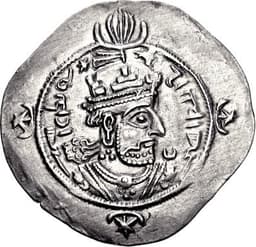
Kavad II
Emperor · Ancient
49.6Total

Leo I the Thracian
Emperor · Ancient
48.4Total
Basic Information
Born
-590
401
Died
—
474
Era
Ancient
Ancient
Nationality
Sasanian Empire
Byzantine Empire
Occupation
Emperor
Emperor
Civilization
Middle Eastern
Western
Score Comparison
Military (10%)
34.6
45.0
Political (20%)
68.0
43.7
Influence (20%)
56.4
49.4
Legacy (20%)
39.2
40.8
Leadership (15%)
45.0
65.0
Strategy (15%)
53.2
50.0
TOTAL
49.6
48.4
Kavad II — Complete Timeline
628 AD
Murder of Khosrow IIPolitical Action
Kavad II, then known as Sheroe, led a coup against his father Khosrow II, imprisoning and later executing him. This act ended Khosrow's long reign and the Sasanian-Byzantine war, but plunged the empire into civil war and decline.
CoupPatricideCivil War
Impact: regionaldestructive
Massacre of 17 BrothersPolitical Action◆ Major
Kavad II ordered the execution of 17 of his brothers to eliminate potential rivals to the throne. This massacre decimated the Sasanian royal family and weakened the dynasty's legitimacy, contributing to the empire's instability.
MassacreRoyal FamilyPower Consolidation
Impact: nationaldestructive
Peace Treaty with ByzantiumPolitical Action◆ Major
Kavad II negotiated a peace treaty with the Byzantine Empire, ending the decades-long war. The treaty restored pre-war borders and returned the True Cross to Jerusalem, but the Sasanian Empire was left exhausted and weakened.
Peace TreatyByzantiumTrue Cross
Impact: regionalconstructive
Leo I the Thracian — Complete Timeline
457 AD
Crowned by the Patriarch of ConstantinoplePolitical Action
Leo I was crowned Eastern Roman Emperor by Patriarch Anatolius of Constantinople. This was the first time a Byzantine emperor was crowned by a patriarch, establishing a precedent for the role of the Church in imperial coronations and strengthening the bond between church and state.
CoronationChurch-State RelationsPrecedent
Impact: globalconstructive
468 AD
Launched the disastrous expedition against the VandalsWar
Leo I, in cooperation with the Western Emperor Anthemius, launched a massive naval expedition against the Vandal Kingdom. The campaign ended in a catastrophic defeat at the Battle of Cape Bon, costing the empire immense resources and weakening its military position.
Vandal WarMilitary CampaignNaval Battle
Impact: regionaldestructive
471 AD
Assassinated the Alan general AsparPolitical Action◆ Major
Leo I ordered the assassination of the powerful Alan magister militum Aspar and his son, who had dominated the Eastern court for decades. This act ended the Germanic influence over the Eastern Roman army and solidified Leo's authority, but also led to a brief civil war.
AssassinationPower StruggleCivil War
Impact: nationaldestructive
Expert Analysis
Origins
Kavad II, originally named Sheroe, was born in the early 7th century into the Sasanian royal family as a son of Khosrow II. His mother was a Byzantine princess, Maria, though some sources suggest she was a noblewoman. Little is known of his early life, but he likely received a princely education in statecraft and military matters. His father's long reign (590–628) had expanded the empire to its greatest extent, but also drained resources through endless wars.
Leo I, known as Leo the Thracian, was born around 401 AD in Thrace, likely of lowly origins. He rose through the ranks of the Roman army, eventually becoming a trusted officer under the Alan general Aspar. His background was humble, and he lacked the aristocratic pedigree typical of earlier emperors. His ascent was facilitated by Aspar, who sought a puppet ruler.
Rise to Power
Kavad II rose to power through a palace coup in February 628. Dissatisfied with Khosrow II's costly war with Byzantium and his neglect of the nobility, Sheroe led a coalition of aristocrats and imprisoned his father. He then ordered the execution of Khosrow and 17 of his own brothers to eliminate rivals. This act secured his throne but decimated the royal family, scoring a Political 68.0 for decisiveness but a low Military 34.6 due to the instability it caused.
Leo I was crowned emperor in February 457 by Patriarch Anatolius, the first such coronation in Byzantine history. This event set a precedent for ecclesiastical involvement in imperial legitimacy. Leo initially seemed a compliant tool of Aspar, but soon asserted independence. His rise was marked by careful maneuvering against the Gothic and Alan factions that had dominated the court.
Leadership & Governance
Kavad II's reign lasted only six months (February to September 628). His primary act was negotiating a peace treaty with Byzantium, ending the war that had exhausted both empires. He restored pre-war borders and returned the True Cross relic. However, he failed to stabilize the empire's finances or military. His massacre of his brothers created a succession crisis, weakening the dynasty. His governance score of 45.0 reflects his inability to consolidate power.
Leo I ruled for 17 years (457–474). He strengthened the imperial treasury and reduced reliance on Germanic mercenaries by recruiting Isaurians. He sponsored the Chalcedonian Orthodox position and built churches. His assassination of Aspar in 471 freed the throne from barbarian control. However, his disastrous 468 expedition against the Vandals cost immense resources and ended in defeat. His Leadership score of 65.0 is the highest among his metrics, but his Strategy of 50.0 was undermined by poor military decisions.
Triumph & Tragedy
Kavad II's triumph was ending the devastating war with Byzantium, securing peace and the return of the True Cross. His tragedy was the fratricidal purge that left the empire vulnerable. He died of plague soon after, possibly divine retribution in historical accounts. His influence was minimal due to his short reign.
Leo I's triumph was the elimination of Aspar's dominance, asserting imperial authority. He also promoted the Isaurian leader Zeno, who later became emperor. His tragedy was the Vandal expedition, which lost 100,000 men and 1,100 ships, a catastrophic failure. He died of dysentery, leaving a mixed legacy.
Character & Destiny
Kavad II was ruthless and pragmatic, willing to commit patricide and fratricide for power. His actions suggest a short-term focus, ignoring long-term consequences. His early death prevented any real assessment of his character. Historical sources, mostly Byzantine, portray him as a usurper.
Leo I was cautious but ambitious. He patiently built power against Aspar, but his overreach in the Vandal campaign showed poor judgment. He was religiously devout and strengthened the patriarch's role. His character combined low-born tenacity with imperial dignity.
Legacy
Kavad II's legacy is largely negative: he destabilized the Sasanian dynasty, leading to its rapid decline after his death. His peace treaty was beneficial but short-lived. He scored 39.2 in Legacy and 56.4 in Influence, reflecting his limited but consequential impact.
Leo I's legacy includes the precedent of patriarchal coronation and the reduction of Germanic influence in the Byzantine military. His sponsorship of the Council of Chalcedon shaped church history. However, his military failures and the subsequent rise of Zeno's Isaurian faction limited his long-term impact. He scored 40.8 in Legacy and 49.4 in Influence.
Conclusion
Kavad II and Leo I both ruled during periods of crisis, but their impacts differ. Kavad II's brief reign caused lasting damage to the Sasanian Empire, while Leo I's longer rule strengthened Byzantine institutions despite military setbacks. In terms of total score, Kavad II edges Leo I 49.6 to 48.4, but this margin is misleading. Leo I's leadership score of 65.0 against Kavad's 45.0 indicates greater effectiveness. Kavad's political score of 68.0 is high but tainted by his methods. Ultimately, Leo I had a more substantial impact on the Byzantine Empire's political structure, whereas Kavad II's legacy is one of destruction. Therefore, Leo I the Thracian was the greater leader, as his reforms outlasted his reign, while Kavad II's actions hastened his empire's fall.
Rankings
🥇
Kavad IILeader
Mil: 34.6Pol: 68.0Inf: 56.4
49.6
🥈
Leo I the Thracian
Mil: 45.0Pol: 43.7Inf: 49.4
48.4
+1.2 behind
How This Comparison Works
Algorithm
Each figure is scored on 6 dimensions (0—100 scale) based on structured historical data: Military (10%), Political (20%), Influence (20%), Legacy (20%), Leadership (15%), Strategy (15%). The weighted total produces the final ranking.
Data Sources
Scores are computed from structured sub-indicators in the database. Scale factors adjust for era (Ancient ×0.85, Modern ×1.0) and civilization size (Eastern ×1.05, Other ×0.80) to account for differences in population and military scale.
Maximum 3 Figures
Comparisons are limited to 2—3 figures to ensure readability and statistical meaningfulness.
Error Margins
±5 points per dimension — Sub-scores are derived from historical records with inherent uncertainty. Two figures within 5 points on a dimension should be considered roughly equivalent in that area.
Total Score Accuracy
±3 points overall — The weighted combination of 6 dimensions produces a total score with approximately ±3 points of uncertainty. Differences of less than 3 points are not statistically significant— the figures are effectively tied.
Known Limitations
- Historical records are incomplete and uneven across civilizations
- Figures from oral-tradition societies may be underrepresented
- Occupation labels can misclassify multi-role figures
- Scores measure capability and impact, not moral character
- Quantitative scoring is a comparison tool, not absolute truth
Capability Radar
Military (10%) — Battles & Warfare
Battles
40
30
Win Rate
40
30
Expansion
43
15
Political (20%) — Governance & Reform
Reform
0
40
Diplomacy
0
45
Economy
0
35
Influence (20%) — Cultural & Global Reach
Cultural
0
30
Global
0
25
Legacy (20%) — Historical Impact
Historical
5
35
Longevity
0
30
Leadership (15%) — Power & Stability
Tenure
5
60
Stability
0
40
Strategy (15%) — Tactics & Innovation
Strategy
49
25
Tactics
53
25
Reform
52
20
Similar Comparisons
Comments & Discussion
No comments yet. Be the first to share your thoughts!