Loading...
Hugh O Neill vs Oda Nobuhide
Hugh O Neill leads by 3.5 pts · 2 figures compared
…

Hugh O Neill
General · Modern
57.6Total
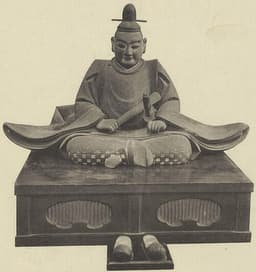
Oda Nobuhide
General · Modern
54.1Total
Basic Information
Born
1550
1510
Died
1616
1551
Era
Modern
Modern
Nationality
Ireland
Japan
Occupation
General
General
Civilization
Western
Eastern
Score Comparison
Military (10%)
70.0
40.0
Political (20%)
45.0
54.7
Influence (20%)
58.3
56.4
Legacy (20%)
52.0
48.3
Leadership (15%)
72.0
64.5
Strategy (15%)
55.0
60.0
TOTAL
57.6
54.1
Hugh O Neill — Complete Timeline
1595 AD
Rebellion against English RuleWar◆ Major
Hugh O'Neill openly rebelled against English authority in Ireland, beginning the Nine Years' War. He sought to defend Gaelic Irish autonomy and resist English expansion, using guerrilla tactics and seeking foreign support.
RebellionNine Years' WarGaelic Resistance
Impact: national
1598 AD
Battle of the Yellow FordWar◆ Major
Hugh O'Neill, Earl of Tyrone, led Irish forces to a decisive victory over an English army at the Yellow Ford in County Armagh. The English commander Sir Henry Bagenal was killed, and the victory boosted Irish morale during the Nine Years' War.
Nine Years' WarBattleIrish Victory
Impact: regional
1601 AD
Battle of KinsaleWar◆ Major
Hugh O'Neill and his Spanish allies were defeated by English forces at Kinsale in County Cork. The defeat was a turning point in the Nine Years' War, as it ended Spanish support and forced O'Neill into a defensive position in Ulster.
Nine Years' WarBattleSpanish Intervention
Impact: regionaltragic
1603 AD
Treaty of MellifontPolitical Action◆ Major
Hugh O'Neill surrendered to the English Crown at Mellifont, ending the Nine Years' War. He submitted to Lord Deputy Mountjoy, received a pardon, and was allowed to retain his lands and title, though his power was significantly reduced.
SurrenderNine Years' WarTreaty
Impact: national
1607 AD
Flight of the EarlsPolitical Action◆ Major
Hugh O'Neill, along with other Ulster Gaelic lords, fled Ireland for continental Europe after the failure of the Nine Years' War. This departure marked the end of the Gaelic Irish political order in Ulster and led to the Plantation of Ulster by English and Scottish settlers.
ExileUlster PlantationGaelic Decline
Impact: nationaltragic
Oda Nobuhide — Complete Timeline
1542 AD
Battle of AzukizakaWar◆ Major
Nobuhide defeated the forces of Imagawa Yoshimoto at Azukizaka. This victory secured his control over Owari Province and established him as a major daimyo in the region, setting the stage for his son Nobunaga's rise.
BattleOwariSengoku Period
Impact: regional
1547 AD
Conflict with Saito DosanWar◆ Major
Nobuhide fought a series of inconclusive battles against Saito Dosan of Mino Province. The conflict ended with a peace treaty sealed by the marriage of Nobuhide's son Nobunaga to Dosan's daughter Nohime.
ConflictAllianceSengoku Period
Impact: regional
1551 AD
Death from illnessOther◆ Major
Nobuhide died suddenly from illness at the age of 41. His death left his young son Nobunaga as head of the Oda clan, leading to a period of instability and rebellion within the clan.
DeathSuccessionOda Clan
Impact: regionaltragic
Expert Analysis
Origins
Hugh O'Neill, born around 1550, was the son of Matthew O'Neill, Baron of Dungannon. He was raised in the Pale under English tutelage, spending his youth in London and at the English court. This gave him a unique understanding of English methods and politics. He returned to Ireland in the 1570s to claim his inheritance as Earl of Tyrone, navigating the complex web of Gaelic and English loyalties.
Oda Nobuhide, born in 1510 in Owari Province, was the head of the Oda clan, a minor samurai family. He inherited a small domain and worked to consolidate power through military campaigns and strategic marriages. Little is known of his early education, but he was trained in the martial arts and governance typical of a daimyo.
Rise to Power
O'Neill rose to prominence by initially cooperating with the English crown, serving as a loyal earl while secretly building a coalition of Gaelic lords. By 1595, he openly rebelled, beginning the Nine Years' War. His early success at the Battle of the Yellow Ford in 1598, where he inflicted a heavy defeat on an English army, cemented his reputation as a military leader.
Nobuhide rose through persistent military campaigns. In 1542, he defeated the powerful Imagawa Yoshimoto at the Battle of Azukizaka, securing control over Owari. He then engaged in a prolonged conflict with Saito Dosan of Mino, ending in a peace sealed by the marriage of his son Nobunaga to Dosan's daughter. By his death, he had established the Oda clan as a significant power in central Japan.
Leadership & Governance
O'Neill's leadership style was adaptive, blending Gaelic traditions with English military tactics. He reformed his forces, introducing firearms and disciplined formations. Politically, he sought to unite Irish lords under a common cause, often through personal alliances and promises of land. However, his governance was hampered by the lack of a centralized state and reliance on personal loyalty.
Nobuhide was a pragmatic ruler who focused on territorial expansion and economic development. He built castles, improved agriculture, and fostered trade. His leadership was direct and hands-on, often leading his troops in battle. He also used marriage and adoption to forge alliances, a common practice among daimyo. His political acumen scored 54.7, slightly higher than O'Neill's 45.0.
Triumph & Tragedy
O'Neill's greatest triumph was the Battle of the Yellow Ford in 1598, where his forces killed about 2,000 English soldiers. This victory nearly drove the English out of Ulster. His greatest tragedy was the Battle of Kinsale in 1601, where a combined Irish-Spanish force was defeated due to poor coordination. The subsequent Treaty of Mellifont in 1603 ended the war, and O'Neill was forced to submit. He later fled Ireland in the Flight of the Earls in 1607, never to return.
Nobuhide's triumph was securing Owari Province and setting the stage for his son Nobunaga's rise. His tragedy was his sudden death from illness in 1551 at age 41, leaving a power vacuum that led to internal clan conflicts. Nobunaga had to fight to regain control, but Nobuhide's groundwork was crucial.
Character & Destiny
O'Neill was calculating and patient, but also ambitious. He was willing to use English methods against them, but his reliance on foreign aid (Spain) proved a strategic error. His character was shaped by his dual identity as an English-raised Gaelic lord, leading to mistrust on both sides. Historically, he is seen as a tragic figure who fought for a lost cause.
Nobuhide was aggressive and decisive, but also a skilled diplomat. His early death cut short his ambitions, but his legacy was secured through his son. He is often overshadowed by Nobunaga, but historians recognize him as a capable consolidator.
Legacy
O'Neill's legacy is as a symbol of Irish resistance. The Flight of the Earls marked the end of the Gaelic order, and his rebellion accelerated English colonization (the Plantation of Ulster). His military tactics influenced later Irish rebels. His total score of 57.6 reflects moderate impact.
Nobuhide's legacy is indirect but profound. He built the foundation for the Oda clan's dominance, which led to the unification of Japan under Nobunaga and eventually Toyotomi Hideyoshi. His strategic and political moves enabled Nobunaga's rise. His score of 54.1 is slightly lower, but his influence on Japanese history is immense.
Conclusion
Hugh O'Neill had a higher total score (57.6 vs 54.1), but Oda Nobuhide's impact on history was greater. O'Neill's rebellion ultimately failed and led to the destruction of the Gaelic system. Nobuhide, though dying early, set in motion events that unified Japan. His political and strategic scores (54.7 and 60.0) were higher than O'Neill's (45.0 and 55.0). While O'Neill was a more accomplished military commander (70.0 vs 40.0), Nobuhide's legacy reshaped a nation. Therefore, Oda Nobuhide had the greater historical impact.
Rankings
🥇
Hugh O NeillLeader
Mil: 70.0Pol: 45.0Inf: 58.3
57.6
🥈
Oda Nobuhide
Mil: 40.0Pol: 54.7Inf: 56.4
54.1
+3.5 behind
How This Comparison Works
Algorithm
Each figure is scored on 6 dimensions (0—100 scale) based on structured historical data: Military (10%), Political (20%), Influence (20%), Legacy (20%), Leadership (15%), Strategy (15%). The weighted total produces the final ranking.
Data Sources
Scores are computed from structured sub-indicators in the database. Scale factors adjust for era (Ancient ×0.85, Modern ×1.0) and civilization size (Eastern ×1.05, Other ×0.80) to account for differences in population and military scale.
Maximum 3 Figures
Comparisons are limited to 2—3 figures to ensure readability and statistical meaningfulness.
Error Margins
±5 points per dimension — Sub-scores are derived from historical records with inherent uncertainty. Two figures within 5 points on a dimension should be considered roughly equivalent in that area.
Total Score Accuracy
±3 points overall — The weighted combination of 6 dimensions produces a total score with approximately ±3 points of uncertainty. Differences of less than 3 points are not statistically significant— the figures are effectively tied.
Known Limitations
- Historical records are incomplete and uneven across civilizations
- Figures from oral-tradition societies may be underrepresented
- Occupation labels can misclassify multi-role figures
- Scores measure capability and impact, not moral character
- Quantitative scoring is a comparison tool, not absolute truth
Capability Radar
Military (10%) — Battles & Warfare
Battles
65
40
Win Rate
60
45
Expansion
40
40
Political (20%) — Governance & Reform
Reform
50
30
Diplomacy
70
45
Economy
45
35
Influence (20%) — Cultural & Global Reach
Cultural
50
30
Global
40
20
Legacy (20%) — Historical Impact
Historical
55
45
Longevity
45
35
Leadership (15%) — Power & Stability
Tenure
60
40
Stability
40
30
Strategy (15%) — Tactics & Innovation
Strategy
75
45
Tactics
70
50
Reform
55
35
Similar Comparisons
Comments & Discussion
No comments yet. Be the first to share your thoughts!