Loading...
Hastings Kamuzu Banda vs Kassim Majaliwa
Hastings Kamuzu Banda leads by 7.7 pts · 2 figures compared
…

Hastings Kamuzu Banda
Politician · Modern
50.2Total
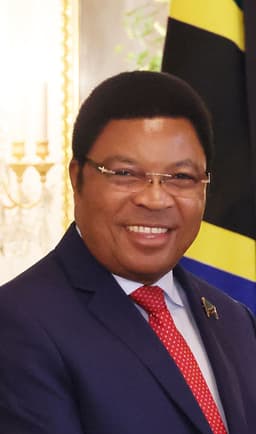
Kassim Majaliwa
Politician · Modern
42.5Total
Basic Information
Born
1898
1960
Died
1997
—
Era
Modern
Modern
Nationality
Malawi
Tanzania
Occupation
Politician
Politician
Civilization
Other
Other
Score Comparison
Military (10%)
43.3
16.7
Political (20%)
43.7
40.8
Influence (20%)
51.8
47.1
Legacy (20%)
45.0
36.7
Leadership (15%)
72.0
65.0
Strategy (15%)
43.4
40.4
TOTAL
50.2
42.5
Hastings Kamuzu Banda — Complete Timeline
1964 AD
Independence and Assumption of PremiershipPolitical Action
Malawi gained independence from Britain on July 6, 1964, with Hastings Kamuzu Banda as Prime Minister. He quickly moved to consolidate power, dismissing several cabinet ministers in the 1964 Cabinet Crisis, establishing a one-party state under the Malawi Congress Party (MCP).
IndependenceCabinet CrisisOne-Party State
Impact: national
1967 AD
Diplomatic Relations with Apartheid South AfricaPolitical Action◆ Major
Banda became the first black African leader to establish formal diplomatic relations with apartheid South Africa. This controversial move provided Malawi with economic aid and trade benefits but drew sharp criticism from other African states and the OAU.
Foreign PolicyApartheidEconomic Pragmatism
Impact: regional
1971 AD
Declaration of Life PresidentPolitical Action◆ Major
Banda was declared President for Life by the MCP-controlled parliament. This formalized his absolute rule, concentrating all state power in his hands. He used this position to suppress all opposition, control the judiciary, and enforce a cult of personality.
DictatorshipCult of PersonalityAuthoritarianism
Impact: nationaldestructive
1993 AD
Referendum and Loss of PowerPolitical Action
Under domestic and international pressure, Banda allowed a referendum on multi-party politics. The vote was overwhelmingly in favor of ending one-party rule. Banda was forced to step down in 1994 after losing the subsequent presidential election to Bakili Muluzi.
DemocratizationReferendumEnd of Dictatorship
Impact: nationalprogressive
Kassim Majaliwa — Complete Timeline
2015 AD
Appointed Prime Minister of TanzaniaPolitical Action◆ Major
Kassim Majaliwa was appointed Prime Minister by President John Magufuli after the 2015 election. He succeeded Mizengo Pinda and became the head of government, responsible for coordinating cabinet activities and policy implementation.
AppointmentGovernmentTanzania
Impact: nationalconstructive
2020 AD
Oversaw COVID-19 ResponsePolitical Action
As Prime Minister, Majaliwa coordinated Tanzania's response to the COVID-19 pandemic, including public health measures and economic support programs. The government initially downplayed the pandemic but later adopted more conventional measures.
COVID-19Public HealthGovernment Response
Impact: national
2021 AD
Reappointed Under President SuluhuPolitical Action
Following President Magufuli's death, new President Samia Suluhu Hassan reappointed Majaliwa as Prime Minister in 2021. He continued in the role, supporting Suluhu's administration and policy direction.
ReappointmentGovernment Continuity
Impact: nationalconstructive
Expert Analysis
Origins
Hastings Kamuzu Banda was born around 1898 in Kasungu, Nyasaland (now Malawi). He left home at age 12, walking to South Africa, then studied in the United States and the United Kingdom, earning degrees in medicine and history. Banda practiced medicine in England and Ghana before returning to Nyasaland in 1958 at the invitation of nationalist leaders. Kassim Majaliwa was born on December 22, 1960, in Ruangwa, Lindi Region, Tanganyika (now Tanzania). He trained as a teacher at Mtwara Teachers College and taught in primary schools before entering politics. Majaliwa joined the ruling Chama Cha Mapinduzi (CCM) party and held local government positions before becoming a member of parliament in 2010.
Rise to Power
Banda rose to prominence as the leader of the Malawi Congress Party (MCP) during the push for independence. He led the party to victory in the 1961 elections, becoming Prime Minister on July 6, 1964, when Malawi gained independence. Banda quickly marginalized rivals, including cabinet ministers who opposed his autocratic style, leading to the 1964 Cabinet Crisis where he dismissed several ministers. By 1966, he declared Malawi a republic and became its first president. In 1971, the MCP-controlled parliament declared him President for Life, cementing his absolute rule. Majaliwa's rise was more gradual. He served as a district commissioner and later as a regional commissioner before being elected to parliament in 2010. In 2015, President John Magufuli appointed him Prime Minister, a role he retained after Magufuli's death under President Samia Suluhu Hassan in 2021. Majaliwa's rise reflects bureaucratic loyalty rather than personal ambition.
Leadership & Governance
Banda ruled Malawi as a dictator for 30 years. He banned opposition parties, controlled the press, and used a paramilitary police force to suppress dissent. His governance was centralized: all decisions flowed through him. Economically, he pursued pro-Western policies, establishing diplomatic relations with apartheid South Africa (becoming the first black African leader to do so) and receiving substantial aid. However, his policies favored his region and cronies, leading to corruption and inequality. Majaliwa, as prime minister, serves under a presidential system with limited executive power. He oversees government operations and coordinates policy implementation. Under Magufuli, he supported infrastructure projects and anti-corruption efforts, but also faced criticism for lack of transparency. Under Suluhu, he has focused on COVID-19 recovery and economic reforms. His leadership style is bureaucratic and consensus-driven, contrasting sharply with Banda's authoritarianism.
Triumph & Tragedy
Banda's greatest success was leading Malawi to independence and maintaining stability for three decades. He built infrastructure like schools and hospitals, and his agricultural policies made Malawi self-sufficient in food for a time. However, his tragedies include severe human rights abuses: political opponents were imprisoned, tortured, or killed; the press was muzzled; and his rule fostered a culture of fear. Economically, his close ties to South Africa and Portugal earned him international condemnation, and his neglect of democratic institutions left a fragile legacy. Majaliwa's successes include overseeing Tanzania's response to COVID-19, coordinating vaccination campaigns and economic support. He has also promoted education and infrastructure. His tragedies are less dramatic: he operated under controversial presidents, and his tenure saw limited personal initiative. He scored 65.0 in leadership compared to Banda's 72.0, but Banda's political score (43.7) is only slightly higher than Majaliwa's (40.8), reflecting the constraints of their roles.
Character & Destiny
Banda was a shrewd, authoritarian figure who brooked no dissent. He cultivated a cult of personality, requiring Malawians to refer to him as 'Ngwazi' (conqueror) and 'Saviour'. His character combined intellectual arrogance with a ruthless instinct for power. This led to his downfall: by the 1990s, internal and external pressure forced him to hold a referendum on multi-party politics, which he lost in 1993. He died in 1997, largely discredited. Majaliwa is described as a low-key, loyal party man. He does not seek the spotlight and focuses on administrative tasks. His destiny is tied to the CCM party; he survives by not rocking the boat. While Banda's character shaped his nation's history, Majaliwa's character has ensured his political survival but limited his impact.
Legacy
Banda's legacy is mixed. He is remembered as the founding father of Malawi but also as a dictator who stunted democratic development. The MCP remains a political force, but his authoritarian model was rejected. His scores: Military 43.3, Political 43.7, Influence 51.8, Legacy 45.0, Leadership 72.0, Strategy 43.4, TOTAL 50.2. Majaliwa's legacy is still forming. He is seen as a competent administrator but not a transformative leader. His scores: Military 16.7, Political 40.8, Influence 47.1, Legacy 36.7, Leadership 65.0, Strategy 40.4, TOTAL 42.5. The score gap is 7.7 points in Banda's favor. Banda's influence endures through Malawi's political culture, while Majaliwa's impact is largely institutional within Tanzania's stable system.
Conclusion
Hastings Kamuzu Banda had greater impact than Kassim Majaliwa, as reflected in his higher total score (50.2 vs 42.5). Banda shaped Malawi's identity and trajectory for three decades, for better or worse. Majaliwa, while a capable steward, has operated within an established system and has not left a distinct mark. Banda's leadership score (72.0) and influence (51.8) underscore his historical weight, even if his political and legacy scores are moderate. The comparison is not close: Banda's autocratic rule left a deeper imprint on his nation than Majaliwa's administrative service.
Rankings
🥇
Hastings Kamuzu BandaLeader
Mil: 43.3Pol: 43.7Inf: 51.8
50.2
🥈
Kassim Majaliwa
Mil: 16.7Pol: 40.8Inf: 47.1
42.5
+7.7 behind
How This Comparison Works
Algorithm
Each figure is scored on 6 dimensions (0—100 scale) based on structured historical data: Military (10%), Political (20%), Influence (20%), Legacy (20%), Leadership (15%), Strategy (15%). The weighted total produces the final ranking.
Data Sources
Scores are computed from structured sub-indicators in the database. Scale factors adjust for era (Ancient ×0.85, Modern ×1.0) and civilization size (Eastern ×1.05, Other ×0.80) to account for differences in population and military scale.
Maximum 3 Figures
Comparisons are limited to 2—3 figures to ensure readability and statistical meaningfulness.
Error Margins
±5 points per dimension — Sub-scores are derived from historical records with inherent uncertainty. Two figures within 5 points on a dimension should be considered roughly equivalent in that area.
Total Score Accuracy
±3 points overall — The weighted combination of 6 dimensions produces a total score with approximately ±3 points of uncertainty. Differences of less than 3 points are not statistically significant— the figures are effectively tied.
Known Limitations
- Historical records are incomplete and uneven across civilizations
- Figures from oral-tradition societies may be underrepresented
- Occupation labels can misclassify multi-role figures
- Scores measure capability and impact, not moral character
- Quantitative scoring is a comparison tool, not absolute truth
Capability Radar
Military (10%) — Battles & Warfare
Battles
21
27
Win Rate
25
30
Expansion
28
31
Political (20%) — Governance & Reform
Reform
20
30
Diplomacy
30
35
Economy
40
30
Influence (20%) — Cultural & Global Reach
Cultural
30
10
Global
20
10
Legacy (20%) — Historical Impact
Historical
40
10
Longevity
30
10
Leadership (15%) — Power & Stability
Tenure
85
40
Stability
25
40
Strategy (15%) — Tactics & Innovation
Strategy
30
35
Tactics
32
37
Reform
39
39
Similar Comparisons
Comments & Discussion
No comments yet. Be the first to share your thoughts!