Loading...
This comparison has not been analyzed yet.
One-time AI generation (~1 minute). Scores and timeline are already available below.
Kara Mustafa Pasha vs Yahya Khan
Kara Mustafa Pasha leads by 20.4 pts · 2 figures compared
…

Kara Mustafa Pasha
General · Modern
62.9Total
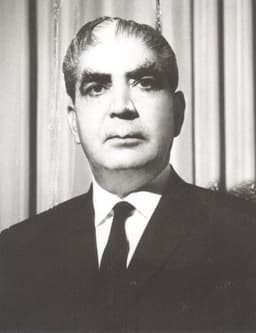
Yahya Khan
General · Modern
42.5Total
Basic Information
Born
1634
1917
Died
1683
1980
Era
Modern
Modern
Nationality
Ottoman Empire
Pakistan
Occupation
General
General
Civilization
Middle Eastern
Indian
Score Comparison
Military (10%)
67.5
50.0
Political (20%)
68.0
25.0
Influence (20%)
61.0
50.2
Legacy (20%)
56.0
41.7
Leadership (15%)
71.0
51.9
Strategy (15%)
60.0
30.3
TOTAL
62.9
42.5
Kara Mustafa Pasha — Complete Timeline
1676 AD
Appointed Grand Vizier of the Ottoman EmpirePolitical Action◆ Major
Kara Mustafa Pasha was appointed Grand Vizier by Sultan Mehmed IV. He became the most powerful official in the empire, overseeing military campaigns and administrative reforms.
Ottoman EmpireLeadershipPolitics
Impact: global
1683 AD
Led the Siege of ViennaWar
Kara Mustafa Pasha led the Ottoman army in the Siege of Vienna, aiming to capture the Habsburg capital. The siege failed after a relief force led by John III Sobieski of Poland defeated the Ottomans at the Battle of Vienna.
SiegeOttoman-Habsburg WarsEurope
Impact: globaldestructive
Executed by Order of the SultanPolitical Action◆ Major
After the failure at Vienna, Kara Mustafa Pasha was executed by order of Sultan Mehmed IV. His head was sent to the sultan as proof of his death, marking a dramatic fall from power.
ExecutionOttoman EmpireFall from Power
Impact: regionaltragic
Yahya Khan — Complete Timeline
1969 AD
Assumption of power after Ayub KhanPolitical Action◆ Major
Yahya Khan took over as President after Ayub Khan's resignation. He imposed martial law and promised a return to civilian rule through elections, but his regime was marked by political instability and the growing crisis in East Pakistan.
Martial lawSuccessionPolitical crisis
Impact: national
1970 AD
1970 general electionPolitical Action
Yahya Khan held Pakistan's first general election based on universal suffrage. The Awami League won a landslide in East Pakistan, while the PPP won in West Pakistan. The refusal to accept the results led to the Bangladesh Liberation War.
ElectionAwami LeaguePolitical crisis
Impact: nationaldestructive
1971 AD
Operation SearchlightWar
Yahya Khan ordered a military crackdown in East Pakistan to suppress the Bengali independence movement. The operation involved widespread atrocities, including mass killings and rape, leading to a humanitarian crisis and the Bangladesh Liberation War.
AtrocitiesBangladesh Liberation WarGenocide
Impact: regionaldestructive
Surrender in the Bangladesh Liberation WarWar
Pakistan's military surrendered to Indian forces in Dhaka, leading to the creation of Bangladesh. Yahya Khan's regime was discredited, and he resigned, handing power to Zulfikar Ali Bhutto. The defeat was a major national humiliation.
SurrenderBangladesh independenceDefeat
Impact: regionaltragic
This comparison has not been analyzed yet.
One-time AI generation (~1 minute). Scores and timeline are already available below.
Rankings
🥇
Kara Mustafa PashaLeader
Mil: 67.5Pol: 68.0Inf: 61.0
62.9
🥈
Yahya Khan
Mil: 50.0Pol: 25.0Inf: 50.2
42.5
+20.4 behind
How This Comparison Works
Algorithm
Each figure is scored on 6 dimensions (0—100 scale) based on structured historical data: Military (10%), Political (20%), Influence (20%), Legacy (20%), Leadership (15%), Strategy (15%). The weighted total produces the final ranking.
Data Sources
Scores are computed from structured sub-indicators in the database. Scale factors adjust for era (Ancient ×0.85, Modern ×1.0) and civilization size (Eastern ×1.05, Other ×0.80) to account for differences in population and military scale.
Maximum 3 Figures
Comparisons are limited to 2—3 figures to ensure readability and statistical meaningfulness.
Error Margins
±5 points per dimension — Sub-scores are derived from historical records with inherent uncertainty. Two figures within 5 points on a dimension should be considered roughly equivalent in that area.
Total Score Accuracy
±3 points overall — The weighted combination of 6 dimensions produces a total score with approximately ±3 points of uncertainty. Differences of less than 3 points are not statistically significant— the figures are effectively tied.
Known Limitations
- Historical records are incomplete and uneven across civilizations
- Figures from oral-tradition societies may be underrepresented
- Occupation labels can misclassify multi-role figures
- Scores measure capability and impact, not moral character
- Quantitative scoring is a comparison tool, not absolute truth
Capability Radar
Military (10%) — Battles & Warfare
Battles
75
30
Win Rate
40
10
Expansion
65
10
Political (20%) — Governance & Reform
Reform
45
5
Diplomacy
40
10
Economy
50
10
Influence (20%) — Cultural & Global Reach
Cultural
40
10
Global
55
20
Legacy (20%) — Historical Impact
Historical
60
30
Longevity
50
10
Leadership (15%) — Power & Stability
Tenure
60
40
Stability
30
5
Strategy (15%) — Tactics & Innovation
Strategy
50
15
Tactics
55
20
Reform
30
5
Similar Comparisons
Comments & Discussion
No comments yet. Be the first to share your thoughts!