Loading...
Qasem Soleimani vs Yahya Khan
Qasem Soleimani leads by 18.4 pts · 2 figures compared
…

Qasem Soleimani
General · Modern
60.9Total
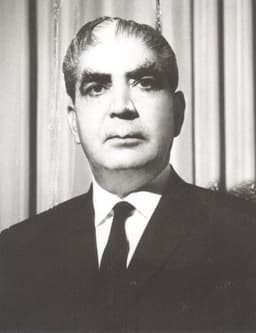
Yahya Khan
General · Modern
42.5Total
Basic Information
Born
1957
1917
Died
—
1980
Era
Modern
Modern
Nationality
Iran
Pakistan
Occupation
General
General
Civilization
Middle Eastern
Indian
Score Comparison
Military (10%)
67.3
50.0
Political (20%)
60.0
25.0
Influence (20%)
55.0
50.2
Legacy (20%)
56.0
41.7
Leadership (15%)
72.0
51.9
Strategy (15%)
66.3
30.3
TOTAL
60.9
42.5
Qasem Soleimani — Complete Timeline
1998 AD
Appointed Commander of Quds ForcePolitical Action◆ Major
Qasem Soleimani was appointed commander of the Quds Force, the elite foreign operations branch of Iran's Islamic Revolutionary Guard Corps (IRGC), in 1998. Under his leadership, the Quds Force expanded Iran's influence across the Middle East, supporting allied groups in Iraq, Syria, Lebanon, and Yemen.
Quds ForceIRGCIranian Influence
Impact: global
2014 AD
Played Key Role in Defeating ISIS in IraqWar◆ Major
Soleimani was instrumental in organizing Iraqi Shia militias and coordinating with Iraqi security forces to counter the Islamic State (ISIS) after its 2014 offensive. He provided strategic advice and logistical support, helping to turn the tide against ISIS. His role made him a hero in Iran and among Shia communities, but a target for the US and its allies.
ISISIraq WarShia Militias
Impact: regional
2020 AD
Killed by US Drone StrikeWar
On January 3, 2020, Soleimani was killed in a US drone strike near Baghdad International Airport, ordered by President Donald Trump. The strike also killed Abu Mahdi al-Muhandis, leader of the Iraqi Kata'ib Hezbollah. The assassination escalated tensions between the US and Iran, leading to Iranian missile strikes on US bases in Iraq.
AssassinationUS-Iran ConflictDrone Strike
Impact: globaltragic
Yahya Khan — Complete Timeline
1969 AD
Assumption of power after Ayub KhanPolitical Action◆ Major
Yahya Khan took over as President after Ayub Khan's resignation. He imposed martial law and promised a return to civilian rule through elections, but his regime was marked by political instability and the growing crisis in East Pakistan.
Martial lawSuccessionPolitical crisis
Impact: national
1970 AD
1970 general electionPolitical Action
Yahya Khan held Pakistan's first general election based on universal suffrage. The Awami League won a landslide in East Pakistan, while the PPP won in West Pakistan. The refusal to accept the results led to the Bangladesh Liberation War.
ElectionAwami LeaguePolitical crisis
Impact: nationaldestructive
1971 AD
Operation SearchlightWar
Yahya Khan ordered a military crackdown in East Pakistan to suppress the Bengali independence movement. The operation involved widespread atrocities, including mass killings and rape, leading to a humanitarian crisis and the Bangladesh Liberation War.
AtrocitiesBangladesh Liberation WarGenocide
Impact: regionaldestructive
Surrender in the Bangladesh Liberation WarWar
Pakistan's military surrendered to Indian forces in Dhaka, leading to the creation of Bangladesh. Yahya Khan's regime was discredited, and he resigned, handing power to Zulfikar Ali Bhutto. The defeat was a major national humiliation.
SurrenderBangladesh independenceDefeat
Impact: regionaltragic
Expert Analysis
Origins
Qasem Soleimani was born on March 11, 1957, in the village of Qanat-e Malek, Kerman Province, Iran, into a peasant family. He left school at 13 to work in construction to support his family. In 1979, he joined the Islamic Revolutionary Guard Corps (IRGC) after the Iranian Revolution, quickly rising through the ranks due to his dedication and combat experience in the Iran-Iraq War.
Yahya Khan was born on February 4, 1917, in Chakwal, Punjab, British India, into a Pashtun family. He attended the Indian Military Academy in Dehradun and was commissioned into the British Indian Army in 1938. After the partition of India, he opted for Pakistan and served in various command and staff positions.
Rise to Power
Soleimani's rise began during the Iran-Iraq War (1980-1988), where he commanded the 41st Tharallah Division. His success in counter-offensives earned him the attention of senior leaders. In 1998, he was appointed commander of the Quds Force, the IRGC's foreign operations branch, tasked with expanding Iran's influence abroad. Under his leadership, the Quds Force became a key player in Syria, Iraq, Lebanon, and Yemen.
Yahya Khan's rise was more conventional. He served as a brigade commander in the 1965 Indo-Pakistani War and later as Chief of Army Staff under President Ayub Khan. In 1969, after Ayub Khan resigned amid widespread protests, Yahya Khan assumed the presidency and imposed martial law. He promised a return to civilian rule and held Pakistan's first general elections in 1970.
Leadership & Governance
Soleimani led through a combination of personal charisma, operational expertise, and strategic patience. He cultivated networks of allied militias, such as Hezbollah in Lebanon and Shia factions in Iraq, providing them with weapons, training, and intelligence. His governance approach was indirect; he influenced governments rather than controlling them directly. In Syria, he orchestrated the deployment of Iranian forces and Hezbollah to support Bashar al-Assad after 2011.
Yahya Khan's leadership was authoritarian and indecisive. He imposed martial law but failed to manage the political crisis following the 1970 elections, where the Awami League won a majority in East Pakistan. Instead of negotiating, he ordered Operation Searchlight on March 25, 1971, a brutal military crackdown that led to widespread atrocities and a full-scale civil war. His governance style alienated both East Pakistan and international opinion.
Triumph & Tragedy
Soleimani's greatest success was the defeat of ISIS in Iraq. By organizing the Popular Mobilization Forces (PMF) and coordinating with Iraqi security forces, he played a key role in liberating Tikrit, Mosul, and other cities between 2014 and 2017. His influence also helped maintain the Assad regime in Syria. However, his greatest failure was his assassination. On January 3, 2020, a US drone strike killed him near Baghdad International Airport, ordered by President Donald Trump. The strike eliminated a key Iranian commander but also escalated tensions.
Yahya Khan's triumph was holding the 1970 elections, which were free and fair. However, his failure was catastrophic: the Bangladesh Liberation War resulted in the creation of Bangladesh, with Pakistan's military surrendering on December 16, 1971. Over 90,000 Pakistani soldiers became prisoners of war. Yahya Khan resigned on December 20, 1971, discredited and blamed for the defeat.
Character & Destiny
Soleimani was known for his calm demeanor, strategic thinking, and willingness to operate in the field. He built personal relationships with militia leaders and often visited front lines. His character made him effective as a commander of irregular forces, but his high profile also made him a target. His death turned him into a martyr in Iran, boosting his posthumous influence.
Yahya Khan was seen as indecisive and politically inept. He failed to understand the depth of Bengali nationalism and relied on military force to solve a political problem. His character—aloof and authoritarian—led to his downfall. Historian Yasmin Saikia notes that his actions during the 1971 crisis were marked by "arrogance and lack of foresight."
Legacy
Soleimani's legacy is complex. He is revered in Iran as a hero who expanded Iran's influence and fought terrorism, while in the West he is seen as a destabilizing force. The Quds Force continued its operations after his death, but his personal touch was lost. His strategies of proxy warfare and militia-building remain central to Iranian foreign policy.
Yahya Khan's legacy is overwhelmingly negative in Pakistan. He is remembered as the general who lost half the country. The 1971 defeat led to a re-evaluation of Pakistan's military and political structures. In Bangladesh, he is condemned for the atrocities of Operation Searchlight. He died in relative obscurity in 1980.
Conclusion
Qasem Soleimani had a greater impact on history than Yahya Khan, as reflected in their total scores: Soleimani 60.9 vs. Yahya Khan 42.5. Soleimani's military score of 67.3 and leadership score of 72.0 contrast sharply with Yahya Khan's 50.0 and 51.9. While Soleimani's influence reshaped the Middle East through proxy wars and the defeat of ISIS, Yahya Khan's actions led to the dismemberment of Pakistan. Soleimani's legacy, though contested, continues to affect regional geopolitics, whereas Yahya Khan's is a cautionary tale of failed leadership. Thus, Soleimani stands as the more consequential figure.
Rankings
🥇
Qasem SoleimaniLeader
Mil: 67.3Pol: 60.0Inf: 55.0
60.9
🥈
Yahya Khan
Mil: 50.0Pol: 25.0Inf: 50.2
42.5
+18.4 behind
How This Comparison Works
Algorithm
Each figure is scored on 6 dimensions (0—100 scale) based on structured historical data: Military (10%), Political (20%), Influence (20%), Legacy (20%), Leadership (15%), Strategy (15%). The weighted total produces the final ranking.
Data Sources
Scores are computed from structured sub-indicators in the database. Scale factors adjust for era (Ancient ×0.85, Modern ×1.0) and civilization size (Eastern ×1.05, Other ×0.80) to account for differences in population and military scale.
Maximum 3 Figures
Comparisons are limited to 2—3 figures to ensure readability and statistical meaningfulness.
Error Margins
±5 points per dimension — Sub-scores are derived from historical records with inherent uncertainty. Two figures within 5 points on a dimension should be considered roughly equivalent in that area.
Total Score Accuracy
±3 points overall — The weighted combination of 6 dimensions produces a total score with approximately ±3 points of uncertainty. Differences of less than 3 points are not statistically significant— the figures are effectively tied.
Known Limitations
- Historical records are incomplete and uneven across civilizations
- Figures from oral-tradition societies may be underrepresented
- Occupation labels can misclassify multi-role figures
- Scores measure capability and impact, not moral character
- Quantitative scoring is a comparison tool, not absolute truth
Capability Radar
Military (10%) — Battles & Warfare
Battles
65
30
Win Rate
70
10
Expansion
70
10
Political (20%) — Governance & Reform
Reform
50
5
Diplomacy
85
10
Economy
45
10
Influence (20%) — Cultural & Global Reach
Cultural
55
10
Global
65
20
Legacy (20%) — Historical Impact
Historical
60
30
Longevity
50
10
Leadership (15%) — Power & Stability
Tenure
60
40
Stability
40
5
Strategy (15%) — Tactics & Innovation
Strategy
80
15
Tactics
75
20
Reform
60
5
Similar Comparisons
Comments & Discussion
No comments yet. Be the first to share your thoughts!