Loading...
This comparison has not been analyzed yet.
One-time AI generation (~1 minute). Scores and timeline are already available below.
Kanishka vs Marduk-apla-iddina II
Kanishka leads by 13.4 pts · 2 figures compared
…

Kanishka
Emperor · Ancient
60.8Total
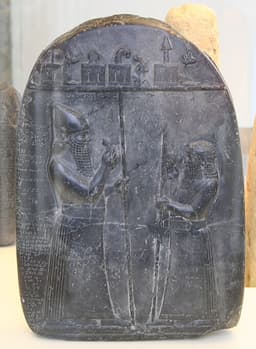
Marduk-apla-iddina II
Emperor · Ancient
47.4Total
Basic Information
Born
127
-722
Died
150
-710
Era
Ancient
Ancient
Nationality
Kushan Empire
Babylon
Occupation
Emperor
Emperor
Civilization
Indian
Middle Eastern
Score Comparison
Military (10%)
78.0
30.0
Political (20%)
60.0
42.3
Influence (20%)
55.0
51.0
Legacy (20%)
58.0
44.2
Leadership (15%)
66.0
55.3
Strategy (15%)
58.0
60.0
TOTAL
60.8
47.4
Kanishka — Complete Timeline
127 AD
Founded the Kanishka EraCultural◆ Major
Kanishka introduced a new calendar era, known as the Kanishka Era (starting 127 CE), used in inscriptions and coins across the Kushan Empire. This era facilitated trade and administration and is still referenced in historical studies.
CalendarAdministration
Impact: regionalconstructive
130 AD
Convened the Fourth Buddhist CouncilCultural
Kanishka sponsored the Fourth Buddhist Council in Kashmir, which compiled the Sarvastivada canon and produced the Mahavibhasha commentary. This council standardized Buddhist doctrine and promoted the spread of Mahayana Buddhism across Central Asia and China.
BuddhismCouncilMahayana
Impact: globalconstructive
135 AD
Expanded the Kushan Empire into Central AsiaWar◆ Major
Kanishka led military campaigns into Central Asia, conquering territories in modern Uzbekistan, Tajikistan, and Afghanistan. He also extended Kushan control into the Tarim Basin (Xinjiang), controlling the Silk Road trade routes.
ConquestSilk Road
Impact: regional
140 AD
Patronized Buddhist Art and ArchitectureCultural◆ Major
Kanishka commissioned the construction of Buddhist stupas, monasteries, and the famous Kanishka Stupa at Peshawar. His patronage fostered the Gandhara school of art, blending Greek, Persian, and Indian styles, which influenced Buddhist iconography across Asia.
ArtArchitectureBuddhism
Impact: globalconstructive
Marduk-apla-iddina II — Complete Timeline
721 BC
Resistance Against Assyrian DominationWar
Marduk-apla-iddina II, known as Merodach-Baladan in the Bible, led a rebellion against Assyrian rule under Sargon II. He seized the Babylonian throne and resisted Assyrian attempts to reconquer Babylon for over a decade, becoming a symbol of Babylonian independence.
Assyrian ResistanceRebellionBabylonian Independence
Impact: regional
710 BC
Defeat and Flight to ElamWar◆ Major
After a prolonged campaign, the Assyrian king Sargon II defeated Marduk-apla-iddina II and recaptured Babylon. Marduk-apla-iddina fled to Elam, where he continued to plot against Assyria, but his direct rule over Babylon ended.
Assyrian VictoryExileBabylon
Impact: regionaltragic
This comparison has not been analyzed yet.
One-time AI generation (~1 minute). Scores and timeline are already available below.
Rankings
🥇
KanishkaLeader
Mil: 78.0Pol: 60.0Inf: 55.0
60.8
🥈
Marduk-apla-iddina II
Mil: 30.0Pol: 42.3Inf: 51.0
47.4
+13.4 behind
How This Comparison Works
Algorithm
Each figure is scored on 6 dimensions (0—100 scale) based on structured historical data: Military (10%), Political (20%), Influence (20%), Legacy (20%), Leadership (15%), Strategy (15%). The weighted total produces the final ranking.
Data Sources
Scores are computed from structured sub-indicators in the database. Scale factors adjust for era (Ancient ×0.85, Modern ×1.0) and civilization size (Eastern ×1.05, Other ×0.80) to account for differences in population and military scale.
Maximum 3 Figures
Comparisons are limited to 2—3 figures to ensure readability and statistical meaningfulness.
Error Margins
±5 points per dimension — Sub-scores are derived from historical records with inherent uncertainty. Two figures within 5 points on a dimension should be considered roughly equivalent in that area.
Total Score Accuracy
±3 points overall — The weighted combination of 6 dimensions produces a total score with approximately ±3 points of uncertainty. Differences of less than 3 points are not statistically significant— the figures are effectively tied.
Known Limitations
- Historical records are incomplete and uneven across civilizations
- Figures from oral-tradition societies may be underrepresented
- Occupation labels can misclassify multi-role figures
- Scores measure capability and impact, not moral character
- Quantitative scoring is a comparison tool, not absolute truth
Capability Radar
Military (10%) — Battles & Warfare
Battles
75
45
Win Rate
70
40
Expansion
80
35
Political (20%) — Governance & Reform
Reform
65
30
Diplomacy
75
50
Economy
70
35
Influence (20%) — Cultural & Global Reach
Cultural
80
30
Global
70
35
Legacy (20%) — Historical Impact
Historical
75
45
Longevity
70
40
Leadership (15%) — Power & Stability
Tenure
70
40
Stability
65
30
Strategy (15%) — Tactics & Innovation
Strategy
70
55
Tactics
65
50
Reform
60
30
Similar Comparisons
Comments & Discussion
No comments yet. Be the first to share your thoughts!