Loading...
Kamehameha V vs Kublai Khan
Kublai Khan leads by 29.3 pts · 2 figures compared
…
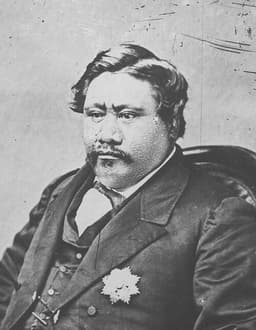
Kamehameha V
Emperor · Modern
45.0Total
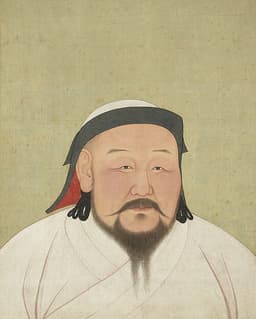
Kublai Khan
Emperor · Medieval
74.3Total
Basic Information
Born
1830
1215
Died
1872
1294
Era
Modern
Medieval
Nationality
Hawaii
Mongolia
Occupation
Emperor
Emperor
Civilization
Other
Eastern
Score Comparison
Military (10%)
11.3
77.5
Political (20%)
46.6
79.2
Influence (20%)
50.2
75.0
Legacy (20%)
42.5
70.0
Leadership (15%)
74.0
72.0
Strategy (15%)
26.5
76.0
TOTAL
45.0
74.3
Kamehameha V — Complete Timeline
1863 AD
Ascended to the Throne as Kamehameha VPolitical Action◆ Major
Lot Kapuāiwa became King Kamehameha V after the death of his brother Kamehameha IV. He was the last monarch of the Kamehameha dynasty.
Impact: national
1864 AD
Promulgated the 1864 ConstitutionReform◆ Major
Kamehameha V abrogated the 1852 constitution and promulgated a new one that increased royal power. The 1864 constitution abolished the office of kuhina nui (premier), gave the king veto power, and restricted suffrage to property owners.
Impact: national
1865 AD
Oversaw Economic Growth and Public WorksReform
Kamehameha V promoted economic development, including the expansion of the sugar industry, construction of roads and harbors, and the establishment of the Hawaiian Board of Health. His reign saw increased foreign investment and trade.
Impact: nationalconstructive
1867 AD
Refused to Sign the Reciprocity TreatyPolitical Action◆ Major
Kamehameha V refused to sign a reciprocity treaty with the United States that would have reduced tariffs on Hawaiian sugar. He believed the treaty would compromise Hawaiian sovereignty and lead to American domination.
Impact: national
1872 AD
Died Without an HeirOther◆ Major
Kamehameha V died without naming an heir, ending the Kamehameha dynasty. His death triggered a succession crisis that led to the election of Lunalilo as the next king.
Impact: nationaltragic
Kublai Khan — Complete Timeline
1260 AD
Adoption of Tibetan Buddhism as State ReligionCultural◆ Major
Kublai Khan appointed the Tibetan lama Drog
Tibetan BuddhismReligionMongol-Tibet Relations
Impact: regional
1271 AD
Proclamation of the Yuan DynastyPolitical Action◆ Major
Kublai Khan officially proclaimed the Yuan dynasty, adopting a Chinese-style dynastic name. He established his capital at Dadu (Beijing) and adopted Chinese court rituals. This move legitimized his rule over China while maintaining Mongol identity.
Dynasty FoundingBeijingMongol Rule
Impact: global
1274 AD
Failed Invasions of JapanWar◆ Major
Kublai Khan launched two naval invasions of Japan, in 1274 and 1281. Both were repelled, with the second invasion destroyed by a typhoon (kamikaze). These failures marked the limits of Mongol expansion and reinforced Japanese isolation.
Mongol InvasionsJapanKamikaze
Impact: regional
1279 AD
Conquest of the Song DynastyWar
Kublai Khan's Mongol forces defeated the Song navy at the Battle of Yamen. The last Song emperor drowned, ending the Song dynasty. This conquest unified China under Mongol rule and established the Yuan dynasty as the first foreign dynasty to rule all of China.
Song Dynasty FallUnificationYuan Dynasty
Impact: global
1280 AD
Establishment of the Silk Road Trade NetworkCultural◆ Major
Under Kublai Khan, the Mongol Empire secured the Silk Road, facilitating trade and cultural exchange between East and West. Marco Polo visited his court. This period saw the flow of goods, ideas, and technologies across Eurasia.
Silk RoadTradeCultural Exchange
Impact: globalconstructive
Expert Analysis
Kublai Khan vs Kamehameha V
### The Emperor Who Built an Empire and the King Who Lost a Kingdom
On a winter day in 1294, Kublai Khan, the grandson of Genghis Khan and the ruler of the largest contiguous land empire in history, lay dying in his grand palace in Khanbaliq—modern-day Beijing. He had just watched his beloved wife and his chosen heir die before him, and his once-vast dominion was fraying at the edges. Nearly six centuries later, on a humid December morning in 1872, Kamehameha V, the last monarch of the Kamehameha dynasty, died alone in his bedroom in Honolulu, refusing to the end to name a successor. One man had conquered China; the other could not even hold onto Hawaii. What drove such different outcomes for these two rulers, born into worlds as distant as the stars?
### Origins
Kublai Khan was born in 1215, a grandson of Genghis Khan, into a world of felt tents, horse archers, and endless steppe. His childhood was spent in the saddle, learning the brutal arts of war and the fluid politics of Mongol tribal loyalty. But unlike his grandfather, Kublai was also exposed to Chinese culture through his mother, Sorghaghtani Beki, a Nestorian Christian princess who ensured her sons received an education in both Mongol and Chinese traditions. This dual inheritance—the raw power of the steppe and the sophisticated bureaucracy of the settled world—shaped his entire reign.
Kamehameha V, born Lot Kapuāiwa in 1830, was the grandson of the great Kamehameha I, who had unified the Hawaiian Islands through war and diplomacy. He was raised in the royal court of Honolulu, educated by American missionaries, and sent to study at the Royal Military Academy in England. He spoke fluent English, wore Western suits, and understood the mechanics of international trade. Yet he was also deeply rooted in Hawaiian tradition, a descendant of chiefs who believed their authority came from the gods. This tension—between the old ways of kapu and the new pressures of foreign influence—would define his short reign.
### Rise to Power
Kublai’s path to power was anything but smooth. When the Great Khan Möngke died in 1259, Kublai was leading a campaign against the Song Dynasty in southern China. His younger brother, Ariq Böke, declared himself Great Khan in the Mongol homeland. What followed was a four-year civil war, fought not with cavalry charges alone but with propaganda, alliances, and the strategic use of Chinese resources. In 1260, Kublai outmaneuvered his brother, securing the support of key Mongol princes and the Chinese bureaucracy. He did not just win a throne; he won a new kind of empire.
Kamehameha V ascended to the throne in 1863, upon the death of his brother, Kamehameha IV. There was no civil war, no dramatic struggle. He was the legitimate heir, and the Hawaiian legislature confirmed his succession without incident. But this smooth transition masked a deeper crisis: the kingdom was already a client of American sugar planters and missionaries, its economy tied to whaling and sugar, its sovereignty slowly eroding. Kamehameha V inherited a crown, but he did not inherit the power that came with it.
### Leadership & Governance
Kublai Khan’s genius lay in his ability to synthesize. He adopted the Chinese dynastic name Yuan in 1271, built a new capital at Khanbaliq, and staffed his government with Confucian scholars, Muslim financiers, and Tibetan Buddhist lamas. He did not simply rule as a Mongol conqueror; he presented himself as a Chinese emperor, performing the rituals of the Son of Heaven while maintaining the Mongol military machine. In 1260, he appointed the Tibetan lama Drogön Chögyal Phagpa as his imperial preceptor, making Tibetan Buddhism the state religion—a masterstroke that tied the vast Tibetan plateau to his empire. He also reopened the Silk Road, which had been fractured by centuries of war, allowing merchants like Marco Polo to travel from Venice to Beijing in safety.
Kamehameha V took the opposite approach. In 1864, he abrogated the existing constitution and promulgated a new one that concentrated power in the monarchy. He refused to sign a reciprocity treaty with the United States that would have reduced tariffs on Hawaiian sugar, fearing it would make the islands a de facto American colony. He promoted economic growth—building roads, expanding the sugar industry, and improving harbors—but he did so with a heavy hand, alienating the powerful foreign planter class. Where Kublai Khan embraced diversity to strengthen his rule, Kamehameha V resisted it to preserve his authority.
### Triumph & Tragedy
Kublai Khan’s greatest triumph came in 1279, when his fleet defeated the Song navy at the Battle of Yamen. The last Song emperor, a child, drowned with his loyal ministers, ending a dynasty that had ruled for three centuries. For the first time in history, all of China was united under a single ruler—and that ruler was a Mongol. But Kublai’s ambition knew no bounds. In 1274 and again in 1281, he launched massive naval invasions of Japan. Both failed catastrophically, with the second invasion destroyed by a typhoon—the legendary *kamikaze*, or “divine wind.” The cost in men, ships, and treasure was staggering, and the defeat marked the beginning of the end of Mongol expansion.
Kamehameha V’s triumph was quieter but no less significant: he held onto his throne and his kingdom’s independence against relentless foreign pressure. He died in 1872 without an heir, and his death triggered a succession crisis that led to the election of a new king, Lunalilo, and ultimately to the overthrow of the monarchy in 1893. His refusal to name a successor was both a personal failure and a political tragedy. He had tried to be a strong king in an era that demanded compromise, and his rigidity doomed the dynasty he had fought to preserve.
### Character & Destiny
Kublai Khan was pragmatic, curious, and ruthless. He tolerated all religions, studied Chinese history, and even experimented with paper currency and postal systems. But he also executed his rivals, drained his treasury on vanity projects, and trusted his generals too much. His character mirrored his empire: vast, ambitious, and ultimately unsustainable.
Kamehameha V was proud, stubborn, and deeply traditional. He believed in the divine right of kings and refused to bow to the rising tide of democracy and foreign influence. He was a man out of time, a medieval monarch in a modern world. Where Kublai Khan adapted to survive, Kamehameha V resisted to the point of self-destruction.
### Legacy
Kublai Khan is remembered as a unifier, a patron of culture, and a symbol of the Mongol Empire’s golden age. His Yuan Dynasty lasted less than a century, but his integration of China into the Silk Road network changed the course of world history. Marco Polo’s tales of his court inspired European exploration and, indirectly, the Age of Discovery.
Kamehameha V is remembered as the last strong king of Hawaii, a man who fought to preserve his nation’s sovereignty but failed to secure its future. His constitution was replaced after his death, and his kingdom was annexed by the United States in 1898. Today, he is a figure of nostalgia and regret, a symbol of what might have been.
### Conclusion
One emperor conquered a continent and built a dynasty; the other king lost a kingdom and ended a line. The difference was not just in their resources or their eras, but in their fundamental approach to power. Kublai Khan understood that to rule a diverse empire, you must embrace its diversity. Kamehameha V believed that to rule a kingdom, you must control it absolutely. In the end, the Mongol’s flexibility made him a titan of history; the Hawaiian’s rigidity made him a footnote. Both were shaped by their worlds, but only one learned to shape his world in return.
Rankings
🥇
Kublai KhanLeader
Mil: 77.5Pol: 79.2Inf: 75.0
74.3
🥈
Kamehameha V
Mil: 11.3Pol: 46.6Inf: 50.2
45.0
+29.3 behind
How This Comparison Works
Algorithm
Each figure is scored on 6 dimensions (0—100 scale) based on structured historical data: Military (10%), Political (20%), Influence (20%), Legacy (20%), Leadership (15%), Strategy (15%). The weighted total produces the final ranking.
Data Sources
Scores are computed from structured sub-indicators in the database. Scale factors adjust for era (Ancient ×0.85, Modern ×1.0) and civilization size (Eastern ×1.05, Other ×0.80) to account for differences in population and military scale.
Maximum 3 Figures
Comparisons are limited to 2—3 figures to ensure readability and statistical meaningfulness.
Error Margins
±5 points per dimension — Sub-scores are derived from historical records with inherent uncertainty. Two figures within 5 points on a dimension should be considered roughly equivalent in that area.
Total Score Accuracy
±3 points overall — The weighted combination of 6 dimensions produces a total score with approximately ±3 points of uncertainty. Differences of less than 3 points are not statistically significant— the figures are effectively tied.
Known Limitations
- Historical records are incomplete and uneven across civilizations
- Figures from oral-tradition societies may be underrepresented
- Occupation labels can misclassify multi-role figures
- Scores measure capability and impact, not moral character
- Quantitative scoring is a comparison tool, not absolute truth
Capability Radar
Military (10%) — Battles & Warfare
Battles
4
95
Win Rate
9
90
Expansion
11
95
Political (20%) — Governance & Reform
Reform
20
88
Diplomacy
30
85
Economy
35
90
Influence (20%) — Cultural & Global Reach
Cultural
30
85
Global
10
85
Legacy (20%) — Historical Impact
Historical
35
90
Longevity
20
80
Leadership (15%) — Power & Stability
Tenure
40
90
Stability
25
80
Strategy (15%) — Tactics & Innovation
Strategy
15
92
Tactics
15
85
Reform
21
88
Similar Comparisons
Comments & Discussion
BlitzkriegBard6/16/2026
Kublai Khan didn’t just conquer—he *absorbed*. While Kamehameha V inherited a unified kingdom, he let it rot through isolationist pride. Kublai adopted Chinese bureaucracy and paper currency, expanding the Silk Road’s trade networks to Europe. The King of Hawaii, by contrast, refused to modernize governance or even name an heir, leaving his kingdom vulnerable to the missionary-backed sugar planters who’d dismantle it within decades. One built an empire of ideas; the other lost a paradise through
数据侦探6/16/2026
别被“最大帝国”的标签迷惑了。忽必烈的蒙古帝国其实早已分裂成四大汗国,他实际控制的只是元朝和部分中亚。而卡美哈梅哈五世面对的是一群武装传教士和移民,1872年外国人已经占了夏威夷人口的三分之一。拿游牧民征服农业帝国来比一个岛屿抵御殖民浪潮?这简直是拿坦克比帆船。两者面对的挑战规模根本不在一个数量级。
ClassicsChisel6/16/2026
Calling Kamehameha V a “lost kingdom” king is a lazy narrative. He revived Hawaiian language education and built the Ali‘iōlani Hale palace, preserving indigenous identity against creeping colonial influence. Kublai Khan, for all his cosmopolitanism, crushed the Song dynasty with brutal sieges—millions died at Xiangyang. The Hawaiian king’s “failure” was refusing to sell out his people to foreign annexation, not weakness. One was an emperor of slaughter; the other a guardian of heritage.
历史弹幕6/16/2026
这种比较本身就很荒谬。忽必烈1280年代两次征讨日本都遇上台风,损失数万大军;而卡美哈梅哈五世1860年代面对的是英美战舰,连炮台都没几座。一个能调动整个亚洲的人力资源,另一个连本土人口都被传染病削减到四万。真正该比的不是结局,而是他们如何在有限条件下挣扎——忽必烈有马,卡美哈梅哈五世有疟疾和甘蔗贸易。这根本不是同一档次的棋局。
RevisionistEdge6/16/2026
Spare me the “empire builder” hero worship. Kublai Khan’s Yuan dynasty was a colonial occupation of China, not a unified civilization. He enforced Mongol supremacy, banned intermarriage, and drained Chinese coffers to fund failed invasions. Meanwhile, Kamehameha V’s legacy of legislative sovereignty—like rejecting the 1872 reciprocity treaty that would have ceded Pearl Harbor—delayed American takeover for decades. He fought a slow legal war the “great conqueror” never understood: whether power l