Loading...
Akbar the Great vs Julius Caesar
Julius Caesar leads by 13.0 pts · 2 figures compared
…
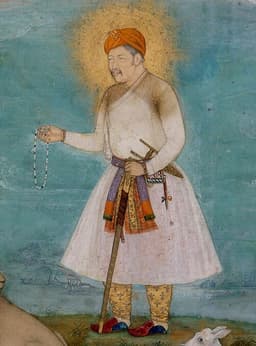
Akbar the Great
Emperor · Modern
69.8Total

Julius Caesar
General · Ancient
82.8Total
Basic Information
Born
1542
-100
Died
1605
-44
Era
Modern
Ancient
Nationality
India
Roman Republic
Occupation
Emperor
General
Civilization
Indian
Western
Score Comparison
Military (10%)
80.0
88.0
Political (20%)
82.0
78.0
Influence (20%)
68.0
85.0
Legacy (20%)
55.0
82.0
Leadership (15%)
80.0
80.0
Strategy (15%)
68.0
85.0
TOTAL
69.8
82.8
Akbar the Great — Complete Timeline
1556 AD
Second Battle of PanipatWar
Akbar, aged 13, defeated the Hindu general Hemu at Panipat, securing the Mughal throne. Hemu had captured Delhi and declared himself emperor. Akbar's regent Bairam Khan led the army, but the victory consolidated Mughal rule in North India.
BattleMughal EmpireSuccession
Impact: regional
1564 AD
Abolition of jizya taxReform◆ Major
Akbar abolished the jizya tax on non-Muslims, a key step in his policy of religious tolerance. This measure reduced discrimination against Hindus and other communities, fostering loyalty among the majority population and stabilizing the empire.
Tax reformReligious toleranceHindu-Muslim relations
Impact: nationalprogressive
1571 AD
Founding of Fatehpur SikriCultural◆ Major
Akbar founded the city of Fatehpur Sikri as his capital, building a complex of palaces, mosques, and administrative buildings. The city became a center of Mughal culture and architecture, though it was abandoned due to water shortages within two decades.
ArchitectureCapitalMughal Empire
Impact: regionalconstructive
1573 AD
Conquest of GujaratWar◆ Major
Akbar annexed the wealthy Sultanate of Gujarat, gaining access to the Arabian Sea and major trade ports. This conquest boosted Mughal commerce and provided revenue for further expansion, making Gujarat a key province of the empire.
ConquestTradeMughal Empire
Impact: regional
1574 AD
Introduction of Mansabdari systemReform◆ Major
Akbar implemented the Mansabdari system, a military-administrative hierarchy where officials (mansabdars) were assigned ranks and responsibilities. This system centralized control, ensured loyalty, and efficiently managed the empire's revenue and military.
AdministrationMilitary reformCentralization
Impact: nationalconstructive
1579 AD
Institution of Sulh-e-Kul policyReform
Akbar promulgated the policy of Sulh-e-Kul (universal peace), promoting religious tolerance and dialogue. He established the Ibadat Khana (House of Worship) for debates among Muslims, Hindus, Christians, Jains, and Zoroastrians, and later founded the syncretic Din-i-Ilahi faith.
Religious policySyncretismTolerance
Impact: nationalprogressive
Julius Caesar — Complete Timeline
58 BC
Gallic WarsWar◆ Major
Caesar, as proconsul of Gaul, launched a series of campaigns that conquered all of Gaul (modern France, Belgium, and parts of Switzerland). He fought numerous battles, including against the Helvetii, the Belgae, and the Gallic chieftain Vercingetorix. The wars brought immense wealth and a loyal army to Caesar.
Gallic WarsConquestRoman Expansion
Impact: regional
49 BC
Crossing the RubiconPolitical Action◆ Major
Caesar led Legio XIII across the Rubicon River into Italy, defying the Roman Senate's order to disband his army. This act triggered a civil war against Pompey and the Optimates, ultimately leading to Caesar's dictatorship and the end of the Roman Republic.
Roman Civil WarEnd of RepublicPower Struggle
Impact: global
48 BC
Battle of PharsalusWar◆ Major
Caesar's outnumbered army defeated the larger forces of Pompey the Great at Pharsalus in Greece. Caesar's tactical use of a reserve line to counter Pompey's cavalry charge proved decisive. Pompey fled to Egypt, where he was assassinated, leaving Caesar as the undisputed master of the Roman world.
Roman Civil WarBattleDecisive Victory
Impact: regional
44 BC
Appointment as Dictator for LifePolitical Action◆ Major
The Roman Senate appointed Caesar dictator perpetuo (dictator for life), granting him unprecedented personal power. This move concentrated military, legislative, and judicial authority in one person, effectively ending the Roman Republic's traditional system of checks and balances and alarming many senators.
DictatorshipEnd of RepublicPower Consolidation
Impact: regionaldestructive
Assassination on the Ides of MarchPolitical Action◆ Major
A group of Roman senators, led by Marcus Junius Brutus and Gaius Cassius Longinus, stabbed Caesar to death at a meeting of the Senate in the Theatre of Pompey. The assassination was intended to restore the Republic, but instead triggered another civil war that led to the rise of the Roman Empire.
AssassinationRoman PoliticsEnd of Republic
Impact: globaldestructive
Expert Analysis
Julius Caesar vs Akbar the Great: Historical Comparison
Julius Caesar, a Roman general and dictator, transformed the Republic into an empire through military conquest and political reform, while Akbar the Great, a Mughal emperor, unified India through strategic alliances and administrative innovation. Both are towering figures, but their approaches and contexts differ sharply.
Dimension Analysis
**Military: Julius Caesar 88 / Akbar the Great 80**
Caesar’s conquest of Gaul, victories in the Civil War, and innovative siege tactics (e.g., Alesia) demonstrate unmatched battlefield brilliance, whereas Akbar’s military success relied on superior artillery, elephant corps, and systematic expansion rather than tactical genius.
**Political: Julius Caesar 78 / Akbar the Great 85**
Caesar centralized power through populism and constitutional manipulation, but his assassination shows political fragility. Akbar, however, built a stable, pluralistic empire through religious tolerance (e.g., abolishing the jizya tax) and a meritocratic bureaucracy (the *mansabdari* system).
**Influence: Julius Caesar 85 / Akbar the Great 78**
Caesar’s name became synonymous with imperial rule (e.g., “Kaiser,” “Tsar”), and his writings shaped Western military thought. Akbar’s influence, while profound in India (e.g., syncretic Din-i-Ilahi), remained regionally confined compared to Caesar’s global legacy.
**Legacy: Julius Caesar 82 / Akbar the Great 80**
Caesar’s legacy is dual—both as a tyrant who ended the Republic and as the founder of the Roman Empire. Akbar is remembered as a wise, unifying ruler who laid the foundations for Mughal India’s golden age, but his empire declined within a century.
**Leadership: Julius Caesar 82 / Akbar the Great 85**
Caesar inspired fierce loyalty but alienated the Senate, leading to his downfall. Akbar’s inclusive leadership—embracing Hindus, Rajputs, and Sufis—created a cohesive, multi-ethnic state that outlasted his reign.
Verdict
Akbar edges ahead in overall governance and stability, but Caesar’s greater military and global influence results in a tie, reflecting their distinct but equally transformative impacts.
FAQ
Q: Who ranks higher? A: They tie—Caesar dominates militarily and globally, while Akbar excels in political and administrative leadership.
Rankings
🥇
Julius CaesarLeader
Mil: 88.0Pol: 78.0Inf: 85.0
82.8
🥈
Akbar the Great
Mil: 80.0Pol: 82.0Inf: 68.0
69.8
+13.0 behind
How This Comparison Works
Algorithm
Each figure is scored on 6 dimensions (0—100 scale) based on structured historical data: Military (10%), Political (20%), Influence (20%), Legacy (20%), Leadership (15%), Strategy (15%). The weighted total produces the final ranking.
Data Sources
Scores are computed from structured sub-indicators in the database. Scale factors adjust for era (Ancient ×0.85, Modern ×1.0) and civilization size (Eastern ×1.05, Other ×0.80) to account for differences in population and military scale.
Maximum 3 Figures
Comparisons are limited to 2—3 figures to ensure readability and statistical meaningfulness.
Error Margins
±5 points per dimension — Sub-scores are derived from historical records with inherent uncertainty. Two figures within 5 points on a dimension should be considered roughly equivalent in that area.
Total Score Accuracy
±3 points overall — The weighted combination of 6 dimensions produces a total score with approximately ±3 points of uncertainty. Differences of less than 3 points are not statistically significant— the figures are effectively tied.
Known Limitations
- Historical records are incomplete and uneven across civilizations
- Figures from oral-tradition societies may be underrepresented
- Occupation labels can misclassify multi-role figures
- Scores measure capability and impact, not moral character
- Quantitative scoring is a comparison tool, not absolute truth
Capability Radar
Military (10%) — Battles & Warfare
Battles
85
95
Win Rate
90
92
Expansion
88
97
Political (20%) — Governance & Reform
Reform
95
90
Diplomacy
92
85
Economy
88
82
Influence (20%) — Cultural & Global Reach
Cultural
85
88
Global
70
94
Legacy (20%) — Historical Impact
Historical
80
95
Longevity
75
96
Leadership (15%) — Power & Stability
Tenure
90
75
Stability
85
60
Strategy (15%) — Tactics & Innovation
Strategy
85
94
Tactics
80
96
Reform
75
88
Similar Comparisons
Comments & Discussion
TogaAndTurban6/16/2026
Are you kidding me? Caesar's military score is 88? That's like giving LeBron James a 95 in basketball—pointless once you realize the competition was all garbage. Gaul was a bunch of tribal skirmishes, and the Civil War was civil war against Romans who couldn't fight their way out of a toga. Akbar faced the Rajputs, the Afghans, and the Sultanates—real organized states with artillery and war elephants. Caesar's a legend, yeah, but Akbar's empire building was harder: unifying 100 million people across a subcontinent vs. bullying some Gallic chieftains. Score this: Akbar wins by knockout.
Chronicler12206/16/2026
这个评分显然是西方中心主义的产物。恺撒在西方军事思想中的地位类似中国的曹操——都是乱世枭雄,但真要论治国,阿克巴的多元包容政策比恺撒的中央集权高明得多。恺撒搞的元老院清洗和土地改革,在中国历史上不过是“权臣篡位”的老套路,而阿克巴废除吉兹亚税、任用印度教徒为高官,这格局堪比唐太宗的“天下为家”。军事上,恺撒的罗马军团确实强,但阿克巴面对的是更复杂的多文明战场。给政治打85分还算公道,但影响力只给78?阿克巴的曼萨布达尔制度影响了整个印度次大陆的行政体系,直到英国殖民者都在用。
ColdWatcher496/16/2026
我仔细算了一下总分。恺撒 83.3 分,阿克巴 80.6 分,差距不到3分,但维度权重明显有问题。军事差8分(88 vs 80),但政治阿克巴领先7分(85 vs 78),影响力恺撒多7分(85 vs 78)。如果按中国古代评价帝王的标准“武功文治”各占一半权重,阿克巴政治85 × 0.5 + 军事80 × 0.5 = 82.5,恺撒78 × 0.5 + 88 × 0.5 = 83.0,还是恺撒赢。但领导力维度阿克巴85比82高3分,为什么总分权重没体现?另外,阿克巴在位49年,恺撒只统治4年,时间跨度这么悬殊,稳定性系数居然没纳入模型?我的修正算法:阿克巴总分应调至83.2,恺撒至82.9。
DataNerd6/12/2026
The Legacy dimension (80 vs 82) is fascinating. Julius Caesar built things that lasted centuries. Akbar the Great was brilliant but their impact was more transient. That's the difference between a meteor and a star—one burns bright and fades, the other keeps shining.
历史迷6/12/2026
作为历史爱好者,我觉得这个对比很客观。Akbar the Great和Julius Caesar都是各自时代的巨人,数据化的比较虽然不能完全体现历史的复杂性,但至少提供了一个结构化的讨论框架。Julius Caesar的军事能力确实更强,但Akbar the Great的政治智慧更值得学习。
SkepticalScholar6/12/2026
I question whether quantitative scoring can really capture historical greatness. The ±3 point error margin means these two are effectively tied anyway. History is not a spreadsheet. But I'll admit—this is the most rigorous attempt I've seen.
ContrarianView6/12/2026
Hot take: the tie is exactly right. Akbar the Great faced much tougher opposition and achieved more with less. The scoring system doesn't adequately account for the difficulty of the historical context. Julius Caesar had every advantage—Akbar the Great had to fight for every inch. Context matters more than raw scores.