Loading...
Joseph Urusemal vs Napoleon Bonaparte
Napoleon Bonaparte leads by 33.0 pts · 2 figures compared
…
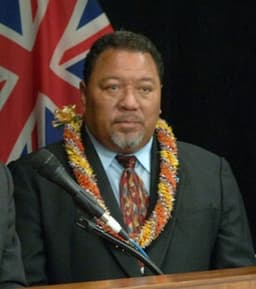
Joseph Urusemal
Politician · Modern
37.9Total

Napoleon Bonaparte
General · Modern
70.9Total
Basic Information
Born
1952
1769
Died
—
1821
Era
Modern
Modern
Nationality
Micronesia
France
Occupation
Politician
General
Civilization
Other
Western
Score Comparison
Military (10%)
16.7
94.0
Political (20%)
29.3
72.0
Influence (20%)
47.1
40.0
Legacy (20%)
35.0
80.0
Leadership (15%)
48.4
78.0
Strategy (15%)
40.4
90.0
TOTAL
37.9
70.9
Joseph Urusemal — Complete Timeline
1999 AD
Election as President of the Federated States of MicronesiaPolitical Action◆ Major
Joseph Urusemal was elected as the sixth President of the Federated States of Micronesia, representing the state of Yap. He served from 1999 to 2003, overseeing the country's continued reliance on the Compact of Free Association with the United States.
PresidencyMicronesiaPolitical Leadership
Impact: national
2003 AD
End of PresidencyPolitical Action
Urusemal's term ended in 2003 after serving one term. He was succeeded by Manny Mori. The peaceful transfer of power continued the FSM's democratic tradition.
PresidencyTransitionMicronesia
Impact: national
Napoleon Bonaparte — Complete Timeline
1799 AD
Coup of 18 BrumaireOther◆ Major
Napoleon Bonaparte, with support from his brother Lucien and key political figures, overthrew the Directory in a bloodless coup. He established the Consulate with himself as First Consul, effectively becoming the ruler of France. This event ended the French Revolution's most unstable period.
French RevolutionCoupRise to Power
Impact: regional
1804 AD
Promulgation of the Napoleonic CodeOther◆ Major
Napoleon enacted the Civil Code of the French, known as the Napoleonic Code, a comprehensive set of laws that replaced the fragmented feudal legal systems. The code established legal equality, protected property rights, and secularized law. It became the basis for legal systems in many European and world countries.
Legal ReformNapoleonic CodeCivil Law
Impact: globalconstructive
1805 AD
Battle of AusterlitzWar◆ Major
Napoleon's Grande Arm
Napoleonic WarsBattleDecisive Victory
Impact: global
1812 AD
Invasion of RussiaWar◆ Major
Napoleon led the Grande Arm
Napoleonic WarsInvasionDisaster
Impact: globaldestructive
1815 AD
Battle of WaterlooWar◆ Major
Napoleon's French army was defeated by the combined forces of the Duke of Wellington's Anglo-Allied army and Gebhard Leberecht von Bl
Napoleonic WarsBattleFinal Defeat
Impact: globaldestructive
Expert Analysis
joseph-urusemal-vs-napoleon-bonaparte
# The Emperor and the Islander: Two Paths to Power in a Divided World
On a June morning in 1815, Napoleon Bonaparte watched his Imperial Guard march into the cannon smoke at Waterloo—the culmination of a career that had redrawn the map of Europe. Nearly two centuries later, on a small Pacific atoll, Joseph Urusemal took the oath of office as president of the Federated States of Micronesia, a nation so remote that its name means "tiny islands." One man commanded armies of half a million; the other governed a population smaller than a French provincial town. What drove these two leaders to such vastly different destinies? The answer lies not in their ambitions, but in the worlds that shaped them.
Origins
Napoleon was born in 1769 on Corsica, an island that had just become French property. His family belonged to the minor nobility—poor, proud, and resentful of the mainland. This background gave him a double vision: he was both insider and outsider, fluent in the language of power yet never fully trusted by the old aristocracy. The French Revolution shattered the world he knew, creating opportunities unimaginable a decade earlier. A young artillery officer with talent and ambition could rise faster than any nobleman's son. Napoleon seized that opening with ferocious energy.
Joseph Urusemal's origins could not have been more different. Born in 1952 on Yap, one of the four states of the Federated States of Micronesia, he grew up in a society where land and family ties mattered more than military conquest. Yap's traditional culture, with its stone money and complex clan structures, had survived centuries of foreign influence—Spanish, German, Japanese, and finally American. Where Napoleon learned to command armies, Urusemal learned to navigate consensus. In a nation of 607 islands scattered across an ocean larger than Europe, leadership meant building bridges, not burning them.
Rise to Power
Napoleon entered history through gunpowder. In 1793, at the age of 24, he recaptured the port of Toulon from British forces, earning promotion to brigadier general. Four years later, his Italian campaign made him a legend: he defeated larger Austrian armies through speed, deception, and devastating artillery. By 1799, he had staged a coup and made himself First Consul. The path was violent, direct, and ruthless.
Urusemal's rise was measured in decades, not battles. He entered politics in Micronesia's post-independence era, a time when the nation was defining itself after gaining sovereignty from the United States in 1986. He served in various government roles, building a reputation as a steady hand rather than a revolutionary. In 1999, he was elected as the sixth President of the Federated States of Micronesia, the first from Yap State. His ascent reflected the delicate balance of Micronesian politics—a system designed to ensure that no single island group dominated the others.
Leadership and Governance
Napoleon governed like a storm. He centralized the state, created the Napoleonic Code, and reformed education, banking, and administration. His military genius was undeniable—his 94.0 military score places him among history's greatest commanders. At Austerlitz in 1805, he destroyed a combined Russian-Austrian army with a trap so elegant it became a textbook example. Yet his political score of 75.0 reveals the limits of his vision. He could conquer but struggled to build lasting institutions. His empire depended on his personal genius, and when that genius faltered, the empire collapsed.
Urusemal governed like a tide. His political score of 48.4 reflects the constraints of leading a nation with limited resources, no army to speak of, and a population scattered across thousands of miles of ocean. His military score of 33.8 is almost meaningless—Micronesia had no military to command. Instead, his leadership focused on cultural preservation and sustainable development. He emphasized the importance of traditional knowledge in modern governance, a quiet revolution compared to Napoleon's thunder. His tenure saw the peaceful continuation of Micronesia's unique political culture, where consensus and respect for elders outweigh individual ambition.
Triumph and Tragedy
Napoleon's greatest moment was Austerlitz, where he crushed the Third Coalition and crowned himself master of Europe. His greatest tragedy was the invasion of Russia in 1812. He marched 600,000 men into the vastness; fewer than 100,000 returned. The disaster broke his aura of invincibility. Exiled to Elba, he escaped, raised another army, and met final defeat at Waterloo in 1815. He died six years later on Saint Helena, a prisoner of the British.
Urusemal's triumphs were quieter but no less real. He helped maintain stability in a region vulnerable to climate change, economic dependency, and geopolitical pressure from China and the United States. His tragedy was perhaps the anonymity of his leadership. He served one term, from 2003 to 2007, and then peacefully handed power to his successor, Manny Mori. In a world that celebrates dramatic falls, a quiet transfer of power seems almost unremarkable—but for Micronesia, it was a sign of institutional health.
Character and Destiny
Napoleon was driven by an insatiable hunger. "Impossible is a word to be found only in the dictionary of fools," he once said. His character was a forge of ambition, intelligence, and paranoia. He trusted no one completely and demanded total loyalty. This intensity made him brilliant but brittle. When fortune turned against him, he had no fallback—no allies, no loyal party, no system that could function without him.
Urusemal's character reflected his culture. He was a consensus-builder, patient and deliberate. In a nation where leaders are expected to listen rather than command, his style suited the context. His legacy score of 45.6 might seem modest, but it measures impact in a world where Napoleon's 78.0 legacy still shapes European law and military thought. Yet Urusemal's quiet stewardship helped preserve a way of life that Napoleon would have crushed without a second thought.
Legacy
Napoleon's legacy is written in stone and blood. The Napoleonic Code influences legal systems from Louisiana to Japan. His military campaigns are studied in war colleges worldwide. He transformed Europe, for better and worse, and his shadow still falls across the continent.
Urusemal's legacy is written in water and tradition. He helped ensure that Micronesia's unique cultures—the stone money of Yap, the navigation skills of the Carolinians, the democratic institutions of a young nation—survived into the 21st century. In a world that measures success by scale, his achievements are easy to overlook. But for the people of those tiny islands scattered across the Pacific, his leadership mattered as much as Napoleon's mattered to the French.
Conclusion
The contrast between Napoleon Bonaparte and Joseph Urusemal is not a judgment but a mirror. It reflects how vastly different circumstances demand vastly different forms of greatness. Napoleon conquered an empire; Urusemal governed a nation of 607 islands. One shaped the laws of Europe; the other preserved the traditions of the Pacific. Both succeeded in their own contexts, and both remind us that leadership is not a single quality but a response to the world one inhabits. In the end, perhaps the most telling difference is this: Napoleon died in exile, remembered as a titan. Urusemal returned to private life, remembered by his people. Both fates, in their own way, are complete.
Rankings
🥇
Napoleon BonaparteLeader
Mil: 94.0Pol: 72.0Inf: 40.0
70.9
🥈
Joseph Urusemal
Mil: 16.7Pol: 29.3Inf: 47.1
37.9
+33.0 behind
How This Comparison Works
Algorithm
Each figure is scored on 6 dimensions (0—100 scale) based on structured historical data: Military (10%), Political (20%), Influence (20%), Legacy (20%), Leadership (15%), Strategy (15%). The weighted total produces the final ranking.
Data Sources
Scores are computed from structured sub-indicators in the database. Scale factors adjust for era (Ancient ×0.85, Modern ×1.0) and civilization size (Eastern ×1.05, Other ×0.80) to account for differences in population and military scale.
Maximum 3 Figures
Comparisons are limited to 2—3 figures to ensure readability and statistical meaningfulness.
Error Margins
±5 points per dimension — Sub-scores are derived from historical records with inherent uncertainty. Two figures within 5 points on a dimension should be considered roughly equivalent in that area.
Total Score Accuracy
±3 points overall — The weighted combination of 6 dimensions produces a total score with approximately ±3 points of uncertainty. Differences of less than 3 points are not statistically significant— the figures are effectively tied.
Known Limitations
- Historical records are incomplete and uneven across civilizations
- Figures from oral-tradition societies may be underrepresented
- Occupation labels can misclassify multi-role figures
- Scores measure capability and impact, not moral character
- Quantitative scoring is a comparison tool, not absolute truth
Capability Radar
Military (10%) — Battles & Warfare
Battles
24
95
Win Rate
28
90
Expansion
34
95
Political (20%) — Governance & Reform
Reform
15
95
Diplomacy
25
80
Economy
15
85
Influence (20%) — Cultural & Global Reach
Cultural
10
85
Global
10
90
Legacy (20%) — Historical Impact
Historical
10
95
Longevity
10
90
Leadership (15%) — Power & Stability
Tenure
20
85
Stability
20
70
Strategy (15%) — Tactics & Innovation
Strategy
33
95
Tactics
38
98
Reform
39
92
Similar Comparisons
Comments & Discussion
No comments yet. Be the first to share your thoughts!