Loading...
Joseph I of Portugal vs Sadasiva Raya
Sadasiva Raya leads by 3.9 pts · 2 figures compared
…
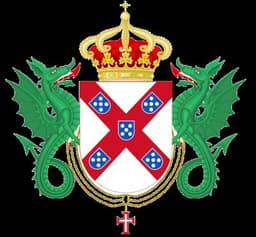
Joseph I of Portugal
Emperor · Modern
52.3Total

Sadasiva Raya
Emperor · Modern
56.2Total
Basic Information
Born
1714
1542
Died
1777
1570
Era
Modern
Modern
Nationality
Portugal
India
Occupation
Emperor
Emperor
Civilization
Western
Indian
Score Comparison
Military (10%)
12.4
46.3
Political (20%)
72.0
48.0
Influence (20%)
51.8
68.0
Legacy (20%)
43.3
52.4
Leadership (15%)
72.0
58.8
Strategy (15%)
57.3
54.7
TOTAL
52.3
56.2
Joseph I of Portugal — Complete Timeline
1750 AD
Accession to the thronePolitical Action◆ Major
Joseph I became King of Portugal after the death of his father John V. His reign is notable for the effective governance of his chief minister, the Marquis of Pombal.
SuccessionMonarchyPombal
Impact: national
1755 AD
1755 Lisbon earthquakeOther
A massive earthquake, followed by a tsunami and fire, destroyed much of Lisbon. Joseph I and his court survived, and the disaster prompted Pombal's extensive rebuilding and reforms.
EarthquakeDisasterRebuilding
Impact: globaltragic
1758 AD
Távora affairPolitical Action◆ Major
An assassination attempt on Joseph I led to the T
Assassination attemptPurgeNobility
Impact: nationaldestructive
1759 AD
Expulsion of the JesuitsPolitical Action◆ Major
Under Pombal's influence, Joseph I expelled the Jesuits from Portugal and its colonies. This was part of a broader Enlightenment reform to reduce Church power and centralize state authority.
JesuitsExpulsionEnlightenment
Impact: globaldestructive
1760 AD
Reforms of the Marquis of PombalReform◆ Major
Joseph I supported Pombal's reforms, including the abolition of slavery in Portugal, educational reforms, and economic modernization. These reforms strengthened the state but faced opposition from the Church and nobility.
ReformEnlightenmentPombal
Impact: nationalconstructive
Sadasiva Raya — Complete Timeline
1542 AD
Accession as Puppet EmperorPolitical Action◆ Major
Sadasiva Raya was placed on the throne by the regent Rama Raya, who effectively controlled the empire. Sadasiva was a figurehead, with real power exercised by Rama Raya and his family for the duration of his reign.
Puppet RulerRegencyPolitical
Impact: national
1565 AD
Battle of TalikotaWar
The Vijayanagara army, nominally under Sadasiva Raya but commanded by Rama Raya, was decisively defeated by the Deccan Sultanates at Talikota. The defeat led to the sack of Vijayanagara city and the collapse of the empire's power.
WarDefeatCollapse
Impact: globaltragic
Flight from VijayanagaraPolitical Action◆ Major
Following the Battle of Talikota, Sadasiva Raya fled the capital along with the royal family as the city was sacked by the Deccan armies. He took refuge in Penukonda, marking the end of Vijayanagara as a major power.
FlightDisplacementPolitical
Impact: nationaltragic
Expert Analysis
Origins
Joseph I of Portugal was born in 1714, the third child of King John V and Maria Anna of Austria. His father's lavish spending and piety left a kingdom in debt. Joseph was not initially expected to rule, but after the deaths of his older brothers, he became heir. He received a traditional Jesuit education, though he showed little interest in governance. In 1750, he ascended the throne at age 36, inheriting a centralized monarchy with vast colonial wealth.
Sadasiva Raya was born into the Tuluva dynasty of the Vijayanagara Empire, likely in the early 1540s. His exact birth year is uncertain. He was the son of Raghunatha Raya, a lesser prince. The empire was then under the control of the powerful minister Rama Raya, who had effectively seized power after the death of the previous emperor. Sadasiva was placed on the throne as a puppet in 1542, when he was still a child, with Rama Raya as regent. His early life was shaped by court intrigue and the dominance of the Aravidu family.
Rise to Power
Joseph I's rise was straightforward: he became king upon his father's death in 1750. However, real power soon shifted to his chief minister, Sebastião José de Carvalho e Melo, later known as the Marquis of Pombal. Joseph was content to leave affairs of state to Pombal, who had impressed him during his tenure as ambassador to Vienna. The turning point came with the 1755 Lisbon earthquake, which killed tens of thousands and destroyed the capital. Joseph survived because he was at Belém; he subsequently gave Pombal sweeping powers to rebuild and reform.
Sadasiva Raya's rise was engineered by Rama Raya. After the death of Emperor Achyuta Raya, Rama Raya imprisoned the rightful heir and placed Sadasiva on the throne as a figurehead. Sadasiva was crowned in 1542 at Vijayanagara. He had no real authority; Rama Raya controlled the army, administration, and foreign policy. Sadasiva's reign was marked by constant warfare between Rama Raya and the Deccan Sultanates, culminating in the Battle of Talikota in 1565.
Leadership & Governance
Joseph I's leadership score of 72.0 reflects his hands-off style. He delegated almost all governance to Pombal, who implemented Enlightenment reforms: abolition of slavery in Portugal, educational reforms (including the creation of the College of Nobles), economic modernization (promotion of industry and trade), and the reduction of Church power. Joseph supported these reforms but was not actively involved. His political score is 72.0, indicating effective governance through his minister.
Sadasiva Raya's leadership score of 58.8 is higher than Joseph's military score (12.4) but lower than Joseph's political score. Sadasiva was a puppet; his governance was non-existent. Rama Raya made all decisions, often provoking the Deccan Sultanates through aggressive diplomacy and interference in their internal affairs. Sadasiva's strategy score of 54.7 is similar to Joseph's 57.3, but while Joseph's strategy was about rebuilding after disaster, Sadasiva's reign saw strategic blunders that led to the empire's downfall.
Triumph & Tragedy
Joseph I's greatest triumph was surviving the 1755 earthquake and the subsequent rebuilding of Lisbon, a model of urban planning. His support for Pombal's reforms modernized Portugal, though many reforms were reversed after his death. The tragedy of his reign was the Távora affair (1758), a fabricated assassination attempt that led to the execution of an innocent noble family and the consolidation of Pombal's power. The expulsion of the Jesuits (1759) also weakened education and missionary work.
Sadasiva Raya's reign is defined by tragedy. The Battle of Talikota (1565) was a catastrophic defeat: the Vijayanagara army was routed, the capital sacked, and the empire fragmented. Sadasiva fled to Penukonda, where he lived as a refugee. His triumph, if any, was that he survived for a few more years as a nominal ruler under Rama Raya's brother, Tirumala, before being assassinated in 1570. His military score of 46.3 reflects the disastrous loss.
Character & Destiny
Joseph I was described as pious, indolent, and melancholic. He suffered from bouts of depression and was prone to hypochondria. His character shaped his fate: his reliance on Pombal allowed for efficient governance but also created a dependency that left the kingdom vulnerable after Pombal's fall. Joseph's total score of 52.3 reflects a ruler who was not a leader but enabled one.
Sadasiva Raya's character is obscure; he was a pawn. His destiny was sealed by Rama Raya's aggressive policies. Sadasiva's total score of 56.2 is slightly higher, but this is misleading: he had no agency. His influence score of 68.0 is higher than Joseph's 51.8 because the Vijayanagara Empire was a major power, but his personal influence was negligible.
Legacy
Joseph I's legacy is tied to Pombal's reforms. The rebuilding of Lisbon, the abolition of slavery in Portugal, and the expulsion of the Jesuits had lasting impacts. However, many reforms were rolled back after his death. His legacy score of 43.3 is modest.
Sadasiva Raya's legacy is the end of the Vijayanagara Empire. His reign marked the transition from a powerful empire to a fragmented collection of successor states. The Battle of Talikota is remembered as a turning point in Indian history. His legacy score of 52.4 is higher than Joseph's, but this is due to the empire's significance, not his personal actions.
Conclusion
Joseph I of Portugal had greater impact than Sadasiva Raya. Despite his lower total score (52.3 vs 56.2), Joseph's reign through Pombal implemented lasting reforms that shaped modern Portugal. Sadasiva Raya was a puppet whose reign ended in disaster, and his influence was entirely passive. Joseph's political and leadership scores (72.0 each) reflect effective governance, while Sadasiva's scores are inflated by the empire's stature. Joseph's legacy, though modest, includes concrete achievements like the rebuilding of Lisbon and the abolition of slavery. Sadasiva's legacy is one of decline. Therefore, Joseph I, through his minister, had a more significant and positive impact.
Rankings
🥇
Sadasiva RayaLeader
Mil: 46.3Pol: 48.0Inf: 68.0
56.2
🥈
Joseph I of Portugal
Mil: 12.4Pol: 72.0Inf: 51.8
52.3
+3.9 behind
How This Comparison Works
Algorithm
Each figure is scored on 6 dimensions (0—100 scale) based on structured historical data: Military (10%), Political (20%), Influence (20%), Legacy (20%), Leadership (15%), Strategy (15%). The weighted total produces the final ranking.
Data Sources
Scores are computed from structured sub-indicators in the database. Scale factors adjust for era (Ancient ×0.85, Modern ×1.0) and civilization size (Eastern ×1.05, Other ×0.80) to account for differences in population and military scale.
Maximum 3 Figures
Comparisons are limited to 2—3 figures to ensure readability and statistical meaningfulness.
Error Margins
±5 points per dimension — Sub-scores are derived from historical records with inherent uncertainty. Two figures within 5 points on a dimension should be considered roughly equivalent in that area.
Total Score Accuracy
±3 points overall — The weighted combination of 6 dimensions produces a total score with approximately ±3 points of uncertainty. Differences of less than 3 points are not statistically significant— the figures are effectively tied.
Known Limitations
- Historical records are incomplete and uneven across civilizations
- Figures from oral-tradition societies may be underrepresented
- Occupation labels can misclassify multi-role figures
- Scores measure capability and impact, not moral character
- Quantitative scoring is a comparison tool, not absolute truth
Capability Radar
Military (10%) — Battles & Warfare
Battles
35
31
Win Rate
39
31
Expansion
45
33
Political (20%) — Governance & Reform
Reform
70
0
Diplomacy
55
5
Economy
65
0
Influence (20%) — Cultural & Global Reach
Cultural
30
67
Global
20
77
Legacy (20%) — Historical Impact
Historical
40
68
Longevity
30
71
Leadership (15%) — Power & Stability
Tenure
60
5
Stability
50
0
Strategy (15%) — Tactics & Innovation
Strategy
47
40
Tactics
46
44
Reform
52
44
Similar Comparisons
Comments & Discussion
No comments yet. Be the first to share your thoughts!