Loading...
Christina of Sweden vs Joseph I of Portugal
Christina of Sweden leads by 1.4 pts · 2 figures compared
…

Christina of Sweden
Emperor · Modern
53.7Total
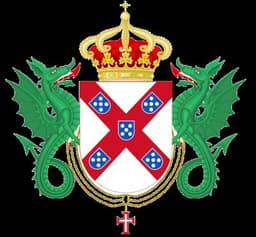
Joseph I of Portugal
Emperor · Modern
52.3Total
Basic Information
Born
1626
1714
Died
1689
1777
Era
Modern
Modern
Nationality
Sweden
Portugal
Occupation
Emperor
Emperor
Civilization
Western
Western
Score Comparison
Military (10%)
23.2
12.4
Political (20%)
72.0
72.0
Influence (20%)
59.0
51.8
Legacy (20%)
47.5
43.3
Leadership (15%)
53.2
72.0
Strategy (15%)
60.0
57.3
TOTAL
53.7
52.3
Christina of Sweden — Complete Timeline
1644 AD
Patronage of arts and learningCultural◆ Major
Christina brought leading European intellectuals and artists to her court, including Descartes, who died there. She amassed a vast library and art collection, and her patronage made Stockholm a center of learning. After her abdication, she continued this in Rome, founding the Arcadian Academy.
PatronageIntellectual LifeCultural Center
Impact: regionalconstructive
1648 AD
End of the Thirty Years' War (Peace of Westphalia)Political Action◆ Major
During Christina's reign, Sweden participated in the Peace of Westphalia negotiations that ended the Thirty Years' War. Sweden gained territories in northern Germany, including Western Pomerania and Bremen-Verden, establishing Sweden as a major European power and securing its control of the Baltic Sea.
Peace TreatyTerritorial GainsSwedish Empire
Impact: globalconstructive
1654 AD
Abdication and conversion to CatholicismPolitical Action
Christina abdicated the Swedish throne in favor of her cousin Charles X Gustav, citing her desire to convert to Catholicism, which was illegal in Lutheran Sweden. She formally converted in Brussels and later settled in Rome, where she became a patron of the arts and a prominent figure in the Catholic Church.
AbdicationReligious ConversionExile
Impact: global
1656 AD
Attempt to claim the throne of NaplesPolitical Action
After her abdication, Christina attempted to become Queen of Naples, a Spanish possession. She conspired with French Cardinal Mazarin, but the plot failed. Her involvement led to the execution of her servant, the Marquis of Monaldesco, whom she had executed for betrayal.
Political IntrigueFailed AmbitionExecution
Impact: regionaldestructive
Joseph I of Portugal — Complete Timeline
1750 AD
Accession to the thronePolitical Action◆ Major
Joseph I became King of Portugal after the death of his father John V. His reign is notable for the effective governance of his chief minister, the Marquis of Pombal.
SuccessionMonarchyPombal
Impact: national
1755 AD
1755 Lisbon earthquakeOther
A massive earthquake, followed by a tsunami and fire, destroyed much of Lisbon. Joseph I and his court survived, and the disaster prompted Pombal's extensive rebuilding and reforms.
EarthquakeDisasterRebuilding
Impact: globaltragic
1758 AD
Távora affairPolitical Action◆ Major
An assassination attempt on Joseph I led to the T
Assassination attemptPurgeNobility
Impact: nationaldestructive
1759 AD
Expulsion of the JesuitsPolitical Action◆ Major
Under Pombal's influence, Joseph I expelled the Jesuits from Portugal and its colonies. This was part of a broader Enlightenment reform to reduce Church power and centralize state authority.
JesuitsExpulsionEnlightenment
Impact: globaldestructive
1760 AD
Reforms of the Marquis of PombalReform◆ Major
Joseph I supported Pombal's reforms, including the abolition of slavery in Portugal, educational reforms, and economic modernization. These reforms strengthened the state but faced opposition from the Church and nobility.
ReformEnlightenmentPombal
Impact: nationalconstructive
Expert Analysis
Origins
Christina of Sweden was born on December 18, 1626, in Stockholm, the only surviving legitimate child of King Gustav II Adolph and Maria Eleonora of Brandenburg. Her father died at the Battle of Lützen in 1632 when she was six, leaving her as heir. She was raised as a prince, receiving a rigorous education in politics, languages, and philosophy, tutored by Chancellor Axel Oxenstierna. Her mother, emotionally unstable, was largely absent.
Joseph I of Portugal was born on August 17, 1714, in Lisbon, the third son of King John V and Maria Anna of Austria. He became heir after his older brothers died young. His education was typical for a royal, emphasizing religion and courtly manners, but he showed little interest in governance. He married Mariana Victoria of Spain in 1729, and they had four daughters. His father's lavish spending left the treasury depleted.
Rise to Power
Christina assumed full rule at age 18 in 1644, after a regency led by Oxenstierna. Her early reign focused on concluding the Thirty Years' War, which culminated in the Peace of Westphalia (1648). Sweden gained territories including Western Pomerania, Bremen-Verden, and Wismar, securing its status as a European power. Christina personally participated in negotiations, demonstrating diplomatic skill. However, she clashed with the nobility over her absolutist tendencies and fiscal policies.
Joseph I ascended the throne on July 31, 1750, upon his father's death. He inherited a kingdom burdened by debt and a powerful nobility. Lacking interest in administration, he delegated authority to Sebastião José de Carvalho e Melo, later the Marquis of Pombal, whom he appointed Secretary of State. Pombal had served as ambassador in London and Vienna, gaining Enlightenment ideas. Joseph's reliance on Pombal defined his reign.
Leadership & Governance
Christina ruled as an absolute monarch, centralizing power and reducing the influence of the nobility. She established a court that attracted intellectuals like René Descartes (who died at her court in 1650). Her patronage of arts and learning was extensive, amassing a library of 8,000 volumes and collecting art. However, her financial management was poor; she sold crown lands and imposed heavy taxes, causing unrest. Her political score of 72.0 reflects her effective diplomacy but also her fiscal mismanagement.
Joseph I's leadership was indirect, leaving governance to Pombal. Pombal implemented Enlightenment reforms: he abolished slavery in Portugal in 1761 (though not in colonies), reformed education, and modernized the economy. After the 1755 Lisbon earthquake, Pombal led the reconstruction with rational urban planning, creating the Baixa Pombalina district. Joseph supported these efforts but also allowed the Távora affair (1758-1759), where the powerful Távora family was executed for an attempted assassination on the king. This crushed noble opposition but was a brutal act. Joseph's leadership score of 72.0 is tied to his delegation, not personal initiative.
Triumph & Tragedy
Christina's greatest triumph was securing Sweden's gains at Westphalia, which expanded its territory and influence. Her patronage fostered a cultural golden age. Her tragedy was her abdication in 1654, driven by her desire to convert to Catholicism, which was illegal in Lutheran Sweden. She left the throne to her cousin Charles X Gustav. After abdication, she attempted to become Queen of Naples but failed. She lived in Rome, converting to Catholicism, and died in 1689. Her legacy score of 47.5 reflects her controversial choice.
Joseph I's triumph was the successful rebuilding of Lisbon after the 1755 earthquake, which killed tens of thousands. Pombal's efficient response included quarantine measures, rubble clearance, and modern architecture. The Távora affair strengthened royal authority but was a tragedy of justice, as the family was likely innocent. Joseph also expelled the Jesuits in 1759, weakening Church power but causing educational disruptions. His legacy score of 43.3 is lower, partly because his achievements are attributed to Pombal.
Character & Destiny
Christina was intelligent, eccentric, and willful. She dressed as a man, preferred intellectual pursuits, and refused to marry. Her conversion to Catholicism was a personal conviction that cost her the throne. She scored 60.0 in strategy, showing she planned her abdication but failed to secure a new kingdom. Her character led to her isolation in Rome.
Joseph I was passive, relying on Pombal. He suffered from melancholy after the earthquake. His character allowed Pombal's reforms but also his excesses. His strategy score of 57.3 reflects his acceptance of ministerial rule. The Távora affair showed his willingness to use brutality to maintain power.
Legacy
Christina is remembered as an unconventional queen who abdicated for faith. She influenced Swedish culture and is a figure in feminist history. Her library and art collection formed the basis of the Vatican Library's holdings. She scored 59.0 in influence, but her political impact was limited by her short reign.
Joseph I's legacy is tied to Pombal's reforms, which modernized Portugal. The reconstruction of Lisbon is a model of urban planning. The expulsion of Jesuits affected global Catholic missions. However, his reign also saw the consolidation of absolutism. His influence score of 51.8 is moderate.
Conclusion
Christina of Sweden (total score 53.7) had a higher political and strategic impact than Joseph I (52.3), despite her abdication. Her role in ending the Thirty Years' War and fostering intellectual culture gave Sweden lasting influence. Joseph I's reign was effective but largely directed by Pombal. Christina's personal agency and international impact outweigh Joseph's passive governance. While both scored similarly, Christina's unique path makes her more historically significant.
Rankings
🥇
Christina of SwedenLeader
Mil: 23.2Pol: 72.0Inf: 59.0
53.7
🥈
Joseph I of Portugal
Mil: 12.4Pol: 72.0Inf: 51.8
52.3
+1.4 behind
How This Comparison Works
Algorithm
Each figure is scored on 6 dimensions (0—100 scale) based on structured historical data: Military (10%), Political (20%), Influence (20%), Legacy (20%), Leadership (15%), Strategy (15%). The weighted total produces the final ranking.
Data Sources
Scores are computed from structured sub-indicators in the database. Scale factors adjust for era (Ancient ×0.85, Modern ×1.0) and civilization size (Eastern ×1.05, Other ×0.80) to account for differences in population and military scale.
Maximum 3 Figures
Comparisons are limited to 2—3 figures to ensure readability and statistical meaningfulness.
Error Margins
±5 points per dimension — Sub-scores are derived from historical records with inherent uncertainty. Two figures within 5 points on a dimension should be considered roughly equivalent in that area.
Total Score Accuracy
±3 points overall — The weighted combination of 6 dimensions produces a total score with approximately ±3 points of uncertainty. Differences of less than 3 points are not statistically significant— the figures are effectively tied.
Known Limitations
- Historical records are incomplete and uneven across civilizations
- Figures from oral-tradition societies may be underrepresented
- Occupation labels can misclassify multi-role figures
- Scores measure capability and impact, not moral character
- Quantitative scoring is a comparison tool, not absolute truth
Capability Radar
Military (10%) — Battles & Warfare
Battles
34
35
Win Rate
42
39
Expansion
40
45
Political (20%) — Governance & Reform
Reform
55
70
Diplomacy
65
55
Economy
50
65
Influence (20%) — Cultural & Global Reach
Cultural
55
30
Global
40
20
Legacy (20%) — Historical Impact
Historical
50
40
Longevity
45
30
Leadership (15%) — Power & Stability
Tenure
60
60
Stability
40
50
Strategy (15%) — Tactics & Innovation
Strategy
43
47
Tactics
47
46
Reform
50
52
Similar Comparisons
Comments & Discussion
No comments yet. Be the first to share your thoughts!