Loading...
Joseph I of Portugal vs Julius Caesar
Julius Caesar leads by 30.5 pts · 2 figures compared
…
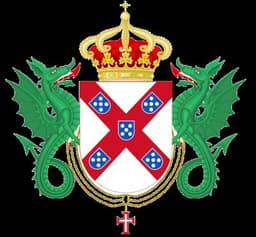
Joseph I of Portugal
Emperor · Modern
52.3Total

Julius Caesar
General · Ancient
82.8Total
Basic Information
Born
1714
-100
Died
1777
-44
Era
Modern
Ancient
Nationality
Portugal
Roman Republic
Occupation
Emperor
General
Civilization
Western
Western
Score Comparison
Military (10%)
12.4
88.0
Political (20%)
72.0
78.0
Influence (20%)
51.8
85.0
Legacy (20%)
43.3
82.0
Leadership (15%)
72.0
80.0
Strategy (15%)
57.3
85.0
TOTAL
52.3
82.8
Joseph I of Portugal — Complete Timeline
1750 AD
Accession to the thronePolitical Action◆ Major
Joseph I became King of Portugal after the death of his father John V. His reign is notable for the effective governance of his chief minister, the Marquis of Pombal.
SuccessionMonarchyPombal
Impact: national
1755 AD
1755 Lisbon earthquakeOther
A massive earthquake, followed by a tsunami and fire, destroyed much of Lisbon. Joseph I and his court survived, and the disaster prompted Pombal's extensive rebuilding and reforms.
EarthquakeDisasterRebuilding
Impact: globaltragic
1758 AD
Távora affairPolitical Action◆ Major
An assassination attempt on Joseph I led to the T
Assassination attemptPurgeNobility
Impact: nationaldestructive
1759 AD
Expulsion of the JesuitsPolitical Action◆ Major
Under Pombal's influence, Joseph I expelled the Jesuits from Portugal and its colonies. This was part of a broader Enlightenment reform to reduce Church power and centralize state authority.
JesuitsExpulsionEnlightenment
Impact: globaldestructive
1760 AD
Reforms of the Marquis of PombalReform◆ Major
Joseph I supported Pombal's reforms, including the abolition of slavery in Portugal, educational reforms, and economic modernization. These reforms strengthened the state but faced opposition from the Church and nobility.
ReformEnlightenmentPombal
Impact: nationalconstructive
Julius Caesar — Complete Timeline
58 BC
Gallic WarsWar◆ Major
Caesar, as proconsul of Gaul, launched a series of campaigns that conquered all of Gaul (modern France, Belgium, and parts of Switzerland). He fought numerous battles, including against the Helvetii, the Belgae, and the Gallic chieftain Vercingetorix. The wars brought immense wealth and a loyal army to Caesar.
Gallic WarsConquestRoman Expansion
Impact: regional
49 BC
Crossing the RubiconPolitical Action◆ Major
Caesar led Legio XIII across the Rubicon River into Italy, defying the Roman Senate's order to disband his army. This act triggered a civil war against Pompey and the Optimates, ultimately leading to Caesar's dictatorship and the end of the Roman Republic.
Roman Civil WarEnd of RepublicPower Struggle
Impact: global
48 BC
Battle of PharsalusWar◆ Major
Caesar's outnumbered army defeated the larger forces of Pompey the Great at Pharsalus in Greece. Caesar's tactical use of a reserve line to counter Pompey's cavalry charge proved decisive. Pompey fled to Egypt, where he was assassinated, leaving Caesar as the undisputed master of the Roman world.
Roman Civil WarBattleDecisive Victory
Impact: regional
44 BC
Appointment as Dictator for LifePolitical Action◆ Major
The Roman Senate appointed Caesar dictator perpetuo (dictator for life), granting him unprecedented personal power. This move concentrated military, legislative, and judicial authority in one person, effectively ending the Roman Republic's traditional system of checks and balances and alarming many senators.
DictatorshipEnd of RepublicPower Consolidation
Impact: regionaldestructive
Assassination on the Ides of MarchPolitical Action◆ Major
A group of Roman senators, led by Marcus Junius Brutus and Gaius Cassius Longinus, stabbed Caesar to death at a meeting of the Senate in the Theatre of Pompey. The assassination was intended to restore the Republic, but instead triggered another civil war that led to the rise of the Roman Empire.
AssassinationRoman PoliticsEnd of Republic
Impact: globaldestructive
Expert Analysis
joseph-i-of-portugal-vs-julius-caesar
# The Dictator and the Bystander
On the Ides of March, 44 BCE, the most powerful man in the Roman world fell beneath the daggers of his friends. Julius Caesar, conqueror of Gaul and dictator for life, crumpled at the foot of Pompey’s statue, his blood pooling on the Senate floor. He had rewritten the rules of power, and the Republic killed him for it. Compare this to a scene in Lisbon, Portugal, on November 1, 1755. King Joseph I, fleeing his collapsing palace as the earth shook and a tsunami swallowed the city, was carried to safety by his carriage horses. He survived, but he did not command. His chief minister, the Marquis of Pombal, would command for him. One man seized history by the throat; the other let history happen to him. Why such different outcomes? The answer lies not in the eras they inhabited, but in the men they were.
Origins
Julius Caesar was born into the chaos of a dying republic. His family, the Julii, claimed descent from the goddess Venus, but their political influence had waned. Rome in the first century BCE was a crucible of ambition: civil wars, slave revolts, and the spectacle of generals like Marius and Sulla marching on the capital. Caesar’s father died when he was sixteen, forcing him to navigate a world where survival meant alliance, and alliance meant risk. He was a patrician by birth but a populist by instinct, learning early that power came not from blood but from the loyalty of soldiers and the cheers of the mob.
Joseph I was born into a very different world. Portugal in 1714 was a stable, Catholic monarchy, its golden age of exploration long past. His father, John V, had ruled with baroque opulence, pouring gold from Brazil into churches and ceremonies. Joseph inherited a throne, not a battlefield. He was pious, reserved, and—by all accounts—uninterested in the grueling work of governance. He had never led an army, never faced a rebellion, never known a day of true danger until the earth itself turned against him.
Rise to Power
Caesar’s path to power was a masterclass in calculated audacity. He rose through the Roman *cursus honorum*—quaestor, aedile, praetor—each step marked by debt, bribery, and showmanship. He formed the First Triumvirate with Pompey and Crassus, an illegal alliance that gave him command of Gaul. Then he conquered it. In eight years, he subdued hundreds of tribes, crossed the Rhine, and invaded Britain. His *Commentaries* turned war into propaganda. When the Senate ordered him to disband his army, he crossed the Rubicon in 49 BCE, uttering the famous *“Alea iacta est”*—the die is cast. He chose civil war over submission.
Joseph I’s rise required no such choice. He became king in 1750 upon his father’s death, a transition as smooth as the anointing oil. His key event was not a conquest but an appointment: he handed the reins of state to Sebastião José de Carvalho e Melo, later the Marquis of Pombal. Joseph did not seize power; he delegated it. The turning point of his reign—the Lisbon earthquake of 1755—found him not on a battlefield but in a carriage, fleeing the flames. His response was to trust Pombal, who famously said, *“What do we do now? Bury the dead and feed the living.”* Joseph let his minister bury and feed, and rule.
Leadership & Governance
Caesar governed as he conquered: personally, decisively, and ruthlessly. As dictator, he reformed the calendar, granted citizenship to Gauls, redistributed land to veterans, and centralized authority in his own hands. His military genius was inseparable from his political wisdom. He led from the front, sharing his soldiers’ rations and their dangers. His reforms were radical—breaking the Senate’s monopoly on power, curbing debt, and initiating public works—but they were imposed, not negotiated. He believed in speed, in shock, in the overwhelming force of a single will.
Joseph I’s governance was the opposite: passive, delegated, and reformist by proxy. Under Pombal’s influence, Portugal underwent a top-down Enlightenment. The Távora affair of 1758—a failed assassination attempt on the king—became a purge of the old nobility, with the entire Távora family executed or imprisoned. The Jesuits were expelled in 1759, their wealth confiscated. Slavery was abolished in Portugal (though not in the colonies), education was modernized, and the economy reformed. But these were Pombal’s achievements, not Joseph’s. The king was a figurehead, a stamp of approval. He did not lead; he authorized.
Triumph & Tragedy
Caesar’s greatest triumph was his conquest of Gaul, a feat that doubled Rome’s territory and made him a legend. His most devastating failure was his own assassination. He had achieved everything—dictator for life, father of the Roman Empire—but he could not secure his own safety. He ignored warnings, dismissed the soothsayer’s “Beware the Ides of March,” and walked into the Senate unarmed. His tragedy was that he understood power but not the limits of power.
Joseph I’s triumph was survival. The 1755 earthquake could have destroyed his dynasty; instead, Pombal rebuilt Lisbon as a modern, grid-planned city. The king’s tragedy was his irrelevance. He was not murdered, not overthrown, not even challenged. He simply faded. His reign’s most dramatic moment—the Távora affair—was a judicial massacre orchestrated by his minister. Joseph I was a king who never truly ruled, and a man who never truly lived.
Character & Destiny
Caesar’s character was ambition incarnate. He was arrogant, charismatic, and relentless. He pardoned his enemies and trusted no one. His decisions were driven by a belief in his own destiny—he was, after all, descended from Venus. This belief made him unstoppable, but it also made him blind. He thought his clemency would disarm his enemies; instead, it gave them time to conspire. His personality shaped history by accelerating the fall of the Republic, but it also sealed his fate.
Joseph I’s character was the reverse: cautious, devout, and passive. He did not trust his own judgment, so he trusted Pombal’s. This allowed reform, but it also allowed cruelty. The Távora executions were brutal, the Jesuits expelled without mercy, and the king said nothing. His personality did not shape events; it merely permitted them. History happened to Joseph I, and he let it.
Legacy
Caesar’s legacy is the Roman Empire. His name became a title—Caesar, Kaiser, Tsar—synonymous with supreme authority. His reforms outlived him, his calendar lasted 1,600 years, and his conquests reshaped Europe. He is remembered as a genius and a tyrant, a martyr and a warning. His score of 82.0 in Legacy reflects this duality: he built an empire, but he destroyed a republic.
Joseph I’s legacy is Pombal’s shadow. He is remembered, if at all, as the king who survived the earthquake and let his minister rule. His score of 59.5 in Legacy reflects his absorption into a larger narrative: the Enlightenment reforms of Portugal, the rebuilding of Lisbon, the expulsion of the Jesuits. He was not a catalyst; he was a container. The history books mention him, but they dwell on Pombal.
Conclusion
What drove the different outcomes? Caesar and Joseph I were both men of their eras, but one was a force of nature and the other a bystander. Caesar crossed the Rubicon because he could not imagine not crossing it. Joseph I fled the earthquake because he could not imagine staying. One shaped history through will, the other through surrender. The dictator died in the blood of his ambition; the king died in the comfort of his irrelevance. Which fate is more tragic? Perhaps the one that leaves no mark at all.
Rankings
🥇
Julius CaesarLeader
Mil: 88.0Pol: 78.0Inf: 85.0
82.8
🥈
Joseph I of Portugal
Mil: 12.4Pol: 72.0Inf: 51.8
52.3
+30.5 behind
How This Comparison Works
Algorithm
Each figure is scored on 6 dimensions (0—100 scale) based on structured historical data: Military (10%), Political (20%), Influence (20%), Legacy (20%), Leadership (15%), Strategy (15%). The weighted total produces the final ranking.
Data Sources
Scores are computed from structured sub-indicators in the database. Scale factors adjust for era (Ancient ×0.85, Modern ×1.0) and civilization size (Eastern ×1.05, Other ×0.80) to account for differences in population and military scale.
Maximum 3 Figures
Comparisons are limited to 2—3 figures to ensure readability and statistical meaningfulness.
Error Margins
±5 points per dimension — Sub-scores are derived from historical records with inherent uncertainty. Two figures within 5 points on a dimension should be considered roughly equivalent in that area.
Total Score Accuracy
±3 points overall — The weighted combination of 6 dimensions produces a total score with approximately ±3 points of uncertainty. Differences of less than 3 points are not statistically significant— the figures are effectively tied.
Known Limitations
- Historical records are incomplete and uneven across civilizations
- Figures from oral-tradition societies may be underrepresented
- Occupation labels can misclassify multi-role figures
- Scores measure capability and impact, not moral character
- Quantitative scoring is a comparison tool, not absolute truth
Capability Radar
Military (10%) — Battles & Warfare
Battles
35
95
Win Rate
39
92
Expansion
45
97
Political (20%) — Governance & Reform
Reform
70
90
Diplomacy
55
85
Economy
65
82
Influence (20%) — Cultural & Global Reach
Cultural
30
88
Global
20
94
Legacy (20%) — Historical Impact
Historical
40
95
Longevity
30
96
Leadership (15%) — Power & Stability
Tenure
60
75
Stability
50
60
Strategy (15%) — Tactics & Innovation
Strategy
47
94
Tactics
46
96
Reform
52
88
Similar Comparisons
Comments & Discussion
河边的费边6/17/2026
约瑟夫一世的马车故事说明他根本不懂权力——不是被刺杀就是被大臣架空。凯撒知道政治就是刺杀或被杀,而这位葡萄牙国王连统治都保不住。权力属于敢在元老院流血的人,不是在里斯本避难的人。
Chronicler61526/17/2026
Caesar's assassination proves he played too aggressively with a Senate that wasn't ready for monarchy. Joseph's survival shows playing dead and letting Pombal do the dirty work is smarter. Caesar's reforms were bold but got him killed; Joseph's passivity gave Portugal stability. History rewards survivors, not martyrs.