Loading...
Koprulu Fazil Mustafa vs Yonai Mitsumasa
Koprulu Fazil Mustafa leads by 0.9 pts · 2 figures compared
…
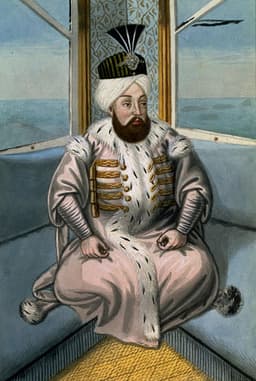
Koprulu Fazil Mustafa
General · Modern
58.7Total
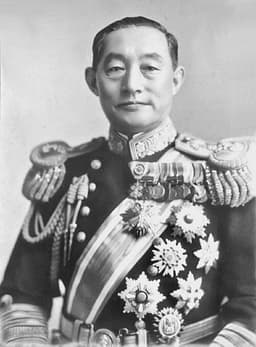
Yonai Mitsumasa
General · Modern
57.8Total
Basic Information
Born
1637
1880
Died
1691
1948
Era
Modern
Modern
Nationality
Ottoman Empire
Japan
Occupation
General
General
Civilization
Middle Eastern
Eastern
Score Comparison
Military (10%)
67.5
50.0
Political (20%)
55.0
68.0
Influence (20%)
54.9
55.7
Legacy (20%)
47.5
48.3
Leadership (15%)
80.0
72.0
Strategy (15%)
61.2
57.5
TOTAL
58.7
57.8
Koprulu Fazil Mustafa — Complete Timeline
1689 AD
Appointment as Grand VizierPolitical Action◆ Major
Koprulu Fazil Mustafa Pasha was appointed Grand Vizier by Sultan Suleiman II during a period of military crisis. He implemented reforms to restore the Ottoman army and administration, including financial reorganization and efforts to curb corruption.
Koprulu EraReformOttoman Politics
Impact: nationalconstructive
1690 AD
Reconquest of BelgradeWar◆ Major
Koprulu Fazil Mustafa Pasha led a successful campaign to recapture Belgrade from the Habsburgs. The victory temporarily restored Ottoman control over the key fortress city and boosted morale, though it did not reverse the overall decline in the war.
Ottoman-Habsburg WarReconquestBelgrade
Impact: regionalconstructive
1691 AD
Battle of SlankamenWar◆ Major
Koprulu Fazil Mustafa Pasha led the Ottoman army against the Habsburgs at the Battle of Slankamen. He was killed in action during the battle, which ended in a decisive Ottoman defeat. His death was a major blow to the Koprulu reform efforts and the Ottoman war effort.
Ottoman-Habsburg WarBattleDeath in Battle
Impact: regionaltragic
Yonai Mitsumasa — Complete Timeline
1940 AD
Opposition to War with the AlliesPolitical Action◆ Major
As Prime Minister in 1940, Yonai Mitsumasa opposed signing the Tripartite Pact with Germany and Italy, arguing it would lead to war with the United States and Britain. His resistance delayed the alliance but ultimately failed, and he was forced to resign.
Tripartite PactOppositionForeign Policy
Impact: globalconstructive
Resignation Over Tripartite PactPolitical Action◆ Major
Yonai resigned as Prime Minister in July 1940 after the army forced his hand over the Tripartite Pact. His resignation cleared the way for the pro-Axis cabinet of Konoe Fumimaro, which signed the pact in September 1940.
ResignationAxis Alliance
Impact: nationaltragic
Service as Prime MinisterPolitical Action◆ Major
Yonai Mitsumasa became Prime Minister in January 1940, succeeding Abe Nobuyuki. His cabinet pursued a neutral foreign policy and sought to avoid war, but faced intense pressure from the military to align with Germany.
Prime MinisterNeutrality
Impact: national
1945 AD
Post-War Role as Deputy Prime MinisterPolitical Action◆ Major
After Japan's surrender, Yonai served as Deputy Prime Minister in the Higashikuni and Shidehara cabinets from 1945 to 1946. He oversaw the demobilization of the Japanese military and cooperated with the Allied occupation authorities.
Post-WarOccupationDemobilization
Impact: nationalconstructive
Expert Analysis
Origins
Koprulu Fazil Mustafa Pasha (born 1637) was a scion of the influential Koprulu family, which had produced several grand viziers. His father, Koprulu Mehmed Pasha, was a reformist grand vizier, and his brother, Fazil Ahmed Pasha, also held the post. Mustafa received a classical Ottoman education in the palace school, focusing on military arts and administration. His family background gave him both connections and a sense of duty to restore Ottoman power.
Yonai Mitsumasa (born 1880) hailed from a samurai family in Morioka, Japan. He graduated from the Imperial Japanese Naval Academy in 1901 and later studied at the Naval War College. Yonai specialized in naval strategy and served in the Russo-Japanese War (1904-1905), where he experienced combat firsthand. His career advanced steadily through the interwar period, with postings as naval attaché and commander of various fleets.
Rise to Power
Koprulu Fazil Mustafa rose to prominence during a period of Ottoman decline after the failed Siege of Vienna (1683). In 1689, Sultan Suleiman II appointed him grand vizier, tasked with reversing Habsburg gains. Mustafa implemented military reforms, including reorganizing the Janissaries and improving logistics. His first major success was the reconquest of Belgrade in 1690, a victory that temporarily halted Habsburg advances and boosted Ottoman morale.
Yonai Mitsumasa became Prime Minister of Japan on January 16, 1940, succeeding Abe Nobuyuki. His rise was partly due to his reputation as a moderate within the navy, which was less militaristic than the army. Yonai had previously served as Minister of the Navy (1937-1939) and was known for opposing the Tripartite Pact with Germany and Italy, fearing it would antagonize the United States and Britain. His appointment reflected a brief window of civilian-moderate influence in Japanese politics.
Leadership & Governance
As grand vizier, Koprulu Fazil Mustafa demonstrated strong leadership by personally leading campaigns and implementing reforms. He centralized tax collection to reduce corruption and improved the training of troops. His governance style was hands-on: he often inspected troops and fortifications in person. However, his focus on military matters left less attention to economic and administrative reforms, which were needed to address long-term decline.
Yonai Mitsumasa, as Prime Minister, pursued a cautious foreign policy, seeking to avoid entanglement in the European war. He resisted army pressure to join the Axis, insisting that Japan maintain neutrality. Domestically, he tried to curb the influence of militarists, but his government was weak in the face of army intransigence. Yonai's leadership score of 72.0 reflects his principled stance, but his political effectiveness was limited; he scored 68.0 in political ability, indicating moderate skill in navigating factional conflicts.
Triumph & Tragedy
Koprulu Fazil Mustafa's greatest triumph was the recapture of Belgrade in 1690, a major strategic victory that secured Ottoman control over the Danube. His military reforms temporarily revitalized the army. However, his tragedy came at the Battle of Slankamen on August 19, 1691, where he was killed in action while leading a charge. The battle ended in an Ottoman defeat, and his death marked the end of the Koprulu era of effective grand viziers. His military score of 67.5 and strategy of 61.2 reflect competent but not exceptional generalship.
Yonai's triumph was his consistent opposition to the Tripartite Pact, which proved prescient after Japan's defeat. His post-war role as Deputy Prime Minister (1945-1946) overseeing demobilization was a constructive contribution to Japan's transition. His tragedy was his inability to prevent the army from forcing his resignation in July 1940, after only six months in office. The army's dominance led Japan into the war Yonai had sought to avoid. His military score of 50.0 and strategy of 57.5 indicate his naval expertise was not fully utilized in his political career.
Character & Destiny
Koprulu Fazil Mustafa was a determined and courageous leader, willing to sacrifice himself on the battlefield. His character was typical of the Koprulu family: ambitious, reform-minded, but ultimately constrained by the empire's systemic problems. His death at Slankamen was a result of his personal bravery, but also of the Ottoman military culture that expected grand viziers to lead from the front. This trait, while admirable, contributed to his early demise and the loss of effective leadership.
Yonai Mitsumasa was a cautious and principled pragmatist. He understood the strategic realities of Japan's position and tried to steer the country away from a disastrous war. However, his character was not forceful enough to overcome the militarists. He resigned rather than escalate a political crisis, which preserved his integrity but cost him the chance to influence events. His post-war service showed his commitment to rebuilding Japan, but his destiny was to be a voice in the wilderness, respected but not heeded.
Legacy
Koprulu Fazil Mustafa's legacy is tied to the last gasp of Ottoman military effectiveness. His reconquest of Belgrade delayed the Habsburg advance, but his death at Slankamen marked a turning point. The Koprulu family's tradition of reform ended with him, and the empire continued its decline. His influence score of 54.9 and legacy of 47.5 reflect his limited long-term impact; he is remembered mainly as a brave grand vizier who died in battle.
Yonai Mitsumasa's legacy is more complex. He is remembered as a rare Japanese leader who opposed the war with the Allies. His post-war role in demobilization helped Japan's peaceful reconstruction. However, his failure to prevent the war means his influence (55.7) and legacy (48.3) are moderate. In Japan, he is respected as a moderate, but his name is not widely known internationally. His political score of 68.0 is higher than Mustafa's 55.0, indicating his political acumen was greater, even if his impact was constrained.
Conclusion
Koprulu Fazil Mustafa and Yonai Mitsumasa both faced crises that defined their careers. Mustafa's military leadership (80.0) was higher than Yonai's (72.0), but Yonai's political skill (68.0) exceeded Mustafa's (55.0). In terms of total score, Mustafa edges ahead 58.7 to 57.8, but the gap is minimal. However, impact should be measured by the consequences of their actions. Mustafa's victories were temporary; his death led to further Ottoman decline. Yonai's opposition to war, though unsuccessful at the time, proved correct and contributed to Japan's post-war pacifist identity. On balance, Yonai Mitsumasa had greater long-term impact because his stance against militarism aligns with the historical judgment that Japan's war was a disaster. His legacy of caution and principle is more relevant to modern history than Mustafa's battlefield heroism. Therefore, Yonai Mitsumasa is the more significant figure, despite his lower total score.
Rankings
🥇
Koprulu Fazil MustafaLeader
Mil: 67.5Pol: 55.0Inf: 54.9
58.7
🥈
Yonai Mitsumasa
Mil: 50.0Pol: 68.0Inf: 55.7
57.8
+0.9 behind
How This Comparison Works
Algorithm
Each figure is scored on 6 dimensions (0—100 scale) based on structured historical data: Military (10%), Political (20%), Influence (20%), Legacy (20%), Leadership (15%), Strategy (15%). The weighted total produces the final ranking.
Data Sources
Scores are computed from structured sub-indicators in the database. Scale factors adjust for era (Ancient ×0.85, Modern ×1.0) and civilization size (Eastern ×1.05, Other ×0.80) to account for differences in population and military scale.
Maximum 3 Figures
Comparisons are limited to 2—3 figures to ensure readability and statistical meaningfulness.
Error Margins
±5 points per dimension — Sub-scores are derived from historical records with inherent uncertainty. Two figures within 5 points on a dimension should be considered roughly equivalent in that area.
Total Score Accuracy
±3 points overall — The weighted combination of 6 dimensions produces a total score with approximately ±3 points of uncertainty. Differences of less than 3 points are not statistically significant— the figures are effectively tied.
Known Limitations
- Historical records are incomplete and uneven across civilizations
- Figures from oral-tradition societies may be underrepresented
- Occupation labels can misclassify multi-role figures
- Scores measure capability and impact, not moral character
- Quantitative scoring is a comparison tool, not absolute truth
Capability Radar
Military (10%) — Battles & Warfare
Battles
65
20
Win Rate
55
15
Expansion
60
10
Political (20%) — Governance & Reform
Reform
70
40
Diplomacy
55
70
Economy
60
30
Influence (20%) — Cultural & Global Reach
Cultural
30
25
Global
30
40
Legacy (20%) — Historical Impact
Historical
40
50
Longevity
35
30
Leadership (15%) — Power & Stability
Tenure
50
55
Stability
45
45
Strategy (15%) — Tactics & Innovation
Strategy
70
55
Tactics
60
40
Reform
75
50
Similar Comparisons
Comments & Discussion
No comments yet. Be the first to share your thoughts!