Loading...
Jose Maria Aznar vs Matsukata Masayoshi
Matsukata Masayoshi leads by 1.2 pts · 2 figures compared
…

Jose Maria Aznar
Politician · Modern
55.1Total
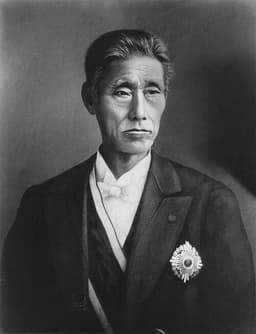
Matsukata Masayoshi
Politician · Modern
56.3Total
Basic Information
Born
1953
1835
Died
—
1924
Era
Modern
Modern
Nationality
Spain
Japan
Occupation
Politician
Politician
Civilization
Western
Eastern
Score Comparison
Military (10%)
50.0
10.4
Political (20%)
59.3
78.0
Influence (20%)
58.0
58.0
Legacy (20%)
46.7
54.0
Leadership (15%)
72.0
80.0
Strategy (15%)
42.7
35.5
TOTAL
55.1
56.3
Jose Maria Aznar — Complete Timeline
1996 AD
Implemented Economic Liberalization ReformsReform◆ Major
Aznar's government pursued a program of economic liberalization, including privatization of state-owned enterprises, labor market reforms, and tax cuts. These policies contributed to strong economic growth and reduced unemployment, but also increased income inequality.
Economic ReformPrivatizationLiberalization
Impact: national
Won the 1996 General ElectionPolitical Action◆ Major
Jose Maria Aznar led the People's Party (PP) to victory in the March 3, 1996 general election, defeating the incumbent PSOE. He formed a minority government with support from Catalan and Basque nationalists, ending 14 years of socialist rule.
ElectionPPChange of Government
Impact: national
2000 AD
Achieved an Absolute Majority in 2000Political Action◆ Major
Aznar's PP won an absolute majority in the March 12, 2000 general election, securing 183 seats. This allowed him to govern without relying on nationalist parties and implement a more conservative agenda, including tax cuts and privatization.
ElectionAbsolute MajorityPP
Impact: national
2003 AD
Aligned Spain with the US in the Iraq WarPolitical Action◆ Major
Aznar's government supported the US-led invasion of Iraq in March 2003, despite widespread public opposition in Spain. He participated in the Azores Summit with Bush and Blair, committing Spanish troops to the coalition, which strained relations with France and Germany.
Iraq WarForeign PolicyUS Alliance
Impact: global
2004 AD
Survived the 11-M Madrid Train BombingsPolitical Action◆ Major
On March 11, 2004, Islamist terrorists bombed commuter trains in Madrid, killing 191 people. Aznar's government initially blamed ETA, but evidence pointed to Al-Qaeda. The handling of the attacks and the subsequent election loss on March 14 marked the end of his tenure.
Terrorism11-MElection
Impact: nationaltragic
Lost the 2004 General ElectionPolitical Action◆ Major
Despite leading in polls before the 11-M attacks, Aznar's PP lost the March 14, 2004 general election to the PSOE led by Jose Luis Rodriguez Zapatero. The defeat was widely attributed to public anger over the government's handling of the bombings and support for the Iraq War.
Election Defeat11-MPP
Impact: nationaltragic
Matsukata Masayoshi — Complete Timeline
1881 AD
Matsukata Fiscal PolicyReform◆ Major
As Finance Minister, Matsukata implemented the Matsukata Fiscal Policy, a series of deflationary measures to combat inflation and stabilize the currency. He established the Bank of Japan in 1882 and introduced a new tax system. These policies laid the foundation for Japan's modern economy.
FinanceReformEconomy
Impact: nationalconstructive
1891 AD
Served as Prime MinisterPolitical Action◆ Major
Matsukata Masayoshi served as the fourth Prime Minister of Japan from 1891 to 1892. His first term was marked by political instability and economic challenges. He was known for his conservative fiscal policies.
Prime MinisterGovernmentPolitics
Impact: national
1896 AD
Second Term as Prime MinisterPolitical Action◆ Major
Matsukata served a second term as Prime Minister from 1896 to 1898. His second term was also short and marked by political conflicts. He focused on foreign policy, including the Triple Intervention after the First Sino-Japanese War.
Prime MinisterGovernmentPolitics
Impact: national
1897 AD
Established the Gold StandardReform◆ Major
Matsukata, as Finance Minister, led Japan's adoption of the gold standard in 1897. This move stabilized the yen and facilitated foreign trade and investment. It was a key step in Japan's integration into the global economy.
Gold StandardFinanceEconomy
Impact: globalconstructive
Expert Analysis
Origins
Jose Maria Aznar was born on February 25, 1953, in Madrid, Spain, into a middle-class family with a tradition of public service. His father was a journalist, and his grandfather served as a government official under the Second Spanish Republic. Aznar studied law at Complutense University of Madrid and began his political career in the Francoist student union, later joining the conservative People's Alliance (AP). His early political experiences were shaped by Spain's transition to democracy after Franco's death in 1975.
Matsukata Masayoshi was born on February 25, 1835, in Kagoshima, Japan, into a samurai family of the Satsuma domain. He studied Confucian classics and Western learning, including economics and finance, under the guidance of prominent scholars. Matsukata participated in the Meiji Restoration (1868) as a young samurai, serving in various administrative roles. His early career was marked by his involvement in the modernization of Japan's fiscal system, drawing on his studies of Western economic principles.
Rise to Power
Aznar rose through the ranks of the People's Party (PP), which he helped found in 1989 after the dissolution of the People's Alliance. He served as President of the regional government of Castile and León from 1987 to 1989, gaining administrative experience. His national breakthrough came when he led the PP to victory in the March 3, 1996 general election, defeating the incumbent Spanish Socialist Workers' Party (PSOE). Aznar formed a minority government with support from Catalan and Basque nationalist parties.
Matsukata's rise was rooted in his expertise in finance. After the Meiji Restoration, he served in the Ministry of Finance, becoming Vice Minister of Finance in 1871. He was appointed Finance Minister in 1881, a position he held multiple times. His fiscal policies during a period of high inflation and government deficits earned him the trust of Emperor Meiji and other leaders. He served as Prime Minister for the first time from 1891 to 1892, following a political crisis, and again from 1896 to 1898.
Leadership & Governance
Aznar's leadership style was pragmatic and conservative, focusing on economic liberalization and strengthening Spain's international standing. He pursued privatization of state-owned enterprises, labor market reforms, and tax cuts, which contributed to economic growth and reduced unemployment from 22% in 1996 to 11% in 2004. In foreign policy, he aligned Spain closely with the United States, supporting the 2003 Iraq War despite domestic opposition. His governance was marked by a confrontational approach with opposition parties, but he achieved an absolute majority in 2000.
Matsukata's governance was characterized by fiscal discipline and institutional reform. As Finance Minister, he implemented the Matsukata Fiscal Policy, a deflationary program to curb inflation and stabilize the currency. He established the Bank of Japan (1882) and led Japan's adoption of the gold standard in 1897, which facilitated foreign trade and investment. As Prime Minister, his terms were short and politically turbulent, but his fiscal policies laid the foundation for Japan's rapid industrialization. His leadership score of 80.0 reflects his effectiveness in economic management, while his strategy score of 35.5 indicates his limited political maneuvering.
Triumph & Tragedy
Aznar's greatest triumph was the economic transformation of Spain: GDP growth averaged 3.5% annually during his tenure, and Spain qualified for the euro in 1999. His tragedy was the 2004 Madrid train bombings, where his government's initial false attribution to ETA eroded public trust, contributing to the PP's defeat in the 2004 election. Aznar's political score of 59.3 and legacy score of 46.7 reflect his mixed record.
Matsukata's triumph was the stabilization of Japan's finances and the establishment of modern fiscal institutions. His deflationary policies successfully reduced inflation from 10% in 1881 to near zero by 1885, and the gold standard boosted international confidence. His tragedy was his inability to sustain political power: his two prime ministerial terms were marked by political infighting and ended prematurely. Matsukata's legacy score of 54.0 and political score of 78.0 highlight his lasting economic impact despite political struggles.
Character & Destiny
Aznar was known for his tenacity and ideological conviction, often described as a determined leader who pursued his vision despite opposition. His decision to support the Iraq War alienated many Spaniards and damaged his reputation. His leadership score of 72.0 reflects his assertiveness, but his strategy score of 42.7 suggests a lack of flexibility in foreign policy.
Matsukata was a meticulous and conservative administrator, deeply influenced by his samurai background. He was patient and methodical, focusing on long-term economic stability rather than short-term political gains. His character suited the Meiji era's modernization drive, but his political naivety limited his tenure as prime minister. His leadership score of 80.0 is high, but his strategy score of 35.5 indicates his weakness in political navigation.
Legacy
Aznar's legacy is mixed: his economic reforms modernized Spain and integrated it into the European mainstream, but his Iraq War stance and the 11-M aftermath left a controversial mark. The PP's subsequent electoral defeat and the rise of Zapatero's socialist government were partly reactions to his policies. Aznar's total score of 55.1 reflects a moderate overall impact.
Matsukata's legacy is more enduring: his fiscal policies and the gold standard provided a stable economic framework for Japan's rise as an industrial power. He is remembered as one of the 'genro' (elder statesmen) who shaped modern Japan. His economic reforms influenced subsequent generations of policymakers. Matsukata's total score of 56.3 is slightly higher than Aznar's.
Conclusion
Matsukata Masayoshi had a greater impact than Jose Maria Aznar. While Aznar's economic reforms were significant, Matsukata's foundational work in fiscal policy and the gold standard had a more profound and lasting effect on Japan's development. Matsukata's total score of 56.3 exceeds Aznar's 55.1, and his legacy score of 54.0 is higher than Aznar's 46.7, indicating a more enduring influence. Matsukata's policies enabled Japan's transformation into a modern industrial economy, whereas Aznar's achievements were more context-specific and reversible. Thus, Matsukata's contributions to global economic history outweigh Aznar's political achievements.
Rankings
🥇
Matsukata MasayoshiLeader
Mil: 10.4Pol: 78.0Inf: 58.0
56.3
🥈
Jose Maria Aznar
Mil: 50.0Pol: 59.3Inf: 58.0
55.1
+1.2 behind
How This Comparison Works
Algorithm
Each figure is scored on 6 dimensions (0—100 scale) based on structured historical data: Military (10%), Political (20%), Influence (20%), Legacy (20%), Leadership (15%), Strategy (15%). The weighted total produces the final ranking.
Data Sources
Scores are computed from structured sub-indicators in the database. Scale factors adjust for era (Ancient ×0.85, Modern ×1.0) and civilization size (Eastern ×1.05, Other ×0.80) to account for differences in population and military scale.
Maximum 3 Figures
Comparisons are limited to 2—3 figures to ensure readability and statistical meaningfulness.
Error Margins
±5 points per dimension — Sub-scores are derived from historical records with inherent uncertainty. Two figures within 5 points on a dimension should be considered roughly equivalent in that area.
Total Score Accuracy
±3 points overall — The weighted combination of 6 dimensions produces a total score with approximately ±3 points of uncertainty. Differences of less than 3 points are not statistically significant— the figures are effectively tied.
Known Limitations
- Historical records are incomplete and uneven across civilizations
- Figures from oral-tradition societies may be underrepresented
- Occupation labels can misclassify multi-role figures
- Scores measure capability and impact, not moral character
- Quantitative scoring is a comparison tool, not absolute truth
Capability Radar
Military (10%) — Battles & Warfare
Battles
29
15
Win Rate
30
19
Expansion
36
21
Political (20%) — Governance & Reform
Reform
60
75
Diplomacy
70
70
Economy
65
85
Influence (20%) — Cultural & Global Reach
Cultural
30
40
Global
50
50
Legacy (20%) — Historical Impact
Historical
40
60
Longevity
30
55
Leadership (15%) — Power & Stability
Tenure
65
65
Stability
60
70
Strategy (15%) — Tactics & Innovation
Strategy
39
22
Tactics
43
29
Reform
42
26
Similar Comparisons
Comments & Discussion
No comments yet. Be the first to share your thoughts!