Loading...
Jose Maria Aznar vs Mustafa Kemal Ataturk
Mustafa Kemal Ataturk leads by 24.9 pts · 2 figures compared
…

Jose Maria Aznar
Politician · Modern
55.1Total
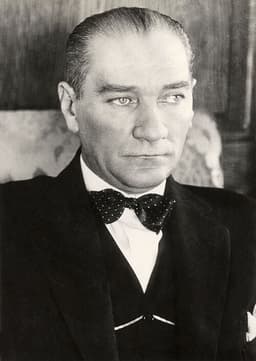
Mustafa Kemal Ataturk
Politician · Modern
80.0Total
Basic Information
Born
1953
1881
Died
—
1938
Era
Modern
Modern
Nationality
Spain
Turkey
Occupation
Politician
Politician
Civilization
Western
Middle Eastern
Score Comparison
Military (10%)
50.0
75.0
Political (20%)
59.3
85.0
Influence (20%)
58.0
75.0
Legacy (20%)
46.7
90.0
Leadership (15%)
72.0
80.0
Strategy (15%)
42.7
65.0
TOTAL
55.1
80.0
Jose Maria Aznar — Complete Timeline
1996 AD
Implemented Economic Liberalization ReformsReform◆ Major
Aznar's government pursued a program of economic liberalization, including privatization of state-owned enterprises, labor market reforms, and tax cuts. These policies contributed to strong economic growth and reduced unemployment, but also increased income inequality.
Economic ReformPrivatizationLiberalization
Impact: national
Won the 1996 General ElectionPolitical Action◆ Major
Jose Maria Aznar led the People's Party (PP) to victory in the March 3, 1996 general election, defeating the incumbent PSOE. He formed a minority government with support from Catalan and Basque nationalists, ending 14 years of socialist rule.
ElectionPPChange of Government
Impact: national
2000 AD
Achieved an Absolute Majority in 2000Political Action◆ Major
Aznar's PP won an absolute majority in the March 12, 2000 general election, securing 183 seats. This allowed him to govern without relying on nationalist parties and implement a more conservative agenda, including tax cuts and privatization.
ElectionAbsolute MajorityPP
Impact: national
2003 AD
Aligned Spain with the US in the Iraq WarPolitical Action◆ Major
Aznar's government supported the US-led invasion of Iraq in March 2003, despite widespread public opposition in Spain. He participated in the Azores Summit with Bush and Blair, committing Spanish troops to the coalition, which strained relations with France and Germany.
Iraq WarForeign PolicyUS Alliance
Impact: global
2004 AD
Survived the 11-M Madrid Train BombingsPolitical Action◆ Major
On March 11, 2004, Islamist terrorists bombed commuter trains in Madrid, killing 191 people. Aznar's government initially blamed ETA, but evidence pointed to Al-Qaeda. The handling of the attacks and the subsequent election loss on March 14 marked the end of his tenure.
Terrorism11-MElection
Impact: nationaltragic
Lost the 2004 General ElectionPolitical Action◆ Major
Despite leading in polls before the 11-M attacks, Aznar's PP lost the March 14, 2004 general election to the PSOE led by Jose Luis Rodriguez Zapatero. The defeat was widely attributed to public anger over the government's handling of the bombings and support for the Iraq War.
Election Defeat11-MPP
Impact: nationaltragic
Mustafa Kemal Ataturk — Complete Timeline
1915 AD
Battle of GallipoliWar
As a colonel, Mustafa Kemal commanded Ottoman forces at Gallipoli, successfully repelling Allied landings. His leadership at critical points like Chunuk Bair made him a national hero and laid the foundation for his political career.
World War IOttoman EmpireMilitary Victory
Impact: regional
1919 AD
Turkish War of IndependenceWar
Kemal organized and led the Turkish National Movement against the Allied occupation of Anatolia and the Treaty of S
Independence WarNational MovementAnkara
Impact: nationalconstructive
1922 AD
Abolition of the SultanatePolitical Action◆ Major
The Grand National Assembly of Turkey, under Kemal's leadership, abolished the Ottoman Sultanate, ending 600 years of imperial rule. This severed the link with the old regime and paved the way for the proclamation of the Republic.
SultanateRepublicPolitical Reform
Impact: nationalprogressive
1923 AD
Proclamation of the Republic of TurkeyPolitical Action
Kemal declared Turkey a republic, becoming its first president. He moved the capital to Ankara and initiated a series of radical reforms to modernize and secularize the state, including the adoption of a new legal code and the Latin alphabet.
RepublicModernizationSecularism
Impact: globalprogressive
1925 AD
Adoption of the Hat LawReform◆ Major
Kemal introduced the Hat Law, banning the fez and encouraging Western-style hats. This was part of his broader cultural revolution to secularize and Westernize Turkish society, symbolizing the break with Ottoman traditions.
Cultural ReformSecularismWesternization
Impact: nationalprogressive
1934 AD
Granting of Women's SuffrageReform◆ Major
Kemal's government granted women the right to vote and stand for election in national elections, ahead of many European countries. This reform was part of his commitment to gender equality and modernization of Turkish society.
Women's RightsSuffrageModernization
Impact: nationalprogressive
Expert Analysis
Origins
Jose Maria Aznar was born on February 25, 1953, in Madrid, Spain, into a middle-class family with a father who was a journalist. He studied law at Complutense University of Madrid and began his political career in the early 1970s as a member of the right-wing party Alianza Popular. Aznar's early experiences were shaped by Spain's transition to democracy after Franco's death in 1975, and he was elected to the regional parliament of Castile and León in 1983.
Mustafa Kemal Ataturk was born in 1881 in Salonika, then part of the Ottoman Empire, to a modest family. His father was a customs official who died when Mustafa was young. He attended military schools, graduating from the Ottoman Military Academy in 1905. Ataturk's early life was marked by the declining Ottoman Empire, and he became involved in the Young Turk movement, seeking reform.
Rise to Power
Aznar rose to prominence within the conservative People's Party (PP), succeeding Manuel Fraga as party leader in 1990. He won the 1996 general election on March 3, 1996, defeating the incumbent PSOE with 38.8% of the vote and forming a minority government with support from Catalan and Basque nationalists. His rise was characterized by a shift to the center, economic competence, and a tough stance on Basque separatism. In 2000, he achieved an absolute majority, winning 44.5% of the vote and 183 seats, allowing him to govern freely.
Ataturk's rise came through military distinction. He commanded at the Battle of Gallipoli in 1915, where his leadership prevented a British breakthrough. After World War I, he organized the Turkish National Movement in 1919, rejecting the Treaty of Sèvres. He established a rival government in Ankara and led the Turkish War of Independence (1919-1923), defeating Greek, Armenian, and French forces. His victory culminated in the proclamation of the Republic of Turkey on October 29, 1923, with him as its first president.
Leadership & Governance
Aznar's leadership style was pragmatic and technocratic. He implemented economic liberalization: privatizing state-owned enterprises like Telefonica and Repsol, cutting taxes, and deregulating labor markets. Spain's GDP growth averaged 3.5% annually during his tenure, and unemployment fell from 22% in 1996 to 11% in 2004. He also pursued a tough anti-terrorism policy against ETA, leading to the arrest of many leaders. However, his foreign policy, particularly support for the Iraq War in 2003, was controversial and widely opposed in Spain. He scored 72.0 in Leadership and 42.7 in Strategy.
Ataturk's leadership was transformative and authoritarian. He instituted radical reforms to secularize and modernize Turkey: abolishing the sultanate in 1922, declaring a republic in 1923, replacing Islamic law with Swiss civil code, adopting Latin script, granting women suffrage in 1934, and promoting industrialization. His governance was top-down, using the Republican People's Party to drive change. He scored 80.0 in Leadership and 65.0 in Strategy. His political score of 85.0 reflects his ability to consolidate power and implement reforms.
Triumph & Tragedy
Aznar's greatest triumph was transforming Spain's economy and integrating it into Europe. He oversaw Spain's entry into the eurozone in 1999 and achieved budget surpluses. His tragedy was the 2004 Madrid train bombings (March 11), which killed 191. His government's initial blame of ETA, despite evidence pointing to Islamists, eroded trust and contributed to his party's defeat in the subsequent election. He scored 46.7 in Legacy.
Ataturk's triumph was founding the Republic of Turkey and preserving its independence. His reforms modernized the country, creating a secular, Western-oriented state. His tragedy includes authoritarian measures, such as suppressing dissent and the Armenian Genocide controversy (though he opposed it). His legacy score of 90.0 is the highest.
Character & Destiny
Aznar was disciplined, cautious, and focused on economic management. He avoided personal charisma, relying on competence. His character led to steady governance but also to overconfidence in foreign policy, ignoring public opinion on Iraq. This misstep shaped his electoral defeat in 2004.
Ataturk was visionary, decisive, and ruthless. He combined military prowess with political acumen. His character drove him to remake a nation from the ashes of an empire. His destiny was to become the father of modern Turkey, but his authoritarian tendencies created a legacy of centralized power.
Legacy
Aznar's legacy is mixed: economic reforms that strengthened Spain, but a foreign policy that divided the nation. His party returned to power in 2011 but his influence waned. Ataturk's legacy endures: Turkey's secularism, nationalism, and modernization are his direct imprint. His image remains ubiquitous, and his principles are enshrined in the constitution. However, recent governments have eroded some reforms.
Conclusion
While Aznar successfully modernized Spain's economy and integrated it into Europe, Ataturk fundamentally created a nation and transformed its societal structure. Ataturk's total score of 80.0 versus Aznar's 55.1 reflects a vast difference in scope and impact. Ataturk's reforms were foundational, affecting every aspect of Turkish life, whereas Aznar's changes were incremental within an established democracy. Therefore, Mustafa Kemal Ataturk had greater historical impact.
Rankings
🥇
Mustafa Kemal AtaturkLeader
Mil: 75.0Pol: 85.0Inf: 75.0
80.0
🥈
Jose Maria Aznar
Mil: 50.0Pol: 59.3Inf: 58.0
55.1
+24.9 behind
How This Comparison Works
Algorithm
Each figure is scored on 6 dimensions (0—100 scale) based on structured historical data: Military (10%), Political (20%), Influence (20%), Legacy (20%), Leadership (15%), Strategy (15%). The weighted total produces the final ranking.
Data Sources
Scores are computed from structured sub-indicators in the database. Scale factors adjust for era (Ancient ×0.85, Modern ×1.0) and civilization size (Eastern ×1.05, Other ×0.80) to account for differences in population and military scale.
Maximum 3 Figures
Comparisons are limited to 2—3 figures to ensure readability and statistical meaningfulness.
Error Margins
±5 points per dimension — Sub-scores are derived from historical records with inherent uncertainty. Two figures within 5 points on a dimension should be considered roughly equivalent in that area.
Total Score Accuracy
±3 points overall — The weighted combination of 6 dimensions produces a total score with approximately ±3 points of uncertainty. Differences of less than 3 points are not statistically significant— the figures are effectively tied.
Known Limitations
- Historical records are incomplete and uneven across civilizations
- Figures from oral-tradition societies may be underrepresented
- Occupation labels can misclassify multi-role figures
- Scores measure capability and impact, not moral character
- Quantitative scoring is a comparison tool, not absolute truth
Capability Radar
Military (10%) — Battles & Warfare
Battles
29
85
Win Rate
30
90
Expansion
36
60
Political (20%) — Governance & Reform
Reform
60
98
Diplomacy
70
85
Economy
65
75
Influence (20%) — Cultural & Global Reach
Cultural
30
90
Global
50
80
Legacy (20%) — Historical Impact
Historical
40
95
Longevity
30
85
Leadership (15%) — Power & Stability
Tenure
65
85
Stability
60
70
Strategy (15%) — Tactics & Innovation
Strategy
39
85
Tactics
43
88
Reform
42
80
Similar Comparisons
Comments & Discussion
No comments yet. Be the first to share your thoughts!