Loading...
This comparison has not been analyzed yet.
One-time AI generation (~1 minute). Scores and timeline are already available below.
Joscelin II of Edessa vs William I of Hainaut
William I of Hainaut leads by 3.7 pts · 2 figures compared
…
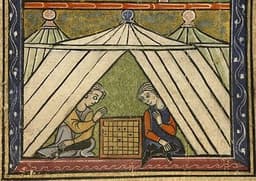
Joscelin II of Edessa
Emperor · Medieval
41.2Total
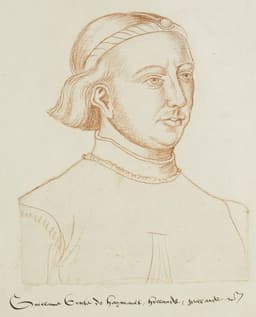
William I of Hainaut
Emperor · Medieval
44.9Total
Basic Information
Born
1113
1286
Died
1159
1337
Era
Medieval
Medieval
Nationality
County of Edessa
Hainaut
Occupation
Emperor
Emperor
Civilization
Western
Western
Score Comparison
Military (10%)
50.0
22.6
Political (20%)
32.1
45.1
Influence (20%)
45.5
49.4
Legacy (20%)
36.7
40.8
Leadership (15%)
39.0
62.2
Strategy (15%)
50.0
39.6
TOTAL
41.2
44.9
Joscelin II of Edessa — Complete Timeline
1144 AD
Loss of EdessaWar
Joscelin II was absent from Edessa when Zengi besieged the city. The city fell after a short siege, marking the first major Crusader territory loss and triggering the Second Crusade.
CrusadesSiegeEdessaZengi
Impact: regionaltragic
1148 AD
Second Crusade CampaignWar◆ Major
Joscelin II participated in the Second Crusade's failed siege of Damascus. The campaign's failure further weakened the Crusader states and left Edessa's remnants vulnerable to Muslim reconquest.
CrusadesSecond CrusadeDamascus
Impact: regionaltragic
1150 AD
Capture and BlindingWar◆ Major
Joscelin II was captured by Nur ad-Din's forces while traveling in disguise. He was imprisoned in Aleppo and blinded, ending his effective rule and leading to the final loss of the County of Edessa's remaining territories.
CrusadesCaptureNur ad-DinEdessa
Impact: regionaltragic
1159 AD
Death in PrisonOther
Joscelin II died in captivity in Aleppo after nine years of imprisonment. His death marked the end of the County of Edessa as a Crusader state, with its lands absorbed by Nur ad-Din's expanding realm.
CrusadesDeathEdessa
Impact: regionaltragic
William I of Hainaut — Complete Timeline
1304 AD
Count of Hainaut, Holland, and ZeelandPolitical Action◆ Major
William I inherited the counties of Hainaut, Holland, and Zeeland from his father John II of Avesnes. He ruled these territories for over three decades, maintaining stability and fostering economic growth.
InheritanceHainautHolland
Impact: regionalconstructive
1324 AD
Marriage of Daughter Margaret to Louis IVPolitical Action◆ Major
William I of Hainaut married his daughter Margaret to Louis IV, Holy Roman Emperor. This marriage strengthened ties between Hainaut and the Wittelsbach dynasty, enhancing William's influence in imperial politics.
MarriageAllianceWittelsbach
Impact: regionalconstructive
1328 AD
Marriage of Daughter Philippa to Edward IIIPolitical Action◆ Major
William I of Hainaut married his daughter Philippa to King Edward III of England. This alliance brought Hainaut into the English orbit and provided Edward with crucial military support for the early stages of the Hundred Years' War.
MarriageAllianceEdward III
Impact: regionalconstructive
This comparison has not been analyzed yet.
One-time AI generation (~1 minute). Scores and timeline are already available below.
Rankings
🥇
William I of HainautLeader
Mil: 22.6Pol: 45.1Inf: 49.4
44.9
🥈
Joscelin II of Edessa
Mil: 50.0Pol: 32.1Inf: 45.5
41.2
+3.7 behind
How This Comparison Works
Algorithm
Each figure is scored on 6 dimensions (0—100 scale) based on structured historical data: Military (10%), Political (20%), Influence (20%), Legacy (20%), Leadership (15%), Strategy (15%). The weighted total produces the final ranking.
Data Sources
Scores are computed from structured sub-indicators in the database. Scale factors adjust for era (Ancient ×0.85, Modern ×1.0) and civilization size (Eastern ×1.05, Other ×0.80) to account for differences in population and military scale.
Maximum 3 Figures
Comparisons are limited to 2—3 figures to ensure readability and statistical meaningfulness.
Error Margins
±5 points per dimension — Sub-scores are derived from historical records with inherent uncertainty. Two figures within 5 points on a dimension should be considered roughly equivalent in that area.
Total Score Accuracy
±3 points overall — The weighted combination of 6 dimensions produces a total score with approximately ±3 points of uncertainty. Differences of less than 3 points are not statistically significant— the figures are effectively tied.
Known Limitations
- Historical records are incomplete and uneven across civilizations
- Figures from oral-tradition societies may be underrepresented
- Occupation labels can misclassify multi-role figures
- Scores measure capability and impact, not moral character
- Quantitative scoring is a comparison tool, not absolute truth
Capability Radar
Military (10%) — Battles & Warfare
Battles
10
10
Win Rate
5
10
Expansion
0
15
Political (20%) — Governance & Reform
Reform
5
30
Diplomacy
15
60
Economy
10
35
Influence (20%) — Cultural & Global Reach
Cultural
5
20
Global
5
15
Legacy (20%) — Historical Impact
Historical
15
25
Longevity
5
20
Leadership (15%) — Power & Stability
Tenure
20
40
Stability
5
40
Strategy (15%) — Tactics & Innovation
Strategy
10
10
Tactics
10
10
Reform
0
5
Similar Comparisons
Comments & Discussion
No comments yet. Be the first to share your thoughts!