Loading...
Al-Rashid vs William I of Hainaut
William I of Hainaut leads by 7.2 pts · 2 figures compared
…
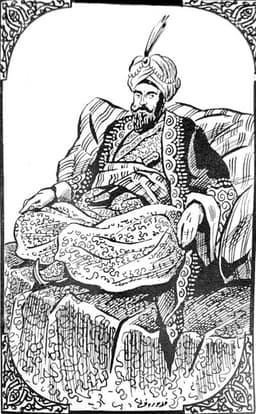
Al-Rashid
Emperor · Medieval
37.7Total
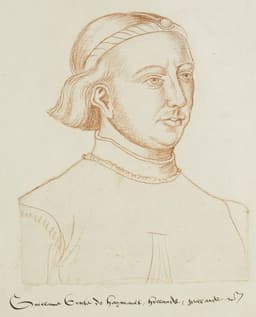
William I of Hainaut
Emperor · Medieval
44.9Total
Basic Information
Born
1109
1286
Died
1138
1337
Era
Medieval
Medieval
Nationality
Abbasid Caliphate
Hainaut
Occupation
Emperor
Emperor
Civilization
Middle Eastern
Western
Score Comparison
Military (10%)
20.0
22.6
Political (20%)
32.1
45.1
Influence (20%)
45.5
49.4
Legacy (20%)
33.3
40.8
Leadership (15%)
44.5
62.2
Strategy (15%)
45.0
39.6
TOTAL
37.7
44.9
Al-Rashid — Complete Timeline
1136 AD
Deposition by SeljuksPolitical Action◆ Major
Caliph Al-Rashid was deposed by the Seljuk Sultan Mas'ud after only one year of rule. The sultan accused him of incompetence and replaced him with his uncle, Al-Muqtafi. Al-Rashid fled to Isfahan.
DepositionSeljuk InterventionCaliphal Crisis
Impact: regionaldestructive
1138 AD
Death in ExileOther
Al-Rashid died in Isfahan under mysterious circumstances, possibly assassinated by Seljuk agents. His brief reign and violent end illustrated the complete subordination of the caliphate to Seljuk power.
ExileDeathSeljuk Era
tragic
William I of Hainaut — Complete Timeline
1304 AD
Count of Hainaut, Holland, and ZeelandPolitical Action◆ Major
William I inherited the counties of Hainaut, Holland, and Zeeland from his father John II of Avesnes. He ruled these territories for over three decades, maintaining stability and fostering economic growth.
InheritanceHainautHolland
Impact: regionalconstructive
1324 AD
Marriage of Daughter Margaret to Louis IVPolitical Action◆ Major
William I of Hainaut married his daughter Margaret to Louis IV, Holy Roman Emperor. This marriage strengthened ties between Hainaut and the Wittelsbach dynasty, enhancing William's influence in imperial politics.
MarriageAllianceWittelsbach
Impact: regionalconstructive
1328 AD
Marriage of Daughter Philippa to Edward IIIPolitical Action◆ Major
William I of Hainaut married his daughter Philippa to King Edward III of England. This alliance brought Hainaut into the English orbit and provided Edward with crucial military support for the early stages of the Hundred Years' War.
MarriageAllianceEdward III
Impact: regionalconstructive
Expert Analysis
Origins
**Al-Rashid** (1109–1138) was an Abbasid caliph, born in Baghdad to Caliph al-Mustarshid. His early life was overshadowed by the declining power of the caliphate, which had become a puppet of the Seljuk Turks. He received a traditional Islamic education but lacked military or political experience. His father's deposition and execution by the Seljuks in 1135 set a grim precedent.
**William I of Hainaut** (c. 1286–1337) was born into the House of Avesnes, inheriting the counties of Hainaut, Holland, and Zeeland from his father John II. He grew up in the Low Countries, a region of fragmented fiefs and shifting alliances. His upbringing focused on diplomacy and marriage politics, as his family sought to expand influence through strategic unions.
Rise to Power
Al-Rashid became caliph in 1135 after his father's murder. His reign was immediately challenged by the Seljuk Sultan Mas'ud, who demanded that the caliph recognize Seljuk authority. Al-Rashid attempted to assert independence, but his forces were no match for the Seljuk army. Within a year, Mas'ud marched on Baghdad, deposed Al-Rashid, and installed his uncle al-Muqtafi. Al-Rashid fled to Isfahan, where he died under mysterious circumstances in 1138, possibly assassinated.
William I inherited his counties in 1304 after his father's death. He consolidated power through marriage alliances: in 1328, he married his daughter Philippa to Edward III of England, securing English support. In 1324, another daughter, Margaret, married Louis IV, Holy Roman Emperor. These marriages elevated William from a minor count to a key player in European politics. He also maintained control over his territories by balancing French and Holy Roman influences.
Leadership & Governance
Al-Rashid's leadership was reactive and weak. He attempted to resist Seljuk domination but lacked the military and political resources. His governance was limited to Baghdad, and he could not implement any reforms. His political score of 32.1 reflects his inability to navigate the power dynamics of his time.
William I governed effectively for over three decades. He centralized administration in Hainaut, Holland, and Zeeland, promoting trade and legal reforms. He maintained neutrality in conflicts between France and England, leveraging his daughters' marriages to gain influence. His leadership score of 62.2 indicates a pragmatic and capable ruler who prioritized stability and alliances.
Triumph & Tragedy
Al-Rashid's greatest achievement was briefly asserting the caliphate's autonomy, but this led to his deposition and death—a clear failure. His reign left no lasting reforms or institutions.
William I's triumphs include the successful marriages of his daughters, which shaped European alliances. Philippa became a popular queen of England, while Margaret became Holy Roman Empress. However, his reliance on marriage diplomacy meant that his territories often served as pawns. He died in 1337, just before the Hundred Years' War, which would have tested his alliances.
Character & Destiny
Al-Rashid was ambitious but naive, overestimating the caliphate's power. His character led to a short, tragic reign. Historians view him as a symbol of Abbasid decline.
William I was calculating and patient, focusing on long-term family strategy. His character ensured a stable reign and elevated his dynasty. He is remembered as a capable count who expanded his family's influence through marriage rather than war.
Legacy
Al-Rashid's legacy is minimal; his brief rule is a footnote in Abbasid history. His deposition highlighted the caliphate's subservience to the Seljuks.
William I's legacy is more substantial. His daughter Philippa brought Hainaut's cultural influence to England, and his alliances helped shape the Hundred Years' War. His descendants continued to rule Hainaut and Holland, and his marriage strategy became a model for medieval diplomacy. His influence score of 49.4 reflects his impact on European politics.
Conclusion
William I of Hainaut had greater impact than Al-Rashid. His political score of 45.1, leadership of 62.2, and influence of 49.4 all exceed Al-Rashid's 32.1, 44.5, and 45.5, respectively. While Al-Rashid's total score of 37.7 is lower than William's 44.9, the gap is clear. William's strategic marriages shaped European alliances for generations, whereas Al-Rashid's brief reign changed nothing. In the contest between a deposed caliph and a count who married his daughters to kings, William I stands as the more consequential figure.
Rankings
🥇
William I of HainautLeader
Mil: 22.6Pol: 45.1Inf: 49.4
44.9
🥈
Al-Rashid
Mil: 20.0Pol: 32.1Inf: 45.5
37.7
+7.2 behind
How This Comparison Works
Algorithm
Each figure is scored on 6 dimensions (0—100 scale) based on structured historical data: Military (10%), Political (20%), Influence (20%), Legacy (20%), Leadership (15%), Strategy (15%). The weighted total produces the final ranking.
Data Sources
Scores are computed from structured sub-indicators in the database. Scale factors adjust for era (Ancient ×0.85, Modern ×1.0) and civilization size (Eastern ×1.05, Other ×0.80) to account for differences in population and military scale.
Maximum 3 Figures
Comparisons are limited to 2—3 figures to ensure readability and statistical meaningfulness.
Error Margins
±5 points per dimension — Sub-scores are derived from historical records with inherent uncertainty. Two figures within 5 points on a dimension should be considered roughly equivalent in that area.
Total Score Accuracy
±3 points overall — The weighted combination of 6 dimensions produces a total score with approximately ±3 points of uncertainty. Differences of less than 3 points are not statistically significant— the figures are effectively tied.
Known Limitations
- Historical records are incomplete and uneven across civilizations
- Figures from oral-tradition societies may be underrepresented
- Occupation labels can misclassify multi-role figures
- Scores measure capability and impact, not moral character
- Quantitative scoring is a comparison tool, not absolute truth
Capability Radar
Military (10%) — Battles & Warfare
Battles
5
10
Win Rate
5
10
Expansion
5
15
Political (20%) — Governance & Reform
Reform
10
30
Diplomacy
10
60
Economy
10
35
Influence (20%) — Cultural & Global Reach
Cultural
5
20
Global
5
15
Legacy (20%) — Historical Impact
Historical
5
25
Longevity
5
20
Leadership (15%) — Power & Stability
Tenure
10
40
Stability
10
40
Strategy (15%) — Tactics & Innovation
Strategy
5
10
Tactics
5
10
Reform
5
5
Similar Comparisons
Comments & Discussion
No comments yet. Be the first to share your thoughts!