Loading...
This comparison has not been analyzed yet.
One-time AI generation (~1 minute). Scores and timeline are already available below.
John Lawrence vs Nelson Mandela
Nelson Mandela leads by 0.3 pts · 2 figures compared
…

John Lawrence
Politician · Modern
56.7Total
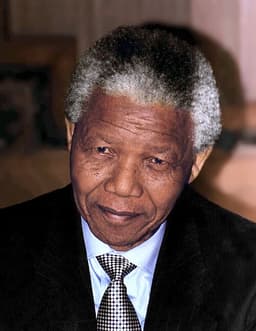
Nelson Mandela
Politician · Modern
57.0Total
Basic Information
Born
1811
1918
Died
1879
2013
Era
Modern
Modern
Nationality
Great Britain
South Africa
Occupation
Politician
Politician
Civilization
Western
Other
Score Comparison
Military (10%)
50.0
10.0
Political (20%)
72.0
78.0
Influence (20%)
57.2
40.0
Legacy (20%)
46.7
68.0
Leadership (15%)
72.0
82.0
Strategy (15%)
41.0
50.0
TOTAL
56.7
57.0
John Lawrence — Complete Timeline
1849 AD
Annexation of the PunjabPolitical Action◆ Major
John Lawrence served as a key administrator during the annexation of the Punjab by the British East India Company in 1849 after the Second Anglo-Sikh War. He helped establish British rule and implemented land revenue reforms.
AnnexationPunjabBritish India
Impact: regional
1857 AD
Defense of the Punjab during the Indian RebellionWar◆ Major
John Lawrence, as Chief Commissioner of the Punjab, organized the defense of the province during the Indian Rebellion of 1857. He raised troops, secured key cities, and prevented the rebellion from spreading to the Punjab, a critical British stronghold.
Indian RebellionPunjabBritish India
Impact: regional
1860 AD
Famine Relief in the PunjabReform
John Lawrence organized famine relief in the Punjab during the famine of 1860-1861. He implemented public works programs and food distribution, which saved thousands of lives and set a precedent for British famine policy in India.
FamineReliefPunjab
Impact: regionalconstructive
1864 AD
Appointed Viceroy of IndiaPolitical Action◆ Major
John Lawrence was appointed Viceroy and Governor-General of India in January 1864. He served until 1869, focusing on administrative reforms, famine relief, and infrastructure development, including the expansion of railways and irrigation systems.
ViceroyBritish IndiaAdministration
Impact: regionalconstructive
Nelson Mandela — Complete Timeline
1964 AD
Rivonia TrialPolitical Action
Nelson Mandela and other anti-apartheid leaders were tried for sabotage and conspiracy. Mandela was sentenced to life imprisonment, delivering a speech from the dock that became a rallying cry against apartheid. The trial drew international attention to the anti-apartheid struggle.
Impact: global
1990 AD
Release from PrisonPolitical Action
After 27 years of imprisonment, Mandela was released from Victor Verster Prison by President F.W. de Klerk. His release was a pivotal moment in South Africa's transition from apartheid to multiracial democracy, leading to negotiations for a new constitution.
Impact: globalprogressive
1993 AD
Awarding of the Nobel Peace PrizeCultural◆ Major
Mandela and F.W. de Klerk were jointly awarded the Nobel Peace Prize for their roles in ending apartheid and laying the foundations for a democratic South Africa. The award recognized their peaceful transition and commitment to reconciliation.
Impact: globalprogressive
1994 AD
Inauguration as President of South AfricaPolitical Action
Mandela was inaugurated as South Africa's first Black president after the country's first fully democratic elections. His presidency focused on national reconciliation, establishing the Truth and Reconciliation Commission, and dismantling the legacy of apartheid.
Impact: globalprogressive
This comparison has not been analyzed yet.
One-time AI generation (~1 minute). Scores and timeline are already available below.
Rankings
🥇
Nelson MandelaLeader
Mil: 10.0Pol: 78.0Inf: 40.0
57.0
🥈
John Lawrence
Mil: 50.0Pol: 72.0Inf: 57.2
56.7
+0.3 behind
How This Comparison Works
Algorithm
Each figure is scored on 6 dimensions (0—100 scale) based on structured historical data: Military (10%), Political (20%), Influence (20%), Legacy (20%), Leadership (15%), Strategy (15%). The weighted total produces the final ranking.
Data Sources
Scores are computed from structured sub-indicators in the database. Scale factors adjust for era (Ancient ×0.85, Modern ×1.0) and civilization size (Eastern ×1.05, Other ×0.80) to account for differences in population and military scale.
Maximum 3 Figures
Comparisons are limited to 2—3 figures to ensure readability and statistical meaningfulness.
Error Margins
±5 points per dimension — Sub-scores are derived from historical records with inherent uncertainty. Two figures within 5 points on a dimension should be considered roughly equivalent in that area.
Total Score Accuracy
±3 points overall — The weighted combination of 6 dimensions produces a total score with approximately ±3 points of uncertainty. Differences of less than 3 points are not statistically significant— the figures are effectively tied.
Known Limitations
- Historical records are incomplete and uneven across civilizations
- Figures from oral-tradition societies may be underrepresented
- Occupation labels can misclassify multi-role figures
- Scores measure capability and impact, not moral character
- Quantitative scoring is a comparison tool, not absolute truth
Capability Radar
Military (10%) — Battles & Warfare
Battles
15
0
Win Rate
20
7
Expansion
50
9
Political (20%) — Governance & Reform
Reform
65
95
Diplomacy
70
95
Economy
55
60
Influence (20%) — Cultural & Global Reach
Cultural
40
85
Global
35
90
Legacy (20%) — Historical Impact
Historical
50
90
Longevity
30
80
Leadership (15%) — Power & Stability
Tenure
60
60
Stability
60
80
Strategy (15%) — Tactics & Innovation
Strategy
30
8
Tactics
25
12
Reform
40
17
Similar Comparisons
Comments & Discussion
No comments yet. Be the first to share your thoughts!