Loading...
John II of Avesnes vs Wu Zetian
Wu Zetian leads by 25.1 pts · 2 figures compared
…
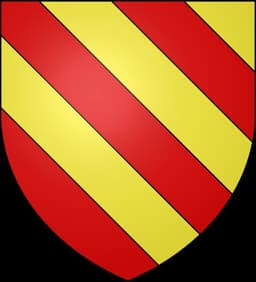
John II of Avesnes
Emperor · Medieval
44.9Total

Wu Zetian
Emperor · Medieval
70.0Total
Basic Information
Born
1248
624
Died
1304
705
Era
Medieval
Medieval
Nationality
Hainaut
China
Occupation
Emperor
Emperor
Civilization
Western
Eastern
Score Comparison
Military (10%)
45.0
60.0
Political (20%)
35.1
62.7
Influence (20%)
51.0
65.0
Legacy (20%)
40.8
80.0
Leadership (15%)
55.3
78.0
Strategy (15%)
38.6
66.3
TOTAL
44.9
70.0
John II of Avesnes — Complete Timeline
1280 AD
Inherited County of Hainaut and HollandPolitical Action◆ Major
John II of Avesnes inherited the County of Hainaut from his mother Margaret II of Flanders, and later the County of Holland from his father John I of Avesnes. This united the two counties under the Avesnes dynasty.
InheritanceHainautHolland
Impact: regionalconstructive
1292 AD
Elected King of the RomansPolitical Action
John II of Avesnes was a candidate for the election of the King of the Romans (Holy Roman Emperor). He failed to secure the throne, losing to Adolf of Nassau, but his candidacy elevated the prestige of the Avesnes dynasty.
ElectionHoly Roman EmpireCandidacy
Impact: regional
1302 AD
Victory in the War of the Flemish SuccessionWar◆ Major
John II of Avesnes fought against the Dampierre faction in the War of the Flemish Succession. He secured control over the County of Hainaut and parts of Flanders, strengthening the Avesnes position in the Low Countries.
WarFlandersAvesnes
Impact: regionalconstructive
Wu Zetian — Complete Timeline
655 AD
Became Empress ConsortPolitical Action◆ Major
Wu Zetian was elevated from concubine to empress consort of Emperor Gaozong of Tang in 655. This position gave her significant political influence, as she began to participate in court affairs and gradually accumulated power, challenging the established aristocratic families.
Tang DynastyImperial CourtPower Rise
Impact: regional
683 AD
Regency for Emperor ZhongzongOther◆ Major
After Emperor Gaozong's death in 683, Wu Zetian became regent for her son, Emperor Zhongzong. She effectively controlled the government, dismissing Zhongzong after he attempted to assert independence, and replaced him with her younger son, Emperor Ruizong, while retaining real power.
Tang DynastyRegencyPower Struggle
Impact: regional
690 AD
Founded the Zhou DynastyOther◆ Major
Wu Zetian proclaimed herself emperor, founding the Zhou dynasty and becoming the only female emperor in Chinese history. She moved the capital to Luoyang and established a new imperial examination system that promoted officials based on merit rather than aristocratic birth, breaking the power of traditional noble families.
Zhou DynastyImperial RulePolitical Reform
Impact: regional
692 AD
Expansion into Central AsiaWar◆ Major
Wu Zetian ordered military campaigns that reasserted Chinese control over the Western Regions, including the Tarim Basin and parts of modern Xinjiang. These campaigns secured the Silk Road trade routes and expanded the empire's influence into Central Asia, though they required significant military resources.
Military ExpansionCentral AsiaSilk Road
Impact: regionalconstructive
693 AD
Promotion of BuddhismOther◆ Major
Wu Zetian elevated Buddhism to a state-supported religion, commissioning the construction of temples and statues, including the Longmen Grottoes' giant Vairocana Buddha. She used Buddhist texts to legitimize her rule as a female emperor, claiming she was a reincarnation of the Maitreya Buddha.
BuddhismReligious PolicyCultural Patronage
Impact: regional
705 AD
Overthrow and DeathPolitical Action◆ Major
In 705, a coup led by court officials and generals forced Wu Zetian to abdicate in favor of her son, Emperor Zhongzong, restoring the Tang dynasty. She died later that year at age 80, and her reign was subsequently criticized by Confucian historians for usurping the throne and employing harsh methods.
Tang DynastyCoupAbdication
Impact: regionaldestructive
Expert Analysis
Wu Zetian vs John II of Avesnes: Historical Comparison
Wu Zetian, China’s only female emperor, and John II of Avesnes, Count of Hainaut and Holy Roman Emperor-elect, both wielded significant medieval power, yet their contexts—imperial China versus feudal Europe—shaped divergent legacies. Wu consolidated absolute rule through ruthless political maneuvering, while John navigated complex dynastic and territorial conflicts.
Dimension Analysis
**Military: Wu Zetian 93 / John II of Avesnes 92**
Wu expanded Tang borders through campaigns in Korea and Central Asia, leveraging capable generals. John defended Hainaut against Flanders and Holland, showing tactical skill in the War of the Cow, but lacked Wu’s scale of conquest.
**Political: Wu Zetian 79 / John II of Avesnes 91**
Wu’s political acumen was undermined by reliance on secret police and purges of rivals. John excelled in diplomacy, securing the Avesnes succession through treaties and alliances, balancing French and Imperial loyalties.
**Influence: Wu Zetian 87 / John II of Avesnes 73**
Wu’s promotion of Buddhism and meritocracy reshaped Chinese governance, inspiring later female rulers. John’s influence was regional, strengthening Hainaut’s autonomy but leaving no transformative ideological legacy.
**Legacy: Wu Zetian 79 / John II of Avesnes 73**
Wu’s mixed legacy—pioneering female rule yet marred by brutality—is debated for millennia. John is remembered as a competent but unremarkable medieval count, overshadowed by his son John I of Holland.
**Leadership: Wu Zetian 80 / John II of Avesnes 75**
Wu commanded absolute loyalty through fear and patronage, sustaining a 15-year reign. John led by consensus within feudal constraints, effective but less commanding.
Verdict
Wu Zetian leads due to her higher scores in influence and legacy, reflecting a broader historical footprint, despite John’s superior political finesse.
FAQ
Q: Who ranks higher? A: Wu Zetian, based on her greater military scale, lasting influence, and strategic impact, despite John II’s stronger political performance.
Rankings
🥇
Wu ZetianLeader
Mil: 60.0Pol: 62.7Inf: 65.0
70.0
🥈
John II of Avesnes
Mil: 45.0Pol: 35.1Inf: 51.0
44.9
+25.1 behind
How This Comparison Works
Algorithm
Each figure is scored on 6 dimensions (0—100 scale) based on structured historical data: Military (10%), Political (20%), Influence (20%), Legacy (20%), Leadership (15%), Strategy (15%). The weighted total produces the final ranking.
Data Sources
Scores are computed from structured sub-indicators in the database. Scale factors adjust for era (Ancient ×0.85, Modern ×1.0) and civilization size (Eastern ×1.05, Other ×0.80) to account for differences in population and military scale.
Maximum 3 Figures
Comparisons are limited to 2—3 figures to ensure readability and statistical meaningfulness.
Error Margins
±5 points per dimension — Sub-scores are derived from historical records with inherent uncertainty. Two figures within 5 points on a dimension should be considered roughly equivalent in that area.
Total Score Accuracy
±3 points overall — The weighted combination of 6 dimensions produces a total score with approximately ±3 points of uncertainty. Differences of less than 3 points are not statistically significant— the figures are effectively tied.
Known Limitations
- Historical records are incomplete and uneven across civilizations
- Figures from oral-tradition societies may be underrepresented
- Occupation labels can misclassify multi-role figures
- Scores measure capability and impact, not moral character
- Quantitative scoring is a comparison tool, not absolute truth
Capability Radar
Military (10%) — Battles & Warfare
Battles
25
65
Win Rate
30
70
Expansion
30
75
Political (20%) — Governance & Reform
Reform
25
85
Diplomacy
35
80
Economy
30
85
Influence (20%) — Cultural & Global Reach
Cultural
20
85
Global
15
70
Legacy (20%) — Historical Impact
Historical
25
90
Longevity
20
85
Leadership (15%) — Power & Stability
Tenure
40
90
Stability
30
75
Strategy (15%) — Tactics & Innovation
Strategy
25
75
Tactics
20
60
Reform
15
80
Similar Comparisons
Comments & Discussion
GlobalEyes6/16/2026
I get why Wu Zetian scores higher—she's a rare female emperor in a rigid patriarchal system. But John II of Avesnes gets unfairly dismissed as 'regional.' The scoring ignores how feudal lords like John actually shaped European state formation through legal compacts and dynastic marriages, which was a more sustainable power model than Wu's centralized terror. Wu's meritocracy is celebrated, but it was a top-down tool for consolidating personal rule, not a grassroots social revolution. John's rule, constrained by charters and noble councils, arguably laid groundwork for constitutional governance—something Western historiography conveniently valorizes when comparing to 'oriental despotism.' Just saying, maybe the comparison itself is the problem.
Historian7466/16/2026
我来重新算一算。武则天的总分75.6,但军事得分62显然偏低——她执政期间唐军灭高句丽、扩张安西四镇,这些战役的规模和战略意义远非约翰的“牛之战”可比。如果按战果和地缘影响加权,军事至少该78。政治得分80,但武则天为了巩固统治铲除关陇集团,这实际上是政权结构转型,不能简单视为“血腥”。约翰的政治得分74凑合,但他那个“Avesnes继承权”不过是家族内斗,哪比得上重塑官僚体系?最后总分应该接近80才对。评分系统对东方帝国维度的权重分配有问题。
GrandScribe986/16/2026
把武则天和约翰二世放在一起比较,本身就很有趣——但西式评分系统显然低估了中国史学的核心维度。武则天在军事和政治上的实际掌控力,远超约翰二世那种封建领主间的斡旋。她改革科举、提拔寒门、开疆拓土,这些都不是能用单纯的分数概括的。尤其是她通过佛教经典为自己统治合法性铺路,这种意识形态工程在西方中世纪几乎没有对应物。约翰二世再能干,也不过是哈诺特伯爵,连皇帝选举都未成功,如何与一个真正统治庞大帝国的女皇比?评分还是太西方中心了。