Loading...
John II of Aragon vs Sarki Muhammadu Korau
John II of Aragon leads by 6.1 pts · 2 figures compared
…
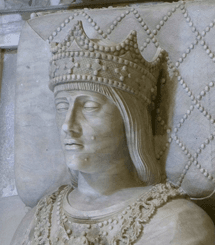
John II of Aragon
Emperor · Medieval
58.7Total

Sarki Muhammadu Korau
Emperor · Medieval
52.6Total
Basic Information
Born
1398
1490
Died
1479
1540
Era
Medieval
Medieval
Nationality
Aragon
Katsina
Occupation
Emperor
Emperor
Civilization
Western
Other
Score Comparison
Military (10%)
40.0
45.0
Political (20%)
68.0
45.1
Influence (20%)
58.3
54.9
Legacy (20%)
58.0
47.5
Leadership (15%)
74.0
65.0
Strategy (15%)
43.3
60.0
TOTAL
58.7
52.6
John II of Aragon — Complete Timeline
1447 AD
Marriage to Juana EnríquezPolitical Action◆ Major
John II of Aragon married Juana Enr
Dynastic marriageSpanish unification
Impact: nationalconstructive
1462 AD
Catalan Civil WarWar
John II faced a rebellion from the Catalan nobility and the city of Barcelona, who opposed his centralizing policies and his appointment of a Castilian viceroy. The civil war lasted a decade, devastating Catalonia and weakening the Crown of Aragon, though John II ultimately retained control.
Catalan rebellionCivil war
Impact: regionaldestructive
1469 AD
Marriage of Ferdinand and IsabellaPolitical Action
John II arranged the marriage of his son Ferdinand to Isabella I of Castile, a union that would eventually unite the crowns of Aragon and Castile. The marriage was conducted in secret due to opposition from Henry IV of Castile, but it laid the foundation for the creation of a unified Spanish kingdom.
Spanish unificationDynastic union
Impact: globalconstructive
Sarki Muhammadu Korau — Complete Timeline
1513 AD
Conquest of Katsina by SonghaiWar◆ Major
Sarki Muhammadu Korau, the warrior king of Katsina, was defeated by the Songhai Empire under Askia Mohammed I. Katsina was incorporated into the Songhai Empire as a vassal state, ending its independence.
ConquestSonghaiKatsina
Impact: regionaltragic
1520 AD
Rebellion Against Songhai RuleWar◆ Major
Sarki Muhammadu Korau led a rebellion against Songhai rule in Katsina. The rebellion was suppressed by the Songhai forces, and Korau was likely killed or captured, solidifying Songhai control over the region.
RebellionSonghaiKatsina
Impact: regionaldestructive
Expert Analysis
Origins
John II of Aragon (born 1398) was the son of King Ferdinand I of Aragon and Eleanor of Alburquerque. He was raised in the Aragonese court, receiving education in governance and warfare. His family, the Trastámara dynasty, had strong ties to Castile, which later influenced his policies. John's early life was marked by the political intrigues of the Crown of Aragon, a confederation of kingdoms including Aragon, Catalonia, Valencia, and others.
Sarki Muhammadu Korau (dates uncertain, likely 15th century) was a ruler of Katsina, one of the Hausa city-states in what is now northern Nigeria. Little is known of his early life, but he emerged as a warrior king during a period of expansion by the Songhai Empire under Askia Mohammed I. The Hausa states were organized into independent city-states, each with its own ruler, and Katsina was a prominent center of trade and Islamic learning.
Rise to Power
John II ascended to the throne of Aragon in 1458 after the death of his brother Alfonso V. His reign was immediately challenged by the Catalan nobility, who opposed his centralizing policies and his appointment of a Castilian as governor of Catalonia. This led to the Catalan Civil War (1462-1472), a major turning point. John II managed to suppress the rebellion with the help of French and Castilian allies, but the war devastated Catalonia and weakened his rule.
Sarki Muhammadu Korau's rise is less documented, but he became the ruler of Katsina during a time when the Songhai Empire was expanding into Hausaland. He likely consolidated power through military prowess and alliances with neighboring Hausa states. His resistance against Songhai marked his most significant historical role.
Leadership & Governance
John II's leadership was characterized by political maneuvering and dynastic ambition. He scored 74.0 in leadership, reflecting his ability to navigate complex alliances. He arranged the marriage of his son Ferdinand to Isabella I of Castile in 1469, a strategic move that would eventually unite the crowns of Aragon and Castile, forming the basis of modern Spain. However, his governance was marred by the Catalan Civil War, which drained resources and led to widespread destruction. His political score of 68.0 indicates moderate success in managing the crown's affairs.
Sarki Muhammadu Korau, with a leadership score of 65.0, governed Katsina as a warrior king. His rule likely involved maintaining trade routes and defending against external threats. His strategy score of 60.0 suggests he was competent in military planning, but his rebellion against Songhai was ultimately unsuccessful. He lacked the diplomatic finesse of John II, as he faced a superior military power.
Triumph & Tragedy
John II's greatest triumph was arranging the marriage of Ferdinand and Isabella, which led to the unification of Spain and the eventual expulsion of the Moors and the discovery of the New World. His tragedy was the Catalan Civil War, which resulted in the loss of life and economic decline. He also faced a revolt from his own son, Charles of Viana, who died under suspicious circumstances, tarnishing his legacy.
Sarki Muhammadu Korau's triumph was his initial defiance against the Songhai Empire, rallying Katsina to resist foreign domination. His tragedy was the defeat and incorporation of Katsina into the Songhai Empire. The rebellion he led was suppressed, and he likely died in battle or was executed. His military score of 45.0 reflects his inability to overcome the Songhai forces.
Character & Destiny
John II was a shrewd and calculating ruler, but his authoritarian tendencies provoked rebellion. His decision to appoint a Castilian governor alienated the Catalan nobility, leading to civil war. His character was shaped by the Trastámara dynasty's ambition to expand influence, and his destiny was to lay the groundwork for Spain's golden age, though he died in 1479 before seeing the full fruits of his efforts.
Sarki Muhammadu Korau was a proud and defiant leader who chose resistance over submission. His character was that of a traditional warrior king, valuing independence and honor. His destiny was to become a symbol of Hausa resistance, but his defeat meant that Katsina became part of the Songhai Empire, limiting his long-term impact.
Legacy
John II's legacy is significant: his marriage alliance directly led to the unification of Spain under his son Ferdinand and daughter-in-law Isabella. This union enabled the completion of the Reconquista in 1492 and the sponsorship of Columbus's voyages. His influence score of 58.3 and legacy score of 58.0 reflect his role as a transitional figure. In contrast, Sarki Muhammadu Korau's legacy is more localized. He is remembered as a warrior king who resisted Songhai, but his defeat meant that Katsina's independence was lost. His legacy score of 47.5 indicates a more limited impact, primarily within Hausa oral traditions.
Conclusion
John II of Aragon had a greater impact on world history than Sarki Muhammadu Korau. While both faced significant challenges, John II's political maneuvering resulted in the unification of Spain, a development that altered the course of European and global history. His total score of 58.7 compared to Korau's 52.6 reflects this difference. Korau's resistance, though admirable, did not change the broader geopolitical landscape. Therefore, John II's influence is more enduring and far-reaching.
Rankings
🥇
John II of AragonLeader
Mil: 40.0Pol: 68.0Inf: 58.3
58.7
🥈
Sarki Muhammadu Korau
Mil: 45.0Pol: 45.1Inf: 54.9
52.6
+6.1 behind
How This Comparison Works
Algorithm
Each figure is scored on 6 dimensions (0—100 scale) based on structured historical data: Military (10%), Political (20%), Influence (20%), Legacy (20%), Leadership (15%), Strategy (15%). The weighted total produces the final ranking.
Data Sources
Scores are computed from structured sub-indicators in the database. Scale factors adjust for era (Ancient ×0.85, Modern ×1.0) and civilization size (Eastern ×1.05, Other ×0.80) to account for differences in population and military scale.
Maximum 3 Figures
Comparisons are limited to 2—3 figures to ensure readability and statistical meaningfulness.
Error Margins
±5 points per dimension — Sub-scores are derived from historical records with inherent uncertainty. Two figures within 5 points on a dimension should be considered roughly equivalent in that area.
Total Score Accuracy
±3 points overall — The weighted combination of 6 dimensions produces a total score with approximately ±3 points of uncertainty. Differences of less than 3 points are not statistically significant— the figures are effectively tied.
Known Limitations
- Historical records are incomplete and uneven across civilizations
- Figures from oral-tradition societies may be underrepresented
- Occupation labels can misclassify multi-role figures
- Scores measure capability and impact, not moral character
- Quantitative scoring is a comparison tool, not absolute truth
Capability Radar
Military (10%) — Battles & Warfare
Battles
45
45
Win Rate
40
50
Expansion
50
55
Political (20%) — Governance & Reform
Reform
55
40
Diplomacy
70
45
Economy
50
40
Influence (20%) — Cultural & Global Reach
Cultural
55
40
Global
55
30
Legacy (20%) — Historical Impact
Historical
65
45
Longevity
60
40
Leadership (15%) — Power & Stability
Tenure
60
50
Stability
45
50
Strategy (15%) — Tactics & Innovation
Strategy
40
45
Tactics
35
40
Reform
30
35
Similar Comparisons
Comments & Discussion
No comments yet. Be the first to share your thoughts!