Loading...
John II of Aragon vs Julius Caesar
Julius Caesar leads by 24.1 pts · 2 figures compared
…
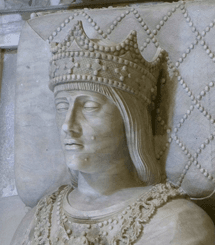
John II of Aragon
Emperor · Medieval
58.7Total

Julius Caesar
General · Ancient
82.8Total
Basic Information
Born
1398
-100
Died
1479
-44
Era
Medieval
Ancient
Nationality
Aragon
Roman Republic
Occupation
Emperor
General
Civilization
Western
Western
Score Comparison
Military (10%)
40.0
88.0
Political (20%)
68.0
78.0
Influence (20%)
58.3
85.0
Legacy (20%)
58.0
82.0
Leadership (15%)
74.0
80.0
Strategy (15%)
43.3
85.0
TOTAL
58.7
82.8
John II of Aragon — Complete Timeline
1447 AD
Marriage to Juana EnríquezPolitical Action◆ Major
John II of Aragon married Juana Enr
Dynastic marriageSpanish unification
Impact: nationalconstructive
1462 AD
Catalan Civil WarWar
John II faced a rebellion from the Catalan nobility and the city of Barcelona, who opposed his centralizing policies and his appointment of a Castilian viceroy. The civil war lasted a decade, devastating Catalonia and weakening the Crown of Aragon, though John II ultimately retained control.
Catalan rebellionCivil war
Impact: regionaldestructive
1469 AD
Marriage of Ferdinand and IsabellaPolitical Action
John II arranged the marriage of his son Ferdinand to Isabella I of Castile, a union that would eventually unite the crowns of Aragon and Castile. The marriage was conducted in secret due to opposition from Henry IV of Castile, but it laid the foundation for the creation of a unified Spanish kingdom.
Spanish unificationDynastic union
Impact: globalconstructive
Julius Caesar — Complete Timeline
58 BC
Gallic WarsWar◆ Major
Caesar, as proconsul of Gaul, launched a series of campaigns that conquered all of Gaul (modern France, Belgium, and parts of Switzerland). He fought numerous battles, including against the Helvetii, the Belgae, and the Gallic chieftain Vercingetorix. The wars brought immense wealth and a loyal army to Caesar.
Gallic WarsConquestRoman Expansion
Impact: regional
49 BC
Crossing the RubiconPolitical Action◆ Major
Caesar led Legio XIII across the Rubicon River into Italy, defying the Roman Senate's order to disband his army. This act triggered a civil war against Pompey and the Optimates, ultimately leading to Caesar's dictatorship and the end of the Roman Republic.
Roman Civil WarEnd of RepublicPower Struggle
Impact: global
48 BC
Battle of PharsalusWar◆ Major
Caesar's outnumbered army defeated the larger forces of Pompey the Great at Pharsalus in Greece. Caesar's tactical use of a reserve line to counter Pompey's cavalry charge proved decisive. Pompey fled to Egypt, where he was assassinated, leaving Caesar as the undisputed master of the Roman world.
Roman Civil WarBattleDecisive Victory
Impact: regional
44 BC
Appointment as Dictator for LifePolitical Action◆ Major
The Roman Senate appointed Caesar dictator perpetuo (dictator for life), granting him unprecedented personal power. This move concentrated military, legislative, and judicial authority in one person, effectively ending the Roman Republic's traditional system of checks and balances and alarming many senators.
DictatorshipEnd of RepublicPower Consolidation
Impact: regionaldestructive
Assassination on the Ides of MarchPolitical Action◆ Major
A group of Roman senators, led by Marcus Junius Brutus and Gaius Cassius Longinus, stabbed Caesar to death at a meeting of the Senate in the Theatre of Pompey. The assassination was intended to restore the Republic, but instead triggered another civil war that led to the rise of the Roman Empire.
AssassinationRoman PoliticsEnd of Republic
Impact: globaldestructive
Expert Analysis
john-ii-of-aragon-vs-julius-caesar
# The Rubicon and the Marriage Bed: Two Paths to Power
On a January morning in 49 BCE, Julius Caesar stood at the banks of a small river in northern Italy, the Rubicon. He knew that crossing it with his legions would mean civil war—a gamble that would either make him master of Rome or destroy him. More than fifteen centuries later, in 1469, another king, John II of Aragon, sat in his palace in Zaragoza, penning a marriage contract that would change the destiny of Spain. He would never lead an army across a river, but he would arrange a union that proved far more enduring than any conquest. Two men, both driven by ambition, both seeking to shape the world around them—yet they could hardly have been more different.
Origins
Julius Caesar was born into the patrician Julian clan, a family that traced its lineage to the goddess Venus, but one that had lost much of its political clout. Rome in the first century BCE was a republic in crisis, torn by class conflict between the patrician Senate and the popular reformers. Caesar grew up amid the chaos of civil wars and proscriptions, learning early that survival required cunning. His uncle by marriage, Gaius Marius, had been a populist general, and his father-in-law, Cinna, a radical reformer—both men had been butchered by the optimates. From boyhood, Caesar understood that in Rome, power belonged to those who could seize it.
John II of Aragon, born in 1398, came from a very different world. The son of Ferdinand I of Aragon, he inherited a kingdom that was less a unified state than a patchwork of territories—Aragon, Catalonia, Valencia, Sicily, and Sardinia—each with its own laws, parliaments, and proud nobility. Medieval Europe was an age of dynastic politics, where a king's power depended less on his sword than on his marriages, alliances, and ability to balance competing factions. John was the second son, never expected to rule, and his early life was spent in the shadow of his older brother Alfonso V. When Alfonso died in 1458, John ascended the throne at age sixty, a man who had spent decades learning the art of political negotiation.
Rise to Power
Caesar's path was forged in blood and ambition. He served as a military tribune, then as quaestor in Spain, where he reportedly wept before a statue of Alexander the Great, lamenting that he had done nothing at an age when Alexander had conquered the world. His rise accelerated through the 60s and 50s BCE: he became pontifex maximus, then praetor, then governor of Further Spain, where he won victories against local tribes and the respect of his soldiers. But his true springboard was the First Triumvirate—an alliance with Pompey the Great and the wealthy Crassus. With their backing, he was elected consul in 59 BCE, and then secured the governorship of Gaul. Over the next eight years, he conquered a territory that stretched from the Alps to the Atlantic, winning battles against the Helvetii, the Belgae, and the Gaulish chieftain Vercingetorix at Alesia in 52 BCE. His *Commentaries on the Gallic War* turned military reports into propaganda, crafting his own legend for a Roman audience.
John II came to power through marriage and patience. His first wife, Blanche of Navarre, brought him the throne of Navarre and a son, Charles of Viana. But when Blanche died in 1441, John kept control of Navarre, denying his son the crown. This created a rift that would define his reign. In 1447, he married Juana Enríquez, a Castilian noblewoman from the powerful Enríquez family—a political alliance that strengthened his ties to Castile but inflamed tensions with his Catalan subjects. John was not a conqueror; he was a chess player. His rise was not marked by a single dramatic crossing, but by a lifetime of careful moves.
Leadership & Governance
Caesar governed through charisma and terror. As dictator, he reformed the calendar, granted citizenship to Gauls and Spaniards, and launched massive public works. He centralized power, packed the Senate with his supporters, and minted coins bearing his image—a break from republican tradition that horrified the old aristocracy. His military genius was undeniable: at the Battle of Alesia (52 BCE), he built a ring of fortifications around the Gaulish army while simultaneously constructing an outer wall to repel relief forces, a feat of engineering and tactics that remains a textbook example of siege warfare. Yet his political wisdom was flawed. He pardoned his enemies, including Brutus and Cassius, believing that clemency would win loyalty. It did not.
John II governed through diplomacy and endurance. He faced the Catalan Civil War (1462-1472), a rebellion by the Catalan nobility and Barcelona against his centralizing policies. John had no army of the caliber of Caesar's legions; his forces were mercenaries and feudal levies. He fought not with brilliant maneuvers but with stubbornness, outlasting his enemies while his wife Juana held the fortress of Gerona against siege. His greatest political achievement was arranging the marriage of his son Ferdinand to Isabella of Castile in 1469. This union, which would eventually unite the crowns of Aragon and Castile, was the culmination of decades of careful diplomacy. John understood that a dynasty could achieve what a general could not: permanence.
Triumph & Tragedy
Caesar's greatest triumph was his conquest of Gaul, which made him the richest and most powerful man in Rome. His crossing of the Rubicon in 49 BCE and his subsequent victory over Pompey at Pharsalus in 48 BCE secured his dominance. But his tragedy was that he could not translate military victory into stable political rule. On the Ides of March, 44 BCE, a conspiracy of senators, many of them his own appointees, stabbed him to death in the Senate chamber. He fell at the foot of a statue of Pompey, his old rival, bleeding from twenty-three wounds.
John II's triumph was quieter but more lasting. He died in 1479 at the age of eighty-one, having lived to see his son Ferdinand marry Isabella and lay the foundation for a united Spain. His tragedy was the death of his son Charles of Viana in 1461, possibly poisoned, and the bitter civil war that followed. He spent his final years a widower, his kingdom scarred by rebellion, but his dynasty secure.
Character & Destiny
Caesar was impulsive, brilliant, and reckless. He believed in his own destiny, writing that "the die is cast" as he crossed the Rubicon. His arrogance—his refusal to accept a subordinate role, his dismissal of republican norms—drove him to overreach. He was a man who could conquer the world but could not imagine a world without himself at its center.
John II was patient, calculating, and pragmatic. He understood that in the medieval world, power was not seized but built. He once wrote that "a king must be like a father to his people," and his reign reflected a paternalistic, if often ruthless, approach. He lived long enough to see his plans bear fruit, but he never enjoyed the glory that would come to his son.
Legacy
Caesar's legacy is the Roman Empire. His name became a title—Caesar, Kaiser, Tsar—and his reforms laid the groundwork for the imperial system. But he also destroyed the Republic, and his assassination plunged Rome into another generation of civil war. He is remembered as both a hero and a tyrant, a man whose ambition reshaped the world.
John II's legacy is Spain. Without his marriage of Ferdinand and Isabella, there might have been no unified Spanish monarchy, no patronage of Columbus, no Spanish Empire. He is often overshadowed by his son and daughter-in-law, but historians give him a political score of 85.9, reflecting his mastery of dynastic statecraft. He is remembered not as a conqueror, but as a builder.
Conclusion
Caesar crossed the Rubicon in a single, dramatic moment. John II crossed the threshold of history through a marriage contract. One sought power through the sword, the other through the family tree. Both succeeded, and both paid a price. Caesar's ambition ended in blood on the Senate floor; John's patience ended in a dynasty that would dominate Europe. In the end, perhaps the lesson is that there are many roads to power—and that the quiet ones sometimes lead farthest.
Rankings
🥇
Julius CaesarLeader
Mil: 88.0Pol: 78.0Inf: 85.0
82.8
🥈
John II of Aragon
Mil: 40.0Pol: 68.0Inf: 58.3
58.7
+24.1 behind
How This Comparison Works
Algorithm
Each figure is scored on 6 dimensions (0—100 scale) based on structured historical data: Military (10%), Political (20%), Influence (20%), Legacy (20%), Leadership (15%), Strategy (15%). The weighted total produces the final ranking.
Data Sources
Scores are computed from structured sub-indicators in the database. Scale factors adjust for era (Ancient ×0.85, Modern ×1.0) and civilization size (Eastern ×1.05, Other ×0.80) to account for differences in population and military scale.
Maximum 3 Figures
Comparisons are limited to 2—3 figures to ensure readability and statistical meaningfulness.
Error Margins
±5 points per dimension — Sub-scores are derived from historical records with inherent uncertainty. Two figures within 5 points on a dimension should be considered roughly equivalent in that area.
Total Score Accuracy
±3 points overall — The weighted combination of 6 dimensions produces a total score with approximately ±3 points of uncertainty. Differences of less than 3 points are not statistically significant— the figures are effectively tied.
Known Limitations
- Historical records are incomplete and uneven across civilizations
- Figures from oral-tradition societies may be underrepresented
- Occupation labels can misclassify multi-role figures
- Scores measure capability and impact, not moral character
- Quantitative scoring is a comparison tool, not absolute truth
Capability Radar
Military (10%) — Battles & Warfare
Battles
45
95
Win Rate
40
92
Expansion
50
97
Political (20%) — Governance & Reform
Reform
55
90
Diplomacy
70
85
Economy
50
82
Influence (20%) — Cultural & Global Reach
Cultural
55
88
Global
55
94
Legacy (20%) — Historical Impact
Historical
65
95
Longevity
60
96
Leadership (15%) — Power & Stability
Tenure
60
75
Stability
45
60
Strategy (15%) — Tactics & Innovation
Strategy
40
94
Tactics
35
96
Reform
30
88
Similar Comparisons
Comments & Discussion
RUBICON\_REBEL6/17/2026
Caesar crossing the Rubicon was a one-man show—dramatic, illegal, and frankly overrated. John II's marriage contract for Ferdinand and Isabella outlasted every legion Rome ever raised. Caesar built an empire that crumbled within generations; John built a Spanish dynasty that reshaped the globe for centuries. Give me the diplomat who pens a treaty over the general who throws a tantrum with swords any day.
CAESAR\_SKEPTIC6/17/2026
别被“跨过卢比孔河”的戏剧性骗了——凯撒根本就是个赌徒,运气好而已。约翰二世才是真战略家:他用一纸婚约合并了卡斯蒂利亚和阿拉贡,没流一滴血就奠定了西班牙帝国的基础。凯撒的征服靠的是剑和运气,约翰的布局靠的是脑子和忍耐。谁更配得上“伟大”这个词?答案显而易见。
DATA\_DETECTIVE6/17/2026
Everyone romanticizes Caesar's gamble, but let's look at the numbers: Caesar's civil war killed an estimated 100,000+ Romans and destabilized the Republic for a generation. John II's marriage pact? Zero casualties, zero civil war, and it directly led to the unification of Spain and the funding of Columbus. If we're comparing efficiency of power-building, the pen absolutely beat the sword here.
CLASSICS\_NERD6/17/2026
凯撒跨越卢比孔河是为了打破元老院的枷锁,维护自己作为平民领袖的地位,而约翰二世呢?他不过是个封建君主在玩王朝联姻的老把戏。凯撒面对的是罗马共和国的生死存亡,约翰二世想的只是如何让自己儿子多占几个王国。把这两个人放在一起比较,简直是对古典世界历史分量的侮辱。
REVISIONIST\_CRITIC6/17/2026
Stop romanticizing John II as a master strategist. He spent decades fighting pointless wars in Navarre and Catalonia, nearly bankrupting Aragon. His "brilliant" marriage contract was pure desperation—he needed Castilian support to survive. Caesar at least had the guts to stake everything on a single, decisive crossing. John stumbled into success through luck and his daughter-in-law Isabella's tenacity. Give me Caesar's audacity over John's mediocrity any day.