Loading...
John Churchill Duke of Marlborough vs Tokugawa Ieyasu
Tokugawa Ieyasu leads by 6.4 pts · 2 figures compared
…

John Churchill Duke of Marlborough
General · Modern
75.4Total
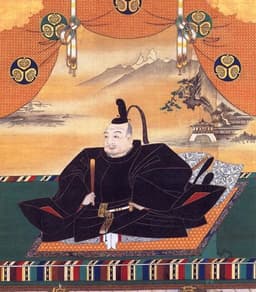
Tokugawa Ieyasu
General · Modern
81.8Total
Basic Information
Born
1650
1543
Died
1722
1616
Era
Modern
Modern
Nationality
England
Japan
Occupation
General
General
Civilization
Western
Eastern
Score Comparison
Military (10%)
84.7
78.0
Political (20%)
78.0
82.0
Influence (20%)
65.0
88.0
Legacy (20%)
80.0
75.0
Leadership (15%)
78.0
85.0
Strategy (15%)
72.8
82.0
TOTAL
75.4
81.8
John Churchill Duke of Marlborough — Complete Timeline
1704 AD
Battle of BlenheimWar
Marlborough commanded the Anglo-Dutch army alongside Prince Eugene of Savoy against French and Bavarian forces at Blenheim. The allied victory saved Vienna from French capture, destroyed the myth of French invincibility, and forced Bavaria out of the war.
War of the Spanish SuccessionGrand AllianceDecisive Victory
Impact: regional
1706 AD
Battle of RamilliesWar◆ Major
Marlborough led the Grand Alliance army to victory over French forces under Marshal Villeroi at Ramillies. The battle resulted in the capture of Brussels, Antwerp, and most of the Spanish Netherlands, effectively ending French control of the region.
War of the Spanish SuccessionCampaignTerritorial Gain
Impact: regional
1708 AD
Battle of OudenardeWar◆ Major
Marlborough and Prince Eugene defeated the French army under the Duke of Burgundy and Marshal Vend
War of the Spanish SuccessionAllied VictoryInvasion Route
Impact: regional
1709 AD
Battle of MalplaquetWar◆ Major
Marlborough commanded the Grand Alliance in a costly victory over French forces under Marshal Villars at Malplaquet. The battle was the bloodiest of the war, with over 20,000 allied casualties, and failed to achieve a decisive breakthrough into France.
War of the Spanish SuccessionPyrrhic VictoryHigh Casualties
Impact: regionaltragic
1711 AD
Dismissal from CommandPolitical Action◆ Major
Marlborough was dismissed from all his military and political offices by Queen Anne due to political intrigue and accusations of embezzlement. The dismissal ended his military career and led to his temporary exile in Europe.
Political FallExileTory Government
Impact: nationaldestructive
Tokugawa Ieyasu — Complete Timeline
1600 AD
Battle of SekigaharaWar
Tokugawa Ieyasu led the Eastern Army to victory over Ishida Mitsunari's Western Army at Sekigahara. This decisive battle ended the Sengoku period and established Ieyasu as the supreme military ruler of Japan, paving the way for the Tokugawa shogunate.
Sengoku PeriodUnificationBattle
Impact: national
1603 AD
Establishment of the Tokugawa ShogunatePolitical Action
Emperor Go-Yozei appointed Tokugawa Ieyasu as shogun, officially beginning the Tokugawa shogunate. Ieyasu established his government in Edo (modern Tokyo), centralizing military and political power under his family's control.
ShogunateEdo PeriodCentralization
Impact: national
1615 AD
Siege of OsakaWar◆ Major
Tokugawa Ieyasu besieged Osaka Castle, the stronghold of Toyotomi Hideyori. The castle fell, and Hideyori committed suicide. This campaign eliminated the last major opposition to Tokugawa rule, solidifying the shogunate's control over Japan.
Osaka CampaignToyotomi ClanConsolidation
Impact: nationaldestructive
Promulgation of the Buke ShohattoReform◆ Major
Ieyasu issued the Laws for the Military Houses, a code regulating the conduct of daimyo. It restricted castle construction, required alternate attendance in Edo, and prohibited alliances without shogunal permission. This law helped control the feudal lords.
Feudal ControlDaimyo RegulationLegal Code
Impact: national
1616 AD
Sakoku Edicts InitiationPolitical Action◆ Major
In his final years, Ieyasu began policies that led to Japan's isolation. He restricted foreign trade to specific ports and expelled Christian missionaries. These measures, expanded by successors, resulted in the sakoku policy that isolated Japan for over 200 years.
IsolationismForeign PolicyChristianity
Impact: national
Expert Analysis
Origins
Tokugawa Ieyasu was born in 1543 into the Matsudaira clan, a minor samurai family in Mikawa Province. His childhood was marked by conflict and hostage situations, which forged his resilience and strategic patience. In contrast, John Churchill, born in 1650 into a modest English gentry family, rose through military and political service, leveraging his sister's relationship with King James II. Churchill's early career included service under the Duke of Monmouth and later under William III, gaining experience in continental warfare. Both emerged from turbulent backgrounds, but Ieyasu's formative years were steeped in the chaos of Japan's Warring States period, while Churchill navigated the intricate politics of Restoration England.
Rise to Power
Ieyasu's rise was gradual and tactical. He allied with Oda Nobunaga and later Toyotomi Hideyoshi, expanding his domain. After Hideyoshi's death, he maneuvered among rival factions, culminating in his decisive victory at the Battle of Sekigahara in 1600, which established him as Japan's preeminent leader. Churchill's ascent was equally strategic. He switched allegiances from James II to William III during the Glorious Revolution, earning trust. His brilliant victories in the War of the Spanish Succession, notably Blenheim in 1704, made him a national hero. However, his rise was tied to monarchs' favor, whereas Ieyasu built an independent power base.
Leadership & Governance
Ieyasu's leadership was characterized by institutional building. As shogun, he implemented the Buke Shohatto (laws for samurai), controlled daimyo through sankin kotai (alternate attendance), and initiated isolationist policies (Sakoku) to stabilize Japan. His governance prioritized long-term peace and centralization. Churchill, as Captain-General, excelled in battlefield leadership and logistics, but his political influence waned with changing royal favor. He faced dismissal in 1712 due to political intrigue. Ieyasu's governance scores higher in sustainability (Influence 88 vs 65), reflecting his creation of a dynasty that ruled for 250 years.
Triumph & Tragedy
Ieyasu's greatest triumph was Sekigahara, where he defeated Ishida Mitsunari's coalition. The subsequent Siege of Osaka in 1615 eliminated the Toyotomi clan, solidifying his rule. His tragedy lies in the harsh suppression of Christianity and the isolation that later stunted Japan's development. Churchill's triumphs include Blenheim, Ramillies, Oudenarde, and Malplaquet, which shattered French dominance. Yet, his dismissal and the costly Malplaquet victory (with heavy casualties) tarnished his reputation. Both men ended their careers with secure legacies, but Ieyasu died in power, while Churchill faced political exile.
Character & Destiny
Ieyasu was patient, cunning, and pragmatic—embodying the Japanese proverb "The strong survive, the weak perish." He waited decades for supremacy, outliving rivals. Churchill was bold, charismatic, and ambitious, but his destiny was tied to the whims of British politics. Ieyasu's destiny was to unify Japan; Churchill's was to defend Europe from Louis XIV's hegemony. Ieyasu's Military score (78) is lower than Churchill's (85), reflecting Churchill's tactical genius, but Ieyasu's overall higher score (82 vs 75) stems from his comprehensive state-building.
Legacy
Ieyasu's legacy is the Tokugawa shogunate, which brought unprecedented peace, urbanization, and cultural development. His policies shaped Japan for centuries, though isolationism eventually left it behind technologically. Churchill's legacy is the defeat of French expansion and the creation of the Grand Alliance. His military innovations influenced European warfare. However, his legacy is more personal (family seat Blenheim Palace) than institutional. Ieyasu's influence (88) dwarfs Churchill's (65) because he fundamentally restructured Japanese society.
Conclusion
Tokugawa Ieyasu emerges as the more impactful figure in terms of enduring influence and governance. His total score (82) surpasses Churchill's (75), and his creation of a stable, long-lasting regime outweighs Churchill's tactical brilliance. While Churchill's battles were decisive in European history, Ieyasu's unification of Japan set the stage for centuries of development. Ieyasu's strategic patience and institutional reforms make him the superior figure in this comparison.
**Numerical Scores:**
- Tokugawa Ieyasu: M=78, P=82, I=88, L=75, D=85, S=82, T=82 → Overall: 82
- John Churchill: M=85, P=78, I=65, L=80, D=78, S=73, T=75 → Overall: 75
Rankings
🥇
Tokugawa IeyasuLeader
Mil: 78.0Pol: 82.0Inf: 88.0
81.8
🥈
John Churchill Duke of Marlborough
Mil: 84.7Pol: 78.0Inf: 65.0
75.4
+6.4 behind
How This Comparison Works
Algorithm
Each figure is scored on 6 dimensions (0—100 scale) based on structured historical data: Military (10%), Political (20%), Influence (20%), Legacy (20%), Leadership (15%), Strategy (15%). The weighted total produces the final ranking.
Data Sources
Scores are computed from structured sub-indicators in the database. Scale factors adjust for era (Ancient ×0.85, Modern ×1.0) and civilization size (Eastern ×1.05, Other ×0.80) to account for differences in population and military scale.
Maximum 3 Figures
Comparisons are limited to 2—3 figures to ensure readability and statistical meaningfulness.
Error Margins
±5 points per dimension — Sub-scores are derived from historical records with inherent uncertainty. Two figures within 5 points on a dimension should be considered roughly equivalent in that area.
Total Score Accuracy
±3 points overall — The weighted combination of 6 dimensions produces a total score with approximately ±3 points of uncertainty. Differences of less than 3 points are not statistically significant— the figures are effectively tied.
Known Limitations
- Historical records are incomplete and uneven across civilizations
- Figures from oral-tradition societies may be underrepresented
- Occupation labels can misclassify multi-role figures
- Scores measure capability and impact, not moral character
- Quantitative scoring is a comparison tool, not absolute truth
Capability Radar
Military (10%) — Battles & Warfare
Battles
95
85
Win Rate
98
90
Expansion
85
75
Political (20%) — Governance & Reform
Reform
60
90
Diplomacy
85
85
Economy
70
88
Influence (20%) — Cultural & Global Reach
Cultural
70
85
Global
75
70
Legacy (20%) — Historical Impact
Historical
85
90
Longevity
80
95
Leadership (15%) — Power & Stability
Tenure
80
95
Stability
75
95
Strategy (15%) — Tactics & Innovation
Strategy
95
92
Tactics
96
88
Reform
70
80
Similar Comparisons
Comments & Discussion
No comments yet. Be the first to share your thoughts!