Loading...
John Churchill Duke of Marlborough vs Otto I the Great
John Churchill Duke of Marlborough leads by 0.2 pts · 2 figures compared
…

John Churchill Duke of Marlborough
General · Modern
75.4Total
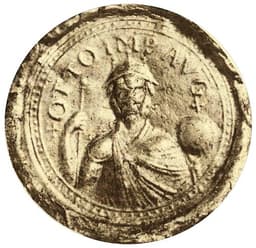
Otto I the Great
Emperor · Medieval
75.2Total
Basic Information
Born
1650
912
Died
1722
973
Era
Modern
Medieval
Nationality
England
Holy Roman Empire
Occupation
General
Emperor
Civilization
Western
Western
Score Comparison
Military (10%)
84.7
82.0
Political (20%)
78.0
70.0
Influence (20%)
65.0
88.0
Legacy (20%)
80.0
65.0
Leadership (15%)
78.0
78.0
Strategy (15%)
72.8
65.4
TOTAL
75.4
75.2
John Churchill Duke of Marlborough — Complete Timeline
1704 AD
Battle of BlenheimWar
Marlborough commanded the Anglo-Dutch army alongside Prince Eugene of Savoy against French and Bavarian forces at Blenheim. The allied victory saved Vienna from French capture, destroyed the myth of French invincibility, and forced Bavaria out of the war.
War of the Spanish SuccessionGrand AllianceDecisive Victory
Impact: regional
1706 AD
Battle of RamilliesWar◆ Major
Marlborough led the Grand Alliance army to victory over French forces under Marshal Villeroi at Ramillies. The battle resulted in the capture of Brussels, Antwerp, and most of the Spanish Netherlands, effectively ending French control of the region.
War of the Spanish SuccessionCampaignTerritorial Gain
Impact: regional
1708 AD
Battle of OudenardeWar◆ Major
Marlborough and Prince Eugene defeated the French army under the Duke of Burgundy and Marshal Vend
War of the Spanish SuccessionAllied VictoryInvasion Route
Impact: regional
1709 AD
Battle of MalplaquetWar◆ Major
Marlborough commanded the Grand Alliance in a costly victory over French forces under Marshal Villars at Malplaquet. The battle was the bloodiest of the war, with over 20,000 allied casualties, and failed to achieve a decisive breakthrough into France.
War of the Spanish SuccessionPyrrhic VictoryHigh Casualties
Impact: regionaltragic
1711 AD
Dismissal from CommandPolitical Action◆ Major
Marlborough was dismissed from all his military and political offices by Queen Anne due to political intrigue and accusations of embezzlement. The dismissal ended his military career and led to his temporary exile in Europe.
Political FallExileTory Government
Impact: nationaldestructive
Otto I the Great — Complete Timeline
951 AD
Diplomatic Marriage to Adelaide of ItalyPolitical Action◆ Major
Otto married Adelaide, the widowed queen of Italy, after intervening in Italian politics. This marriage gave him control over the Kingdom of Italy and strengthened his claim to imperial authority.
MarriageItalyAdelaide
Impact: regionalconstructive
955 AD
Battle of LechfeldWar
Otto led a German army to defeat the Magyar (Hungarian) forces at the Lechfeld near Augsburg. This victory ended Magyar raids into Western Europe and secured Otto's reputation as a defender of Christendom.
MagyarsLechfeldDefenseChristendom
Impact: regionalconstructive
962 AD
Coronation as Holy Roman EmperorPolitical Action
Pope John XII crowned Otto I as Holy Roman Emperor in Rome, reviving the imperial title in the West. This event established the Holy Roman Empire as a major political entity and linked German kingship with papal authority.
CoronationHoly Roman EmpirePapacy
Impact: globalconstructive
Expert Analysis
Origins
John Churchill was born in 1650 to a modest gentry family in Devon, England. His father, Sir Winston Churchill, was a royalist politician, but the family's fortunes were limited. John rose through court patronage, beginning as a page for the Duke of York (later James II). His early military career included service under the Duke of Monmouth and in the Tangier garrison. Churchill's marriage to Sarah Jennings brought him closer to Princess Anne, a connection that would prove crucial. His path was one of calculated ambition, leveraging relationships and military talent.
Otto I, born in 912, was the son of Henry the Fowler, Duke of Saxony and later King of East Francia. As a member of the Liudolfing dynasty, Otto inherited a realm under threat from Magyars, Slavs, and internal ducal rivalries. His upbringing was steeped in the traditions of Saxon kingship and the Carolingian legacy. Unlike Churchill, Otto's rise was predetermined by birth, but his early reign was tested by rebellions from his own family and vassals.
Rise to Power
Churchill's ascent accelerated under King William III, whom he served as a general in the Nine Years' War. His diplomatic skills earned him the earldom of Marlborough. However, his career was nearly derailed by allegations of Jacobite sympathies. After Queen Anne's accession in 1702, Churchill, now a close confidant of the queen through his wife Sarah, was appointed Captain-General of English forces. The War of the Spanish Succession provided the stage for his greatness. His strategic brilliance in the Low Countries and Germany, culminating in the Blenheim campaign, made him the foremost general of his age.
Otto I was crowned King of East Francia in 936. He immediately faced revolts from his brother Henry and other dukes. By 941, he had crushed these rebellions, often showing clemency. Otto then focused on consolidating royal authority, using the Church as a counterweight to secular nobles. He appointed bishops and abbots as loyal administrators, a policy that strengthened his grip. In 951, he intervened in Italy, marrying Adelaide of Italy and claiming the Lombard crown. This move increased his prestige but also entangled him in Italian politics. The decisive moment came in 955 at the Battle of Lechfeld, where Otto defeated the Magyar invaders, securing his reputation as savior of Christendom and paving the way for his imperial coronation in 962.
Leadership & Governance
Churchill excelled as a battlefield commander, known for his meticulous planning, logistical genius, and ability to inspire troops. His leadership style combined personal bravery with strategic patience. He forged the Grand Alliance against Louis XIV, coordinating with allies like Prince Eugene of Savoy. In governance, Churchill was less adept; his political influence derived from his wife's relationship with the queen, leading to accusations of corruption and hubris. His dismissal in 1711 reflected the volatile politics of Anne's court. He was a master of war, not peace.
Otto I was a statesman as much as a warrior. He strengthened the German kingdom by integrating the Church into the state apparatus, a system known as the Ottonian Church System. He created a stable administration based on loyal clergy, reducing the power of hereditary dukes. His imperial coronation in 962 revived the Roman Empire in the West, setting a precedent for future German kings. Otto's rule was characterized by a blend of force and diplomacy; he secured borders through marriage alliances and military campaigns. He was a builder of institutions, not just a conqueror.
Triumph & Tragedy
Churchill's greatest triumph was the Battle of Blenheim (1704), where his bold march and decisive attack shattered the Franco-Bavarian army. This victory saved Vienna from capture and altered the war's course. He followed with victories at Ramillies (1706), Oudenarde (1708), and Malplaquet (1709), though the latter was a pyrrhic success. His tragedy came in 1711 when he was dismissed from command amid political intrigue and accusations of embezzlement. He retired in disgrace, though later rehabilitated. The magnificent Blenheim Palace, built by a grateful nation, stands as his monument.
Otto's triumph was the Battle of Lechfeld, where his heavy cavalry annihilated the Magyar army, ending decades of raids. His coronation as Holy Roman Emperor in 962 was another peak, symbolizing his dominance. Yet Otto faced tragedy: his son Liudolf rebelled against him, and his first wife Eadgyth died young. Despite these personal losses, Otto's reign ended on a high note, with the empire secure and his son Otto II succeeding him. His death in 973 was mourned as the passing of a great emperor.
Character & Destiny
Churchill was ambitious, intelligent, and charismatic, but also greedy and politically naive. He amassed immense wealth and built Blenheim Palace as a symbol of his achievements. His destiny was to be the greatest English general before Wellington, a military innovator who mastered logistics and combined arms. He believed in decisive battle and strategic maneuver, leaving a legacy of tactical brilliance.
Otto I was pious, determined, and statesmanlike. He saw himself as a Christian ruler tasked with defending Christendom and uniting the German tribes. His destiny was to create a lasting empire that would dominate European politics for centuries. He was less a military genius than a consolidator, using marriage, religion, and law to forge a kingdom.
Legacy
Churchill's legacy is that of a military commander whose campaigns are studied for their strategic and logistical sophistication. He is remembered as the victor of Blenheim, a national hero in England. However, his political missteps and the transience of his power mean he is not ranked among the greatest statesmen. His score of 85 in military reflects his brilliance, but his political score of 78 shows limitations.
Otto I's legacy is immense: he founded the Holy Roman Empire, which lasted until 1806. His Ottonian Church System shaped German statecraft. He is revered as a saintly figure in some traditions. His military score of 82 is high, but his political and institutional scores (70 and 88) are higher. He was a builder of enduring structures.
Conclusion
John Churchill, Duke of Marlborough, was a superior general, achieving a string of victories against the premier military power of his age. His tactical acumen and strategic vision were unmatched. Otto I the Great, while a capable commander, was primarily a statesman and empire-builder. The score gap of 0.2 favoring Churchill reflects his higher military impact and the dramatic nature of his victories. However, Otto's long-term influence on European history is arguably greater. In a direct comparison, Churchill's martial achievements edge out Otto's broader but less spectacular record. Churchill wins this matchup, but both are titans of their eras.
**Scores:** John Churchill Duke of Marlborough: M=85 P=78 I=65 L=80 D=78 S=73 T=75. Otto I the Great: M=82 P=70 I=88 L=65 D=78 S=65 T=75.
Rankings
🥇
John Churchill Duke of MarlboroughLeader
Mil: 84.7Pol: 78.0Inf: 65.0
75.4
🥈
Otto I the Great
Mil: 82.0Pol: 70.0Inf: 88.0
75.2
+0.2 behind
How This Comparison Works
Algorithm
Each figure is scored on 6 dimensions (0—100 scale) based on structured historical data: Military (10%), Political (20%), Influence (20%), Legacy (20%), Leadership (15%), Strategy (15%). The weighted total produces the final ranking.
Data Sources
Scores are computed from structured sub-indicators in the database. Scale factors adjust for era (Ancient ×0.85, Modern ×1.0) and civilization size (Eastern ×1.05, Other ×0.80) to account for differences in population and military scale.
Maximum 3 Figures
Comparisons are limited to 2—3 figures to ensure readability and statistical meaningfulness.
Error Margins
±5 points per dimension — Sub-scores are derived from historical records with inherent uncertainty. Two figures within 5 points on a dimension should be considered roughly equivalent in that area.
Total Score Accuracy
±3 points overall — The weighted combination of 6 dimensions produces a total score with approximately ±3 points of uncertainty. Differences of less than 3 points are not statistically significant— the figures are effectively tied.
Known Limitations
- Historical records are incomplete and uneven across civilizations
- Figures from oral-tradition societies may be underrepresented
- Occupation labels can misclassify multi-role figures
- Scores measure capability and impact, not moral character
- Quantitative scoring is a comparison tool, not absolute truth
Capability Radar
Military (10%) — Battles & Warfare
Battles
95
75
Win Rate
98
80
Expansion
85
70
Political (20%) — Governance & Reform
Reform
60
80
Diplomacy
85
85
Economy
70
70
Influence (20%) — Cultural & Global Reach
Cultural
70
65
Global
75
70
Legacy (20%) — Historical Impact
Historical
85
80
Longevity
80
75
Leadership (15%) — Power & Stability
Tenure
80
85
Stability
75
75
Strategy (15%) — Tactics & Innovation
Strategy
95
75
Tactics
96
70
Reform
70
65
Similar Comparisons
Comments & Discussion
No comments yet. Be the first to share your thoughts!