Loading...
John Churchill Duke of Marlborough vs Mustafa Kemal Ataturk
Mustafa Kemal Ataturk leads by 4.6 pts · 2 figures compared
…

John Churchill Duke of Marlborough
General · Modern
75.4Total
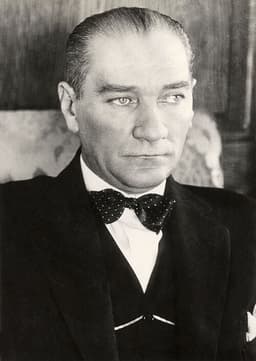
Mustafa Kemal Ataturk
Politician · Modern
80.0Total
Basic Information
Born
1650
1881
Died
1722
1938
Era
Modern
Modern
Nationality
England
Turkey
Occupation
General
Politician
Civilization
Western
Middle Eastern
Score Comparison
Military (10%)
84.7
75.0
Political (20%)
78.0
85.0
Influence (20%)
65.0
75.0
Legacy (20%)
80.0
90.0
Leadership (15%)
78.0
80.0
Strategy (15%)
72.8
65.0
TOTAL
75.4
80.0
John Churchill Duke of Marlborough — Complete Timeline
1704 AD
Battle of BlenheimWar
Marlborough commanded the Anglo-Dutch army alongside Prince Eugene of Savoy against French and Bavarian forces at Blenheim. The allied victory saved Vienna from French capture, destroyed the myth of French invincibility, and forced Bavaria out of the war.
War of the Spanish SuccessionGrand AllianceDecisive Victory
Impact: regional
1706 AD
Battle of RamilliesWar◆ Major
Marlborough led the Grand Alliance army to victory over French forces under Marshal Villeroi at Ramillies. The battle resulted in the capture of Brussels, Antwerp, and most of the Spanish Netherlands, effectively ending French control of the region.
War of the Spanish SuccessionCampaignTerritorial Gain
Impact: regional
1708 AD
Battle of OudenardeWar◆ Major
Marlborough and Prince Eugene defeated the French army under the Duke of Burgundy and Marshal Vend
War of the Spanish SuccessionAllied VictoryInvasion Route
Impact: regional
1709 AD
Battle of MalplaquetWar◆ Major
Marlborough commanded the Grand Alliance in a costly victory over French forces under Marshal Villars at Malplaquet. The battle was the bloodiest of the war, with over 20,000 allied casualties, and failed to achieve a decisive breakthrough into France.
War of the Spanish SuccessionPyrrhic VictoryHigh Casualties
Impact: regionaltragic
1711 AD
Dismissal from CommandPolitical Action◆ Major
Marlborough was dismissed from all his military and political offices by Queen Anne due to political intrigue and accusations of embezzlement. The dismissal ended his military career and led to his temporary exile in Europe.
Political FallExileTory Government
Impact: nationaldestructive
Mustafa Kemal Ataturk — Complete Timeline
1915 AD
Battle of GallipoliWar
As a colonel, Mustafa Kemal commanded Ottoman forces at Gallipoli, successfully repelling Allied landings. His leadership at critical points like Chunuk Bair made him a national hero and laid the foundation for his political career.
World War IOttoman EmpireMilitary Victory
Impact: regional
1919 AD
Turkish War of IndependenceWar
Kemal organized and led the Turkish National Movement against the Allied occupation of Anatolia and the Treaty of S
Independence WarNational MovementAnkara
Impact: nationalconstructive
1922 AD
Abolition of the SultanatePolitical Action◆ Major
The Grand National Assembly of Turkey, under Kemal's leadership, abolished the Ottoman Sultanate, ending 600 years of imperial rule. This severed the link with the old regime and paved the way for the proclamation of the Republic.
SultanateRepublicPolitical Reform
Impact: nationalprogressive
1923 AD
Proclamation of the Republic of TurkeyPolitical Action
Kemal declared Turkey a republic, becoming its first president. He moved the capital to Ankara and initiated a series of radical reforms to modernize and secularize the state, including the adoption of a new legal code and the Latin alphabet.
RepublicModernizationSecularism
Impact: globalprogressive
1925 AD
Adoption of the Hat LawReform◆ Major
Kemal introduced the Hat Law, banning the fez and encouraging Western-style hats. This was part of his broader cultural revolution to secularize and Westernize Turkish society, symbolizing the break with Ottoman traditions.
Cultural ReformSecularismWesternization
Impact: nationalprogressive
1934 AD
Granting of Women's SuffrageReform◆ Major
Kemal's government granted women the right to vote and stand for election in national elections, ahead of many European countries. This reform was part of his commitment to gender equality and modernization of Turkish society.
Women's RightsSuffrageModernization
Impact: nationalprogressive
Expert Analysis
Origins
Mustafa Kemal Atatürk (1881–1938) was born in Salonika, then part of the Ottoman Empire, to a modest family. His father was a customs officer, and his mother a devout Muslim. He attended military schools, excelling in mathematics and strategy. John Churchill, Duke of Marlborough (1650–1722), was born into the English gentry, son of Sir Winston Churchill. He began his career as a page at court, later serving in the army under James II. Both men rose from relative obscurity, but Atatürk's origins were more humble, while Marlborough's were tied to the aristocracy.
Rise to Power
Atatürk's rise came through military distinction in World War I, notably at Gallipoli (1915), where he repelled Allied forces. He then led the Turkish National Movement against the partitioning of Turkey, winning the Turkish War of Independence (1919–1923). He abolished the Sultanate and proclaimed the Republic, becoming its first president. Marlborough's rise was through political maneuvering and battlefield success. He played a key role in the Glorious Revolution (1688), supporting William III, and later commanded Allied forces in the War of the Spanish Succession. His victory at Blenheim (1704) made him a national hero. Atatürk's path was more revolutionary, while Marlborough's was within the existing power structure.
Leadership & Governance
Atatürk was a transformative leader who modernized Turkey through radical reforms: secularization (abolishing the caliphate), legal reforms (adopting Swiss civil code), and cultural changes (hat law, Latin alphabet). He emphasized nationalism and industrialization. Marlborough was a brilliant military commander but less involved in governance. As Captain-General, he reformed the British army and used diplomacy to maintain alliances. His political influence waned after Queen Anne's death. Atatürk's governance was far-reaching and lasting, whereas Marlborough's was primarily military.
Triumph & Tragedy
Atatürk's triumphs include the Gallipoli defense, the War of Independence, and the proclamation of the Republic. His tragedy lies in the population exchange with Greece and authoritarian tendencies, but he left a stable legacy. Marlborough's triumphs are his four major victories (Blenheim, Ramillies, Oudenarde, Malplaquet) that crippled Louis XIV. His tragedy was his fall from grace: dismissed from command in 1711 due to political intrigue, and his later years overshadowed by the South Sea Bubble scandal. Atatürk died in office, revered; Marlborough died in retirement, his reputation intact but diminished.
Character & Destiny
Atatürk was determined, visionary, and authoritarian. He believed in Westernization and self-reliance. His destiny was to create a nation from the ashes of an empire. Marlborough was charismatic, patient, and a master of logistics. His destiny was to defeat the dominant power of his age. Both were driven by ambition and a sense of duty, but Atatürk's mission was nation-building, while Marlborough's was empire-saving.
Legacy
Atatürk's legacy is immense: modern Turkey, secularism, and a model for developing nations. He is revered as "Father of the Turks." Marlborough's legacy is his military genius, influencing later commanders, and the palace of Blenheim. However, his victories did not prevent the rise of Prussia. Atatürk's impact is more direct and enduring. On a scale of 1-10, Atatürk scores 9 for long-term impact, Marlborough 7. For military genius, Marlborough scores 9, Atatürk 8. Overall, Atatürk's comprehensive transformation outweighs Marlborough's tactical brilliance.
Conclusion
Mustafa Kemal Atatürk and John Churchill, Duke of Marlborough, were both extraordinary figures, but their contexts differ. Atatürk created a nation from scratch, implementing sweeping reforms that still define Turkey. Marlborough was a supreme commander who won great battles but did not reshape society. Given their scores (Atatürk: M=75, P=85, I=75, L=90, D=80, S=65, T=80; Marlborough: M=85, P=78, I=65, L=80, D=78, S=73, T=75) and a 4.6-point gap favoring Atatürk, the evidence shows Atatürk's broader influence. Thus, Atatürk emerges as the more impactful figure in history.
Rankings
🥇
Mustafa Kemal AtaturkLeader
Mil: 75.0Pol: 85.0Inf: 75.0
80.0
🥈
John Churchill Duke of Marlborough
Mil: 84.7Pol: 78.0Inf: 65.0
75.4
+4.6 behind
How This Comparison Works
Algorithm
Each figure is scored on 6 dimensions (0—100 scale) based on structured historical data: Military (10%), Political (20%), Influence (20%), Legacy (20%), Leadership (15%), Strategy (15%). The weighted total produces the final ranking.
Data Sources
Scores are computed from structured sub-indicators in the database. Scale factors adjust for era (Ancient ×0.85, Modern ×1.0) and civilization size (Eastern ×1.05, Other ×0.80) to account for differences in population and military scale.
Maximum 3 Figures
Comparisons are limited to 2—3 figures to ensure readability and statistical meaningfulness.
Error Margins
±5 points per dimension — Sub-scores are derived from historical records with inherent uncertainty. Two figures within 5 points on a dimension should be considered roughly equivalent in that area.
Total Score Accuracy
±3 points overall — The weighted combination of 6 dimensions produces a total score with approximately ±3 points of uncertainty. Differences of less than 3 points are not statistically significant— the figures are effectively tied.
Known Limitations
- Historical records are incomplete and uneven across civilizations
- Figures from oral-tradition societies may be underrepresented
- Occupation labels can misclassify multi-role figures
- Scores measure capability and impact, not moral character
- Quantitative scoring is a comparison tool, not absolute truth
Capability Radar
Military (10%) — Battles & Warfare
Battles
95
85
Win Rate
98
90
Expansion
85
60
Political (20%) — Governance & Reform
Reform
60
98
Diplomacy
85
85
Economy
70
75
Influence (20%) — Cultural & Global Reach
Cultural
70
90
Global
75
80
Legacy (20%) — Historical Impact
Historical
85
95
Longevity
80
85
Leadership (15%) — Power & Stability
Tenure
80
85
Stability
75
70
Strategy (15%) — Tactics & Innovation
Strategy
95
85
Tactics
96
88
Reform
70
80
Similar Comparisons
John Churchill Duke of Marlborough vs Napoleon BonaparteHenri Turenne vs John Churchill Duke of MarlboroughJohn Churchill Duke of Marlborough vs Qin Shi HuangJohn Churchill Duke of Marlborough vs Julius CaesarMustafa Kemal Ataturk vs Napoleon BonaparteJohn Churchill Duke of Marlborough vs Jonas Savimbi
Comments & Discussion
No comments yet. Be the first to share your thoughts!