Loading...
Mustafa Kemal Ataturk vs Napoleon Bonaparte
Mustafa Kemal Ataturk leads by 9.1 pts · 2 figures compared
…
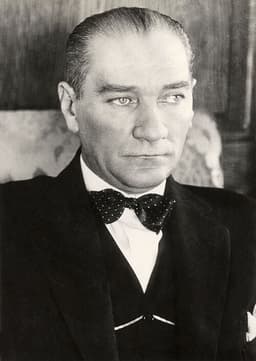
Mustafa Kemal Ataturk
Politician · Modern
80.0Total

Napoleon Bonaparte
General · Modern
70.9Total
Basic Information
Born
1881
1769
Died
1938
1821
Era
Modern
Modern
Nationality
Turkey
France
Occupation
Politician
General
Civilization
Middle Eastern
Western
Score Comparison
Military (10%)
75.0
94.0
Political (20%)
85.0
72.0
Influence (20%)
75.0
40.0
Legacy (20%)
90.0
80.0
Leadership (15%)
80.0
78.0
Strategy (15%)
65.0
90.0
TOTAL
80.0
70.9
Mustafa Kemal Ataturk — Complete Timeline
1915 AD
Battle of GallipoliWar
As a colonel, Mustafa Kemal commanded Ottoman forces at Gallipoli, successfully repelling Allied landings. His leadership at critical points like Chunuk Bair made him a national hero and laid the foundation for his political career.
World War IOttoman EmpireMilitary Victory
Impact: regional
1919 AD
Turkish War of IndependenceWar
Kemal organized and led the Turkish National Movement against the Allied occupation of Anatolia and the Treaty of S
Independence WarNational MovementAnkara
Impact: nationalconstructive
1922 AD
Abolition of the SultanatePolitical Action◆ Major
The Grand National Assembly of Turkey, under Kemal's leadership, abolished the Ottoman Sultanate, ending 600 years of imperial rule. This severed the link with the old regime and paved the way for the proclamation of the Republic.
SultanateRepublicPolitical Reform
Impact: nationalprogressive
1923 AD
Proclamation of the Republic of TurkeyPolitical Action
Kemal declared Turkey a republic, becoming its first president. He moved the capital to Ankara and initiated a series of radical reforms to modernize and secularize the state, including the adoption of a new legal code and the Latin alphabet.
RepublicModernizationSecularism
Impact: globalprogressive
1925 AD
Adoption of the Hat LawReform◆ Major
Kemal introduced the Hat Law, banning the fez and encouraging Western-style hats. This was part of his broader cultural revolution to secularize and Westernize Turkish society, symbolizing the break with Ottoman traditions.
Cultural ReformSecularismWesternization
Impact: nationalprogressive
1934 AD
Granting of Women's SuffrageReform◆ Major
Kemal's government granted women the right to vote and stand for election in national elections, ahead of many European countries. This reform was part of his commitment to gender equality and modernization of Turkish society.
Women's RightsSuffrageModernization
Impact: nationalprogressive
Napoleon Bonaparte — Complete Timeline
1799 AD
Coup of 18 BrumaireOther◆ Major
Napoleon Bonaparte, with support from his brother Lucien and key political figures, overthrew the Directory in a bloodless coup. He established the Consulate with himself as First Consul, effectively becoming the ruler of France. This event ended the French Revolution's most unstable period.
French RevolutionCoupRise to Power
Impact: regional
1804 AD
Promulgation of the Napoleonic CodeOther◆ Major
Napoleon enacted the Civil Code of the French, known as the Napoleonic Code, a comprehensive set of laws that replaced the fragmented feudal legal systems. The code established legal equality, protected property rights, and secularized law. It became the basis for legal systems in many European and world countries.
Legal ReformNapoleonic CodeCivil Law
Impact: globalconstructive
1805 AD
Battle of AusterlitzWar◆ Major
Napoleon's Grande Arm
Napoleonic WarsBattleDecisive Victory
Impact: global
1812 AD
Invasion of RussiaWar◆ Major
Napoleon led the Grande Arm
Napoleonic WarsInvasionDisaster
Impact: globaldestructive
1815 AD
Battle of WaterlooWar◆ Major
Napoleon's French army was defeated by the combined forces of the Duke of Wellington's Anglo-Allied army and Gebhard Leberecht von Bl
Napoleonic WarsBattleFinal Defeat
Impact: globaldestructive
Expert Analysis
mustafa-kemal-ataturk-vs-napoleon-bonaparte
# The Eagle and the Crescent: Napoleon, Atatürk, and the Two Faces of Modernity
On a September morning in 1922, as the last Ottoman sultan fled Istanbul aboard a British warship, a grizzled general with piercing blue eyes stood on a hillside in Anatolia, watching his army drive Greek forces into the Aegean Sea. Mustafa Kemal had just achieved what Napoleon Bonaparte never could: he had not only won a war but also destroyed an old world and built a new one from its ashes. A century earlier, Napoleon had stood on a similar precipice—Emperor of Europe, master of the battlefield—only to see his empire crumble into exile. Why did one man’s ambition forge a lasting nation while the other’s genius dissolved into legend? The answer lies not in their military scores—Napoleon’s 94 against Atatürk’s 75—but in the deeper currents of history and character that shaped their very different destinies.
Origins
Napoleon Bonaparte was born in 1769 on Corsica, an island of rugged independence that France had only just purchased. His family belonged to the minor nobility, but they were poor, and young Napoleon grew up with a chip on his shoulder—a burning need to prove himself to the French establishment that looked down on his Italian-accented French and provincial origins. The French Revolution, erupting when he was twenty, offered him a ladder. In a world where aristocratic birth had once determined rank, talent now mattered. Napoleon seized that opening with ferocious energy.
Mustafa Kemal, born in 1881 in Salonika (then part of the Ottoman Empire), came from a different kind of marginality. His mother was a pious Muslim; his father, a minor civil servant who died when Kemal was young. The Ottoman Empire was the “sick man of Europe,” collapsing under the weight of its own decay. Kemal, like Napoleon, was an outsider—a provincial Turk in a cosmopolitan empire, a modernizer in a traditional society. But where Napoleon’s marginality drove him to conquer, Kemal’s drove him to rebuild. He saw the Ottoman collapse not as an opportunity for personal glory but as a warning: unless Turkey transformed itself, it would die.
Rise to Power
Napoleon’s ascent was a fireworks display of audacity. At twenty-four, he drove the British out of Toulon. At twenty-six, he crushed a royalist uprising in Paris with a “whiff of grapeshot.” At twenty-seven, he invaded Italy and carved up the Austrian Empire. By thirty, he had made himself First Consul of France; by thirty-five, Emperor. Each victory fed the next, a cascade of brilliance that left Europe gasping. His political score of 75 reflects this: Napoleon was less a statesman than a conqueror who used politics as an extension of war.
Kemal’s rise was slower and more disciplined. His first major turning point came in 1915 at Gallipoli, where as a colonel he held the line against Allied landings, famously telling his troops, “I am not ordering you to attack, I am ordering you to die.” That defiance made him a national hero. But unlike Napoleon, Kemal did not seize power immediately after military glory. He waited, organizing resistance from the shadows, building a political movement while the Ottoman regime crumbled. In 1919, he launched the Turkish War of Independence, not as a bid for personal empire but as a national struggle. When he finally abolished the sultanate in 1922 and proclaimed the Republic in 1923, it was not a coup d’état but the culmination of a movement that had already won popular legitimacy.
Leadership & Governance
Napoleon’s governance was a paradox of brilliance and tyranny. The Napoleonic Code—his greatest achievement—standardized French law, abolished feudal privileges, and enshrined meritocracy. He built roads, schools, and a modern bureaucracy. But he also censored the press, jailed opponents, and crowned himself emperor. His leadership score of 80 reflects this duality: he could inspire armies to die for him but could never trust his own people. “Power is my mistress,” he once said, and he meant it.
Atatürk, with the same leadership score, governed in a fundamentally different key. His reforms were revolutionary but consensual: he replaced the Arabic script with the Latin alphabet, abolished the fez in favor of Western hats (the Hat Law of 1925), granted women suffrage in 1934—ahead of most European nations—and secularized the state. Where Napoleon imposed from above, Kemal persuaded from within. He traveled the country giving speeches, teaching the new alphabet himself, and arguing for change rather than decreeing it. His political score of 65.9 is lower than Napoleon’s 75, but that number misses the point: Kemal sought not to dominate his people but to transform them.
Triumph & Tragedy
Napoleon’s greatest triumph was Austerlitz in 1805, where he destroyed the armies of Austria and Russia in a single day. His greatest tragedy was the invasion of Russia in 1812, where hubris—his characteristic flaw—led him to march six hundred thousand men into a frozen grave. Waterloo in 1815 was the final act, a defeat so complete that it ended not just his empire but the very idea of Napoleonic Europe.
Kemal’s triumph was the Republic itself. In 1922, he drove the Greeks out of Anatolia; by 1923, he had negotiated the Treaty of Lausanne, securing Turkey’s borders. His tragedy was more subtle: the price of modernization was the erasure of Ottoman heritage, the suppression of Kurdish identity, and the authoritarianism that sometimes accompanied his reforms. He died in 1938, at fifty-seven, worn out by a life of relentless work, leaving a nation that was both freer and more controlled than it had ever been.
Character & Destiny
Napoleon’s character was a furnace of ambition. He was restless, brilliant, and incapable of stopping. “Impossible is a word to be found only in the dictionary of fools,” he declared. That drive made him a conqueror but also doomed him: he could never consolidate what he had won because he always needed more. His final exile on Saint Helena, writing memoirs and dying of stomach cancer, was the inevitable end of a man who mistook motion for progress.
Kemal’s character was colder, more calculating. He was a pragmatist who understood that true power lies not in conquest but in transformation. “Peace at home, peace in the world,” he famously said—a slogan that would have been incomprehensible to Napoleon. Kemal knew that empires collapse but nations endure. So he chose to build a nation rather than an empire, a legacy that would survive his death.
Legacy
Napoleon’s legacy is everywhere and nowhere. The Napoleonic Code influences legal systems from Louisiana to Lebanon. His military tactics are still studied. But the empire he built vanished within a decade of his death. He is remembered as a force of nature, a titan of history, but not as the founder of anything permanent. His total score of 82.4 captures this: high in influence, lower in lasting governance.
Atatürk’s legacy is the modern Turkish Republic. His image adorns every school, every government building, every banknote. His reforms remain the bedrock of Turkish identity. But that legacy is now contested: a new generation questions his authoritarianism, his secularism, his erasure of Ottoman heritage. His total score of 71.7 is lower than Napoleon’s, but it measures a different kind of achievement—not the scale of conquest but the depth of transformation.
Conclusion
Perhaps the deepest difference between these two men is this: Napoleon conquered the world but could not conquer himself. Atatürk conquered himself first—his ambition, his ego, his desire for glory—and then conquered a nation for its own sake. One built an empire that collapsed; the other built a republic that endures. In the end, the eagle and the crescent both burned bright across history, but only one left a fire that still warms a people. The other left only ashes, and a legend.
Rankings
🥇
Mustafa Kemal AtaturkLeader
Mil: 75.0Pol: 85.0Inf: 75.0
80.0
🥈
Napoleon Bonaparte
Mil: 94.0Pol: 72.0Inf: 40.0
70.9
+9.1 behind
How This Comparison Works
Algorithm
Each figure is scored on 6 dimensions (0—100 scale) based on structured historical data: Military (10%), Political (20%), Influence (20%), Legacy (20%), Leadership (15%), Strategy (15%). The weighted total produces the final ranking.
Data Sources
Scores are computed from structured sub-indicators in the database. Scale factors adjust for era (Ancient ×0.85, Modern ×1.0) and civilization size (Eastern ×1.05, Other ×0.80) to account for differences in population and military scale.
Maximum 3 Figures
Comparisons are limited to 2—3 figures to ensure readability and statistical meaningfulness.
Error Margins
±5 points per dimension — Sub-scores are derived from historical records with inherent uncertainty. Two figures within 5 points on a dimension should be considered roughly equivalent in that area.
Total Score Accuracy
±3 points overall — The weighted combination of 6 dimensions produces a total score with approximately ±3 points of uncertainty. Differences of less than 3 points are not statistically significant— the figures are effectively tied.
Known Limitations
- Historical records are incomplete and uneven across civilizations
- Figures from oral-tradition societies may be underrepresented
- Occupation labels can misclassify multi-role figures
- Scores measure capability and impact, not moral character
- Quantitative scoring is a comparison tool, not absolute truth
Capability Radar
Military (10%) — Battles & Warfare
Battles
85
95
Win Rate
90
90
Expansion
60
95
Political (20%) — Governance & Reform
Reform
98
95
Diplomacy
85
80
Economy
75
85
Influence (20%) — Cultural & Global Reach
Cultural
90
85
Global
80
90
Legacy (20%) — Historical Impact
Historical
95
95
Longevity
85
90
Leadership (15%) — Power & Stability
Tenure
85
85
Stability
70
70
Strategy (15%) — Tactics & Innovation
Strategy
85
95
Tactics
88
98
Reform
80
92
Similar Comparisons
Comments & Discussion
No comments yet. Be the first to share your thoughts!