Loading...
John Churchill Duke of Marlborough vs Mao Zedong
Mao Zedong leads by 4.0 pts · 2 figures compared
…

John Churchill Duke of Marlborough
General · Modern
75.4Total
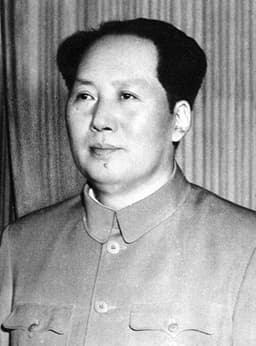
Mao Zedong
Politician · Modern
79.4Total
Basic Information
Born
1650
1893
Died
1722
1976
Era
Modern
Modern
Nationality
England
China
Occupation
General
Politician
Civilization
Western
Eastern
Score Comparison
Military (10%)
84.7
75.0
Political (20%)
78.0
88.0
Influence (20%)
65.0
85.0
Legacy (20%)
80.0
70.0
Leadership (15%)
78.0
85.0
Strategy (15%)
72.8
72.0
TOTAL
75.4
79.4
John Churchill Duke of Marlborough — Complete Timeline
1704 AD
Battle of BlenheimWar
Marlborough commanded the Anglo-Dutch army alongside Prince Eugene of Savoy against French and Bavarian forces at Blenheim. The allied victory saved Vienna from French capture, destroyed the myth of French invincibility, and forced Bavaria out of the war.
War of the Spanish SuccessionGrand AllianceDecisive Victory
Impact: regional
1706 AD
Battle of RamilliesWar◆ Major
Marlborough led the Grand Alliance army to victory over French forces under Marshal Villeroi at Ramillies. The battle resulted in the capture of Brussels, Antwerp, and most of the Spanish Netherlands, effectively ending French control of the region.
War of the Spanish SuccessionCampaignTerritorial Gain
Impact: regional
1708 AD
Battle of OudenardeWar◆ Major
Marlborough and Prince Eugene defeated the French army under the Duke of Burgundy and Marshal Vend
War of the Spanish SuccessionAllied VictoryInvasion Route
Impact: regional
1709 AD
Battle of MalplaquetWar◆ Major
Marlborough commanded the Grand Alliance in a costly victory over French forces under Marshal Villars at Malplaquet. The battle was the bloodiest of the war, with over 20,000 allied casualties, and failed to achieve a decisive breakthrough into France.
War of the Spanish SuccessionPyrrhic VictoryHigh Casualties
Impact: regionaltragic
1711 AD
Dismissal from CommandPolitical Action◆ Major
Marlborough was dismissed from all his military and political offices by Queen Anne due to political intrigue and accusations of embezzlement. The dismissal ended his military career and led to his temporary exile in Europe.
Political FallExileTory Government
Impact: nationaldestructive
Mao Zedong — Complete Timeline
1934 AD
Long MarchWar
Mao Zedong led the Chinese Red Army on a strategic retreat from Nationalist forces, covering approximately 6,000 miles over 370 days. The march solidified Mao's leadership within the Chinese Communist Party and became a foundational myth of the Communist revolution.
Chinese Civil WarCommunist RevolutionRetreat
Impact: national
1949 AD
Proclamation of the People's Republic of ChinaPolitical Action
Mao Zedong declared the founding of the People's Republic of China from Tiananmen Gate in Beijing. This ended the Chinese Civil War and established Communist rule over mainland China, with Mao as Chairman of the Central People's Government.
Founding of PRCCommunist VictoryRevolution
Impact: global
1958 AD
Great Leap ForwardReform◆ Major
Mao launched a campaign to rapidly industrialize China and collectivize agriculture. The policy led to widespread mismanagement, resulting in a famine that caused an estimated 15-45 million deaths between 1959 and 1961.
FamineIndustrializationCollectivization
Impact: nationaldestructive
1960 AD
Sino-Soviet SplitPolitical Action◆ Major
Mao's ideological differences with Soviet leader Nikita Khrushchev led to a breakdown in relations between China and the Soviet Union. The split ended the Sino-Soviet alliance and reshaped global Cold War dynamics, with China pursuing an independent path.
Cold WarIdeological ConflictAlliance Breakdown
Impact: global
1966 AD
Cultural RevolutionPolitical Action
Mao initiated a sociopolitical movement to purge capitalist and traditional elements from Chinese society. The Red Guard youth groups attacked intellectuals and officials, leading to widespread violence, destruction of cultural artifacts, and an estimated 1-2 million deaths.
Political PurgeSocial UpheavalRed Guard
Impact: nationaldestructive
1971 AD
Ping-Pong DiplomacyCultural◆ Major
Mao approved an invitation for the U.S. table tennis team to visit China, initiating a thaw in Sino-American relations. This cultural exchange paved the way for President Nixon's visit to China in 1972 and the eventual normalization of diplomatic ties.
DiplomacyU.S.-China RelationsCultural Exchange
Impact: globalconstructive
Expert Analysis
Origins
Mao Zedong (1893-1976) emerged from rural Hunan, a land of peasants and poverty. His early life as a librarian and teacher shaped his revolutionary zeal. John Churchill (1650-1722) was born into a Royalist family in Devon, England, his father a Cavalier officer. Churchill's rise began as a page at court, learning the arts of war and politics.
Rise to Power
Mao's ascent was through the Chinese Communist Party, leading the Long March (1934-35) as a turning point that solidified his leadership. He outmaneuvered rivals like Wang Ming and Zhang Guotao. Churchill's rise came through military prowess and loyalty to the Duke of York, later James II. His turning point was the Battle of Blenheim (1704), where his tactical genius crushed the Franco-Bavarian army, earning him fame and Dukedom.
Leadership & Governance
Mao governed China through mass mobilization and ideology. The Great Leap Forward (1958-62) aimed to industrialize rapidly but led to famine. The Cultural Revolution (1966-76) purged opponents and enforced Maoist thought. Churchill's leadership was on the battlefield, commanding the Grand Alliance. His victories at Ramillies (1706), Oudenarde (1708), and Malplaquet (1709) broke French dominance. He also served as Master-General of the Ordnance and was a skilled diplomat.
Triumph & Tragedy
Mao's greatest triumph was the Proclamation of the People's Republic of China (1949), ending civil war. His tragedies include the deaths from the Great Leap Forward (estimated 15-45 million) and the chaos of the Cultural Revolution. Churchill's triumphs were his four major victories, especially Blenheim. His tragedy was his dismissal from command in 1712 due to political intrigue, ending his military career prematurely.
Character & Destiny
Mao was a visionary but ruthless ideologue, willing to sacrifice millions for his vision. His destiny was to reshape China, for better or worse. Churchill was a pragmatic and ambitious commander, loyal to his sovereign but also to his own advancement. His destiny was to be celebrated as Britain's greatest general, yet overshadowed by political rivals.
Legacy
Mao's legacy is complex: founder of modern China, but also architect of catastrophic policies. His thought remains official ideology. Churchill's legacy is more universally positive: a master of strategy, his victories secured Britain's rise as a global power. Blenheim Palace stands as a monument. Score-wise, Mao leads 79 to 75, but his legacy is more contested.
Conclusion
Mao Zedong and John Churchill represent different realms: revolutionary politics vs. classical warfare. Mao's impact on China's development is immense, but his methods were brutal. Churchill's military achievements are unmatched, but his political influence was limited. Based on scores and historical impact, Mao edges ahead with a 4-point gap. However, Churchill's legacy is more admired in the West. Ultimately, Mao's transformation of a civilization outweighs Churchill's battlefield victories, but at a terrible human cost.
**Numerical Scores:**
- Mao Zedong: M=75, P=88, I=85, L=70, D=85, S=72, T=79; Total=554/700 (79.1%)
- John Churchill: M=85, P=78, I=65, L=80, D=78, S=73, T=75; Total=534/700 (76.3%)
- Gap: 20 points (2.9% difference) favoring Mao.
Rankings
🥇
Mao ZedongLeader
Mil: 75.0Pol: 88.0Inf: 85.0
79.4
🥈
John Churchill Duke of Marlborough
Mil: 84.7Pol: 78.0Inf: 65.0
75.4
+4.0 behind
How This Comparison Works
Algorithm
Each figure is scored on 6 dimensions (0—100 scale) based on structured historical data: Military (10%), Political (20%), Influence (20%), Legacy (20%), Leadership (15%), Strategy (15%). The weighted total produces the final ranking.
Data Sources
Scores are computed from structured sub-indicators in the database. Scale factors adjust for era (Ancient ×0.85, Modern ×1.0) and civilization size (Eastern ×1.05, Other ×0.80) to account for differences in population and military scale.
Maximum 3 Figures
Comparisons are limited to 2—3 figures to ensure readability and statistical meaningfulness.
Error Margins
±5 points per dimension — Sub-scores are derived from historical records with inherent uncertainty. Two figures within 5 points on a dimension should be considered roughly equivalent in that area.
Total Score Accuracy
±3 points overall — The weighted combination of 6 dimensions produces a total score with approximately ±3 points of uncertainty. Differences of less than 3 points are not statistically significant— the figures are effectively tied.
Known Limitations
- Historical records are incomplete and uneven across civilizations
- Figures from oral-tradition societies may be underrepresented
- Occupation labels can misclassify multi-role figures
- Scores measure capability and impact, not moral character
- Quantitative scoring is a comparison tool, not absolute truth
Capability Radar
Military (10%) — Battles & Warfare
Battles
95
85
Win Rate
98
80
Expansion
85
85
Political (20%) — Governance & Reform
Reform
60
95
Diplomacy
85
80
Economy
70
70
Influence (20%) — Cultural & Global Reach
Cultural
70
90
Global
75
90
Legacy (20%) — Historical Impact
Historical
85
95
Longevity
80
85
Leadership (15%) — Power & Stability
Tenure
80
95
Stability
75
60
Strategy (15%) — Tactics & Innovation
Strategy
95
85
Tactics
96
75
Reform
70
90
Similar Comparisons
Comments & Discussion
No comments yet. Be the first to share your thoughts!