Loading...
Joe Slovo vs Napoleon Bonaparte
Napoleon Bonaparte leads by 16.9 pts · 2 figures compared
…
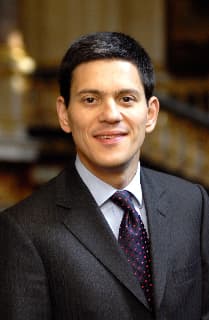
Joe Slovo
Politician · Modern
54.0Total

Napoleon Bonaparte
General · Modern
70.9Total
Basic Information
Born
1926
1769
Died
—
1821
Era
Modern
Modern
Nationality
South Africa
France
Occupation
Politician
General
Civilization
Other
Western
Score Comparison
Military (10%)
10.0
94.0
Political (20%)
72.0
72.0
Influence (20%)
58.0
40.0
Legacy (20%)
50.0
80.0
Leadership (15%)
66.0
78.0
Strategy (15%)
53.5
90.0
TOTAL
54.0
70.9
Joe Slovo — Complete Timeline
1942 AD
Joined South African Communist PartyPolitical Action◆ Major
Slovo joined the SACP as a young man, becoming a leading theorist and organizer. He later served as the party's general secretary and was a key figure in the alliance between the SACP and the ANC.
SACPCommunismAnti-Apartheid
Impact: nationalconstructive
1961 AD
Co-founded Umkhonto we SizwePolitical Action◆ Major
Slovo was a founding member of MK, the armed wing of the ANC, along with Nelson Mandela and others. He served on its high command and helped plan sabotage campaigns against apartheid infrastructure.
MKArmed StruggleAnti-Apartheid
Impact: national
1963 AD
Exile and ANC LeadershipPolitical Action◆ Major
Slovo went into exile after the Rivonia Trial arrests. He became a key ANC leader abroad, coordinating military and political strategy, and served as the SACP general secretary from 1986.
ExileANCSACP
Impact: national
1990 AD
Returned to South Africa and NegotiationsPolitical Action◆ Major
Slovo returned to South Africa after the unbanning of the ANC. He played a key role in the negotiations to end apartheid, advocating for a negotiated settlement and serving as Minister of Housing in Mandela's government.
NegotiationsTransitionHousing
Impact: nationalconstructive
Napoleon Bonaparte — Complete Timeline
1799 AD
Coup of 18 BrumaireOther◆ Major
Napoleon Bonaparte, with support from his brother Lucien and key political figures, overthrew the Directory in a bloodless coup. He established the Consulate with himself as First Consul, effectively becoming the ruler of France. This event ended the French Revolution's most unstable period.
French RevolutionCoupRise to Power
Impact: regional
1804 AD
Promulgation of the Napoleonic CodeOther◆ Major
Napoleon enacted the Civil Code of the French, known as the Napoleonic Code, a comprehensive set of laws that replaced the fragmented feudal legal systems. The code established legal equality, protected property rights, and secularized law. It became the basis for legal systems in many European and world countries.
Legal ReformNapoleonic CodeCivil Law
Impact: globalconstructive
1805 AD
Battle of AusterlitzWar◆ Major
Napoleon's Grande Arm
Napoleonic WarsBattleDecisive Victory
Impact: global
1812 AD
Invasion of RussiaWar◆ Major
Napoleon led the Grande Arm
Napoleonic WarsInvasionDisaster
Impact: globaldestructive
1815 AD
Battle of WaterlooWar◆ Major
Napoleon's French army was defeated by the combined forces of the Duke of Wellington's Anglo-Allied army and Gebhard Leberecht von Bl
Napoleonic WarsBattleFinal Defeat
Impact: globaldestructive
Expert Analysis
joe-slovo-vs-napoleon-bonaparte
# The Revolutionary and the Reformer
In the spring of 1815, Napoleon Bonaparte stood on the fields of Waterloo, marshaling his Grande Armée for one final, desperate gamble. A hundred and seventy-nine years later, on a spring day in 1994, Joe Slovo stood in a government building in Pretoria, preparing to take the oath as South Africa’s first post-apartheid Minister of Housing. One man sought to conquer a continent through sheer force of will; the other sought to dismantle an oppressive system through decades of patient struggle. Both were revolutionaries, but their revolutions could not have been more different. What drove one to empire and the other to a seat at a negotiating table?
Origins
Napoleon Bonaparte was born in 1769 on the island of Corsica, a place that had only recently become French. His family was minor nobility, but his education at French military schools marked him as an outsider—a provincial with an accent, a man who had to prove himself at every turn. The French Revolution, which erupted when he was twenty, shattered the old order and created opportunities unimaginable under the monarchy. For a young artillery officer of talent and ambition, the chaos was a ladder.
Joe Slovo was born in 1926 in Lithuania, a Jewish boy in a land of pogroms and persecution. His family fled anti-Semitic violence for South Africa when he was eight. Growing up in Johannesburg, he witnessed the systematic degradation of Black South Africans under segregation. Where Napoleon saw revolution as a path to personal glory, Slovo saw it as a moral imperative. The difference in their starting points—one an aspiring aristocrat in a nation tearing down its hierarchies, the other a refugee in a country building them up—would define everything that followed.
Rise to Power
Napoleon’s ascent was meteoric. At the siege of Toulon in 1793, his brilliant use of artillery forced the British fleet to withdraw, earning him promotion to brigadier general at twenty-four. By 1796, he commanded the Army of Italy, where his lightning campaigns against the Austrians made him a national hero. Each victory fed the next: the Egyptian expedition, the coup of 18 Brumaire in 1799, and finally the imperial coronation in 1804. His rise was a matter of seizing moments, of exploiting the vacuum left by a collapsing revolution.
Slovo’s rise was slower, more deliberate. He joined the South African Communist Party in 1942, at sixteen, drawn by its commitment to racial equality. For two decades, he worked as a lawyer, organizing, writing, and theorizing. The turning point came in 1961, when he co-founded Umkhonto we Sizwe (MK), the armed wing of the African National Congress, alongside Nelson Mandela. After the Rivonia Trial in 1963, Slovo slipped into exile, where he spent twenty-seven years coordinating resistance from London, Moscow, and Maputo. While Napoleon’s rise was a sprint, Slovo’s was a marathon.
Leadership & Governance
As emperor, Napoleon governed with a military precision that was both his greatest strength and his fatal flaw. He centralized the state, reformed the tax system, and established the Bank of France. But his most enduring achievement was the Napoleonic Code of 1804, a legal framework that enshrined meritocracy, property rights, and secular law. Yet his governance was undermined by his insatiable ambition. He appointed his brothers to thrones across Europe, alienated potential allies, and treated conquered territories as spoils. His political wisdom score of 75 reflects a man who could organize an empire but not sustain it.
Slovo’s leadership was defined by a different kind of discipline. As a leading theorist of the SACP and a senior ANC figure, he advocated for a negotiated settlement to apartheid when many comrades demanded armed struggle. His willingness to compromise—to accept a multi-party democracy rather than a socialist revolution—was rooted in the practical recognition that South Africa could not be liberated by force alone. When he returned from exile in 1990, he helped craft the interim constitution and served as Housing Minister, tackling the legacy of apartheid’s spatial planning. His governance was not about glory but about building institutions.
Triumph & Tragedy
Napoleon’s triumphs are the stuff of legend: Austerlitz in 1805, where he crushed the combined armies of Russia and Austria; Jena in 1806, where he destroyed the Prussian army; the Grand Empire that stretched from Spain to Poland. But his tragedies were equally colossal. The invasion of Russia in 1812 cost half a million lives and shattered his invincible aura. The exile to Elba, the Hundred Days, and finally Waterloo in 1815—a defeat so complete that it ended an era. His score of 93 in strategy cannot mask the fact that his ambition outran his judgment.
Slovo’s greatest triumph came not on a battlefield but at a negotiating table. The 1994 elections, which brought Nelson Mandela to power, were the culmination of a peace process that Slovo helped design. His tragedy was more personal: his wife, Ruth First, was assassinated by a letter bomb in 1982, a reminder of the brutal cost of the struggle. He died of cancer in 1995, just a year after seeing the apartheid state fall. Where Napoleon’s tragedy was hubris, Slovo’s was sacrifice.
Character & Destiny
Napoleon was a man of colossal ego. “I am not a man, but a thing,” he once said, as if his destiny were written in the stars. His character—restless, brilliant, ruthless—drove him to conquer but also to overreach. He could not stop, because stopping meant admitting that he was merely mortal. His destiny was to be the man who remade Europe but could not rule it.
Slovo was a man of iron principle wrapped in pragmatism. “The people,” he wrote, “are the makers of history.” His character was shaped by the long view, by the knowledge that revolutions are not won in a single battle but through decades of organization. He was a Marxist who learned to compromise, a soldier who chose peace. His destiny was to help create a democracy that, however imperfect, was a world away from the apartheid he fought.
Legacy
Napoleon’s legacy is a paradox. He is remembered as a military genius and a tyrant, a reformer and a conqueror. The Napoleonic Code still shapes legal systems from France to Louisiana to Japan. Yet his name is also synonymous with overreach and defeat. His total score of 82.4 reflects a man who changed the world but left it in ruins.
Slovo’s legacy is quieter but no less profound. As a white communist in a Black-led liberation movement, he proved that solidarity could cross racial lines. His role in the negotiated settlement set a template for peaceful transitions of power. His score of 64.8 does not capture the moral weight of a life spent fighting for justice. He is remembered not as a conqueror but as a builder.
Conclusion
Napoleon and Slovo both sought to remake the world, but they chose opposite paths. One built an empire on the bones of his enemies; the other helped dismantle one. One died in exile on a remote island; the other died in office, having seen his dream realized. Their stories remind us that revolution can take many forms—the flash of a sword or the patience of a negotiator, the roar of a cannon or the quiet signing of a treaty. In the end, perhaps the deepest question is not which approach was better, but what each of us would be willing to sacrifice for the world we want to build.
Rankings
🥇
Napoleon BonaparteLeader
Mil: 94.0Pol: 72.0Inf: 40.0
70.9
🥈
Joe Slovo
Mil: 10.0Pol: 72.0Inf: 58.0
54.0
+16.9 behind
How This Comparison Works
Algorithm
Each figure is scored on 6 dimensions (0—100 scale) based on structured historical data: Military (10%), Political (20%), Influence (20%), Legacy (20%), Leadership (15%), Strategy (15%). The weighted total produces the final ranking.
Data Sources
Scores are computed from structured sub-indicators in the database. Scale factors adjust for era (Ancient ×0.85, Modern ×1.0) and civilization size (Eastern ×1.05, Other ×0.80) to account for differences in population and military scale.
Maximum 3 Figures
Comparisons are limited to 2—3 figures to ensure readability and statistical meaningfulness.
Error Margins
±5 points per dimension — Sub-scores are derived from historical records with inherent uncertainty. Two figures within 5 points on a dimension should be considered roughly equivalent in that area.
Total Score Accuracy
±3 points overall — The weighted combination of 6 dimensions produces a total score with approximately ±3 points of uncertainty. Differences of less than 3 points are not statistically significant— the figures are effectively tied.
Known Limitations
- Historical records are incomplete and uneven across civilizations
- Figures from oral-tradition societies may be underrepresented
- Occupation labels can misclassify multi-role figures
- Scores measure capability and impact, not moral character
- Quantitative scoring is a comparison tool, not absolute truth
Capability Radar
Military (10%) — Battles & Warfare
Battles
0
95
Win Rate
0
90
Expansion
0
95
Political (20%) — Governance & Reform
Reform
70
95
Diplomacy
65
80
Economy
50
85
Influence (20%) — Cultural & Global Reach
Cultural
40
85
Global
50
90
Legacy (20%) — Historical Impact
Historical
55
95
Longevity
45
90
Leadership (15%) — Power & Stability
Tenure
60
85
Stability
55
70
Strategy (15%) — Tactics & Innovation
Strategy
10
95
Tactics
5
98
Reform
15
92
Similar Comparisons
Comments & Discussion
CorsicaConqueror6/17/2026
Let’s be real—comparing Napoleon’s cannonballs to Slovo’s housing policies is like comparing a hurricane to a garden hose. Waterloo alone cost 40,000 lives in one day; Slovo’s peace treaty ended a system built on centuries of brutality without a coup. Empire’s flashy, sure, but dismantling apartheid with a pen? That’s practical immortality. Napoleon’s legacy crumbled at Waterloo; Slovo’s built homes. I’ll take the reformer every time.
数据侦探6/17/2026
表面看,拿破仑横扫欧洲,斯洛沃谈判桌搞定种族隔离。但数据会说话:拿破仑的战争导致约350万人死亡,斯洛沃的住房政策覆盖超100万人。前者用鲜血换地图,后者用政策换尊严。硬要比较,就好比拿长剑和计算器打架——拿破仑是18世纪的浪漫幻想,斯洛沃是20世纪冷冰冰的国策现实。我站后者,理性获胜。
ClassicsSage6/17/2026
Napoleon’s revolution burned bright as a comet—code, ambition, a new legal order in the Civil Code. But Joe Slovo? He’s the quiet architect of a moral revolution. Bonaparte’s Waterloo is a set piece of hubris; Slovo’s 1994 oath is a lesson in humility. Both toppled old regimes, but Napoleon rebuilt an empire while Slovo dismantled one. For a classicist, it’s the difference between an epic poem and a peace treaty. I’ll take the treaty.
历史迷6/17/2026
拿破仑的传奇是剑与火,斯洛沃的传奇是谈判与和解。前者在奥斯特里茨打赢了一场战役,后者用《临时宪法》打赢了整个国家的未来。拿破仑说“不可能这个词只在愚人的字典里”,可斯洛沃让不可能变成了1994年的第一次民主选举。讲真,帝国皇帝和革命部长站一起,我选那个教我们和平也能改变世界的人。
RevisionistSkeptic6/17/2026
The slick narrative hides the blood—let’s not canonize Slovo as a saint. His communist ties and armed struggle through Umkhonto we Sizwe meant bombs and sabotage, not just Gandhi-style peace. Napoleon at least left a lasting legal system. Slovo’s revolution was a compromise that left economic inequality festering for decades. Both were flawed revolutionaries—one too ambitious, the other too conciliatory. Pick your poison.