Loading...
This comparison has not been analyzed yet.
One-time AI generation (~1 minute). Scores and timeline are already available below.
Joe Clark vs Spencer Perceval
Spencer Perceval leads by 4.3 pts · 2 figures compared
…
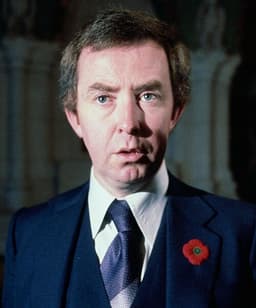
Joe Clark
Politician · Modern
41.5Total

Spencer Perceval
Politician · Modern
45.8Total
Basic Information
Born
1939
1762
Died
—
1812
Era
Modern
Modern
Nationality
Canada
United Kingdom
Occupation
Politician
Politician
Civilization
Western
Western
Score Comparison
Military (10%)
10.2
50.0
Political (20%)
37.9
43.7
Influence (20%)
48.6
48.6
Legacy (20%)
38.3
40.0
Leadership (15%)
58.8
51.9
Strategy (15%)
42.2
43.5
TOTAL
41.5
45.8
Joe Clark — Complete Timeline
1979 AD
Became Prime Minister of CanadaPolitical Action◆ Major
Clark became the 16th Prime Minister of Canada, leading a Progressive Conservative minority government. At age 39, he was the youngest person to hold the office.
Government FormationYouthConservatism
Impact: national
Defeated on budget and lost governmentPolitical Action◆ Major
Clark's minority government was defeated on a motion of non-confidence over his budget, which proposed an 18-cent-per-gallon tax on gasoline. The defeat triggered an election that returned Pierre Trudeau's Liberals to power.
BudgetNon-ConfidenceElection
Impact: national
1984 AD
Returned as Minister of Foreign AffairsPolitical Action
Clark returned to cabinet as Secretary of State for External Affairs under Prime Minister Brian Mulroney. He served in this role until 1991, focusing on foreign policy and international relations.
CabinetForeign AffairsMulroney
Impact: national
Spencer Perceval — Complete Timeline
1807 AD
Passage of the Orders in CouncilPolitical Action◆ Major
As Chancellor of the Exchequer, Perceval supported the Orders in Council, which restricted neutral trade with France. These orders contributed to tensions with the United States and the War of 1812.
Napoleonic WarsTrade PolicyWar of 1812
Impact: global
1809 AD
Appointment as Prime MinisterPolitical Action◆ Major
Perceval became Prime Minister in October 1809, leading a Tory government during the Napoleonic Wars. His tenure was marked by economic hardship and political instability.
British PoliticsPrime MinisterNapoleonic Wars
Impact: national
1812 AD
Assassination by John BellinghamPolitical Action◆ Major
Perceval was shot and killed in the lobby of the House of Commons by John Bellingham, a merchant with a grievance. He remains the only British prime minister to be assassinated.
AssassinationBritish PoliticsPrime Minister
Impact: nationaltragic
This comparison has not been analyzed yet.
One-time AI generation (~1 minute). Scores and timeline are already available below.
Rankings
🥇
Spencer PercevalLeader
Mil: 50.0Pol: 43.7Inf: 48.6
45.8
🥈
Joe Clark
Mil: 10.2Pol: 37.9Inf: 48.6
41.5
+4.3 behind
How This Comparison Works
Algorithm
Each figure is scored on 6 dimensions (0—100 scale) based on structured historical data: Military (10%), Political (20%), Influence (20%), Legacy (20%), Leadership (15%), Strategy (15%). The weighted total produces the final ranking.
Data Sources
Scores are computed from structured sub-indicators in the database. Scale factors adjust for era (Ancient ×0.85, Modern ×1.0) and civilization size (Eastern ×1.05, Other ×0.80) to account for differences in population and military scale.
Maximum 3 Figures
Comparisons are limited to 2—3 figures to ensure readability and statistical meaningfulness.
Error Margins
±5 points per dimension — Sub-scores are derived from historical records with inherent uncertainty. Two figures within 5 points on a dimension should be considered roughly equivalent in that area.
Total Score Accuracy
±3 points overall — The weighted combination of 6 dimensions produces a total score with approximately ±3 points of uncertainty. Differences of less than 3 points are not statistically significant— the figures are effectively tied.
Known Limitations
- Historical records are incomplete and uneven across civilizations
- Figures from oral-tradition societies may be underrepresented
- Occupation labels can misclassify multi-role figures
- Scores measure capability and impact, not moral character
- Quantitative scoring is a comparison tool, not absolute truth
Capability Radar
Military (10%) — Battles & Warfare
Battles
22
31
Win Rate
25
29
Expansion
28
35
Political (20%) — Governance & Reform
Reform
25
30
Diplomacy
40
40
Economy
20
35
Influence (20%) — Cultural & Global Reach
Cultural
15
10
Global
15
10
Legacy (20%) — Historical Impact
Historical
20
25
Longevity
10
15
Leadership (15%) — Power & Stability
Tenure
30
20
Stability
25
25
Strategy (15%) — Tactics & Innovation
Strategy
32
38
Tactics
33
43
Reform
36
45
Similar Comparisons
Comments & Discussion
No comments yet. Be the first to share your thoughts!