Loading...
Joe Clark vs Napoleon Bonaparte
Napoleon Bonaparte leads by 29.4 pts · 2 figures compared
…
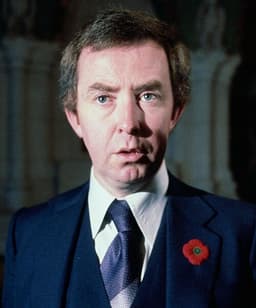
Joe Clark
Politician · Modern
41.5Total

Napoleon Bonaparte
General · Modern
70.9Total
Basic Information
Born
1939
1769
Died
—
1821
Era
Modern
Modern
Nationality
Canada
France
Occupation
Politician
General
Civilization
Western
Western
Score Comparison
Military (10%)
10.2
94.0
Political (20%)
37.9
72.0
Influence (20%)
48.6
40.0
Legacy (20%)
38.3
80.0
Leadership (15%)
58.8
78.0
Strategy (15%)
42.2
90.0
TOTAL
41.5
70.9
Joe Clark — Complete Timeline
1979 AD
Became Prime Minister of CanadaPolitical Action◆ Major
Clark became the 16th Prime Minister of Canada, leading a Progressive Conservative minority government. At age 39, he was the youngest person to hold the office.
Government FormationYouthConservatism
Impact: national
Defeated on budget and lost governmentPolitical Action◆ Major
Clark's minority government was defeated on a motion of non-confidence over his budget, which proposed an 18-cent-per-gallon tax on gasoline. The defeat triggered an election that returned Pierre Trudeau's Liberals to power.
BudgetNon-ConfidenceElection
Impact: national
1984 AD
Returned as Minister of Foreign AffairsPolitical Action
Clark returned to cabinet as Secretary of State for External Affairs under Prime Minister Brian Mulroney. He served in this role until 1991, focusing on foreign policy and international relations.
CabinetForeign AffairsMulroney
Impact: national
Napoleon Bonaparte — Complete Timeline
1799 AD
Coup of 18 BrumaireOther◆ Major
Napoleon Bonaparte, with support from his brother Lucien and key political figures, overthrew the Directory in a bloodless coup. He established the Consulate with himself as First Consul, effectively becoming the ruler of France. This event ended the French Revolution's most unstable period.
French RevolutionCoupRise to Power
Impact: regional
1804 AD
Promulgation of the Napoleonic CodeOther◆ Major
Napoleon enacted the Civil Code of the French, known as the Napoleonic Code, a comprehensive set of laws that replaced the fragmented feudal legal systems. The code established legal equality, protected property rights, and secularized law. It became the basis for legal systems in many European and world countries.
Legal ReformNapoleonic CodeCivil Law
Impact: globalconstructive
1805 AD
Battle of AusterlitzWar◆ Major
Napoleon's Grande Arm
Napoleonic WarsBattleDecisive Victory
Impact: global
1812 AD
Invasion of RussiaWar◆ Major
Napoleon led the Grande Arm
Napoleonic WarsInvasionDisaster
Impact: globaldestructive
1815 AD
Battle of WaterlooWar◆ Major
Napoleon's French army was defeated by the combined forces of the Duke of Wellington's Anglo-Allied army and Gebhard Leberecht von Bl
Napoleonic WarsBattleFinal Defeat
Impact: globaldestructive
Expert Analysis
joe-clark-vs-napoleon-bonaparte
# The Emperor and the Schoolboy: Napoleon Bonaparte and Joe Clark
In the winter of 1815, Napoleon Bonaparte stood on the muddy fields of Waterloo, watching his Imperial Guard fall for the first time in history. One hundred and sixty-four years later, a thirty-nine-year-old man named Joe Clark stood in the Canadian House of Commons, watching his nine-month-old government collapse on a vote about gasoline taxes. One conquered Europe and changed the legal foundations of the Western world; the other could not hold power long enough to pass a budget. How can two men, both leaders of Western nations in the modern era, share so little in common—and what does their contrast reveal about the nature of power itself?
Origins
Napoleon was born in 1769 on the Mediterranean island of Corsica, a rocky land that France had purchased from Genoa just a year earlier. His family were minor nobility, but impoverished. He spoke Italian before he learned French, and his schoolmates mocked his accent. This outsider's hunger—the fury of the provincial boy who must prove himself in a hostile capital—never left him. He attended military academies in Brienne and Paris, graduating at sixteen, and by the time the French Revolution erupted in 1789, he was a young artillery officer with nothing to lose and everything to prove.
Joe Clark was born in 1939 in High River, Alberta, a small farming town in the Canadian prairies. His father was a newspaper editor and member of Parliament; his mother was a schoolteacher. Unlike Napoleon's chaotic Corsica, Clark's world was orderly, Protestant, and prosperous. He was a quiet boy who stuttered—a handicap he overcame through sheer discipline. He studied at the University of Alberta and later at Dalhousie Law School, but he never practiced law. Politics was in his blood, but it was the politics of committee meetings and riding associations, not of barricades and coups.
Rise to Power
Napoleon's ascent was a series of explosions. In 1793, at age twenty-four, he drove the British fleet from the port of Toulon, earning promotion to brigadier general. In 1795, he suppressed a royalist uprising in Paris with a "whiff of grapeshot," as contemporaries called it—cannon fire into a crowd. By 1796, he commanded the Army of Italy and proceeded to smash the Austrians in six weeks. He was not yet thirty years old. His rise was not democratic; it was volcanic. He seized power in the coup of 18 Brumaire in 1799, naming himself First Consul, and by 1804 he crowned himself Emperor of the French.
Joe Clark's rise was the opposite: slow, procedural, and democratic. He entered Parliament in 1972 and became leader of the Progressive Conservative Party in 1976, defeating more seasoned rivals. In 1979, his party won a minority government, and he became prime minister at age thirty-nine—the youngest in Canadian history. But he did not seize power; he was loaned it. His government controlled only 136 of 282 seats. Every vote was a negotiation.
Leadership & Governance
Napoleon governed as a military genius who happened to also be a political reformer. His Napoleonic Code, enacted in 1804, standardized French law, abolished feudal privileges, and enshrined meritocracy—though it also subordinated women to their husbands. He built roads, schools, and a centralized bureaucracy that France still uses. His military strategy—speed, massed artillery, and the destruction of enemy armies rather than the capture of territory—was revolutionary. At Austerlitz in 1805, he destroyed a larger Russian-Austrian army with a feigned withdrawal that remains a textbook maneuver. But he could not stop. He invaded Russia in 1812, lost half a million men, and never recovered.
Joe Clark governed as a consensus-builder in a system designed for consensus. He tried to pass an austerity budget that included an eighteen-cent-per-gallon gasoline tax—modest by today's standards, but politically fatal. The opposition parties united against him. He could not command the military; he could not rewrite the law; he could not even keep his own caucus united. His score for military strategy is 35.3; Napoleon's is 93.0. But this is not a fair comparison. Clark's world was one of parliamentary motions and public opinion polls, not cavalry charges and sieges.
Triumph & Tragedy
Napoleon's triumph was his empire: by 1810, he controlled or dominated most of continental Europe. His tragedy was that he could not stop expanding. He exiled himself to Elba in 1814, returned in 1815 for the Hundred Days, and was finally defeated at Waterloo. He died in 1821 on the remote island of Saint Helena, a prisoner of the British, dictating his memoirs and blaming everyone but himself.
Joe Clark's triumph was becoming prime minister at all—a feat of patience and discipline in a country that rarely trusts its leaders. His tragedy was the brevity of his rule: nine months. He lost the 1980 election to Pierre Trudeau, then served admirably as Foreign Minister under Brian Mulroney from 1984 to 1991, negotiating the Canada-U.S. Free Trade Agreement. He never reached the top again. He is remembered, if at all, as a footnote.
Character & Destiny
Napoleon was driven by an insatiable will. "Impossible is not French," he supposedly said. He believed that destiny belonged to the bold, and he was right—until he was wrong. His personality—arrogant, restless, contemptuous of limits—created his triumphs and his ruin. He could not delegate, could not compromise, could not stop.
Joe Clark was driven by duty. He was decent, hardworking, and uncharismatic—a man who read every briefing note but could not command a room. His personality—cautious, respectful, conciliatory—suited a deputy minister, not a leader in crisis. He once said, "I have never been comfortable with the idea that politics is a game." Napoleon would have laughed.
Legacy
Napoleon's legacy is colossal. The Napoleonic Code influenced civil law across Europe, Latin America, and even Quebec. His military innovations shaped warfare until World War I. He is a symbol of ambition, genius, and hubris—a figure who still fascinates and terrifies.
Joe Clark's legacy is modest. He proved that a stuttering boy from Alberta could become prime minister. He helped negotiate free trade with the United States. He is remembered as a decent man who tried his best. His total score is 54.6; Napoleon's is 82.4. But these numbers measure different worlds.
Conclusion
The contrast between Napoleon and Clark is not about intelligence or effort. It is about context. Napoleon lived in an age of revolution, when a single general could redraw the map of Europe with cannon fire. Clark lived in an age of democracy, when a prime minister could lose power over a gasoline tax. Napoleon's tragedy was that he could not stop conquering. Clark's tragedy was that he could not start. Both men rose as high as their worlds allowed. One lit up the sky like a comet; the other flickered like a candle in a prairie window. Which one was happier? History does not record that answer.
Rankings
🥇
Napoleon BonaparteLeader
Mil: 94.0Pol: 72.0Inf: 40.0
70.9
🥈
Joe Clark
Mil: 10.2Pol: 37.9Inf: 48.6
41.5
+29.4 behind
How This Comparison Works
Algorithm
Each figure is scored on 6 dimensions (0—100 scale) based on structured historical data: Military (10%), Political (20%), Influence (20%), Legacy (20%), Leadership (15%), Strategy (15%). The weighted total produces the final ranking.
Data Sources
Scores are computed from structured sub-indicators in the database. Scale factors adjust for era (Ancient ×0.85, Modern ×1.0) and civilization size (Eastern ×1.05, Other ×0.80) to account for differences in population and military scale.
Maximum 3 Figures
Comparisons are limited to 2—3 figures to ensure readability and statistical meaningfulness.
Error Margins
±5 points per dimension — Sub-scores are derived from historical records with inherent uncertainty. Two figures within 5 points on a dimension should be considered roughly equivalent in that area.
Total Score Accuracy
±3 points overall — The weighted combination of 6 dimensions produces a total score with approximately ±3 points of uncertainty. Differences of less than 3 points are not statistically significant— the figures are effectively tied.
Known Limitations
- Historical records are incomplete and uneven across civilizations
- Figures from oral-tradition societies may be underrepresented
- Occupation labels can misclassify multi-role figures
- Scores measure capability and impact, not moral character
- Quantitative scoring is a comparison tool, not absolute truth
Capability Radar
Military (10%) — Battles & Warfare
Battles
22
95
Win Rate
25
90
Expansion
28
95
Political (20%) — Governance & Reform
Reform
25
95
Diplomacy
40
80
Economy
20
85
Influence (20%) — Cultural & Global Reach
Cultural
15
85
Global
15
90
Legacy (20%) — Historical Impact
Historical
20
95
Longevity
10
90
Leadership (15%) — Power & Stability
Tenure
30
85
Stability
25
70
Strategy (15%) — Tactics & Innovation
Strategy
32
95
Tactics
33
98
Reform
36
92
Similar Comparisons
Comments & Discussion
BoneyBlunder6/17/2026
Comparing Clark to Napoleon is like comparing a teacup to a tidal wave. Waterloo cost Bonaparte his empire, but he reshaped Europe's legal systems and inspired nationalism across a continent. Clark lost a confidence vote over a two-cent gas tax and vanished into obscurity. One conquered Italy at twenty-seven; the other couldn't rally his own caucus at forty. This isn't a contrast—it's a category error. Clark is a footnote; Napoleon is a founding myth of the modern state.
数据炸裂师6/17/2026
拿拿破仑一个军事天才跟克拉克一个高油价受害者比?搞历史的不带这么数据造假。拿破仑打了五十多场战役,战死十万法国士兵,换来了《法典》和欧洲版图重划。克拉克执政区区273天,GDP增长才0.8%,内阁支持率全掉到30%以下。你拿一套军事革命标准去套加拿大加油站政策,这不是分析,是跨维度碰瓷。这俩根本不在同一个数据集里。
GallicaGazer6/17/2026
The real joke? Clark's brief tenure in 1979-80 couldn't even pass a budget—Napoleon's Concordat of 1801 reorganized the entire French Church. Clark governed fewer days than it took Napoleon to march from Austerlitz to his coronation as King of Italy. If we’re serious about power, Clark didn't hold it; he borrowed it for nine months. Napoleon held power across a continent for a decade. One changed law forever; the other changed the price of gas for a season.
反卷史官6/17/2026
克拉克的根本问题是他把政治当成了高中学联竞选——讲礼貌、玩共识、等着别人鼓掌。拿破仑赢的每一场仗都靠精准计算和冷酷决心,比如洛迪桥之战,他一个人扛着炮就冲过去了。克拉克赢了个少数政府,接着还想着修改预算案讨好每一个人,结果九个月就被踹出办公室。一个用铁腕换帝国,一个用温和换出局。这对比不是境界不同,是物种不同。
CodexRevolt6/17/2026
Call this a "comparison"? It's a trolling of historiography. Clark handed Canada his one useful act—patriating the constitution? No, that was Trudeau. Clark's legacy is literally a footnote about Joe Who? Napoleon's legacy includes the metric system, the Napoleonic Code, and the destruction of the Holy Roman Empire. One made a dent in western civilization; the other made a dent in Alberta's conservative leadership. Power isn't just office; it's afterglow. Clark has none.